The Cumbria Lichen and Bryophyte group is a self-study group for everyone interested in learning, recording, conserving or simply enjoying Cumbria’s lichens and bryophytes (regardless of experience) .
Please join us on a field trip and share your experiences with us on the Cumbria Lichens and Cumbria Bryophytes Facebook groups.


Here are our most recent blog posts:
- Bolton Fell Moss lichen trip report 8 November 2026
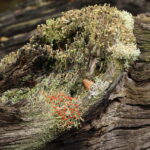 Bolton Fell Moss, north west of Brampton in north Cumbria, was bought by Natural England in 2013 and became a SSSI in 2015. The Natural England SSSI citation says: Bolton Fell and Walton Mosses SSSI is of special interest for its nationally important lowland raised peat bog habitat and associated vegetation communities …. Peat has… Read more: Bolton Fell Moss lichen trip report 8 November 2026
- The Combe, Thorneythwaite bryophyte trip report 20 September 2026
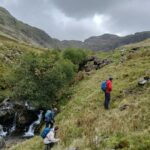 A small group of us (Kerry Milligan, Clare Shaw, Paul Ross, Josie Niemira and Richard Birnie) met at the small parking area at Thorneythwaite Farm. We split off from the lichen group almost immediately as we had decided to investigate an upland monad (NY2512) with only six fairly old species records, the most recent being… Read more: The Combe, Thorneythwaite bryophyte trip report 20 September 2026
- Thorneythwaite lichen trip report 20 September 2026
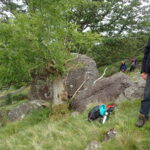 Thorneythwaite covers the NW-facing side of the Seathwaite valley at the head of Borrowdale, often regarded as the poor relative of the famous Seathwaite woods close by, but there’s still plenty to see. There are woods and scattered trees, plus steep rocky slopes with massive boulders. The geology is andesite, a silica-poor igneous rock. The… Read more: Thorneythwaite lichen trip report 20 September 2026
- Black Combe trip report 11 August 2026
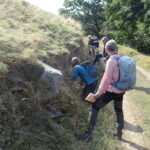 Black Combe is a hill close to the coast in South-West Cumbria whose top is 600m above sea level. The craggy combes face east with a long disused copper mine below showing that there were some metals hidden amongst the mudstone/slate. This was borne out early on as we found Acarospora sinopica, Lecanora handelii and… Read more: Black Combe trip report 11 August 2026
- Whitbarrow Quarry Bryophyte trip report 30 April 2026
 In April, a small group met on a sunny Thursday morning to visit Whitbarrow National Nature Reserve. The site is famous for its limestone crags and unique calcareous species assemblage, but relatively few records are present around the quarry based at the very southern end of the crag, and we set out with this area… Read more: Whitbarrow Quarry Bryophyte trip report 30 April 2026