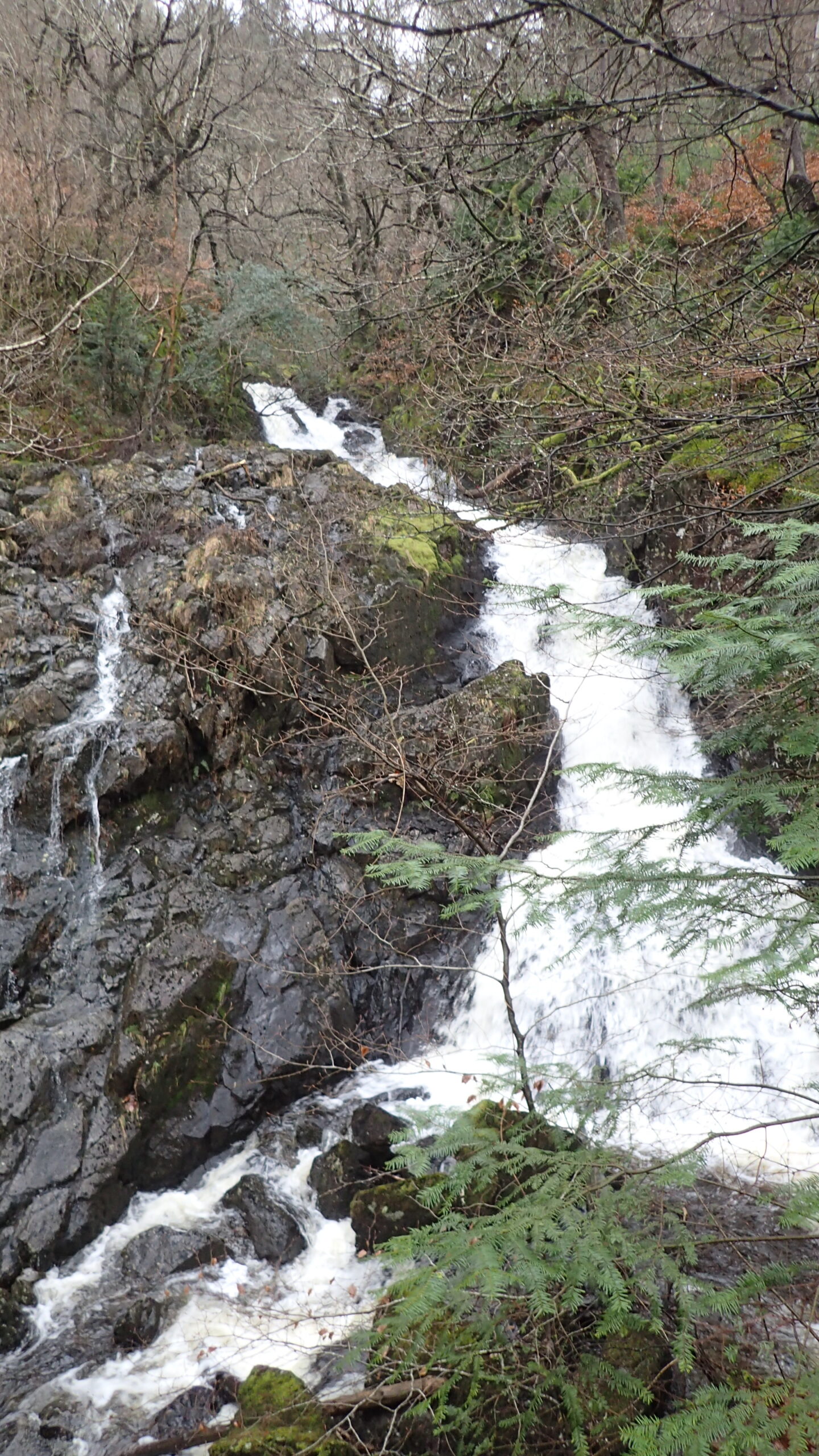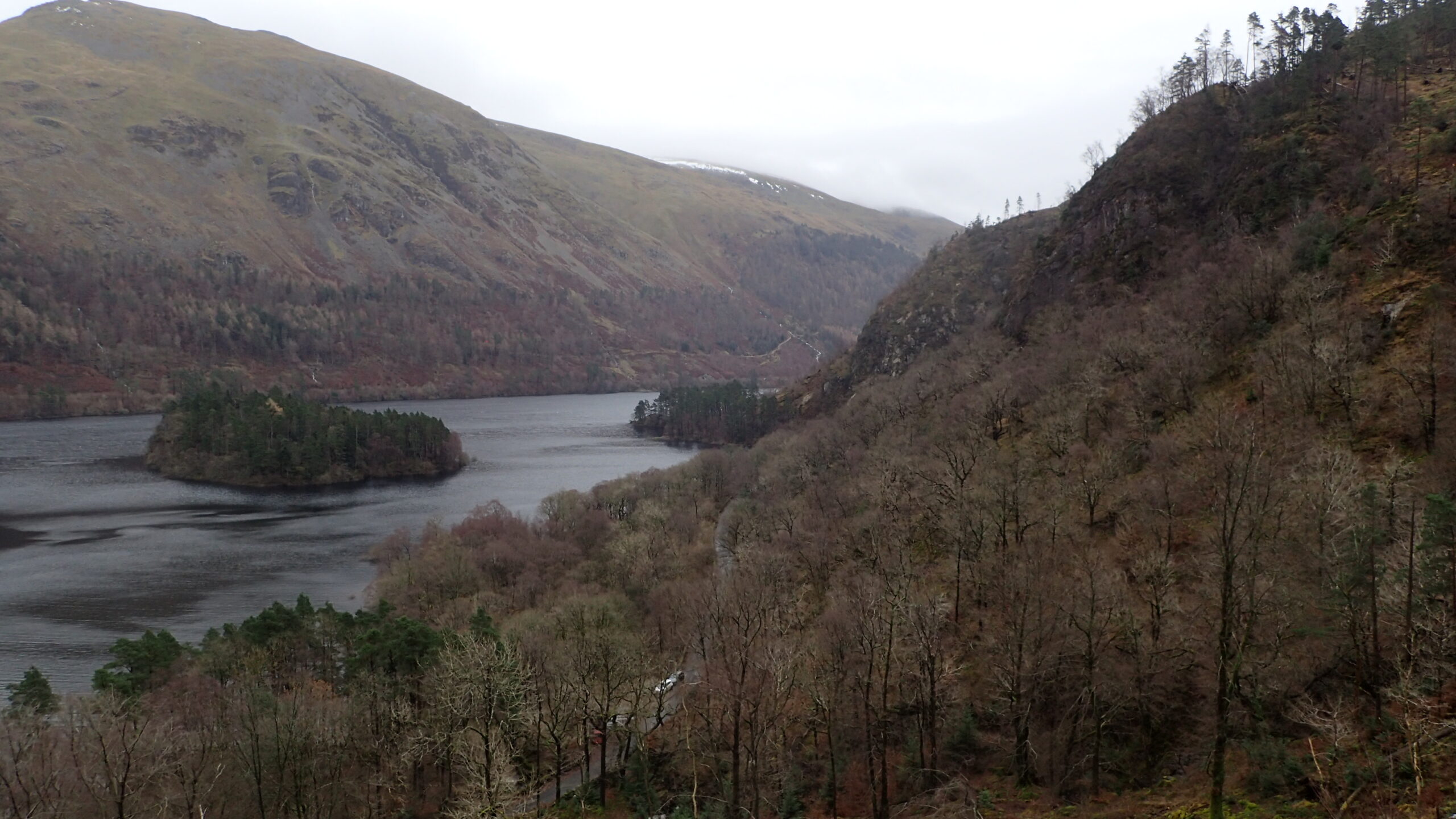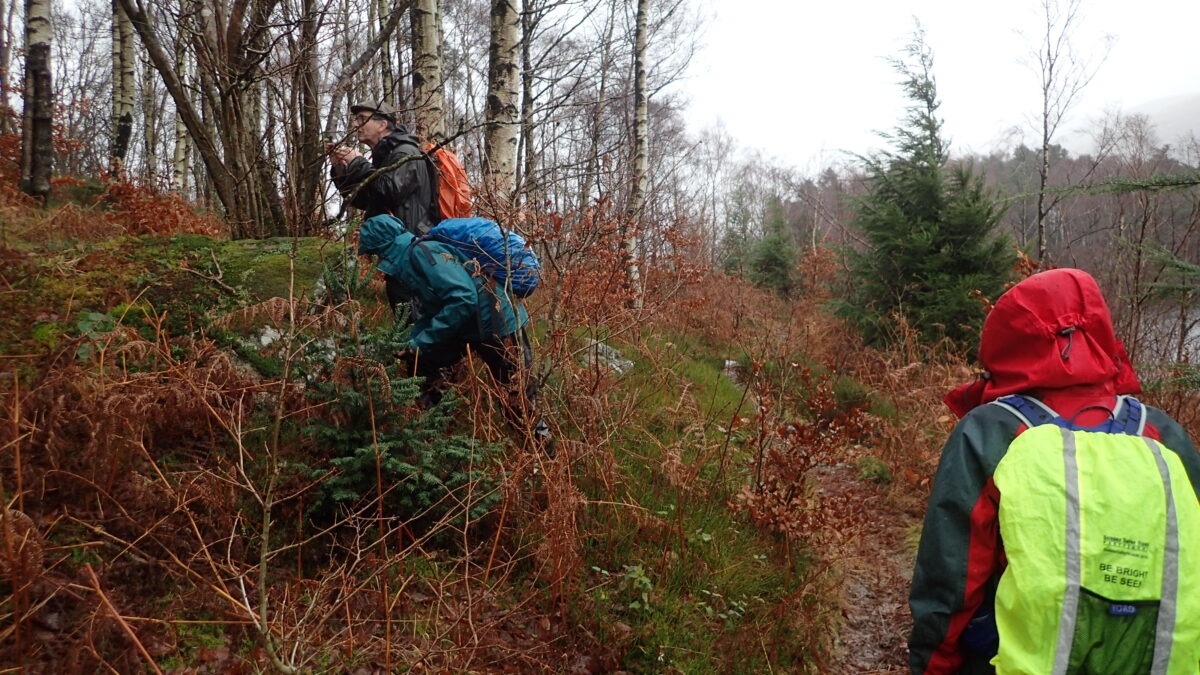
After weeks of rain, all the lichens were soaking but we had a couple of dry hours at Thirlmere north of Launchy Gill before it got wet again. Our route passed through areas where the conifers had been felled and cleared. Quite a few of the remaining trees were blown over and the ground was steep and bouldery, with much moss and algae on the east-facing slopes and trees. So, the ground was rough underfoot and the habitat had changed considerably over years reducing the ecological continuity.
The Thirlmere reservoir was opened in 1894, damming the natural lake, a first supply of water for Manchester from the Lake District, majorly supplemented by Haweswater in the 20th century. It was accompanied by the planting of many conifers that dominate the lower slopes of the surrounding hills. However, we found several native tree species in our complete list of ash, beech, birch, hazel, larch, oak and spruce/pine species. Perhaps these were remnants of what was there before. There was regen of the beech and conifers.
In 2022/2023, Cumbria Woodlands did a project at Thirlmere to help restore ancient woodland sites to their former condition ie on Plantations on Ancient Woodland Sites (PAWS) sites, including beech thinning, rhododendron removal, deer management and removal of Western Hemlock. There is on-going wildlife monitoring and we may have been caught on a trail cam or two.
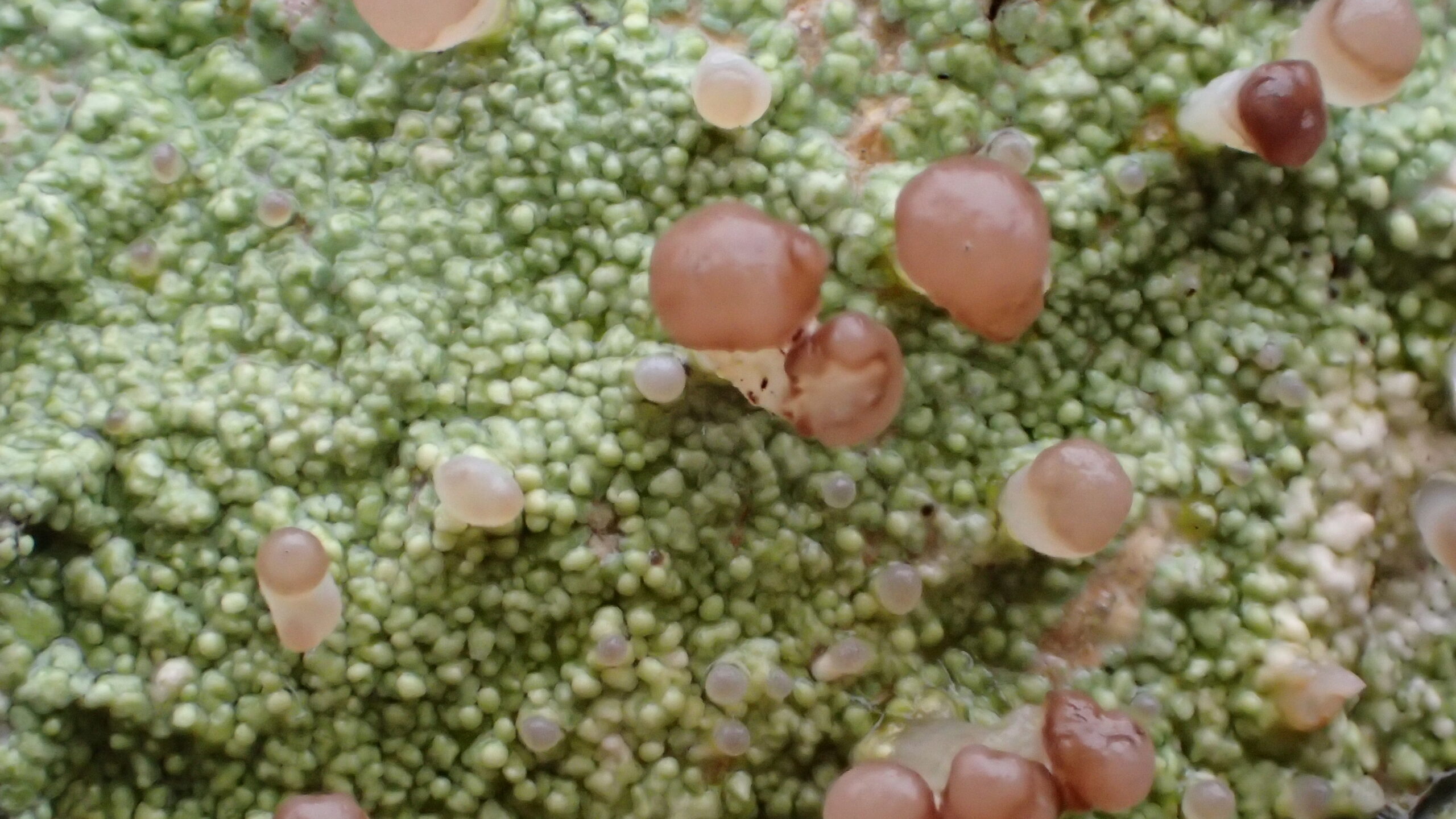
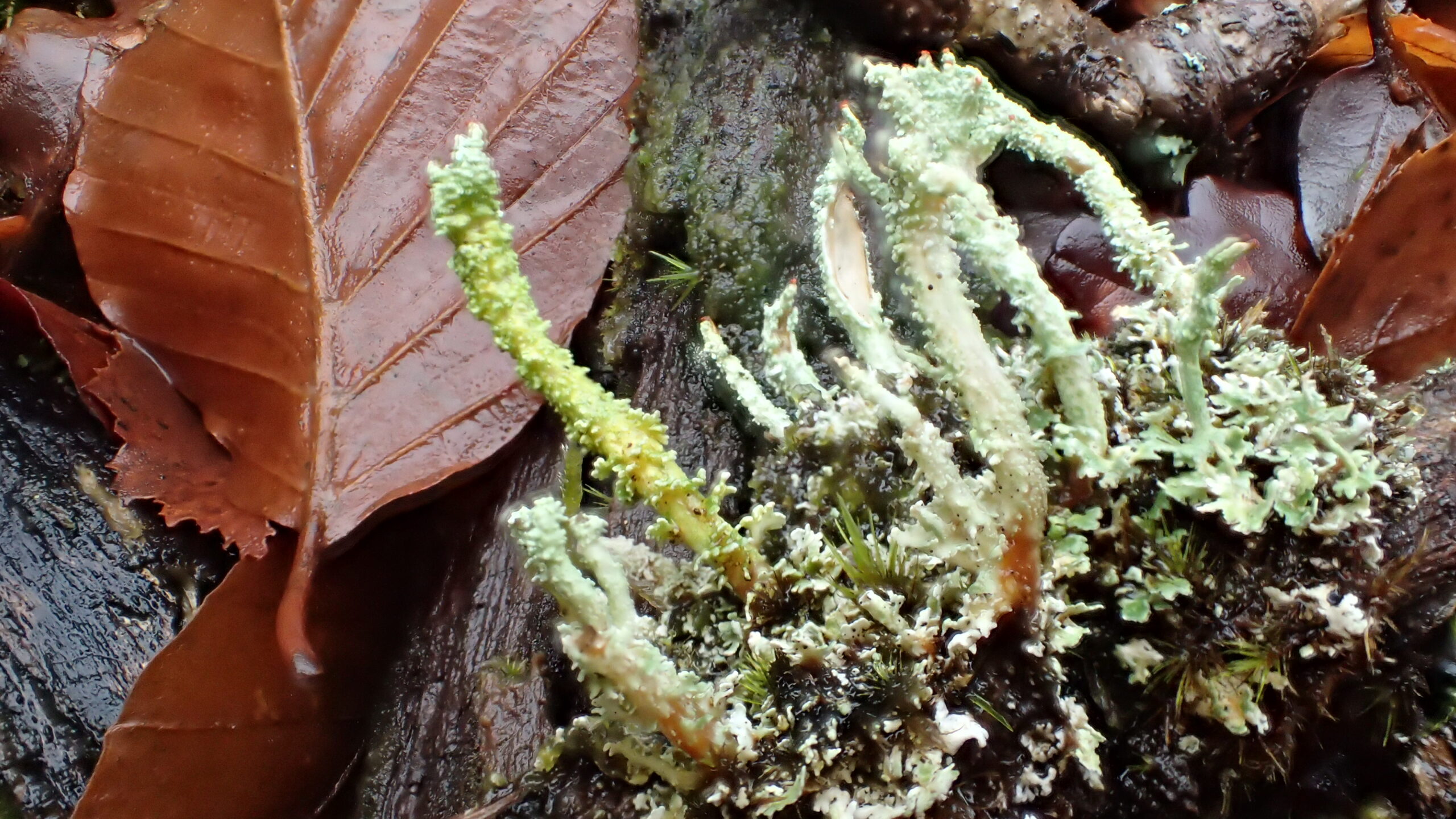
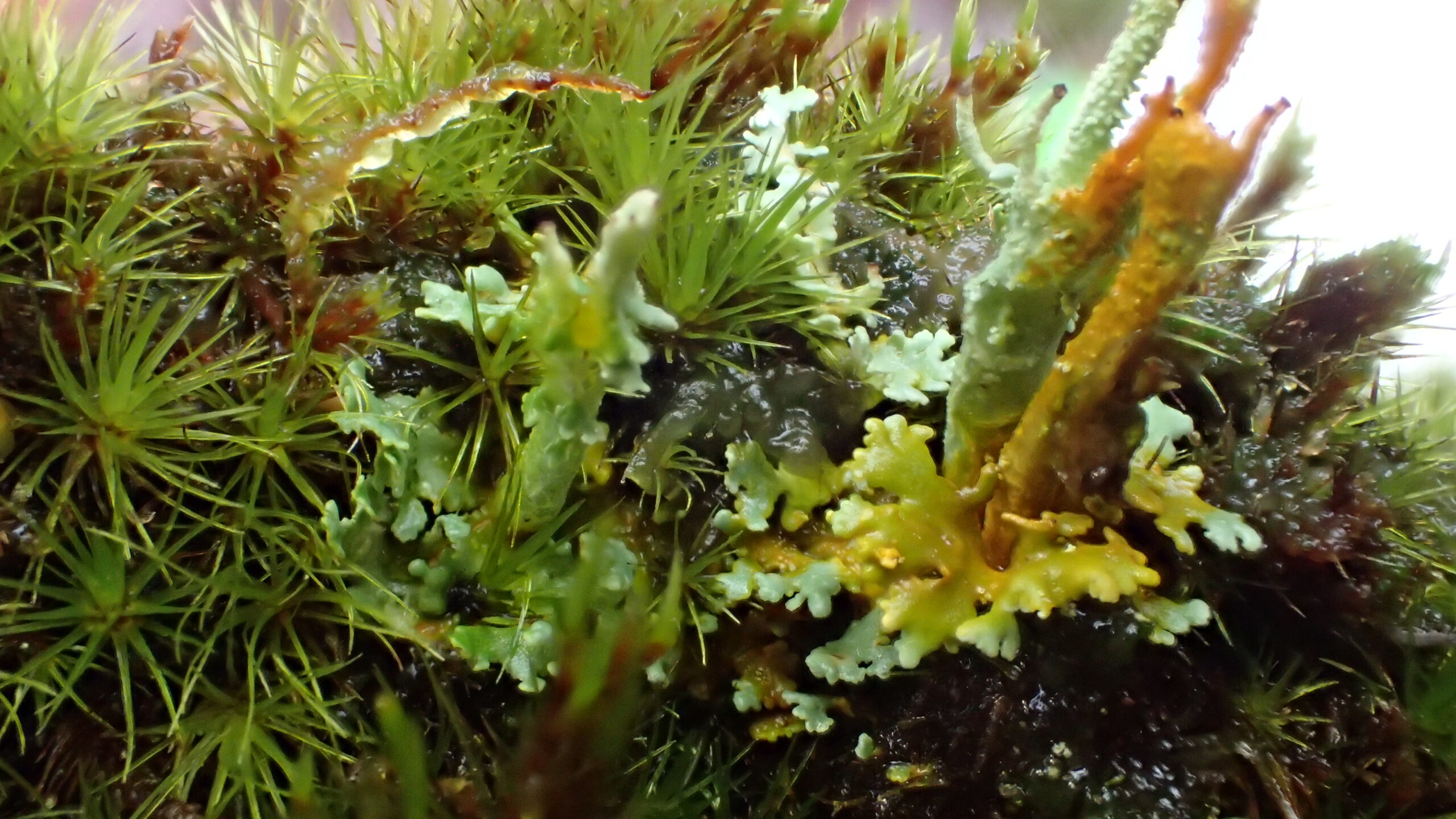
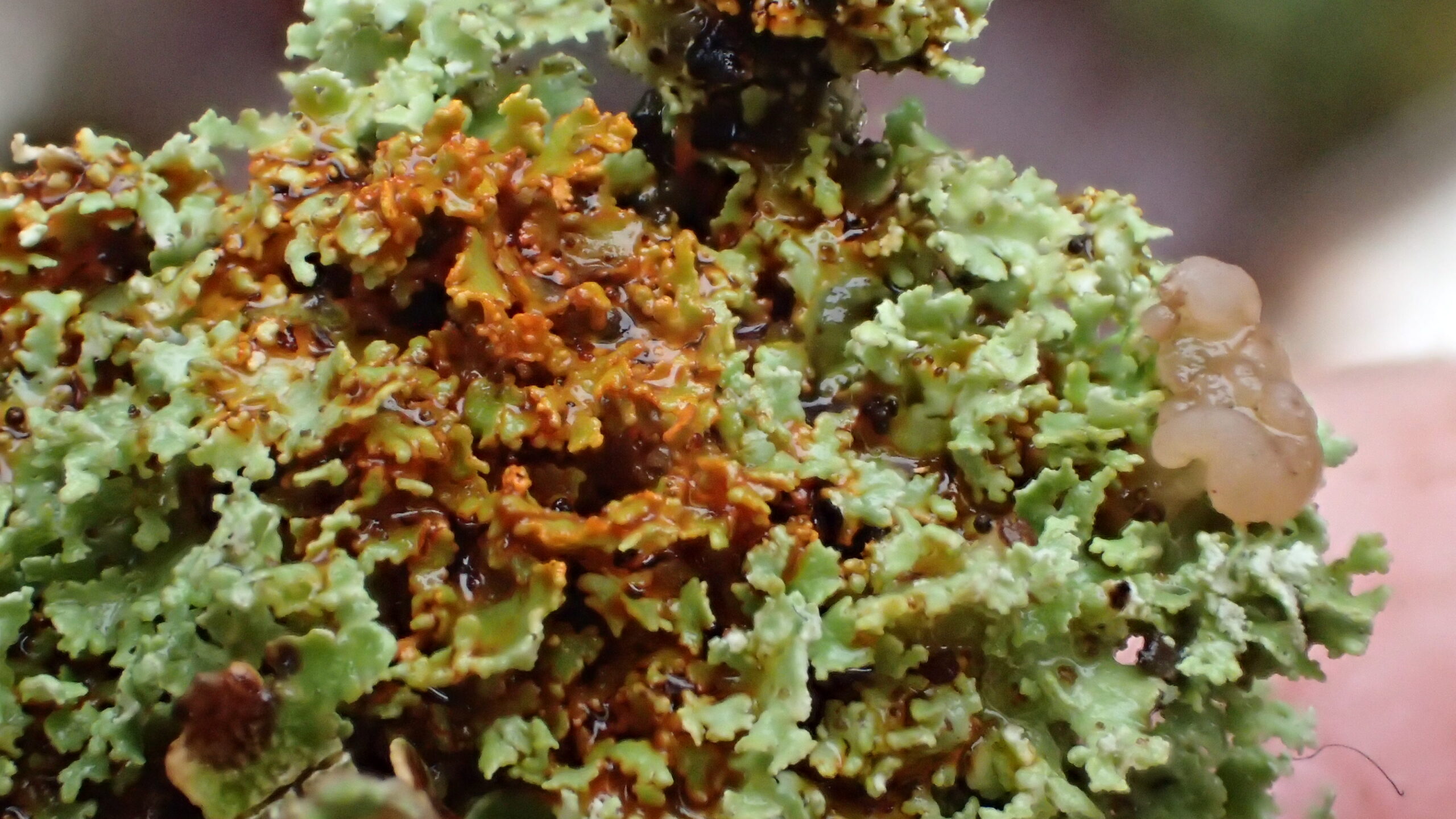
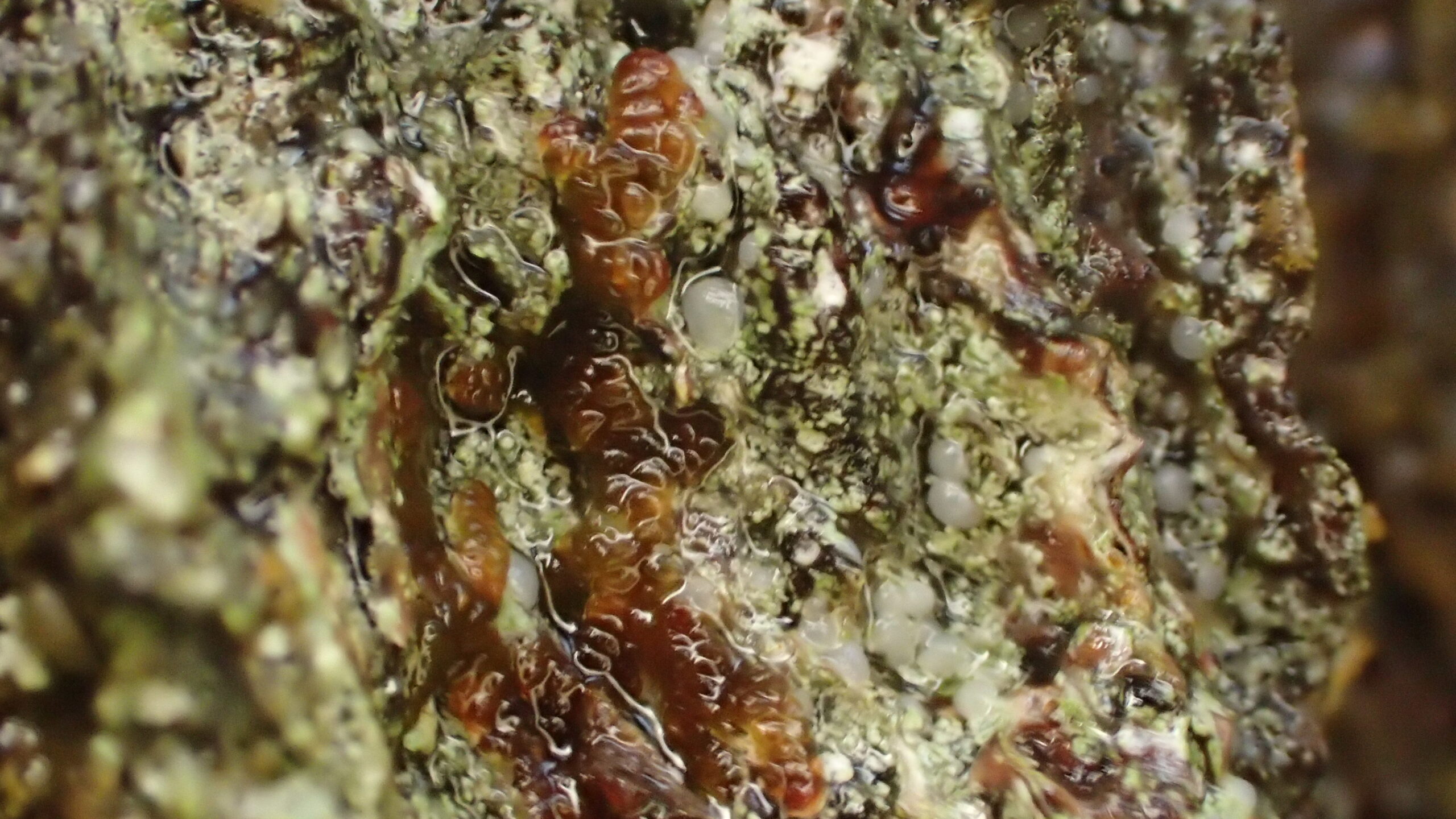
Our lichen species list so far has 69 species across two monads on bark, lignum and rocks. The geology was shown as andesite, a sometimes more basic rock, and there was very little Rhizocarpon geographicum. However we found no basic rock lichens such as jellies. There were very few Peltigera species. The small outcrops and boulders had some of the usual suspects including Baeomyces rufus. Pete found a lovely Cladonia caespiticia with mushroom-like fruit and a thallus that goes P+red. Nearby Helen fretted over a terricolous Cladonia that went P+orange but was too small to identify. Chris found a very soggy Micarea alabastrites on a birch whose white fruit were translucent in the wet, going C+red. Caz had Coniocarpon cinnabarinum on hazel.
As forecast, the rain started around lunchtime and we made our way back to the road. As Pete said: the lichens were swollen and were covered by a film of water, both sides of the hand lens were wet, the outside of his glasses were wet and the inside was steamed up.
There was a brief respite so we took the path below the road back to our starting point before heading home for an early bath.
Text: Chris Cant
Photos: Chris Cant