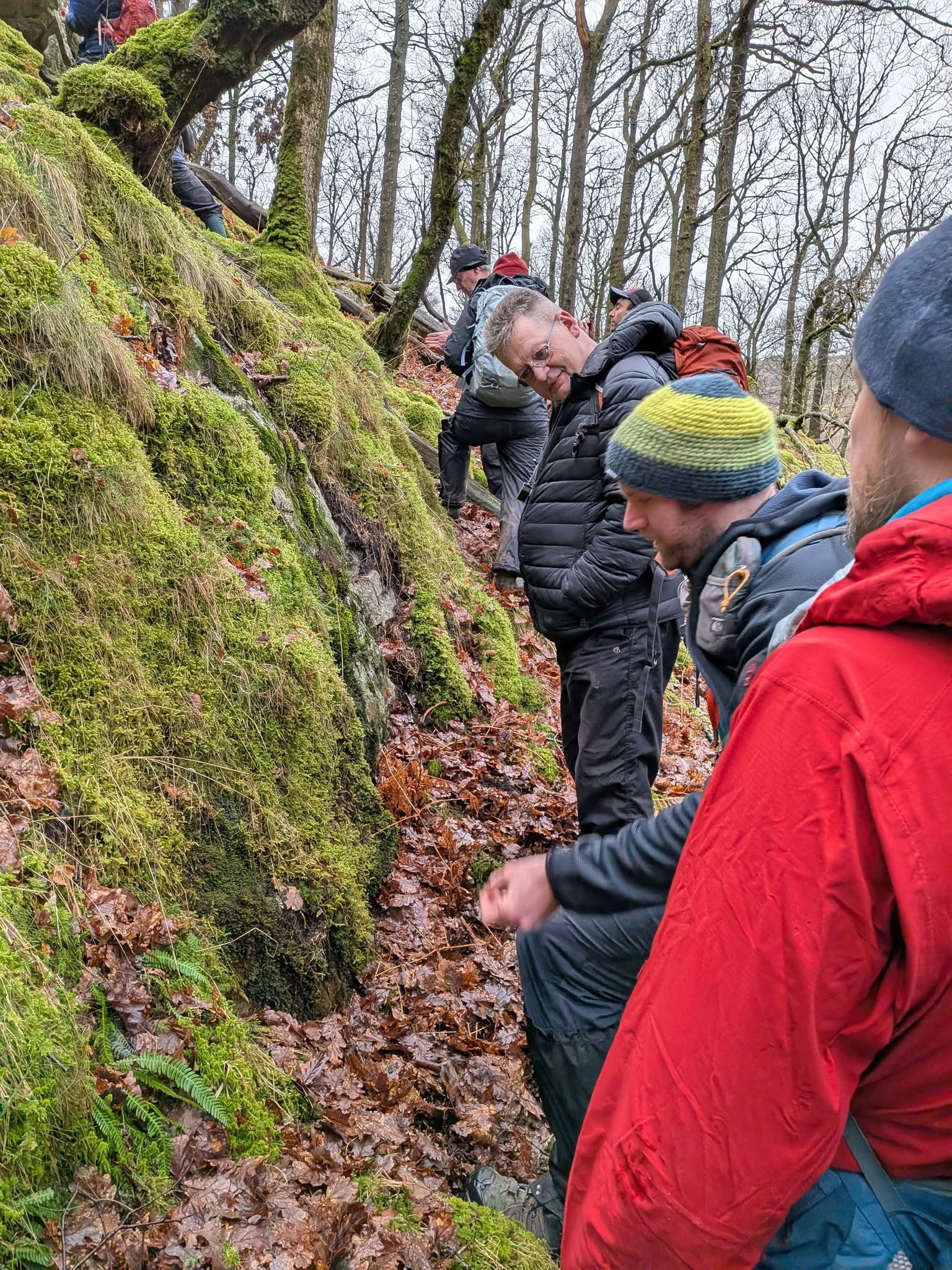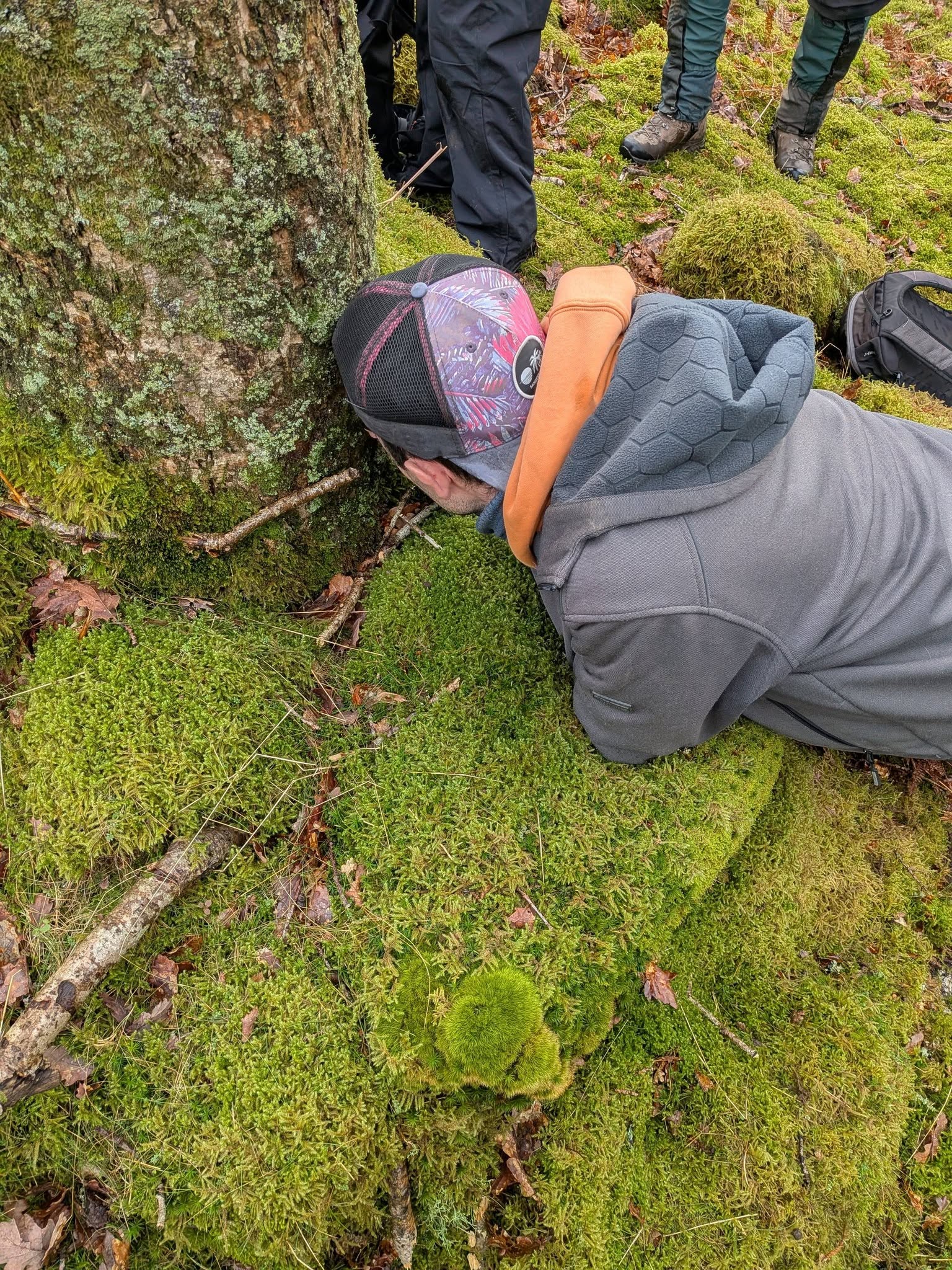
It is unusual for the group to visit the same site twice in a year, but the diversity of habitats at Tilberthwaite proved too enticing. Our previous trip on 13th March 2025 focused on Tilberthwaite Gill and the areas surrouding the old mine workings, racking up well over 100 species of bryophyte. 11 months later, we turned our attention to Low Coppice wood – an oak wood on the east side of the Yewdale Beck – with the promise of some oceanic species. The landscape was damp from recent showers, but the forecast rain thankfully didn’t materialize until after 3pm. Ideal bryophyte weather!
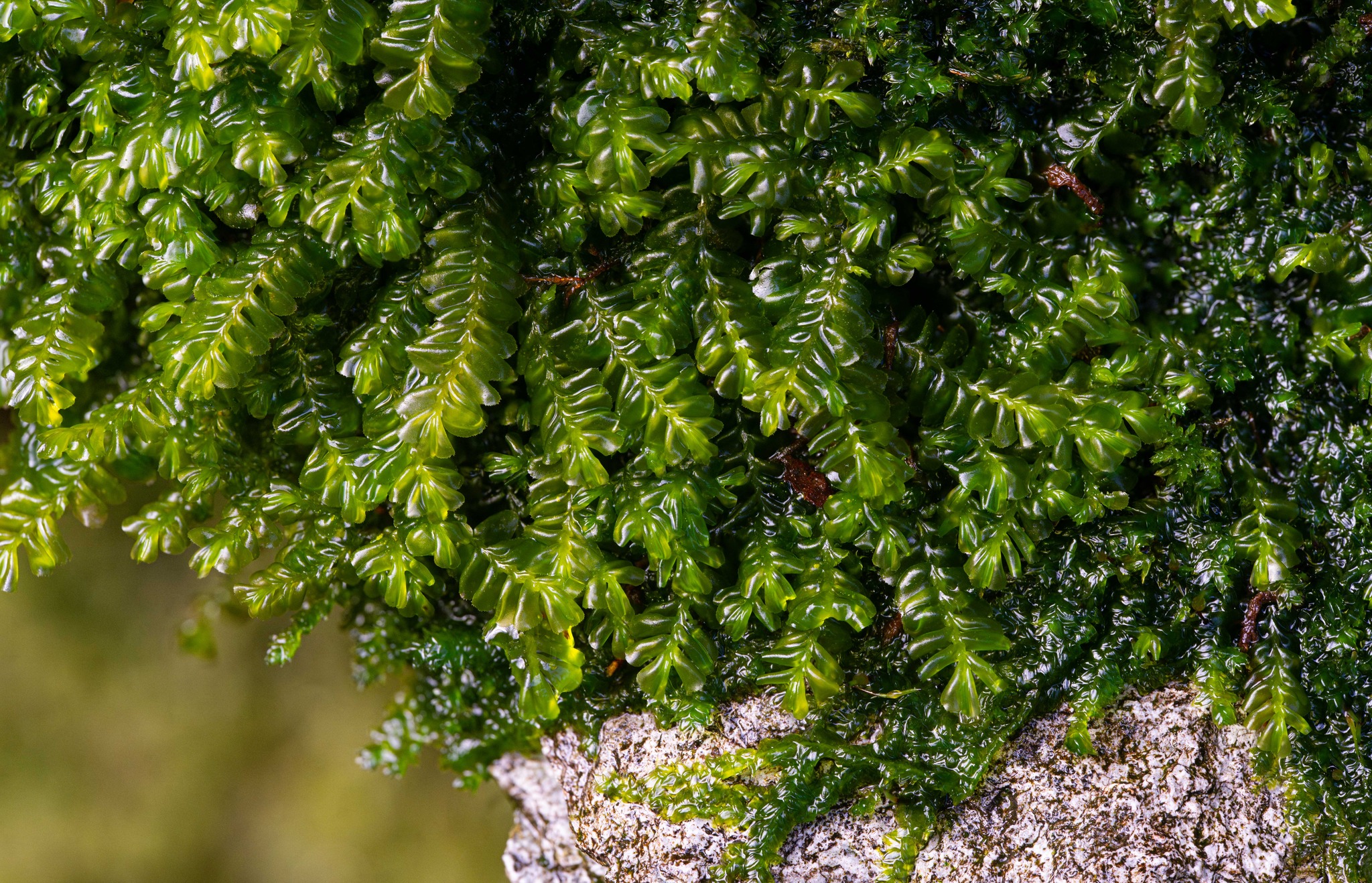
11 of us started the day searching a dry-stone wall and steep slope next to the beck. Clare and Paul spotted a sprawling Plagiochila which looked to be a good candidate for P. britannica. Our confidence grew when comparing it side-by-side to the much more common P. porelloides – the larger cells and straight leaf insertion line of P. britannica were pretty convincing in the field when viewed right next to the small cells and curved leaf insertion on P. porelloides. Gary later confirmed the identification by microscope. It was great to share the experience of field identification as P. britannica is likely overlooked and hopefully will be recorded more in future outings.
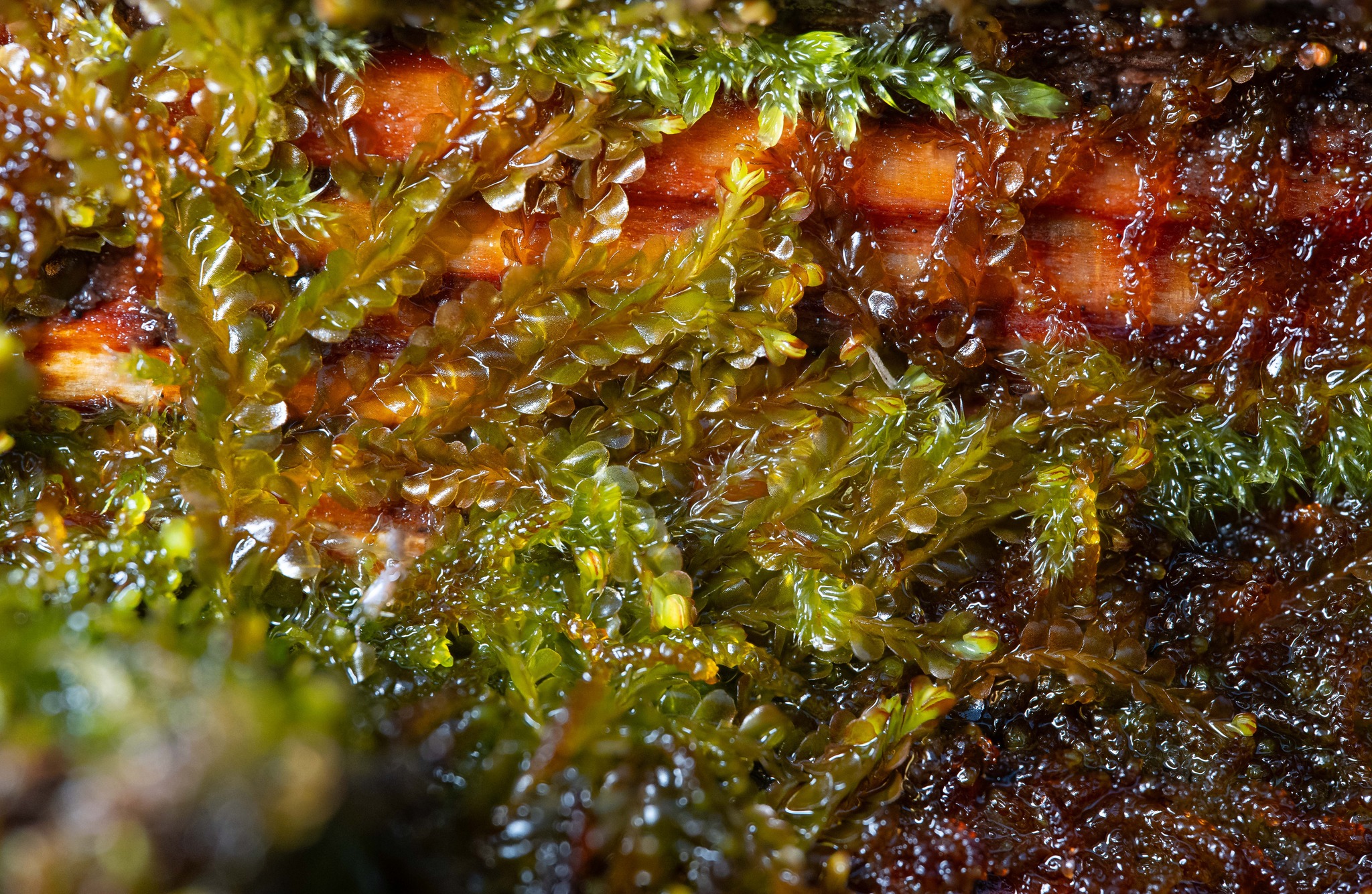
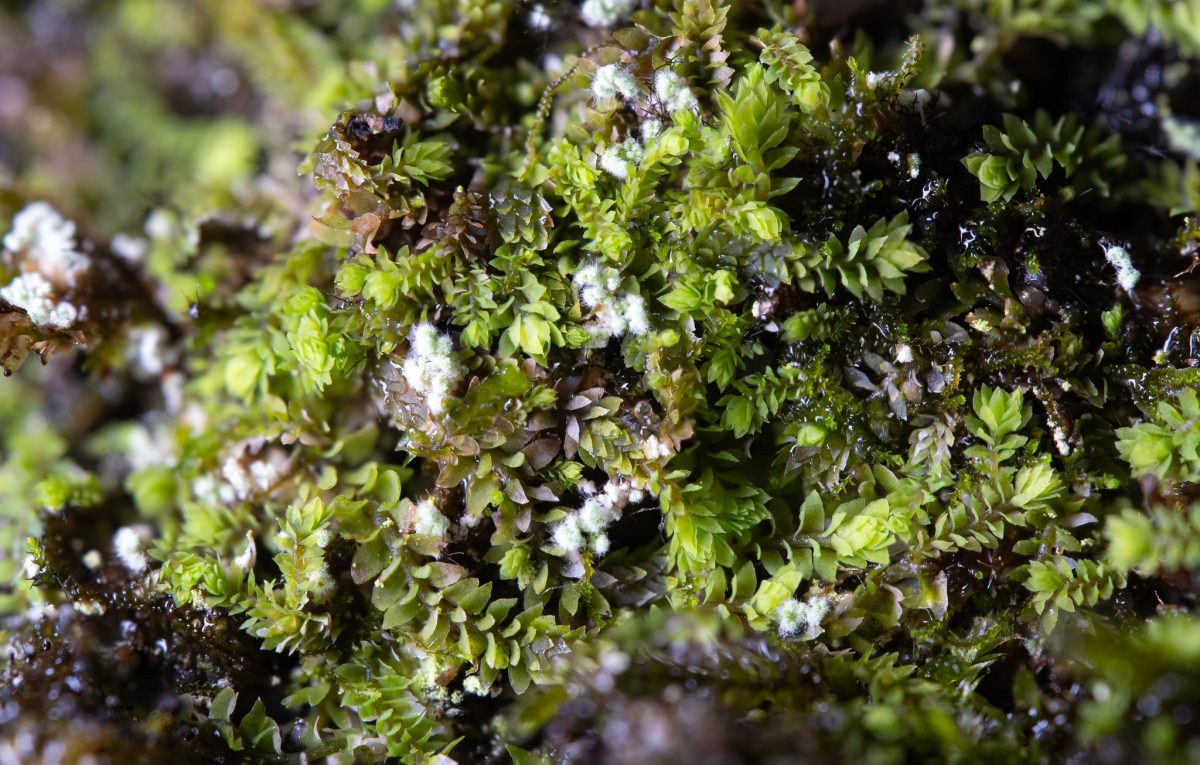
The woodland yielded more Plagiochila species – P. asplenioides, P. spinulosa and P. punctata, the latter always an exciting find given its preference for more oceanic sites. Big mounds of Bazzania trilobata and Scapania gracilis added to the rainforest roster, along with Tritomaria exsectiformis and Saccogyna viticulosa. The star liverworts of the day were a surprising abundance of Syzygiella autumnalis, the very fragrant Frullania fragilifolia, and Kerry found the group’s second-ever discovery of the tiny waxy liverwort Douinia ovata. All-in, the liverwort flora alone was excellent for an oak woodland quite distant from the oceanic strongholds of Borrowdale and Ennerdale.
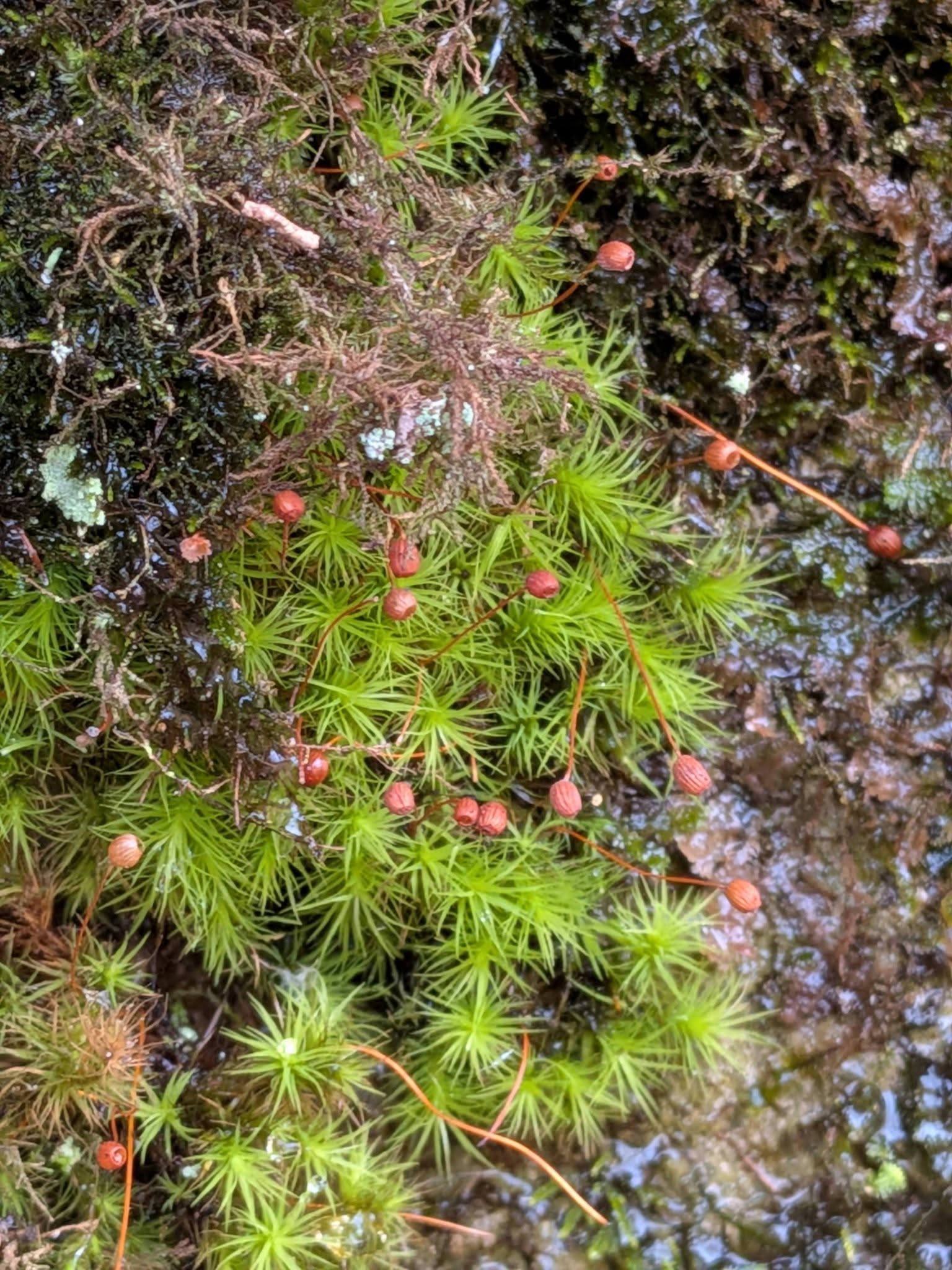
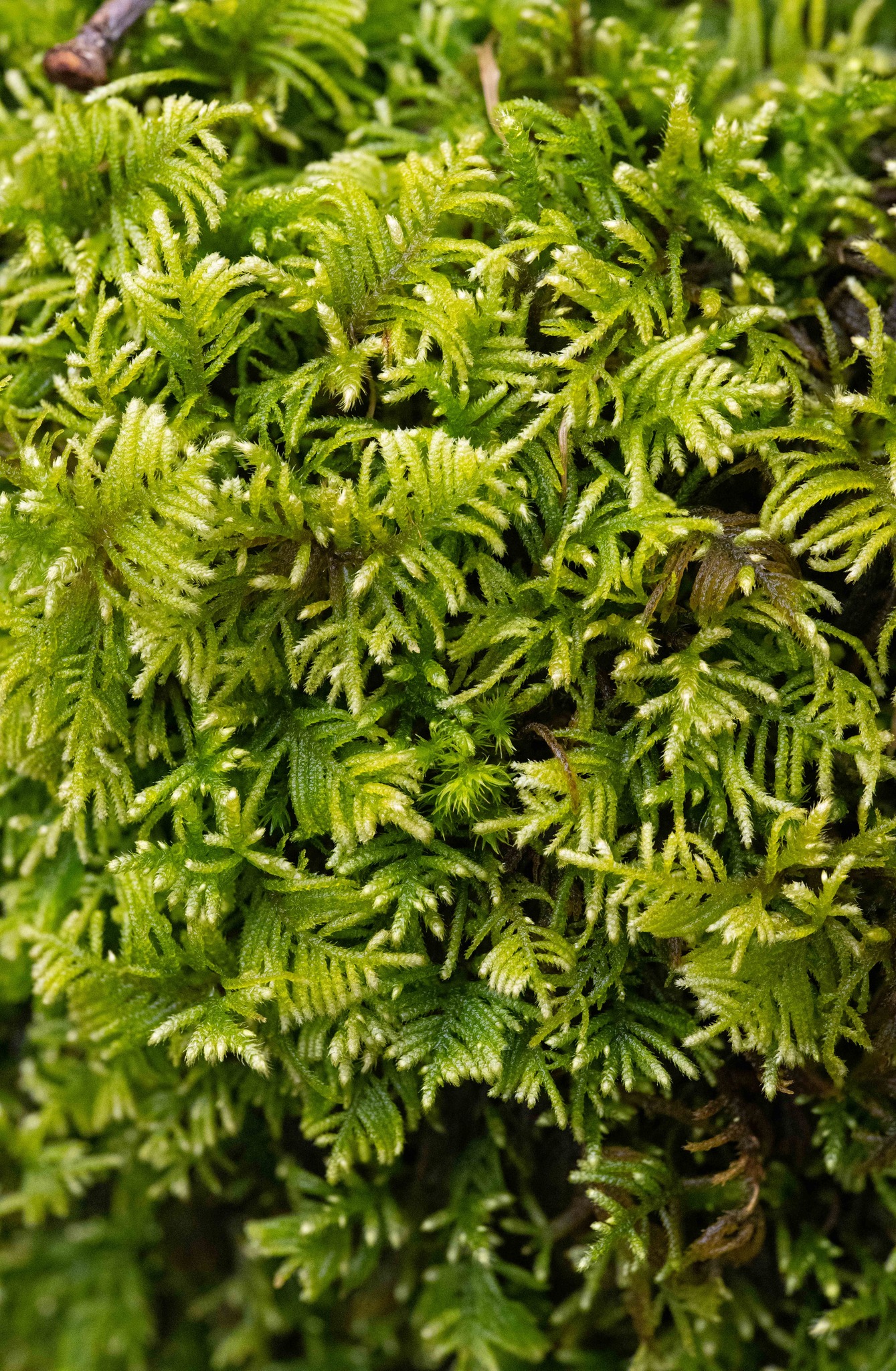
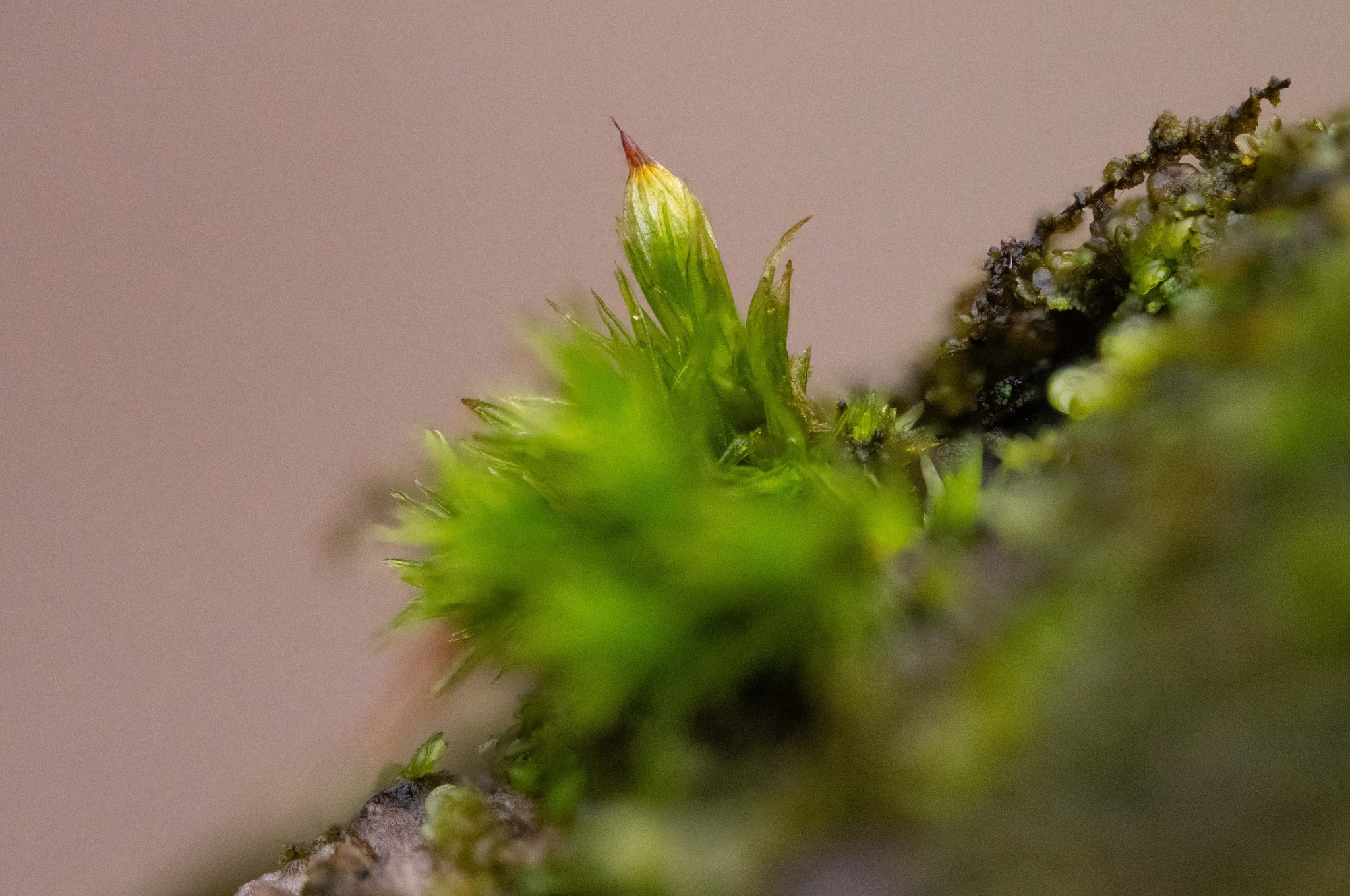
The moss flora included some firm favourites – the apple-like capsules of Bartramia pomiformis were frequent among dry cracks in the slate crags, and the neat golden pinnate shoots of Hyocomium armoricum joined the wiry-stemmed deep green feathers of Thamnobryum alopecurum along a small stream to the east of the wood. Hyocomium is typical of more acid watercourses, and Thamnobryum more basic, indicating some boderline base enrichment from the underlying rock in places. In the slate crags, Clare found small cushions of Rhabdoweissia crenulata with their characteristic broad toothed leaf tips. Larger firm cushions of Leucobryum turned out to include both Leucobryum juniperoideum and Leucobryum albidum.
As the clouds descended and the rain began to fall, we returned to the car park, stopping briefly to explore the sparsely vegetated gravels by the river. This innocuous looking habitat didn’t disappoint, with remarkable amounts of Scapania compacta and good quantities of Barbilophozia sudetica. Twisting among the Barbilophozia was the tiny liverwort Cephaloziella divaricata.
Our return to Tilberthwaite puts the species total at an impressive 166 across the two monads we visited, 111 mosses and a whopping 55 liverworts (almost 20% of the UK species!). Not a bad way to spend a grey Saturday in February.
Text: Paul Ross
Photos: Paul Ross, Peter Bullard