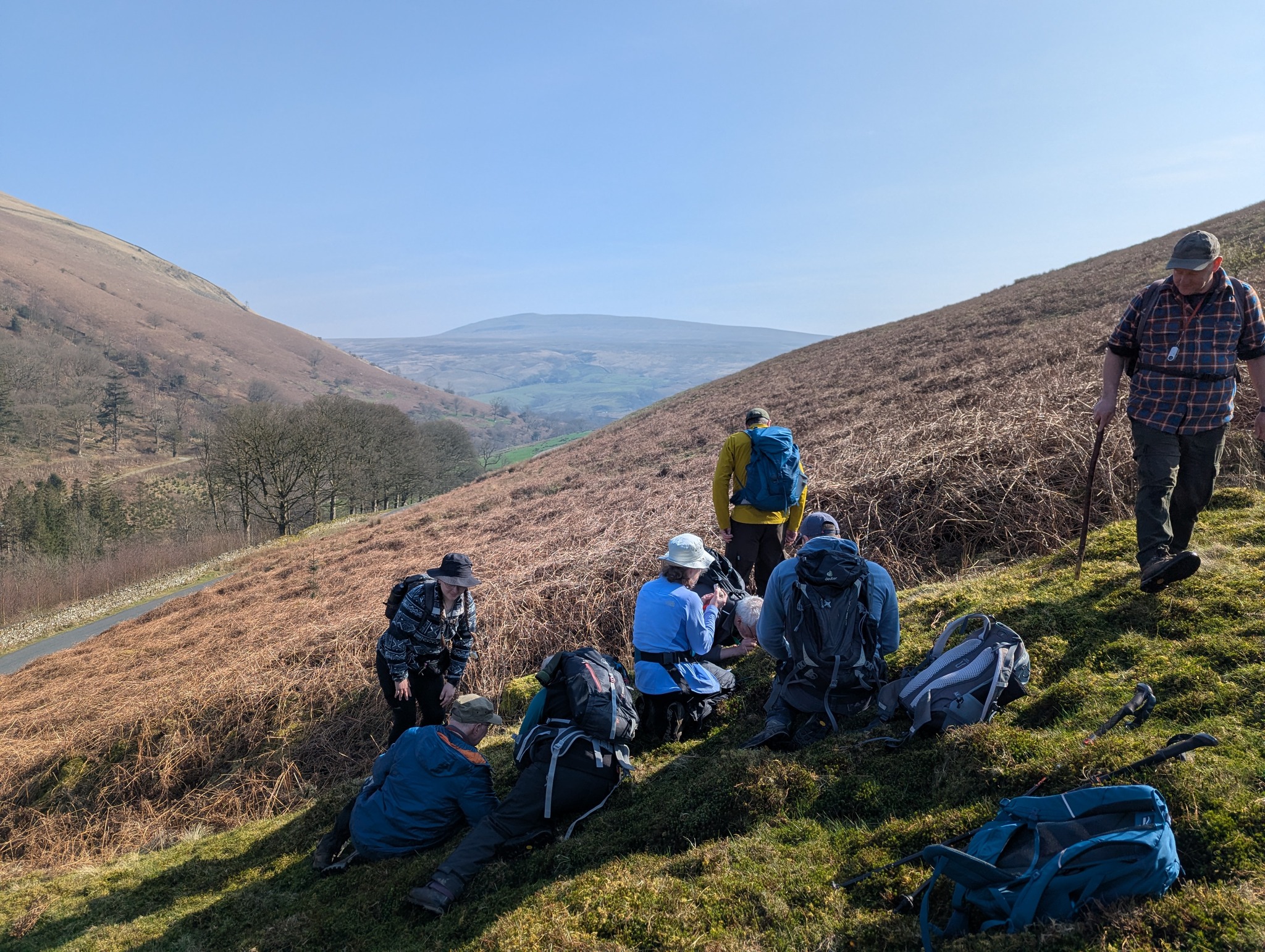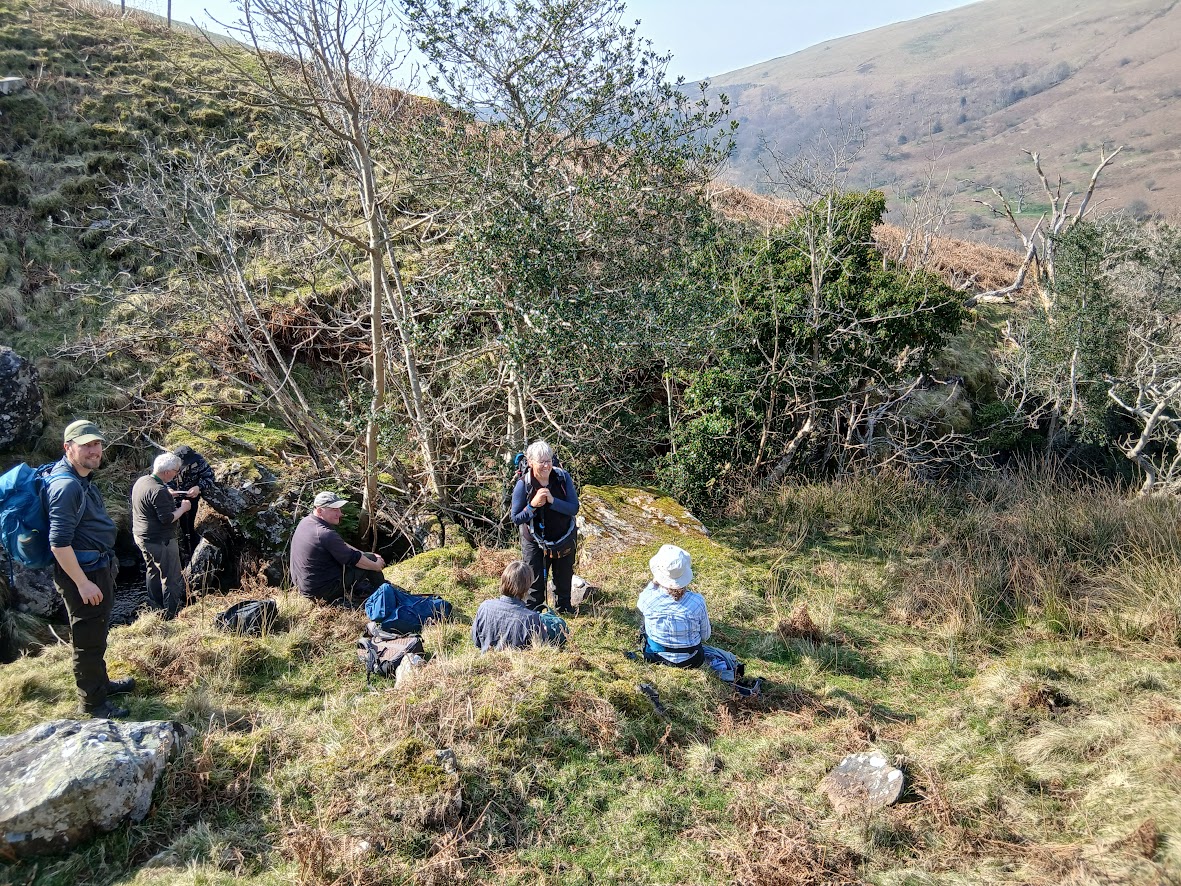
Tempted perhaps by the sunny weather, quite a sizeable group gathered at the parking area by the cattle grid (SD 63784 82516) just below Barbon Low Fell. The bryophyte group was planning to look at the lower slopes of the fell, where there are a few gills and flushes coming down, maybe getting as far round as the waterfalls above the wooden footbridge. Although the first monad (SD6482) already had 49 records, mainly from Tom Blockeel who visited in 2014, these seemed to be from down in the valley and didn’t include some Atlantic species that I had found on a previous fleeting visit. The waterfall monad surprisingly only had one record.
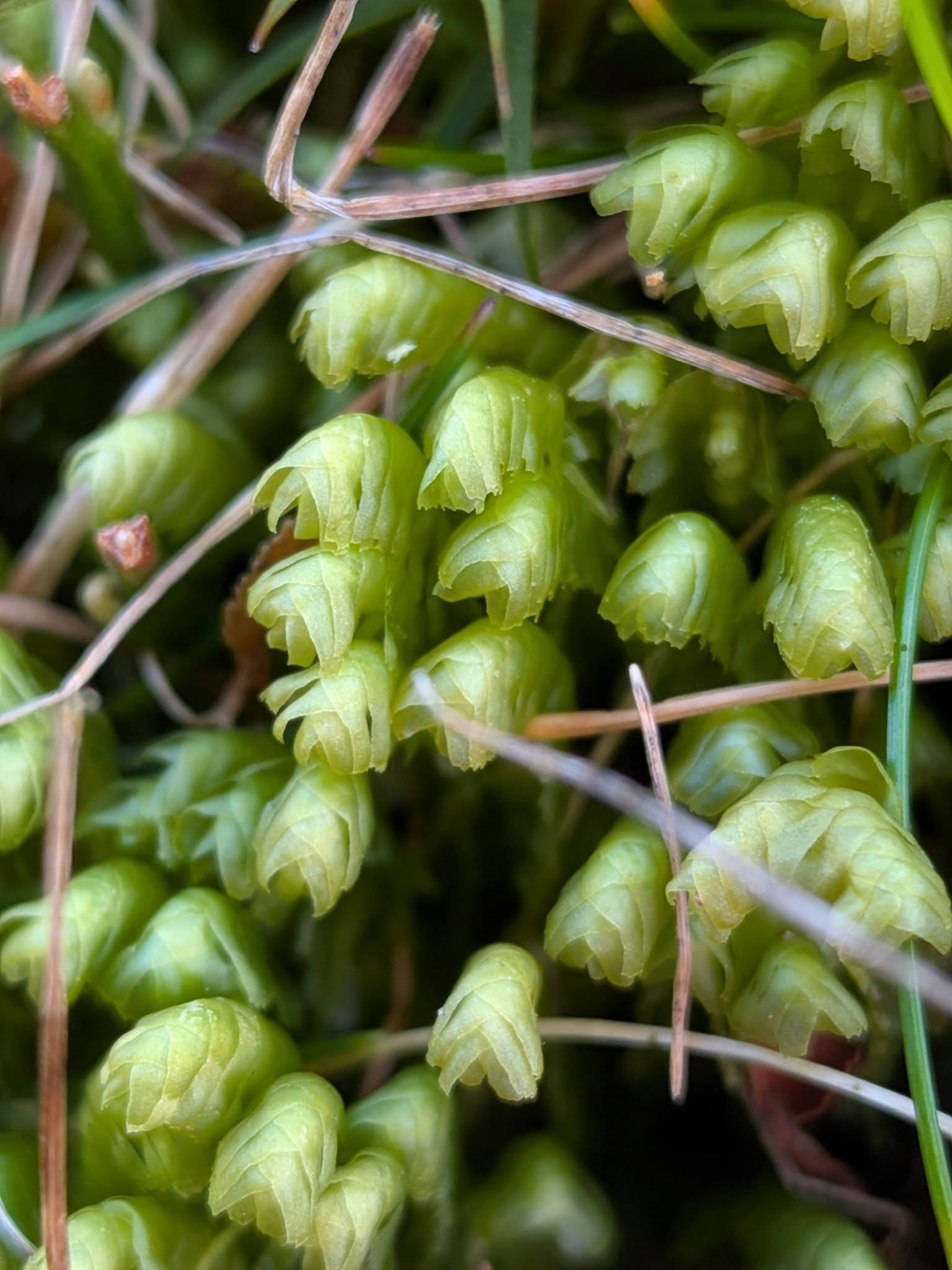
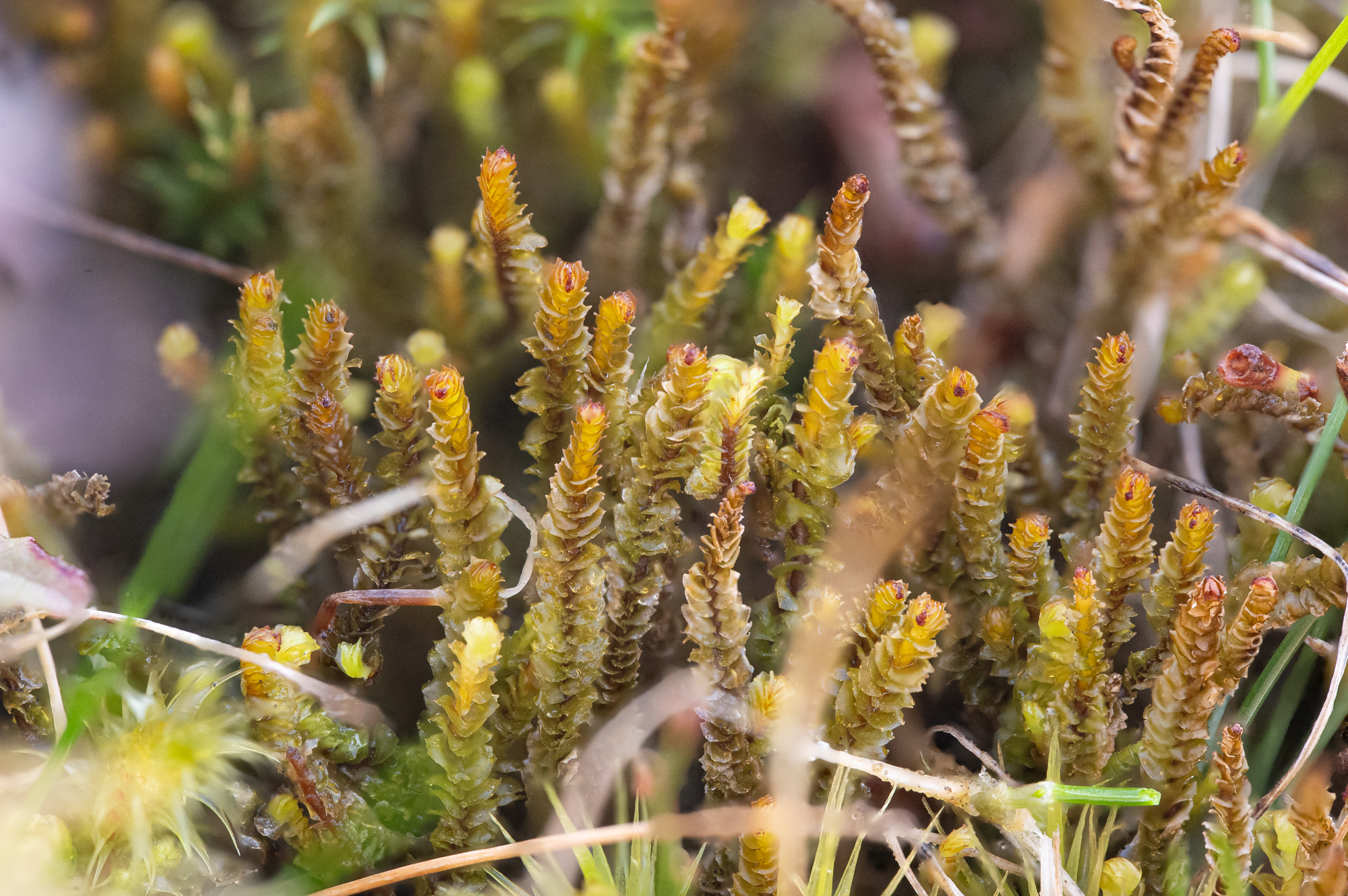
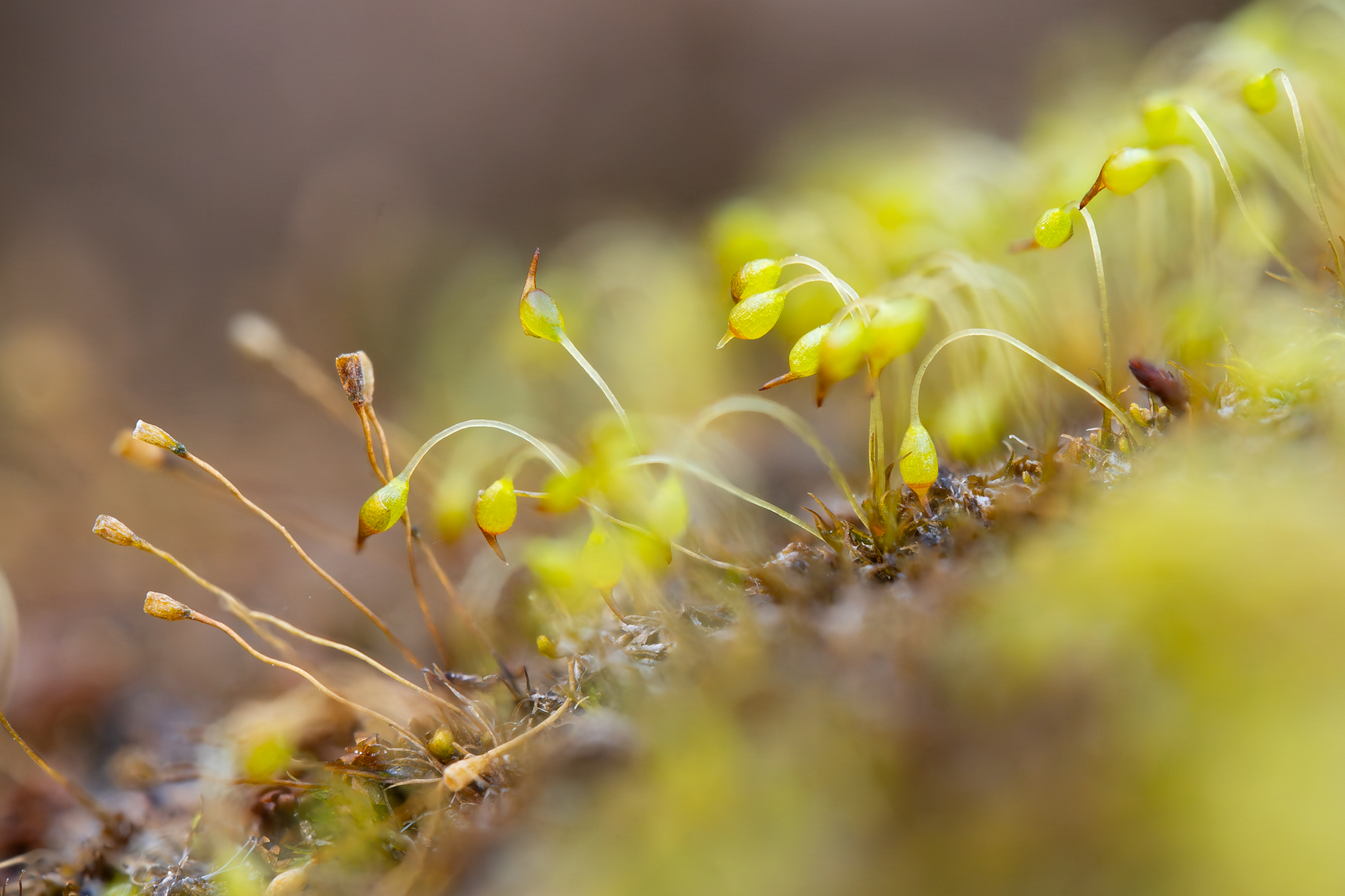
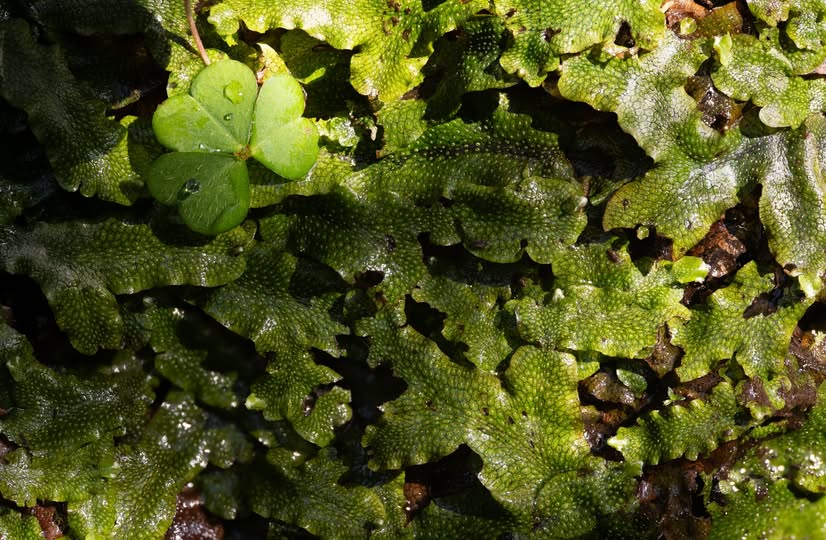
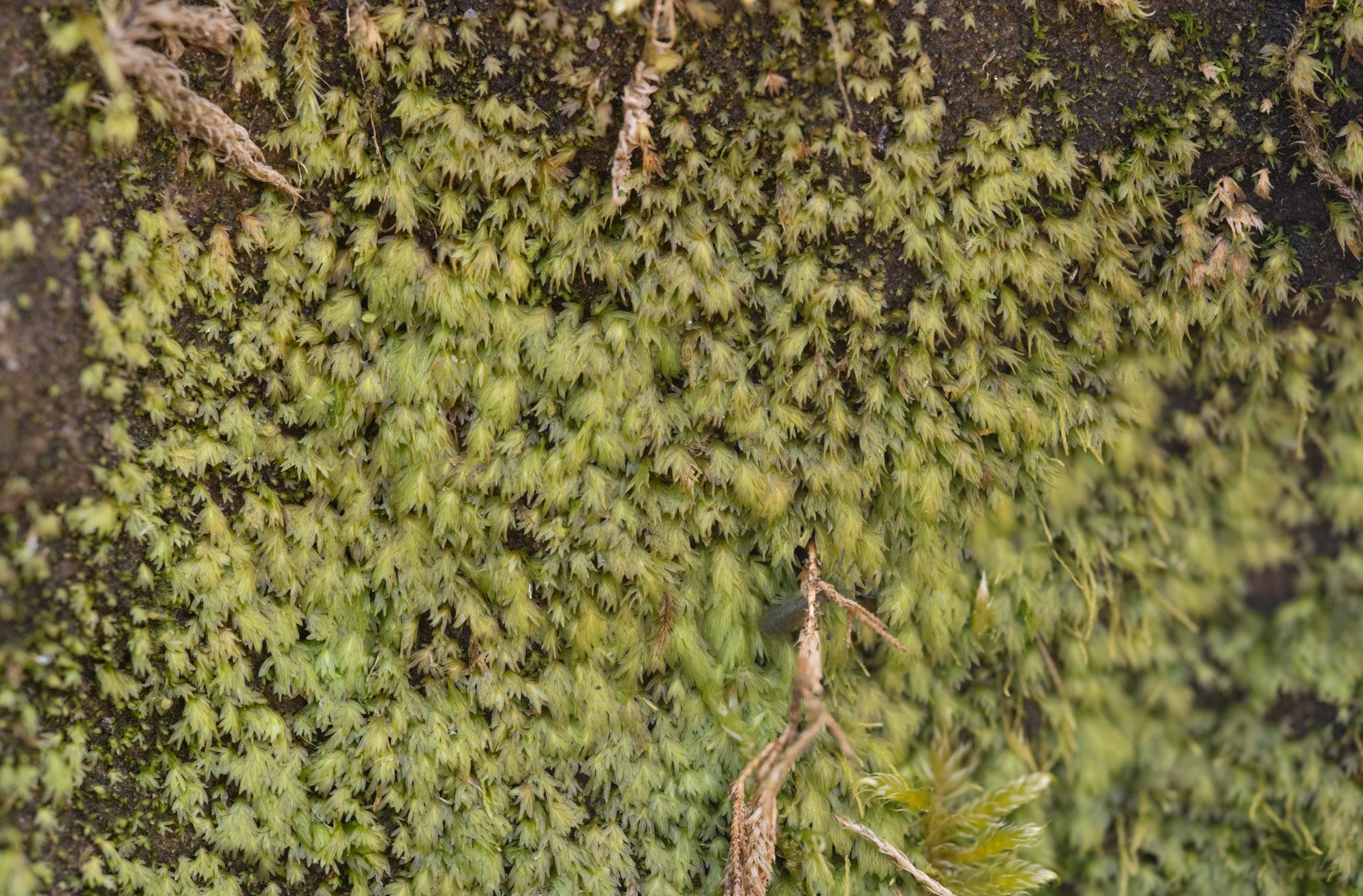
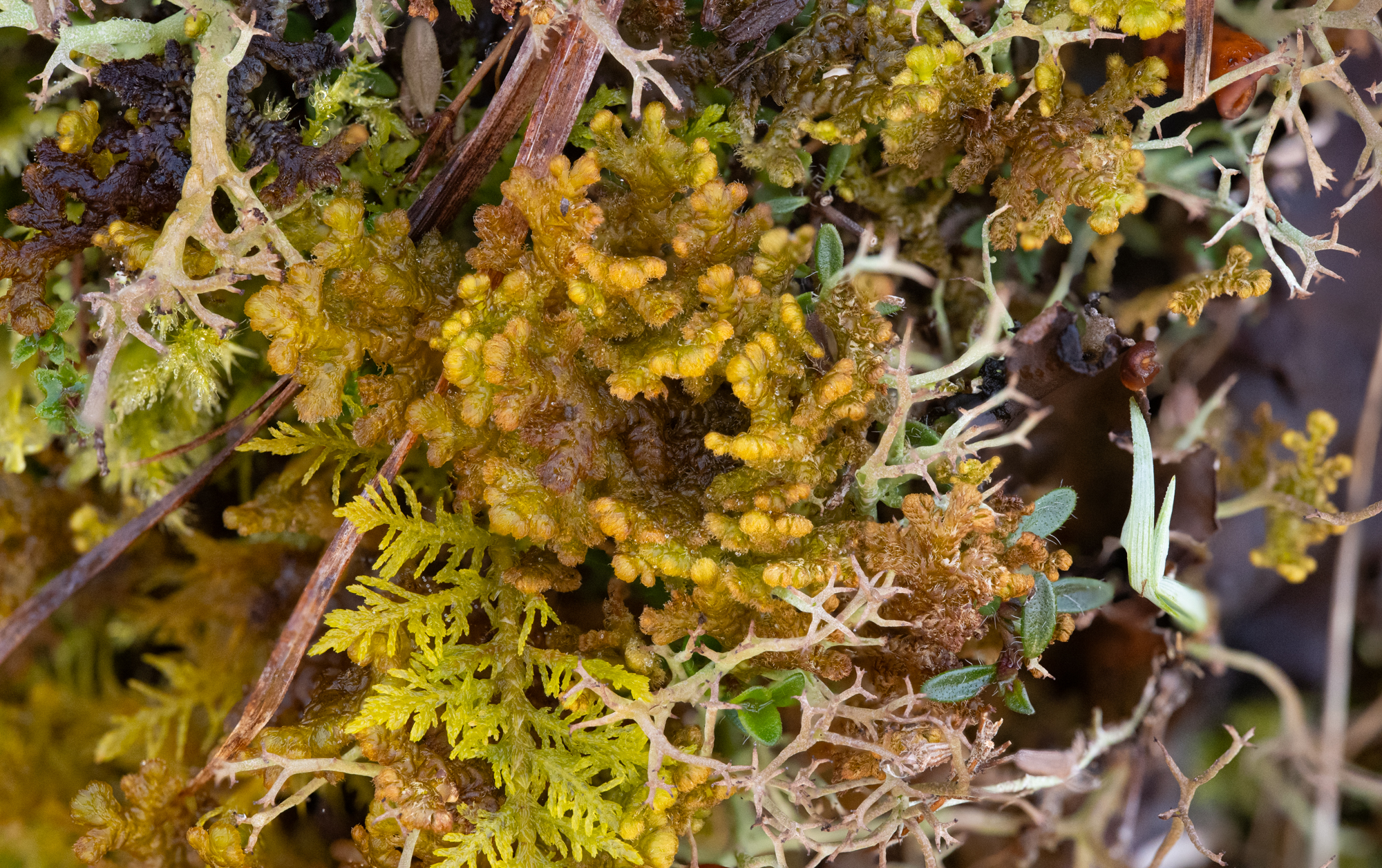
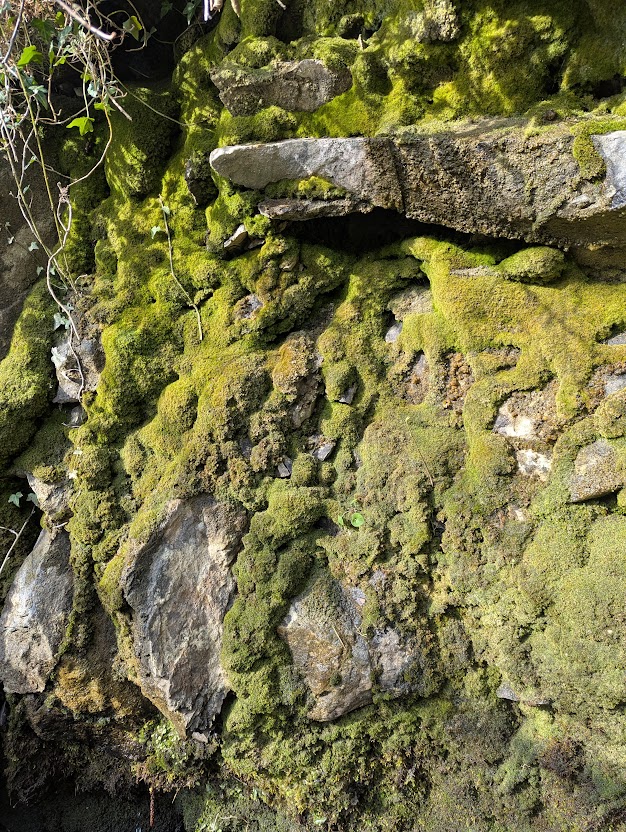
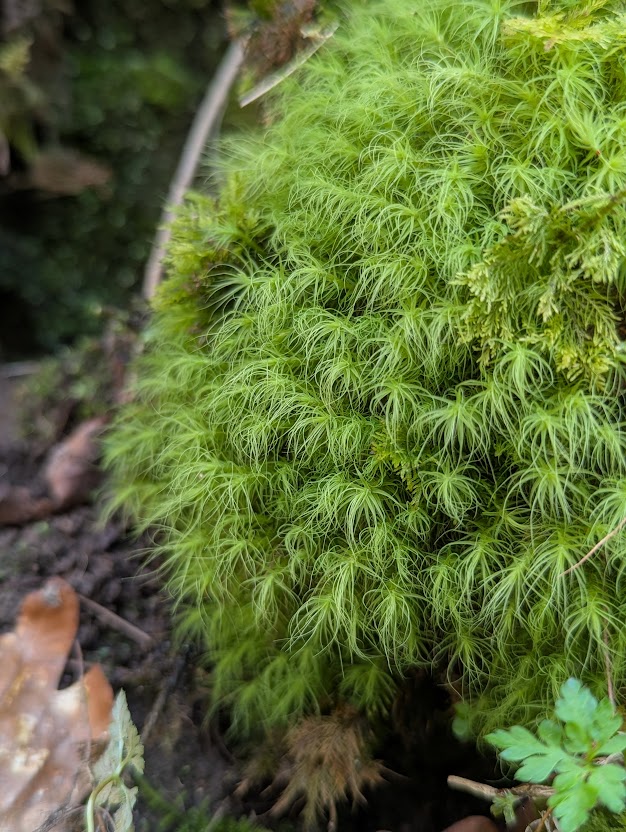
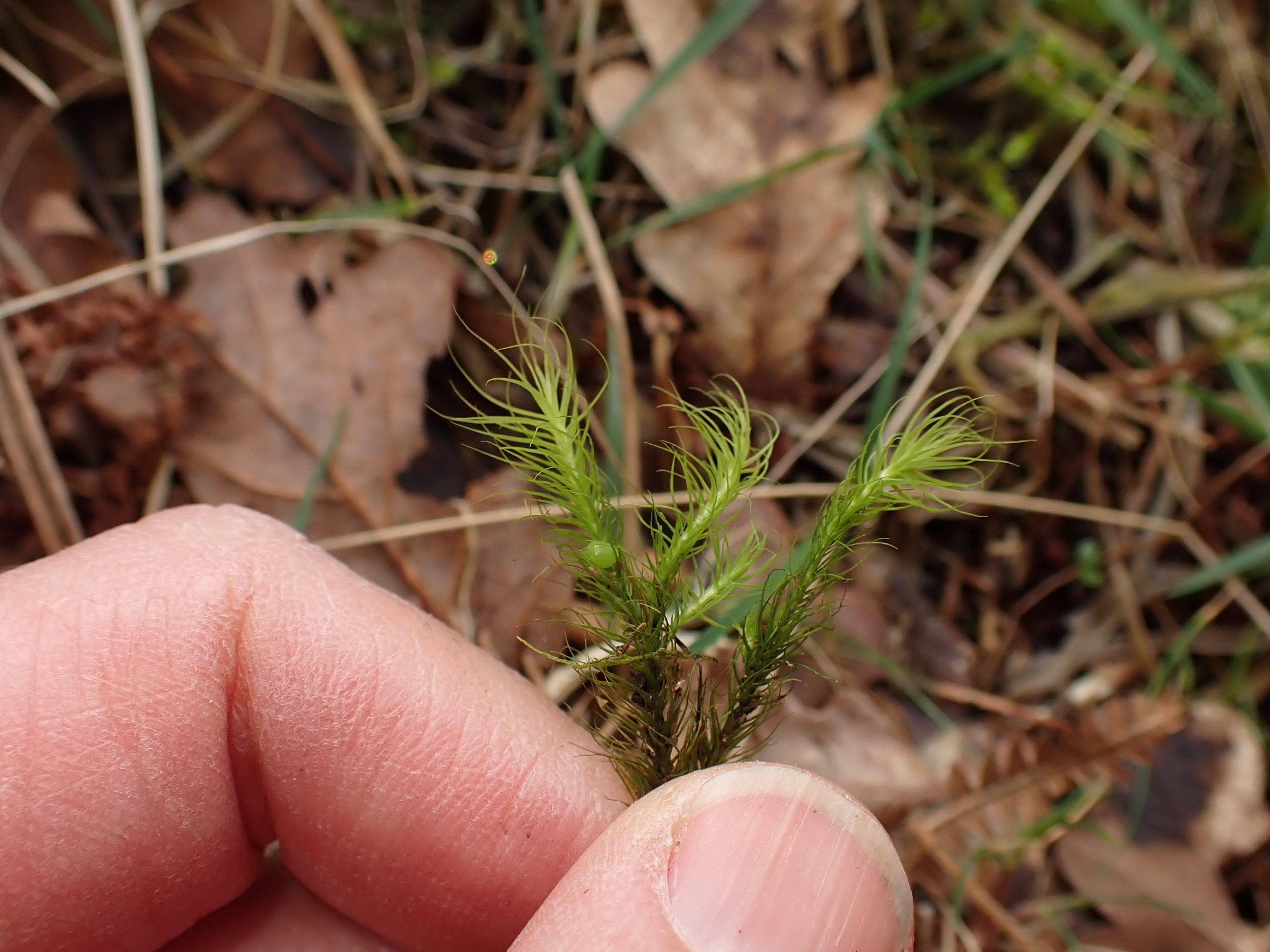
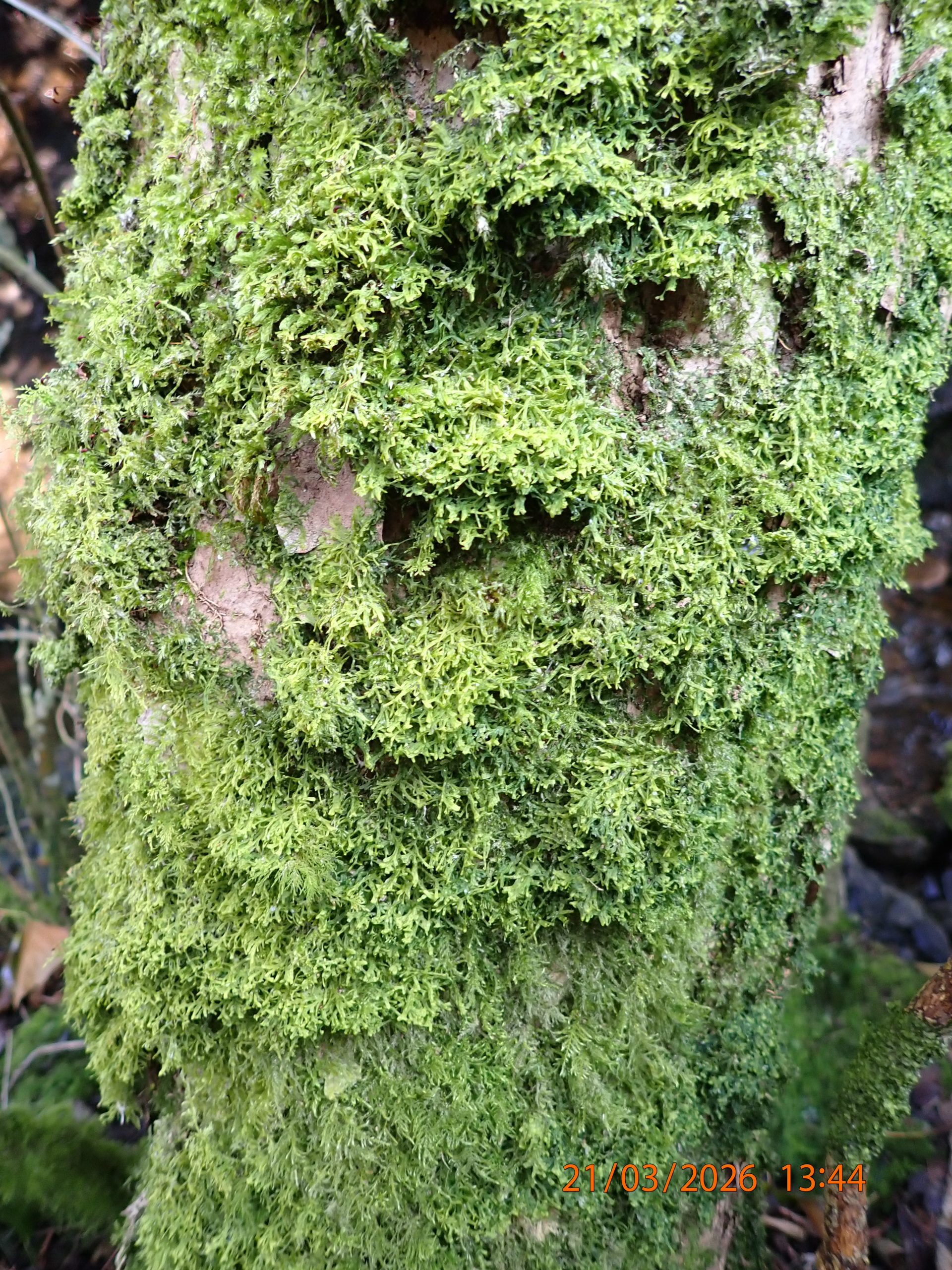
Heading up a small track from the parking area we noted the Pleuridium subulatum on the bare soil bank to one side. There were plenty of common mosses to point out as we headed across the slope through old bracken, and we soon came out into more promising territory, with humps of Sphagnum and moss-covered rocks. Sphagnum capillifolium, S. fallax, S. girgensohnii, S. palustre, S. russowii, S. squarrosum, S. subnitens were recorded in this monad. In flushes Scorpidium cossonii, Campylium stellatum, Brachythecium rivulare and Philonotis fontana were spotted. A boulder had a fine cushion of Orthocaulis atlanticus, with shoot tips just becoming gemmiferous, and non-gemmiferous O. floerkei was also found. Ptilidium ciliare was found on rocks in several places and was much admired! We eventually found the section of slope where mounds of Sphagnum sheltered some Atlantic species unusual in this moorland habitat: Bazzania trilobata was growing happily and there were several patches of Anastrepta orcadensis, also looking healthy and fairly abundant, growing in the shade provided by the Sphagnum humps. Some of us headed down to the road, for an easier walk round to where some bigger gills came down the hillside. We picked up a few epiphytes here on trees by the road: Orthotrichum diaphanum and O. pulchellum, Lewinskya affinis, Ulota crispa and Pulvigera lyellii, whilst the wall had Grimmia pulvinata, Neckera complanata and Homalothecium sericeum. A patch of Fontinalis antipyretica was spotted in a small ditch by the road and Roger found Cinclidotus fontinaloides in a gill. Paul found Mesoptychia bantriensis growing in a flush high on the slope among Palustriella commutata and Campylium stellatum.
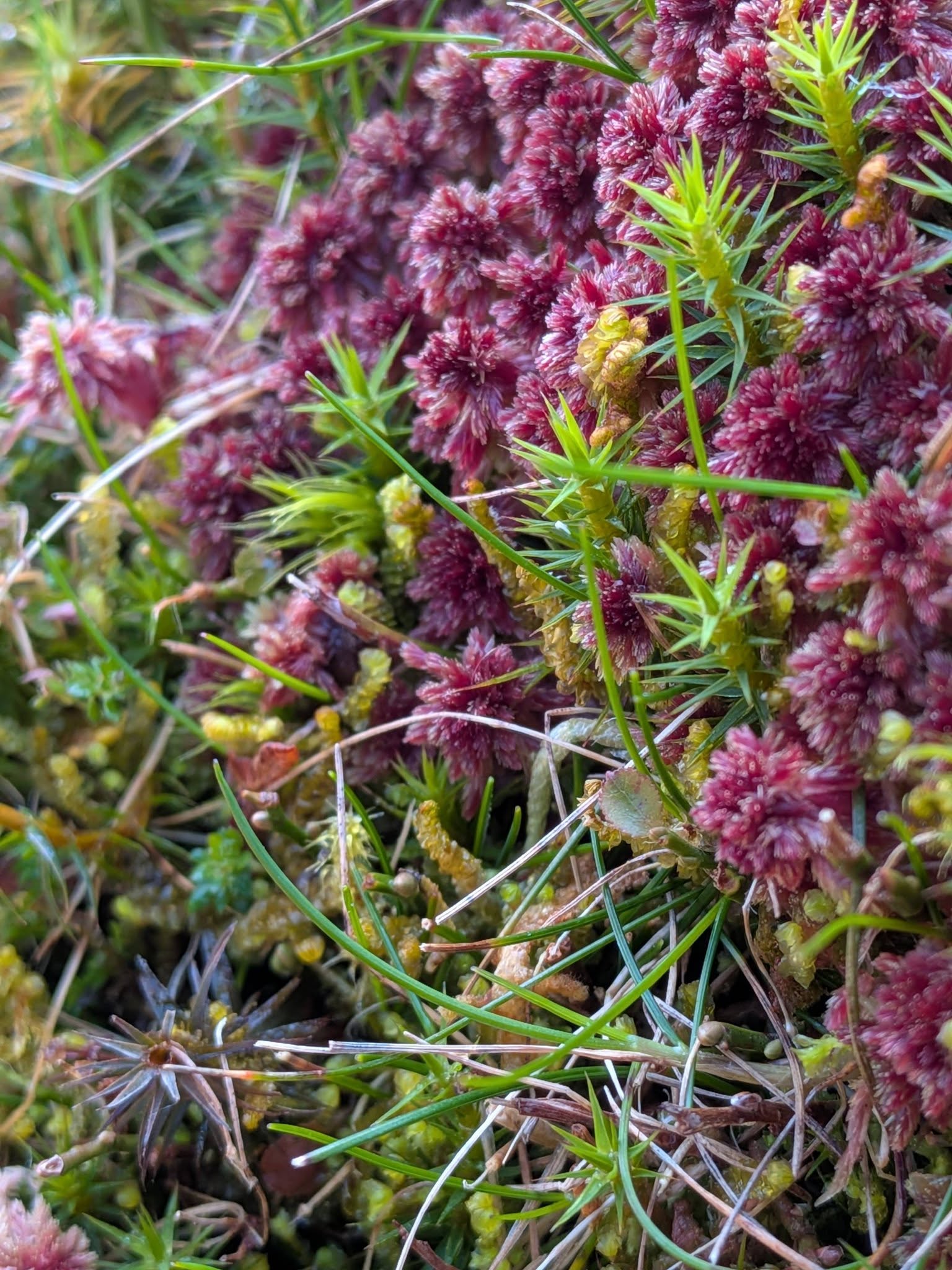
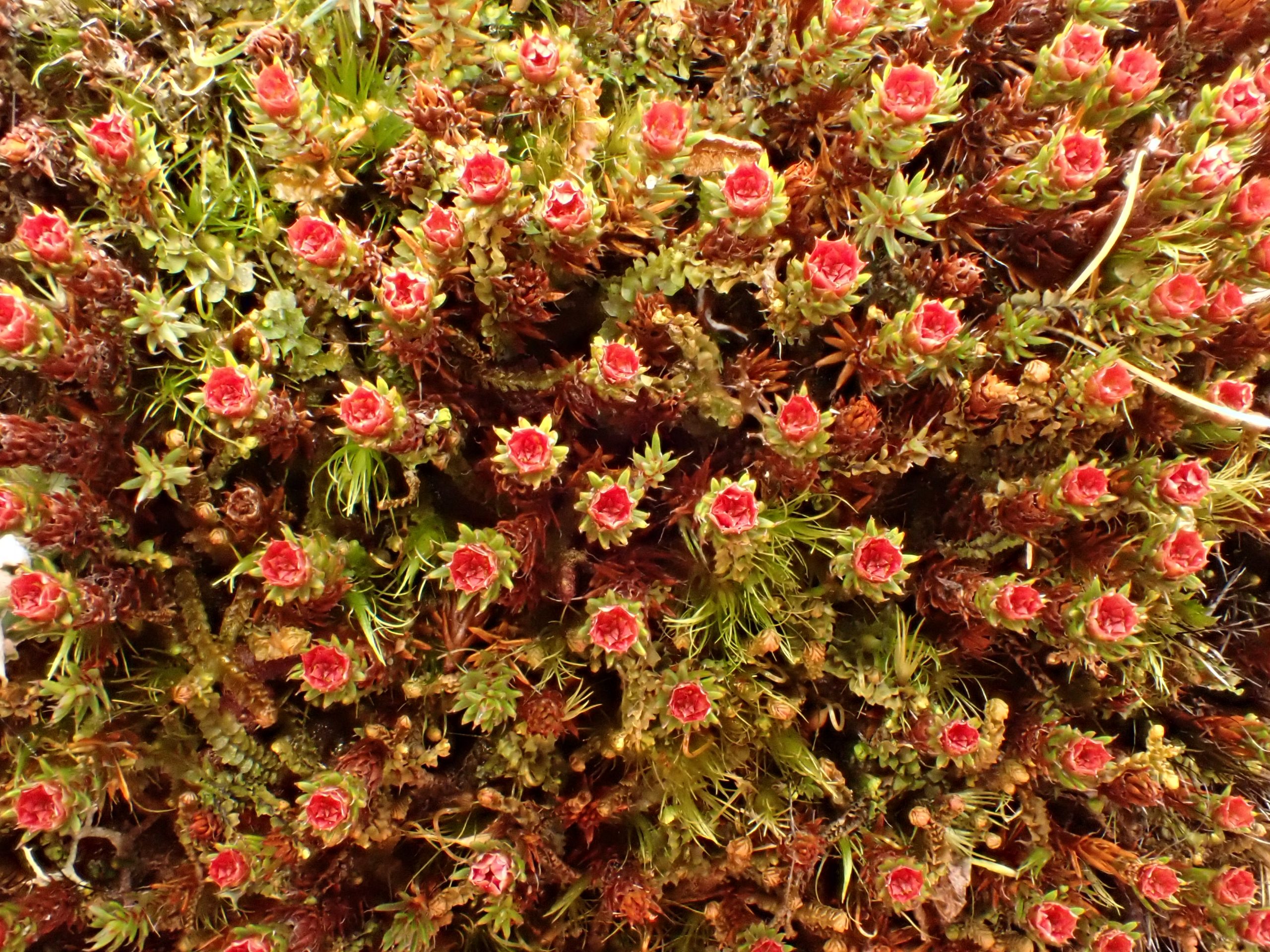
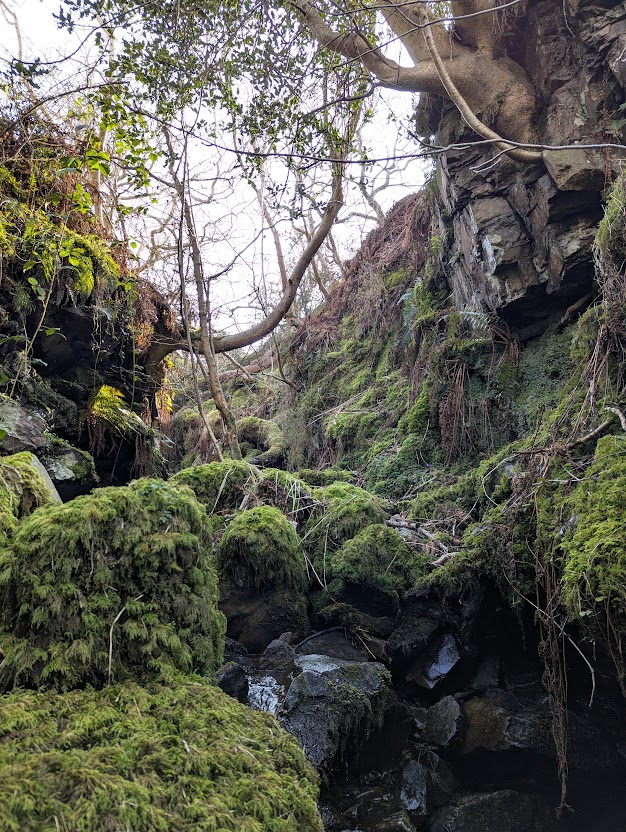
As we came into the new monad we headed back up the hill towards some larger gills with trees. There was plenty of Breutelia chrysocoma on this slope, and Sphagnum tenullum and S. teres were found, along with Straminergon stramineum. The first gill was steep, and trees and rocks were covered in Meztgeria conjugata. There was some spindly-looking Plagiochila spinulosa and a wet rock wall had some very gunky but fertile Jungermannia atrovirens. Amphidium mougeotii was fairly abundant. Kerry found Cephalozia curvifolia and Riccardia palmata on a dead log. Coming out at the top of the gill, we stopped for lunch and Roger spotted a nice patch of Blindiadelphus recurvatus on the rock. A specimen of Racomitrium was taken away for checking – though looking very like R. fasciculare it turned out to be R. obtusum. Then we moved on to Blind Beck, in a gill with the waterfalls. Some of us had a wander around the hillside at the top of the gill where there were quite sizeable stretches of flat limestone with nice fruiting Andreaea Rothii, dark red Bryum alpinum and Polytrichum piliferum with bright red male inflorescences. Kerry also found Mylia taylorii here with Sphagnum compactum. In the beck, Schistidium rivulare was growing with Racomitrium aciculare, and there was some Hyocomium armoricum. Lower down the beck Andy was excited with finds in a steeper part of the gill. A good cushion of the larger Bartramia halleriana was growing on a ledge, with some fresh capsules at the base of the shoots. As well as Amphidium mougeotii there was Anoectangium aestivum and Eucladium verticillatum, and Paul found some Mesoptychia turbinata growing among the cushions of tufa moss. A better example of Plagiochila spinulosa was found on a steep bank above the bridge.
The afternoon was wearing on and, feeling that we had explored this part of the fell quite thoroughly, we headed back up the road to the cars. After everybody had checked their specimens we had 99 species in the first monad and 137 in the second, with a total of 168 species across the site – quite a record. As an added bonus it had been a lovely sunny day in a very pleasant site.
Text: Clare Shaw
Photos: Paul Ross, Josie Niemira, Peter Bullard, Clare Shaw