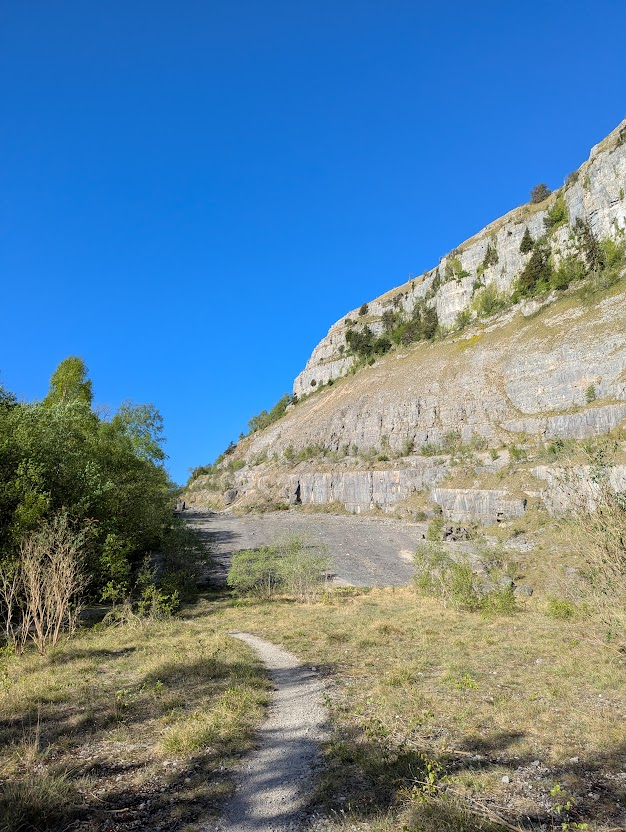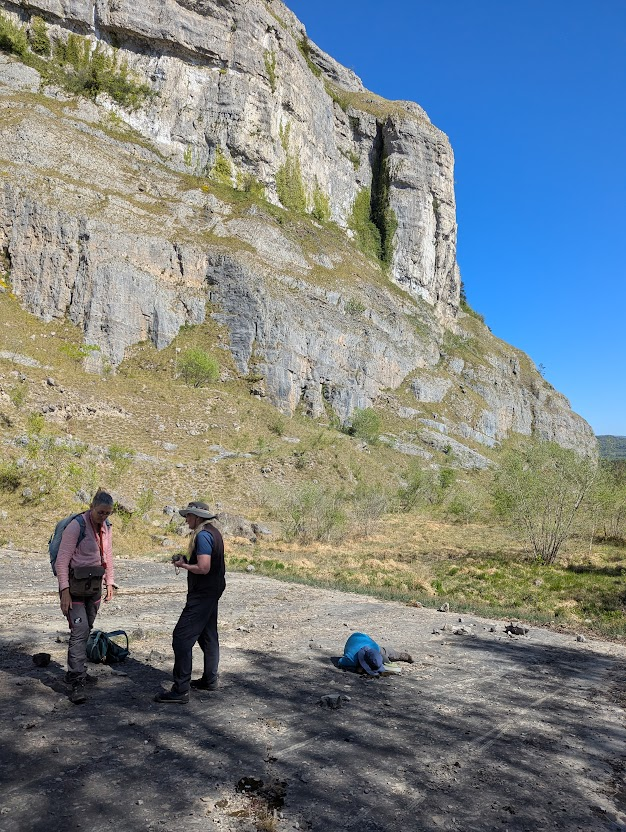
In April, a small group met on a sunny Thursday morning to visit Whitbarrow National Nature Reserve. The site is famous for its limestone crags and unique calcareous species assemblage, but relatively few records are present around the quarry based at the very southern end of the crag, and we set out with this area as our focus for the day.
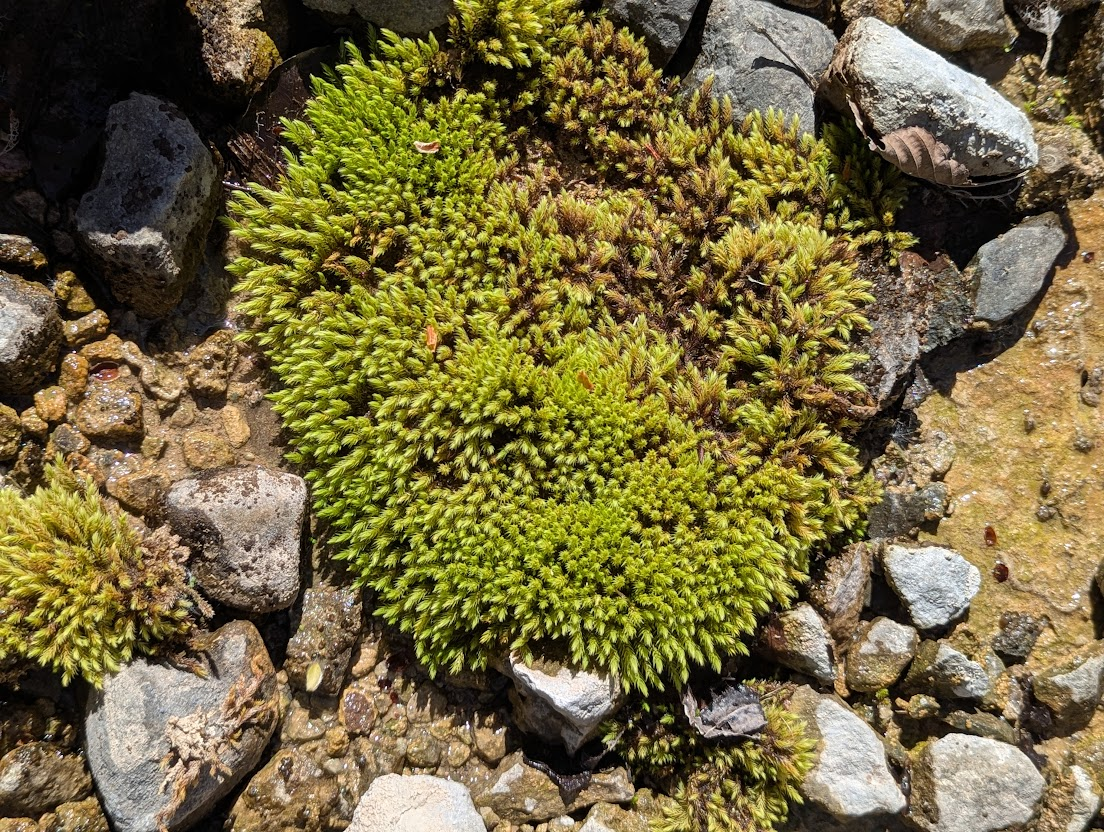
The morning was spent working our way up the path from the car park to the quarry, with regular stops to examine the multiple flushes and seeps that ran along the valley floor as we went. Considering the extremely dry nature of the day, these acted as momentary respites from crispy samples and futile spray bottle identification attempts. Luckily, an interesting species assemblage appeared in these flushes, with regular discoveries of common species such as Ctenidium molluscum, Calliergonella cuspidata, and Bryum pseudotriquetrum, and more specialist base-influenced species such as Palustriella falcata and Cratoneuron filicinum also appearing within the damp bryophyte layer. Tucked within these were nice examples of waxy Aneura pinguis and pale green Mesoptychia badensis, and a nice find of Tortella densa, growing somewhat unusually in a flush (later confirmed microscopically)! By the time we made it to the flat quarry floor, samples were scarce and very dried up for identification attempts. However, some colonies were holding on around shrubs and hollows, and recognisable species such as Flexitrichum gracile and both common Homalotheciums, H. lutescens and H. sericeum were recorded. There were some tufa mosses around the wet flushes, mainly Gymnostomum aeruginosum but also some Eucladium verticillatum.
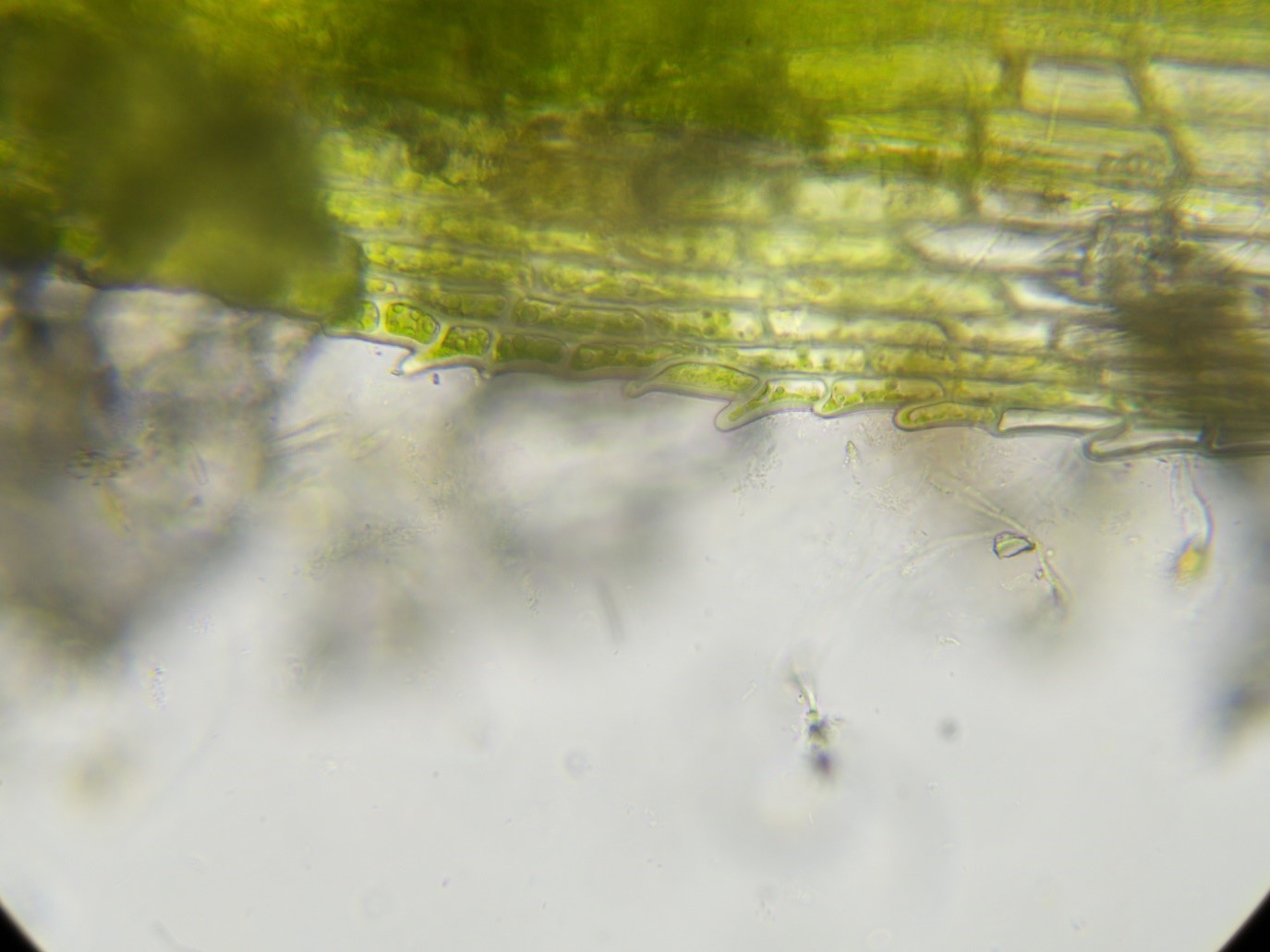
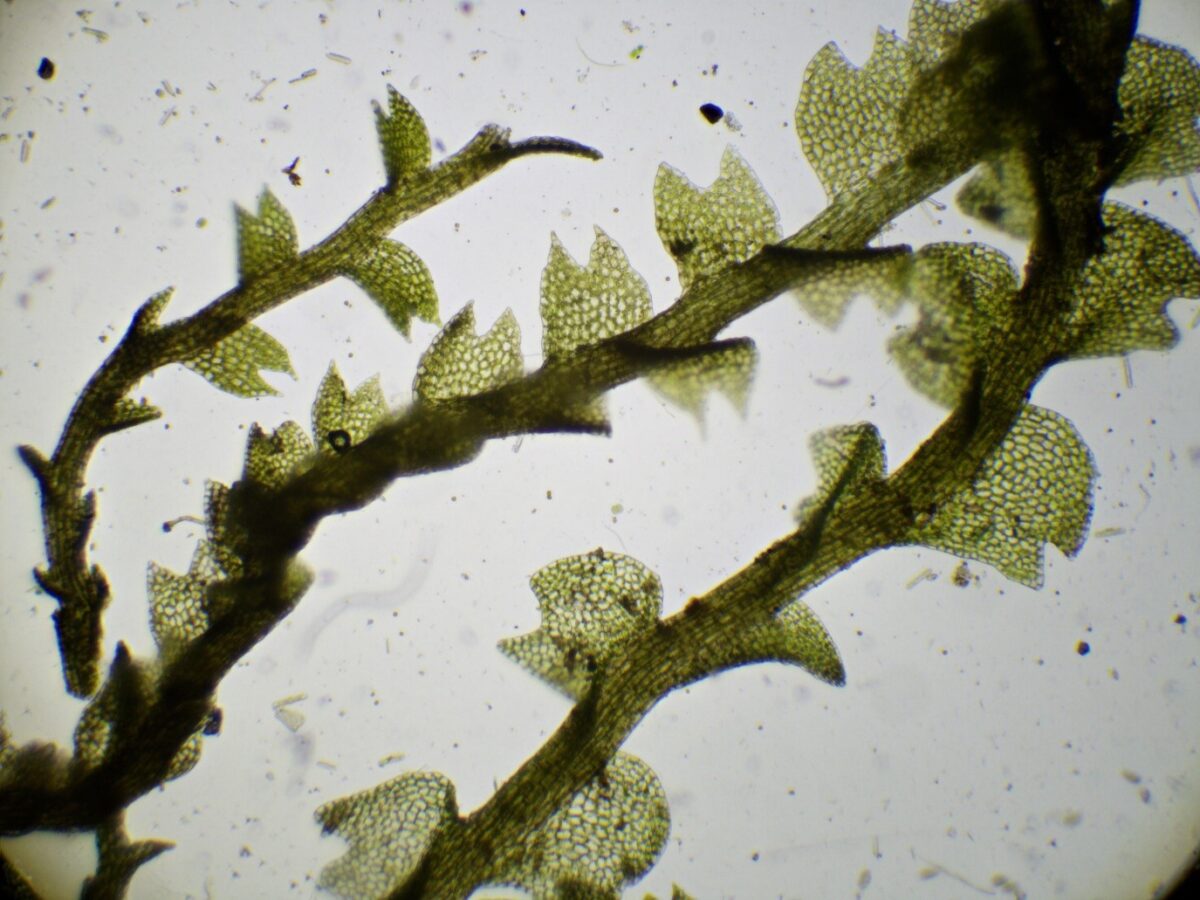
The quarry retains its very own microclimate, and the group moved into the woods to escape the rising heat of the day (even in April!). The woods represented a traditional limestone species assemblage, with generalists such as Isothecium myosuroides and Kindbergia praelonga recorded alongside classic calcareous woodland inhabitants like Neckera complanata, Porella platyphylla, and Thamnobryum alopecurum. Some Microeurynchium pumilum was also found, and a scrappy Oxyrrhynchium that later turned out to be Oxyrrhynchium schleicheri, with twisted leaf tips and narrower cells than O. hians. While in the cover of the woodland, we heard a dramatic sounding rockfall occurring in the quarry, highlighting the active nature of the cliffs and a reminder that health and safety practices are not just advisory at sites like these! From here, we rejoined the Lichen group (of two) for lunch and watched the Peregrines and Ravens nesting on the cliffs and crags.
For the afternoon, we took an exploratory walk along the footpath out of the western end of the quarry to see if there was much habitat variation to be found. While some interesting outcrops were inspected along the way, it was decided that we might have a better chance at the monad by the car park instead, as much more water was present here. So, we headed back down to the quarry entrance in hopes of some damper ground.
Throughout the day, there had been much detailed inspection and debate around the presence of Philonotis calcarea, a species largely expected to appear in the damper areas of the quarry – but easily confused with suspiciously large-growing Philnotis fontana. As we returned to the car park, the last flush presented with a good opportunity to thoroughly search for specimens that matched the field characteristics of P. calcarea. Individuals with clearly pointed leaves all falling to one side of the stem were taken away for further microscopic identification and confirmed by Clare after the visit.
Despite the botanical and bryological richness of the site, the dry weather led to only 49 species recorded. This is, however, still an improvement on the current records and will contribute to the landowner’s understanding of how to continue their management for conservation. During our visit we noted many non-native and invasive species present, as well as scrubbing over of key bare-ground habitats, which will be passed on to the landowners for information. Thanks to everyone who braved the dry quarry floor, and we look forward to seeing you at the next one!
Text: Josie Niemira
Photos: Josie Niemira, Clare Shaw, Kerry Milligan