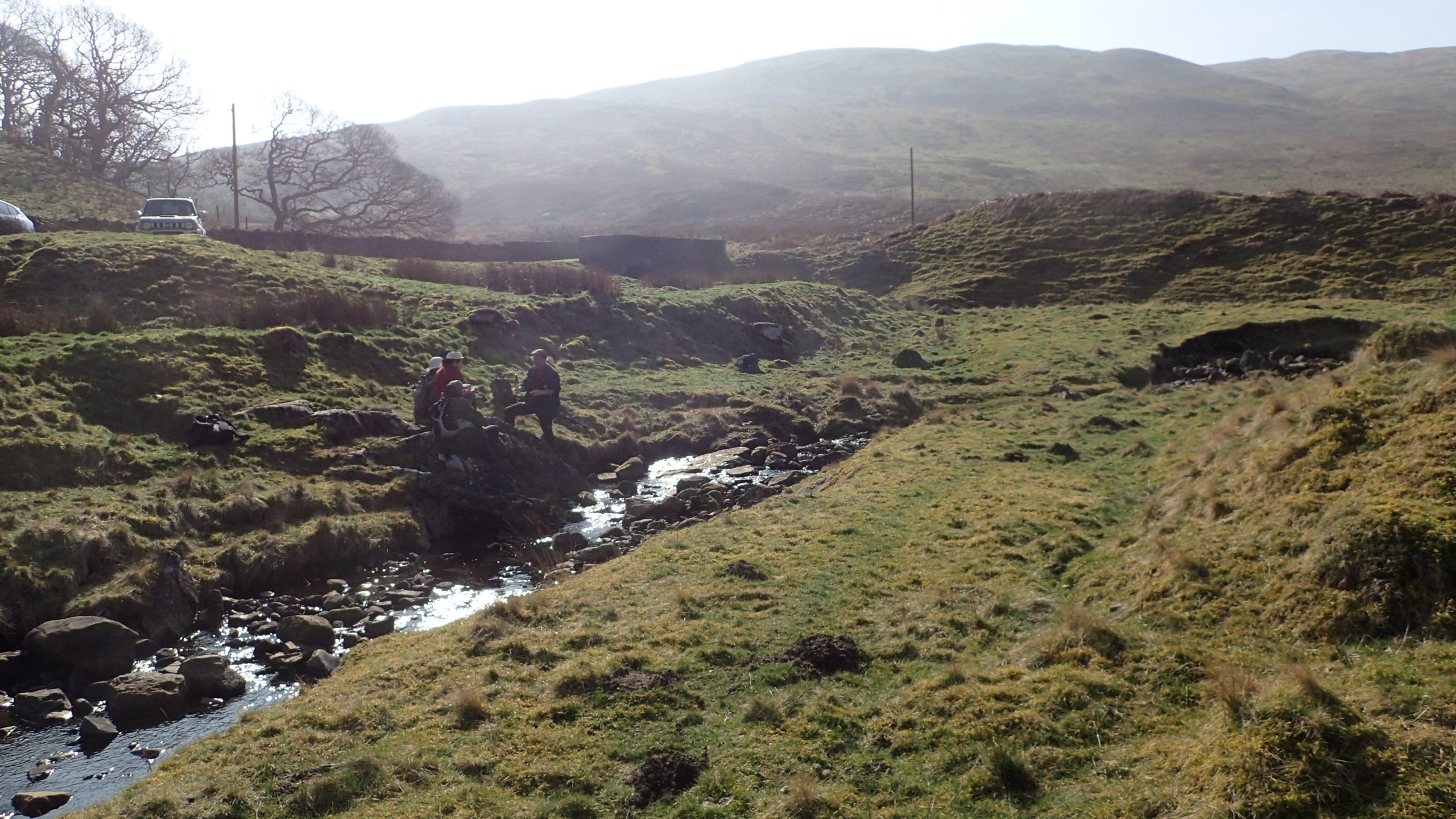
Barbondale is surprisingly little visited: if you don’t know it, you aren’t alone! You’ll find it on the map running between the Lune valley (just north of Kirkby Lonsdale) over to Dentdale (which some think the finest of the Yorkshire Dales, though these days it’s pretty much all in Cumbria). There’s a narrow road running up it, steep fellsides to north west and south east. The geology’s interesting: limestone to one side, Silurian stuff to the other; the Dent fault running up the valley bottom. The little gorges and waterfalls on the south east side were once described to me as “one of the hidden wonders of England”.
The lichen and bryophyte group gathered on a sunny and surprisingly warm morning where the roads from Casterton and Barbon meet. And, immediately, seven licheneers returned to our cars and drove up to Blindbeck Bridge. For us, the gill would be more interesting than the open fellside.
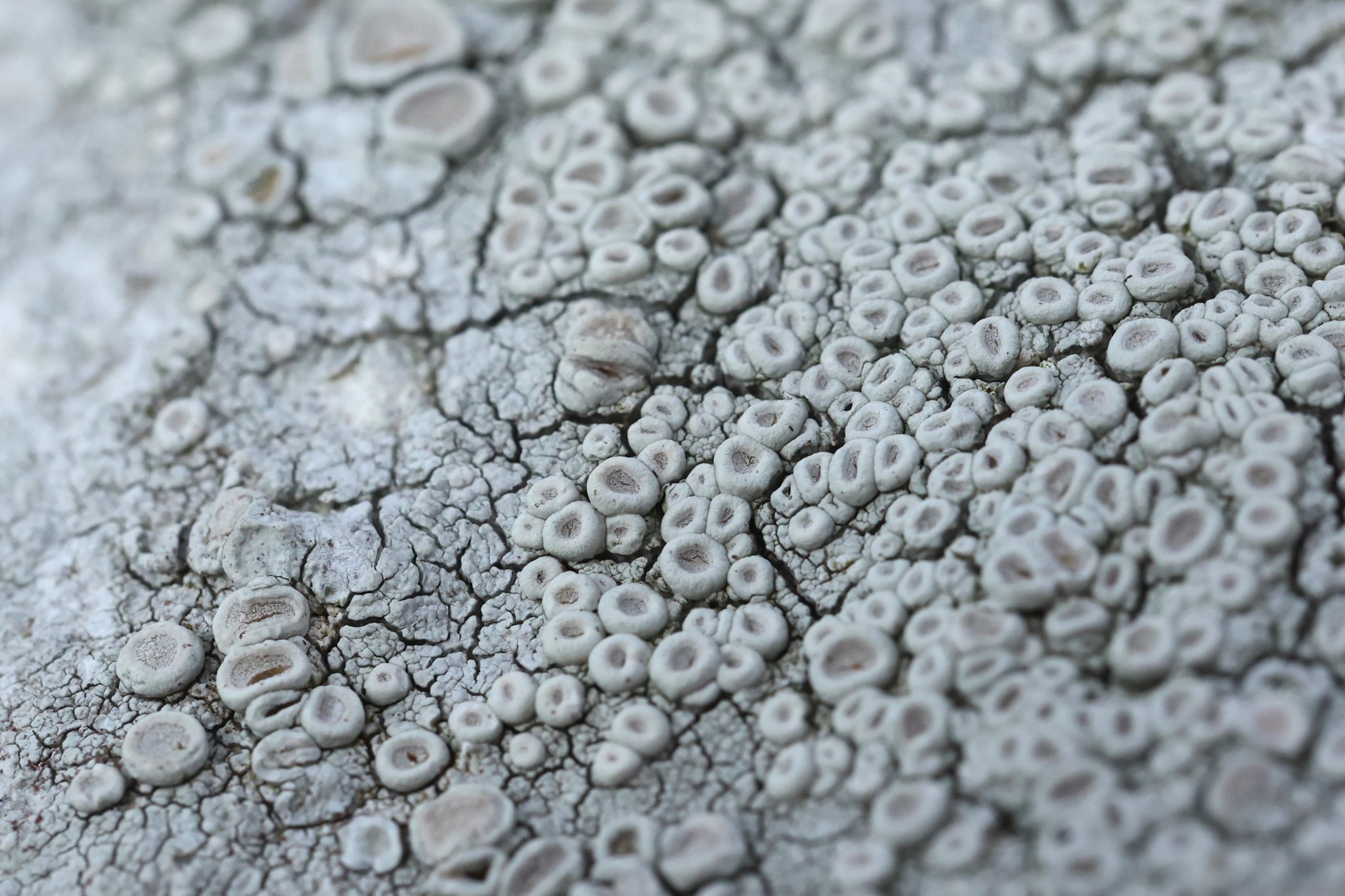
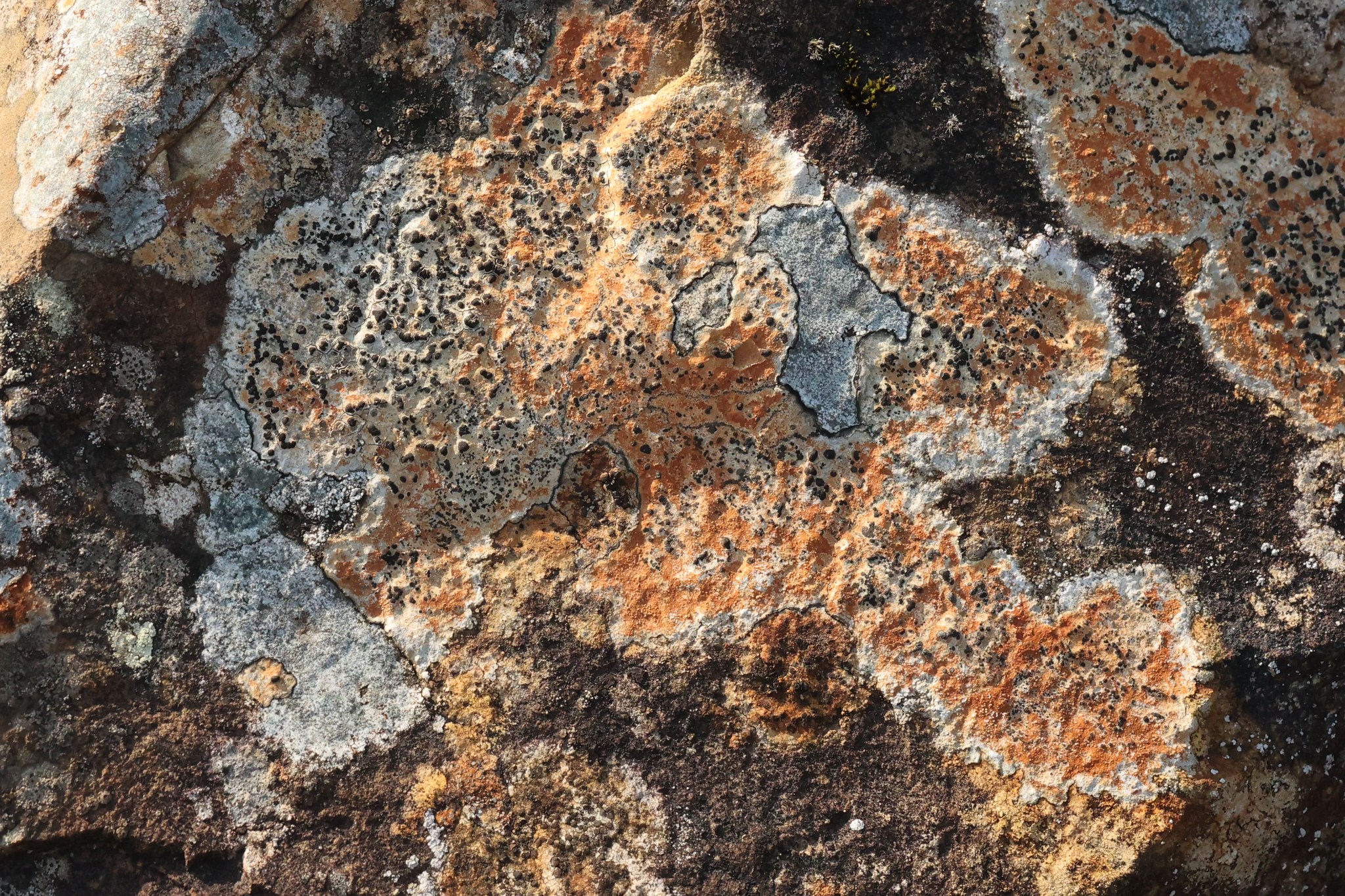
Heading down towards the junction of the gill and the main beck, a wheatear was sighted; Spring! And we found ourselves with a good starter selection of lichens. More acidic rocks had hi-vis yellow-green Rhizocarpon geographicum, brown leafy Melanelixia fuliginosa and the small sorediate thalli of Lecanora soralifera. The big frosty-pruinose apothecia of Ochrolechia parella were also to be found, perhaps indicating that some of the rocks aren’t that acidic.
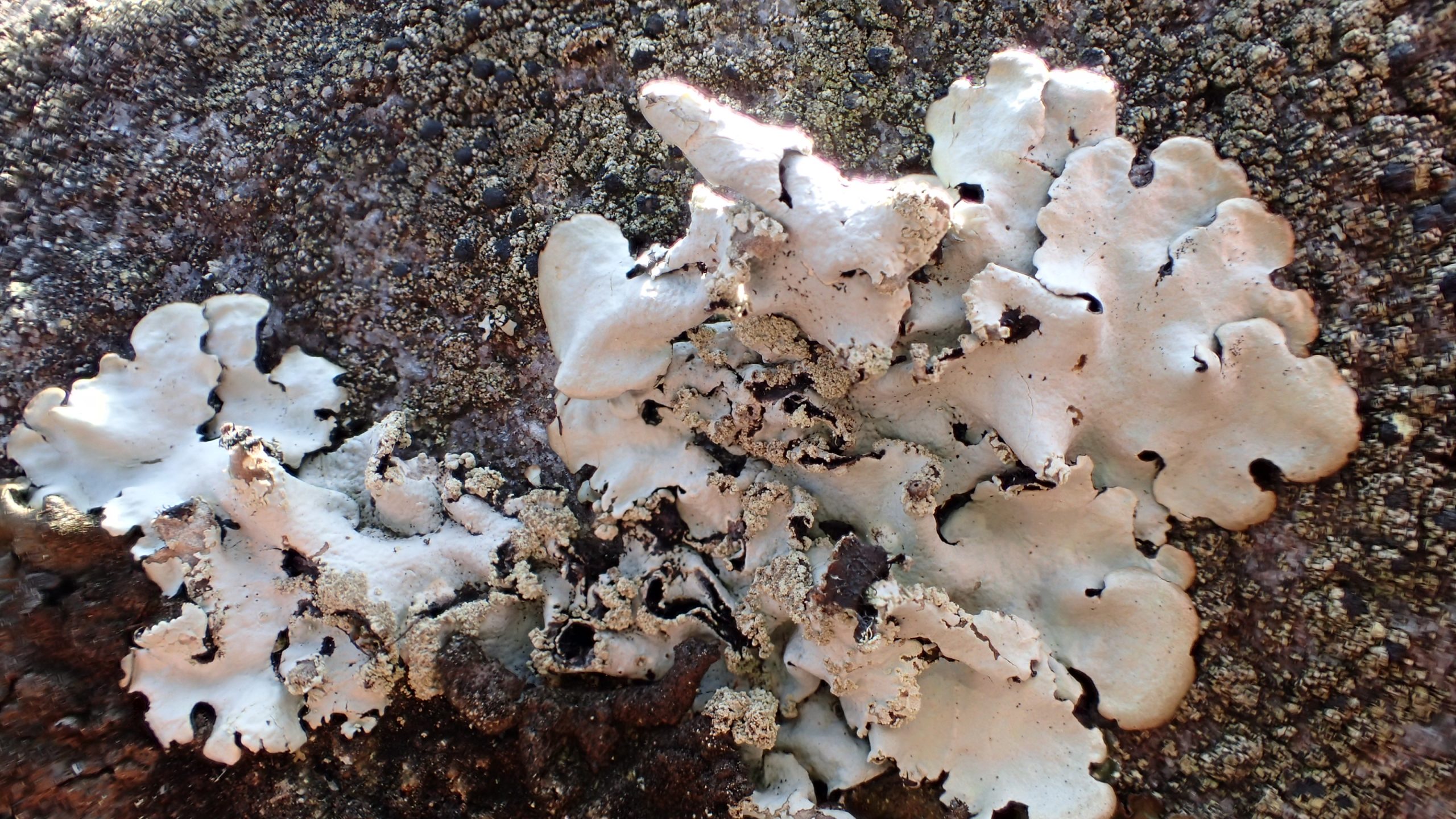
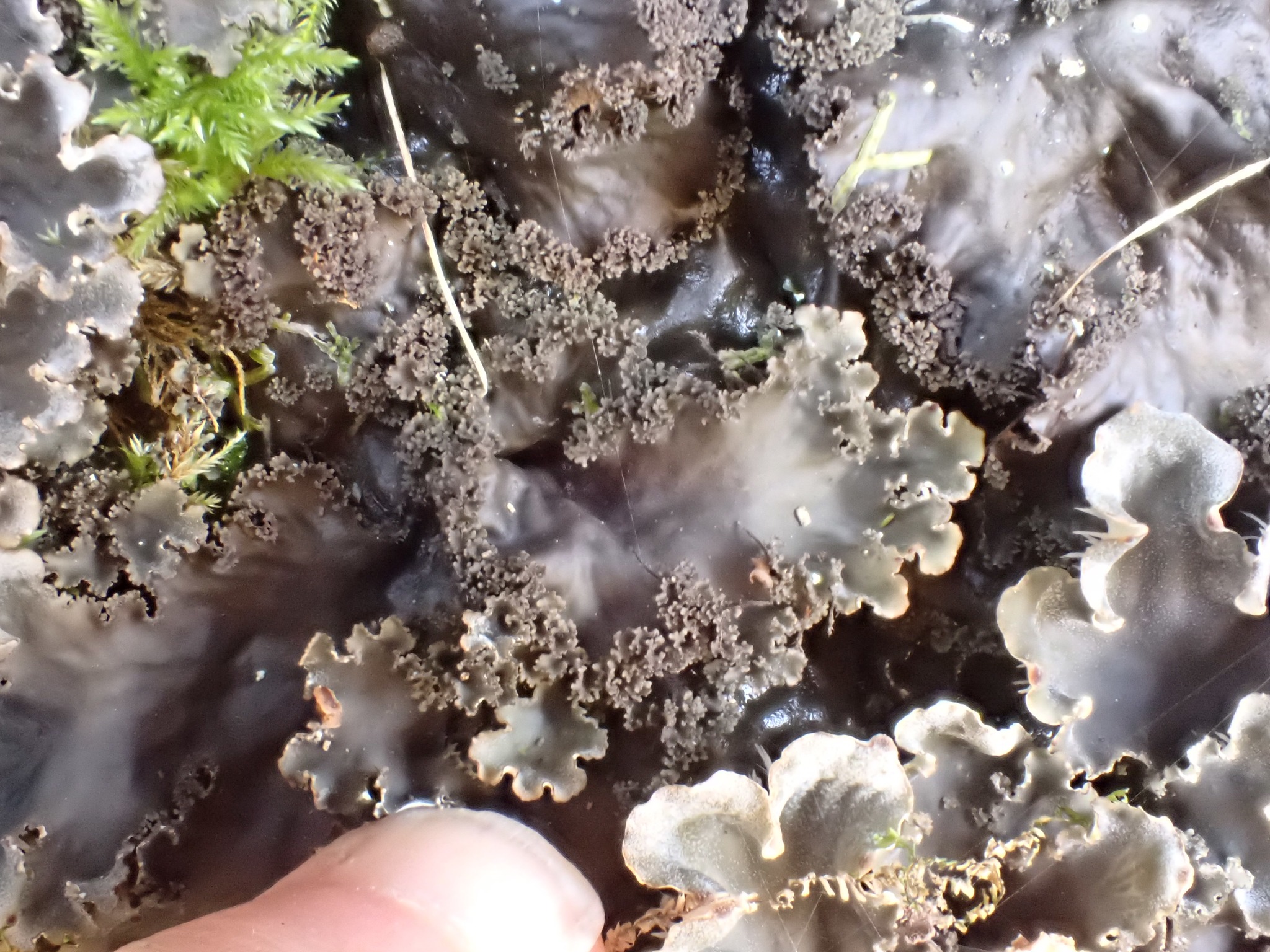
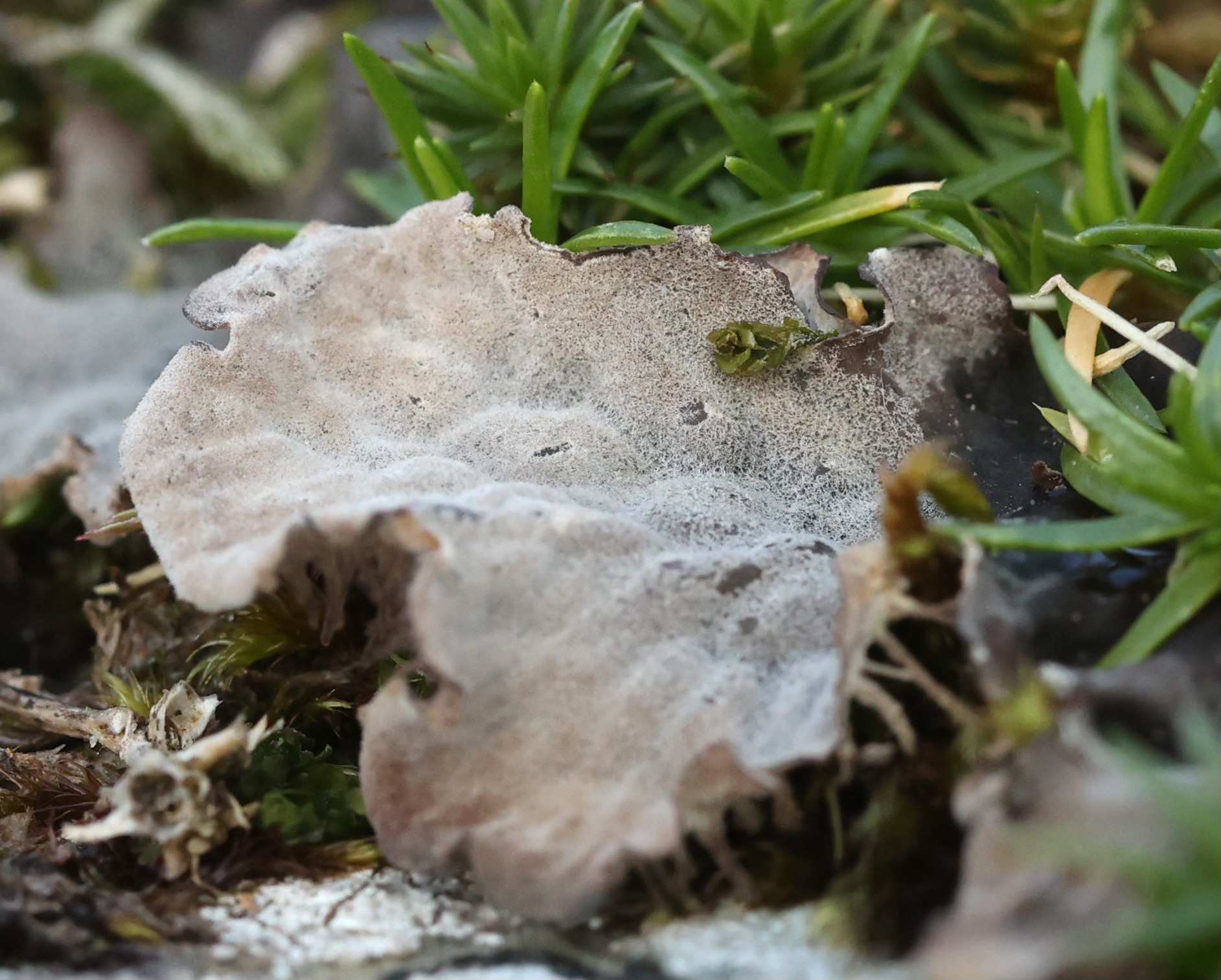
There were four species of Peltigera to be seen: praetextata with small scaly isidia; hymenina with glossy lobes and ascending margins, membranacea with a tomentum (“fuzz” on the upper surface), bullate (bulging) lobes, turned-down margins and long separate white rhizines. There was also the less common Peltigera canina, also with a tomentum and down turned tips but with rhizines that are much more branched and meet at their base.
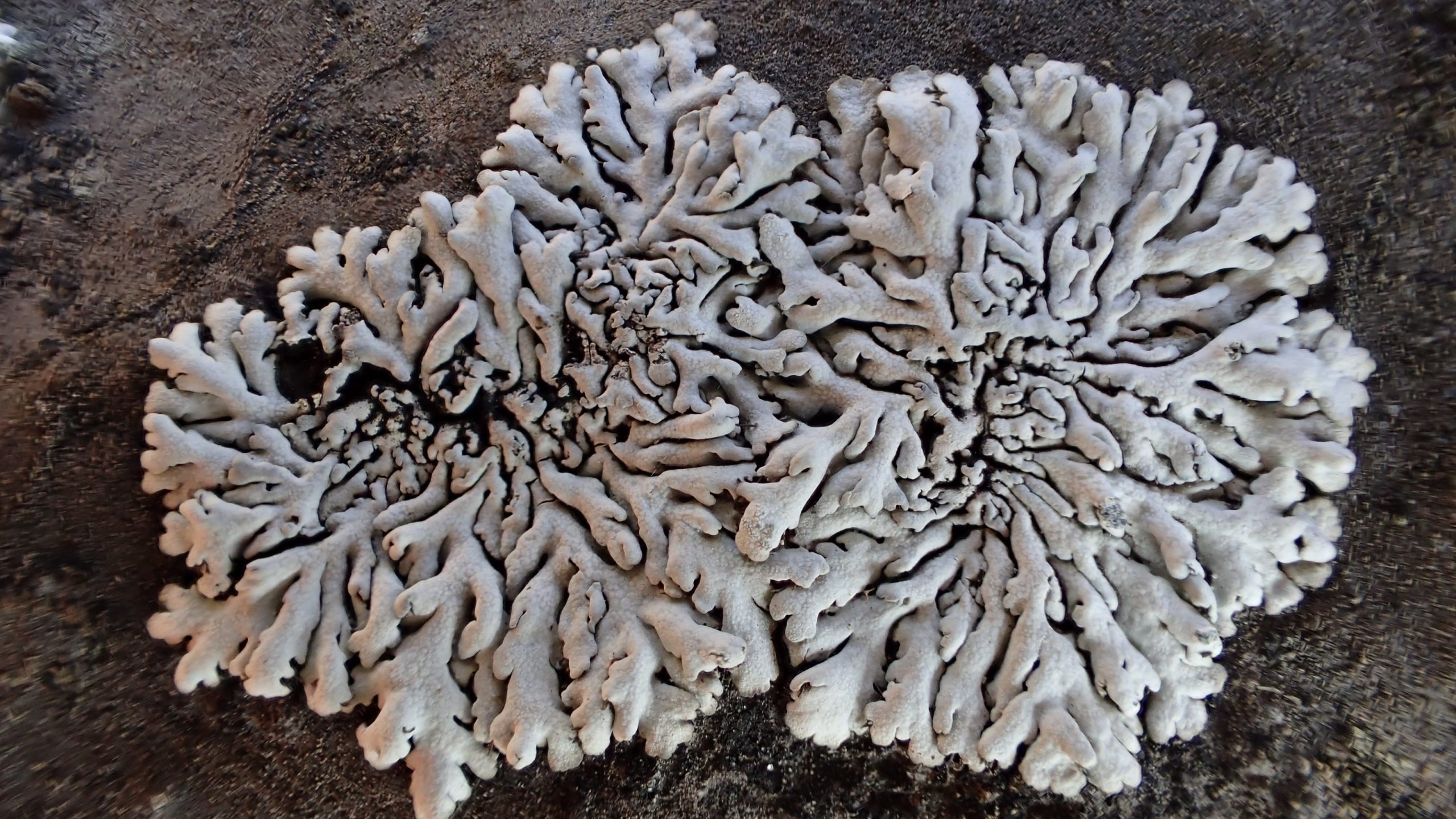
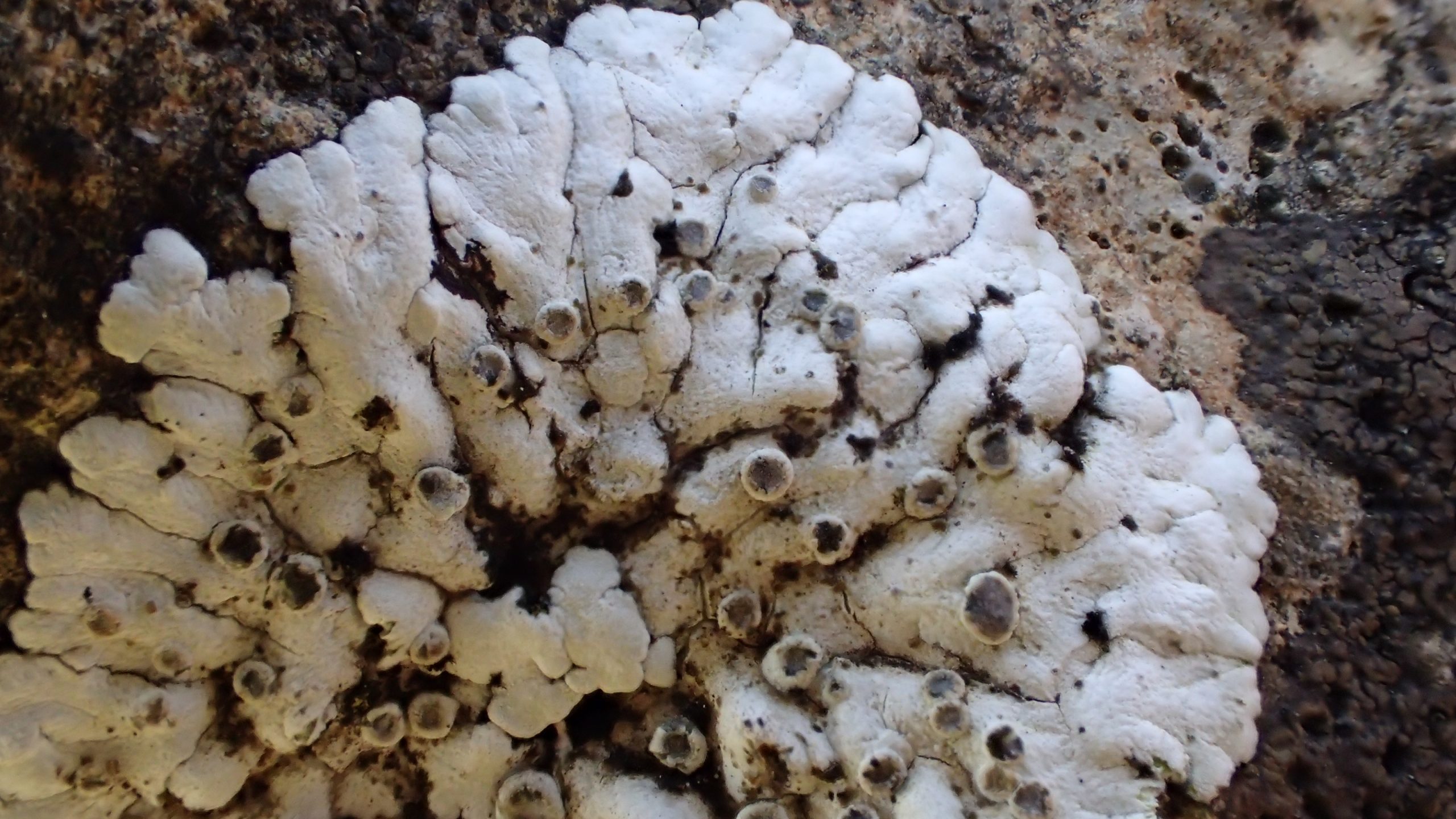
There were a few limestone boulders too. These had some lovely white rosettes of Solenopsora candicans, black splats of Verrucaria nigrescens, the tiny orange apothecia of Protoblastenia rupestris and the stretched out lobes of Physcia caesia.
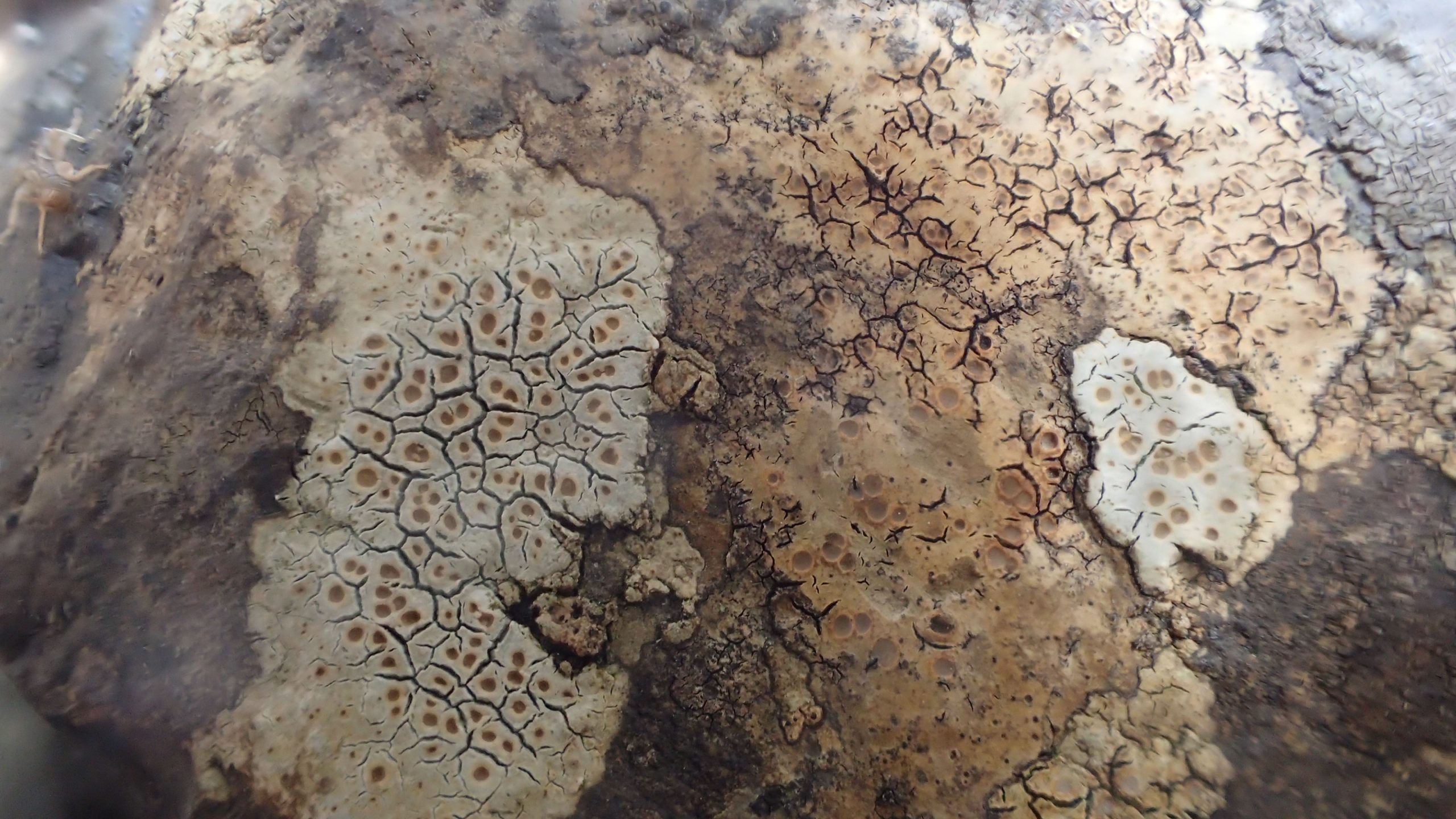
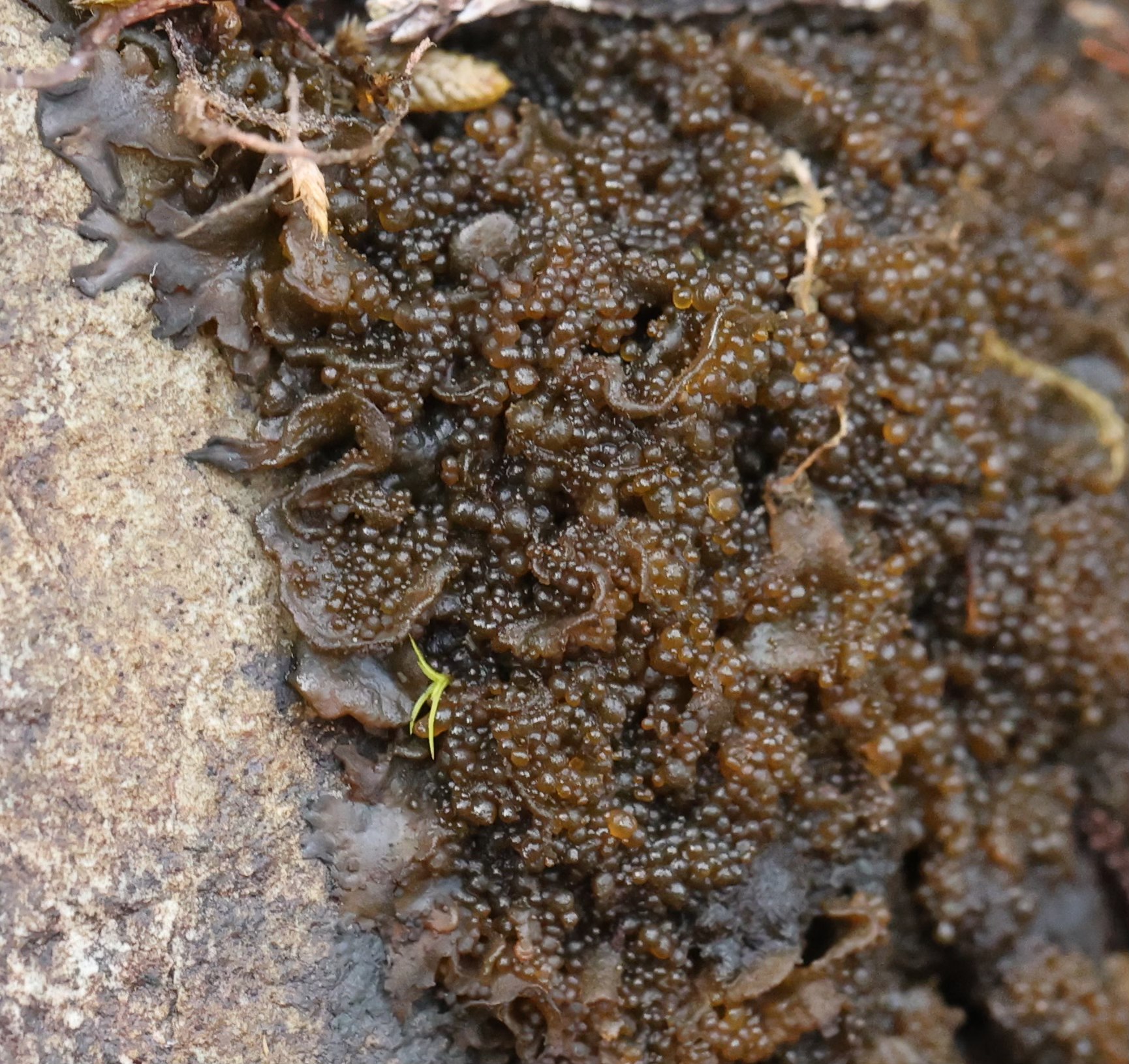
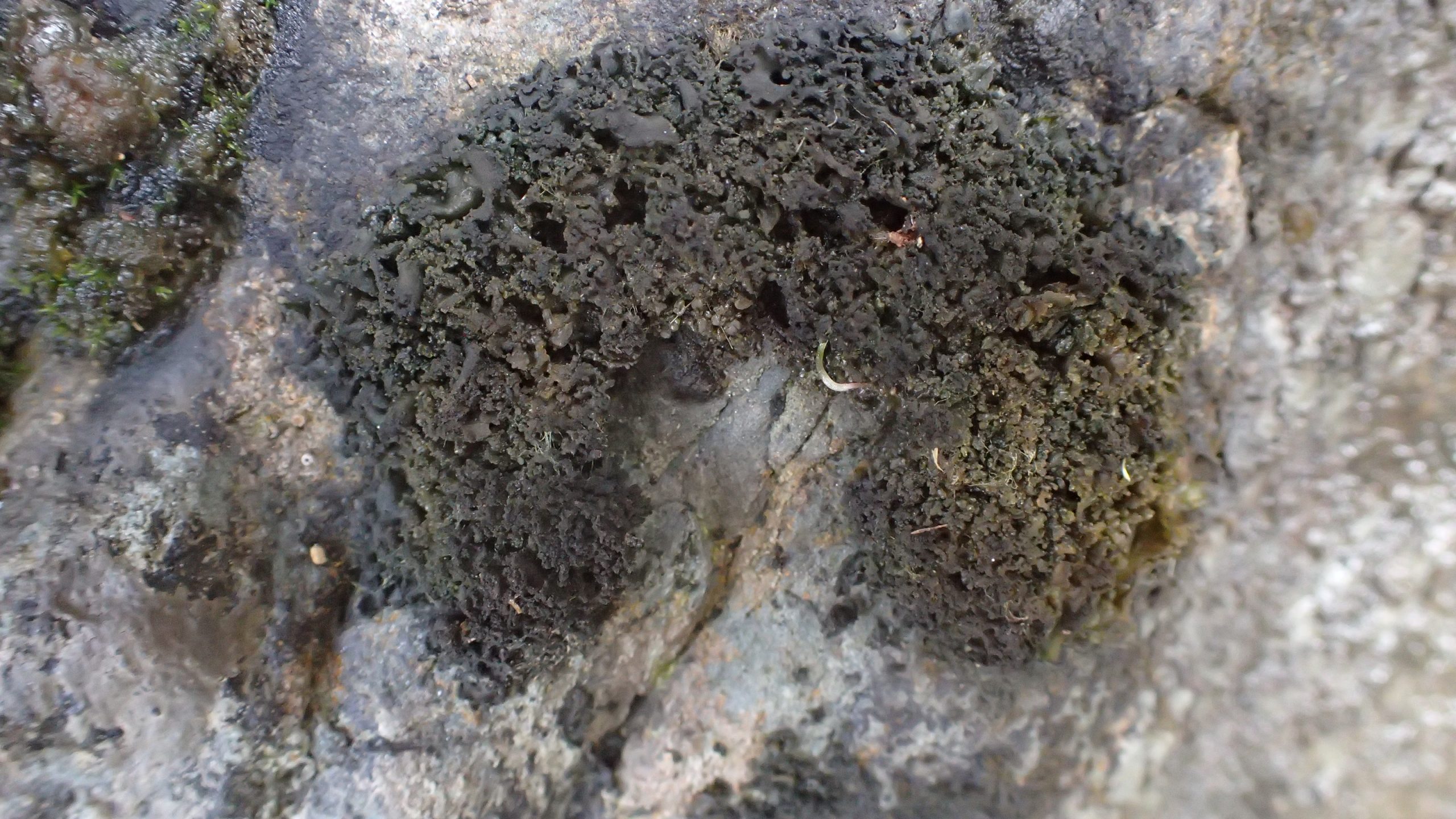
Moving up just above the bridge, we disturbed two woodcock and examined some overhanging trees: there were good examples of Pertusaria hymenea, Lepra amara and a variety of common corticolous species. Somehow, it was already lunchtime, so most of us lounged in the sun whilst others worked hard in the gill, disappearing from view in their search for jelly lichens. Their search was rewarded with Enchylium tenax and Lathagrium fuscovirens to add to the Collema flaccidum found earlier.
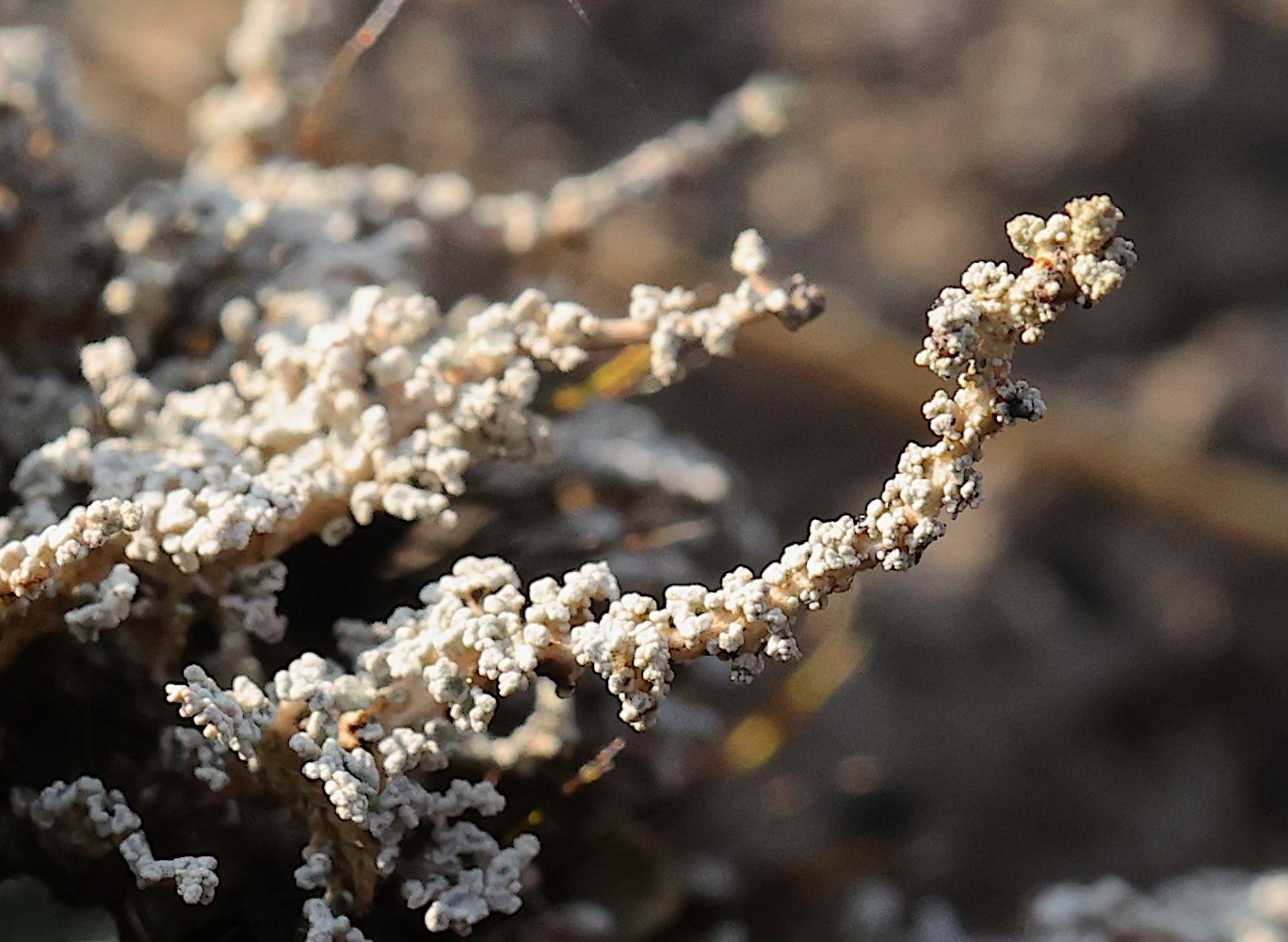
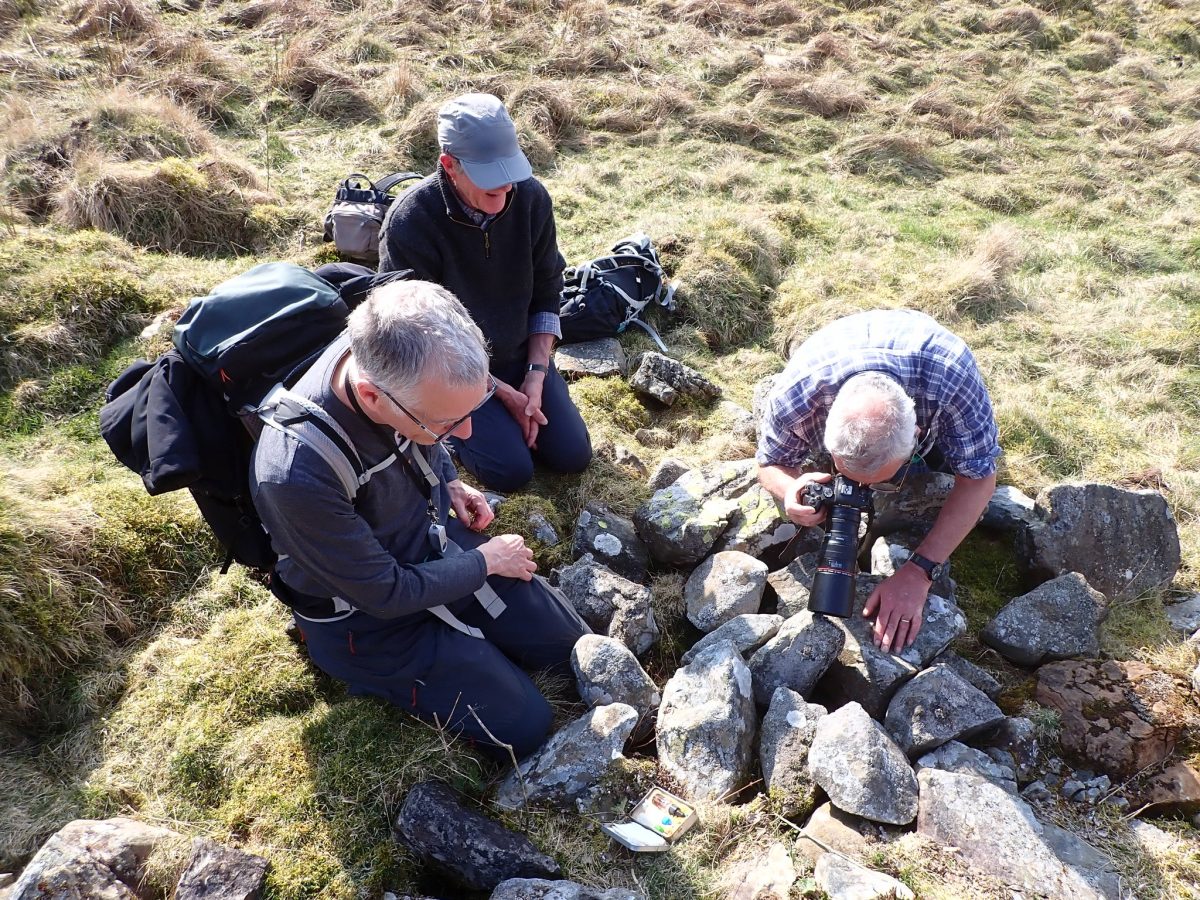
The afternoon saw us move a few metres upstream to a slabby sloped area, where the beck ran in the bottom of an asymmetric rocky V. Cladonias such as C. portentosa, C. cervicornis and C. uncialis biuncialis rubbed shoulders with acidic rock specialists such as Ephebe lanata and Stereocaulon vesuvianum. The latter name provided much mirth for a first-time-out-with-us retired medic. Such are the delights of lichen hunting!
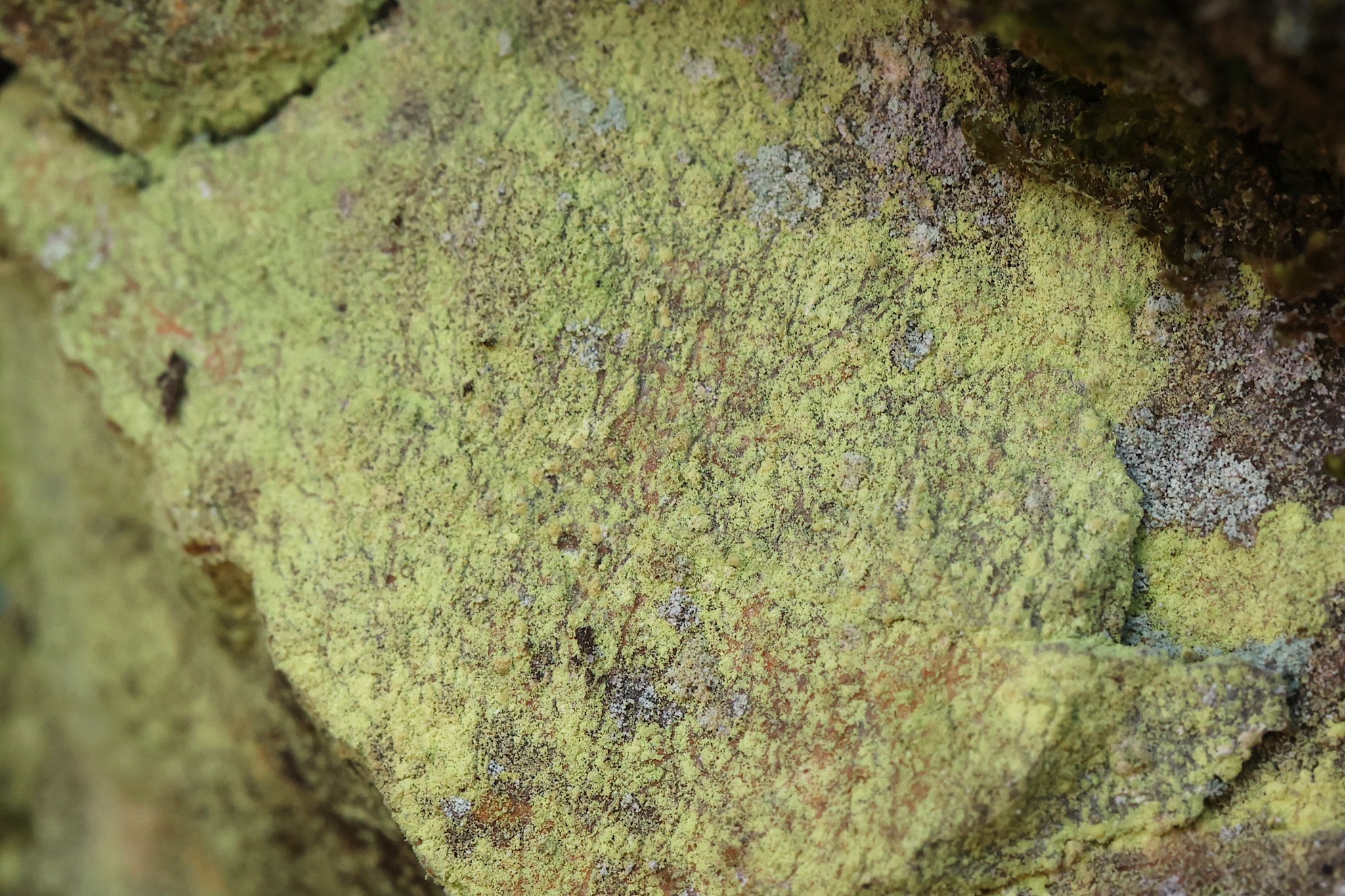
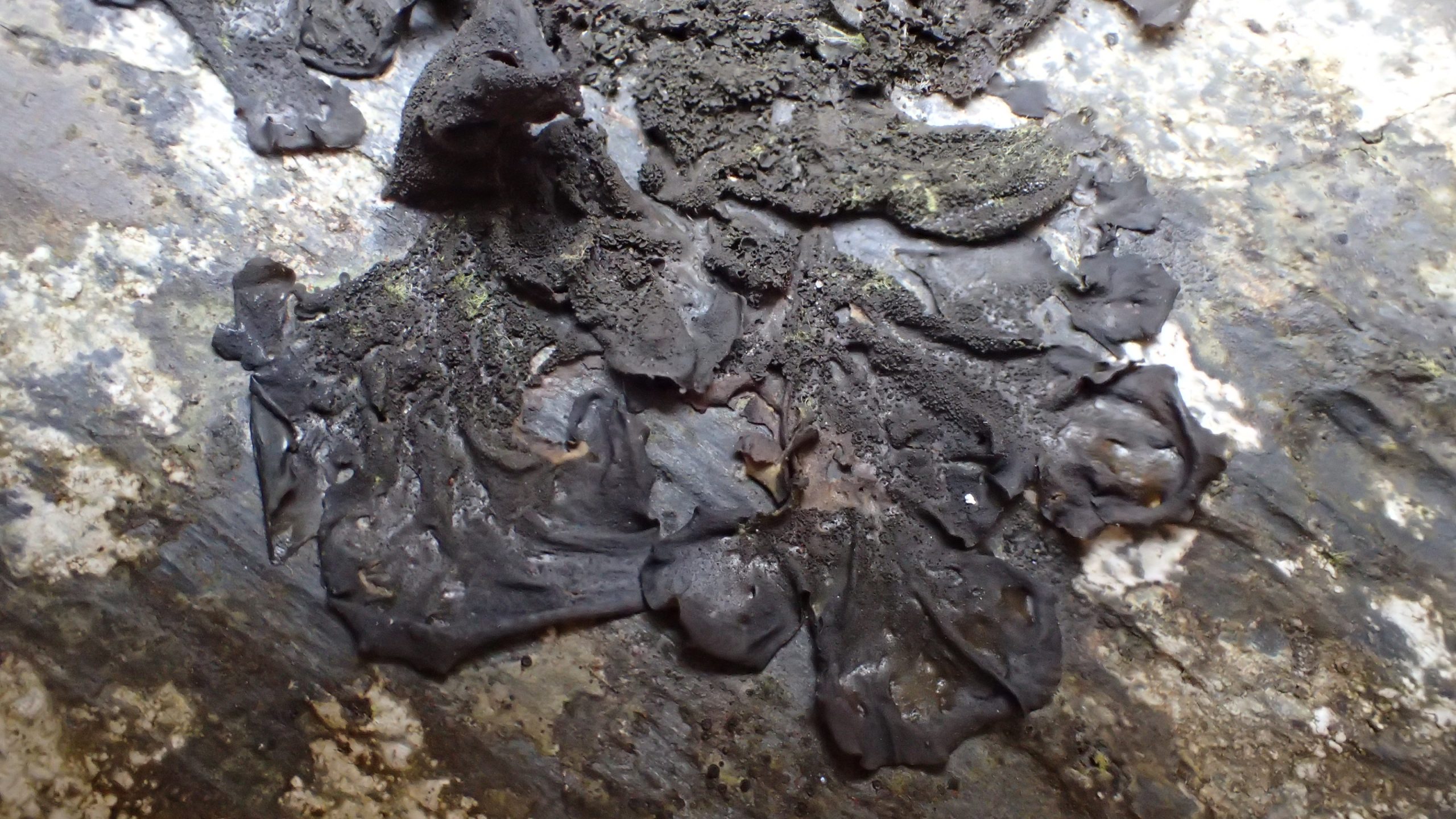
A short distance upstream, and an area of varied boulders gave us metal-loving lichens such as Stereocaulon evolutum and Tremolecia atrata, together with limestone specialists like Placynthium nigrum on boulders presumably washed down from above. The hi-vis Psilolechia lucida was found in a sheltered spot and the orange UV+ reaction demonstrated.
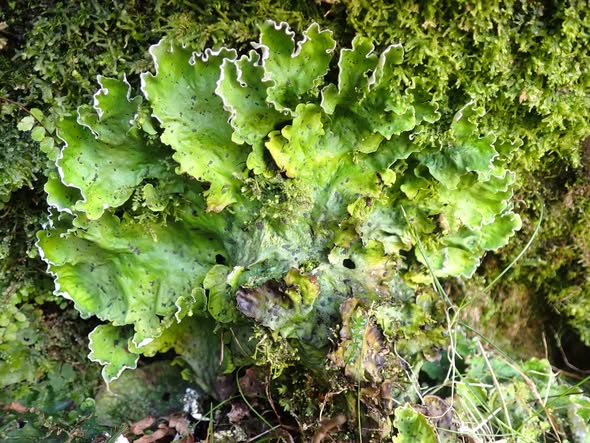
A little further up, in a cleft just below the waterfall, was found arguably the highlight of the day: three separate large colonies of Peltigera leucophlebia. Having an algal photobiont, rather than the more common-among-Peltigera cyanobacteria, this has a lurid green colour when damp. And here it was both damp and dry! The characteristic convex cephalodia (cyanobacterial lumps) were examined closely.
We shuffled about in the beck for a while: jelly lichens were discussed and probably identified as Lathagrium auriforme and Collema glebulentum; but they were atypical specimens. And then it was time for home. We’d found some good things, and introduced several newcomers to the delights of clambering about looking at small things. The overall feeling amongst us old-timers though was that it was maybe a bit disappointing. There’s probably a lot more to find in the Barbondale gorges, but we’d need to spend more time here, and go a little higher. OK then…we’ll have to come back again!
Text: Pete Martin
Photos: Guy Broome, Chris Cant, Pete Martin