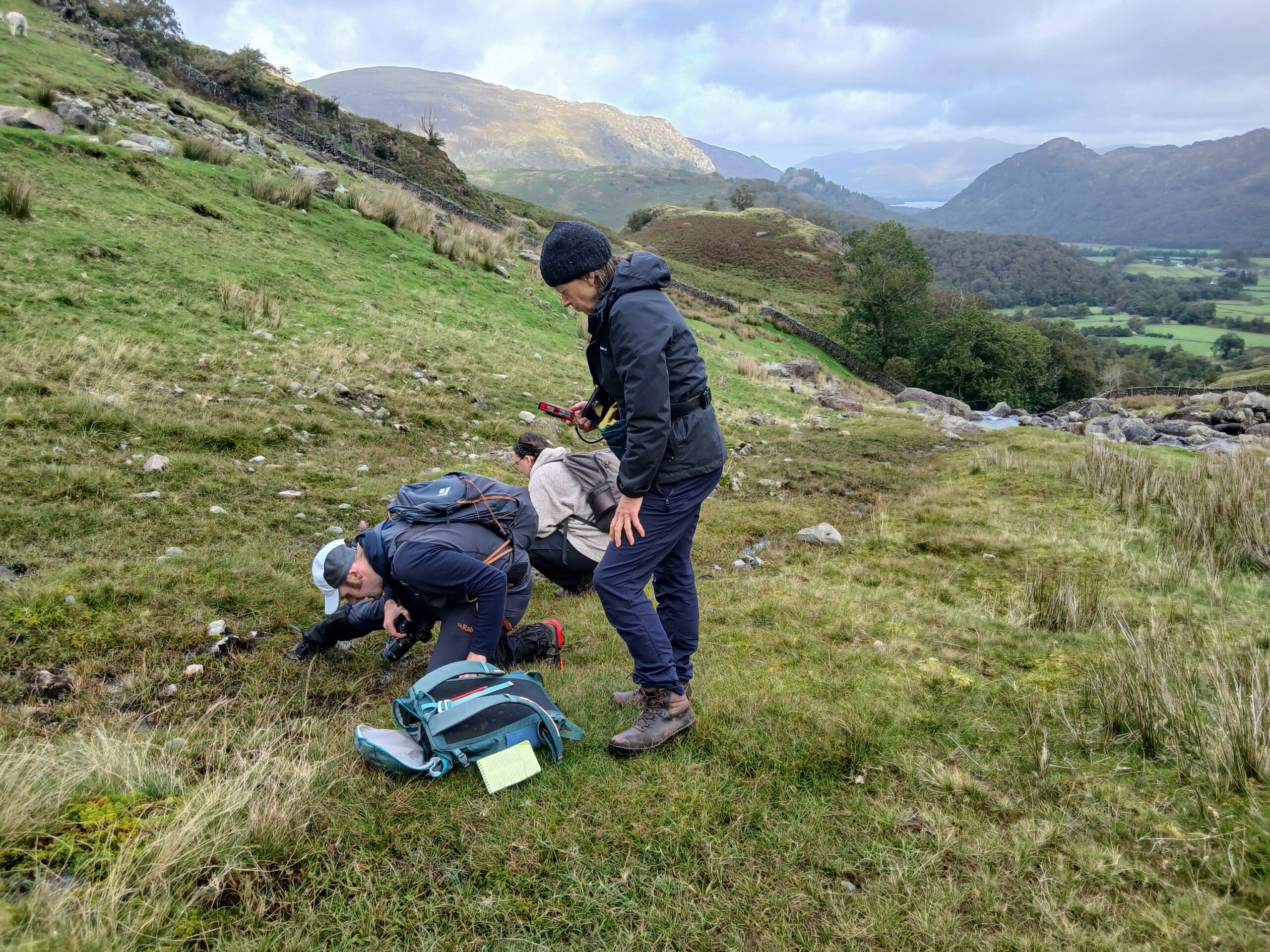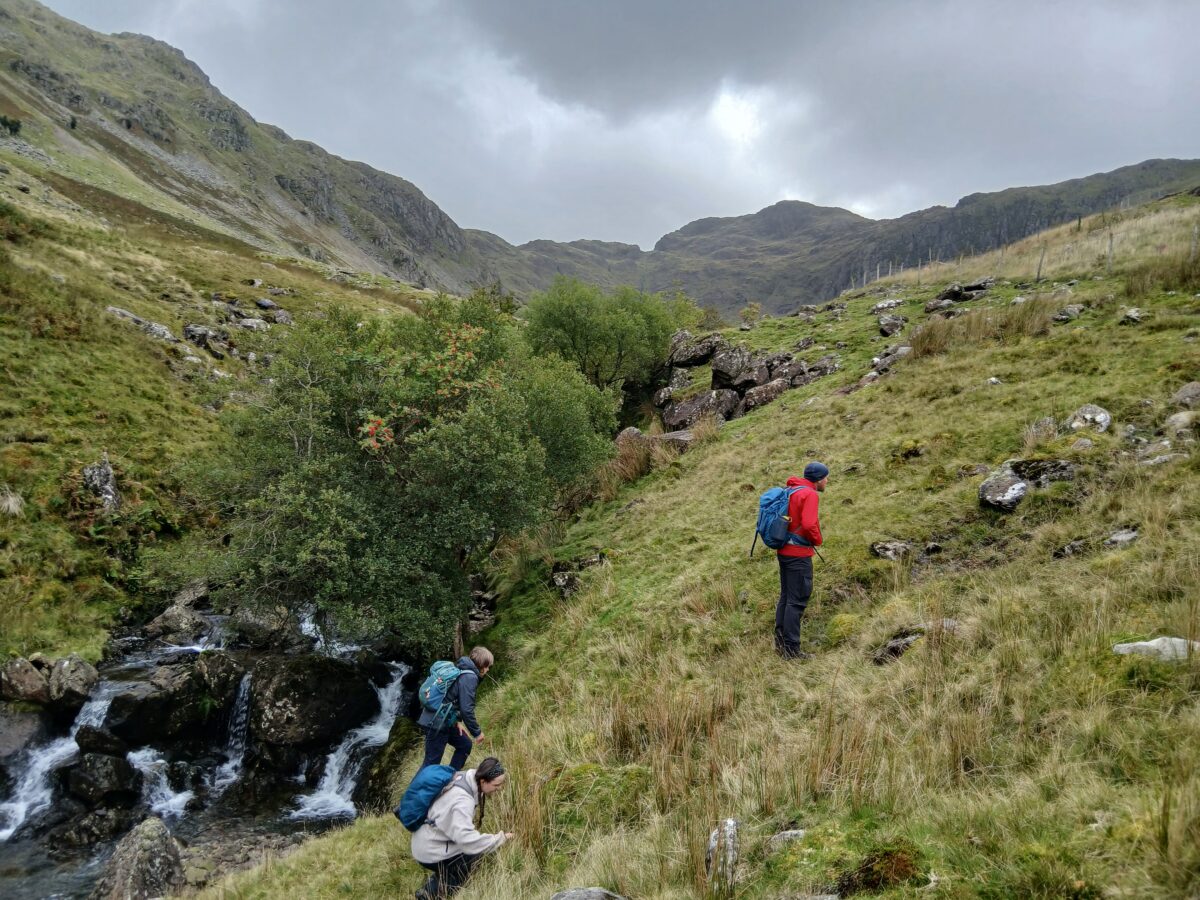
A small group of us (Kerry Milligan, Clare Shaw, Paul Ross, Josie Niemira and Richard Birnie) met at the small parking area at Thorneythwaite Farm. We split off from the lichen group almost immediately as we had decided to investigate an upland monad (NY2512) with only six fairly old species records, the most recent being 1981. The slopes above Thorneythwaite Farm and Black Sike have already been thoroughly investigated, including a bryophyte survey by Ben Averis in 2016-2017. Lots of great species were recorded, and it was tempting to refind some of these, but ultimately, it seemed much more useful and rewarding to get some new records in an adjacent monad which might well have some of the good species found lower down.
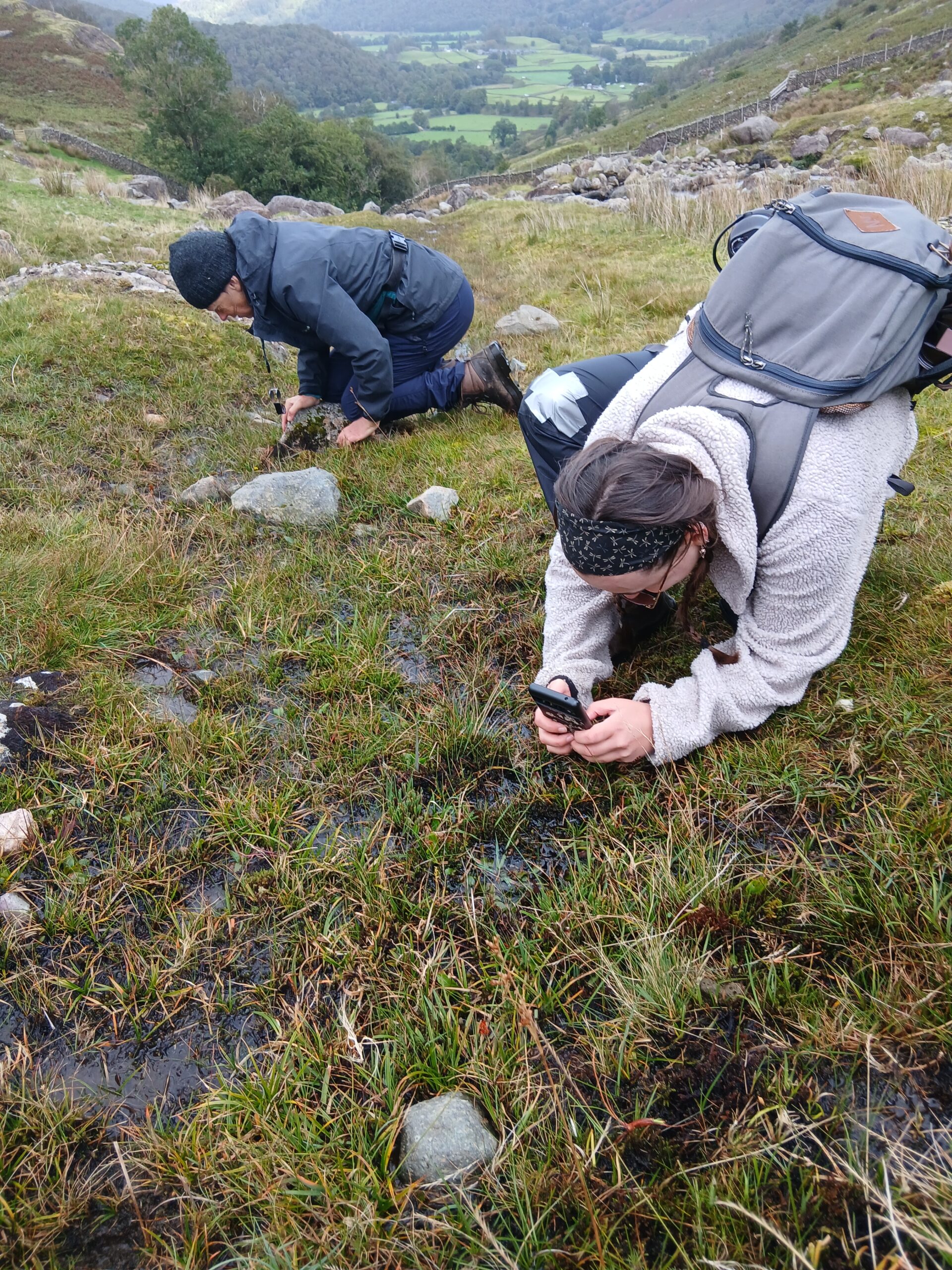
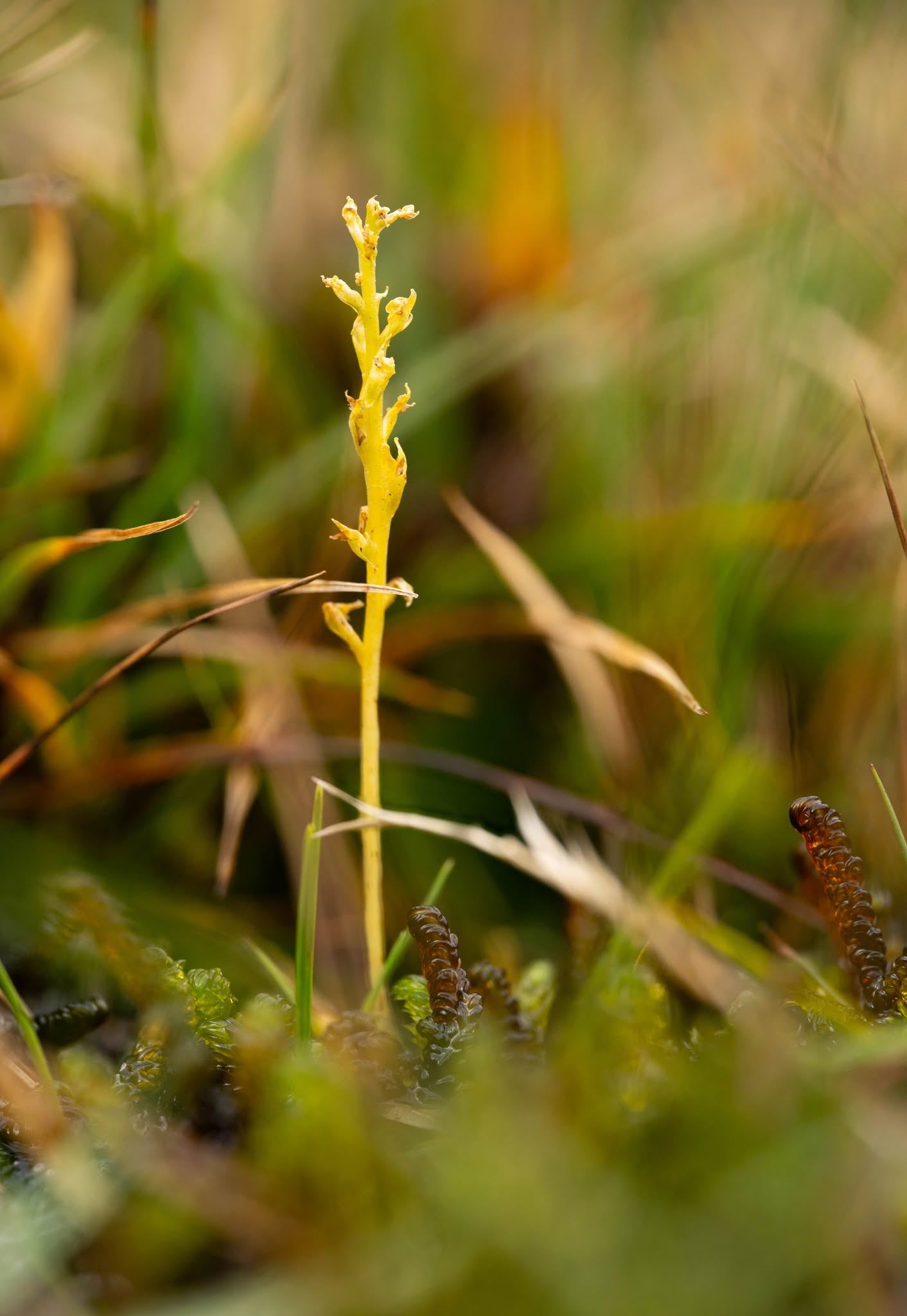
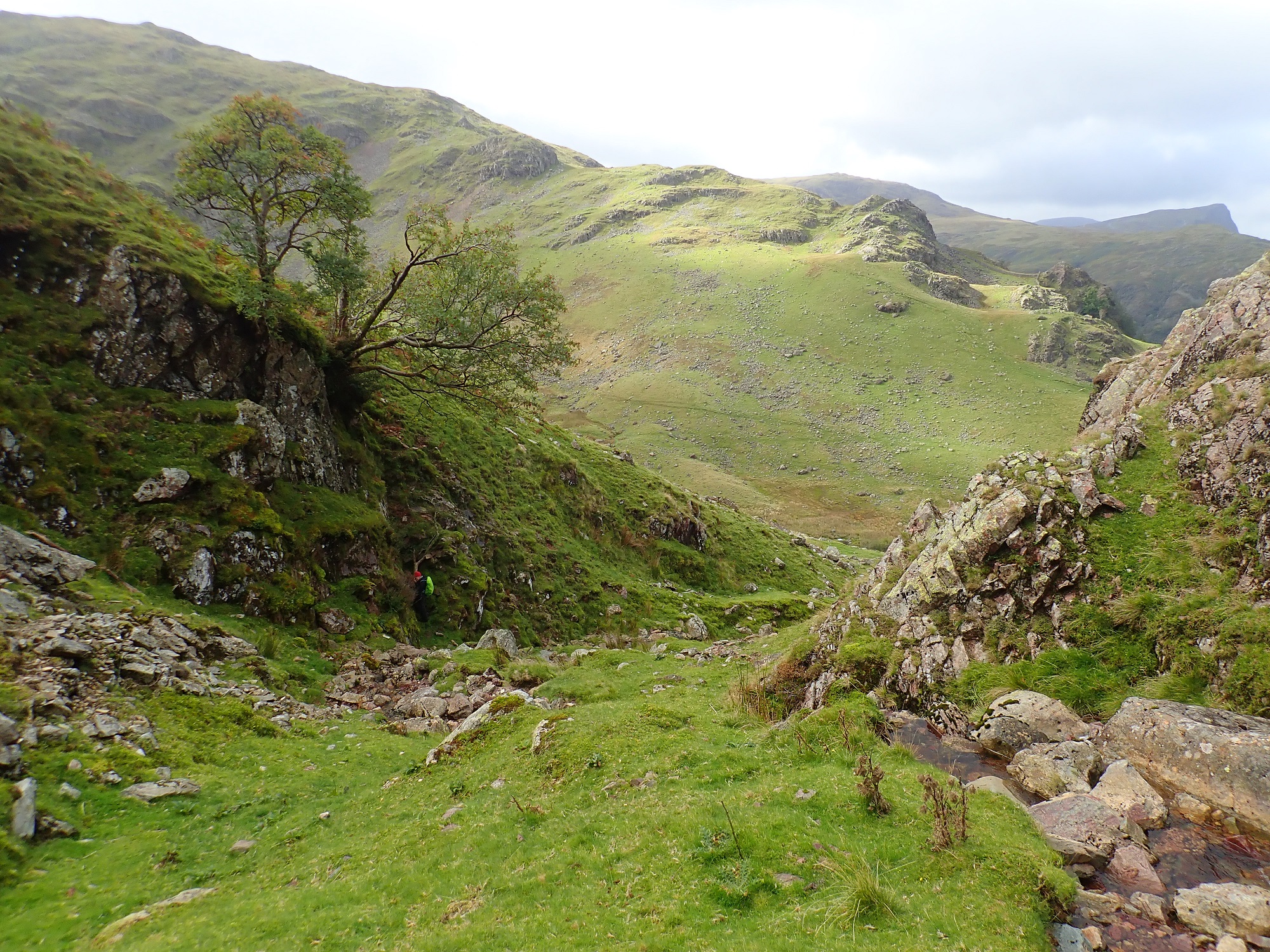
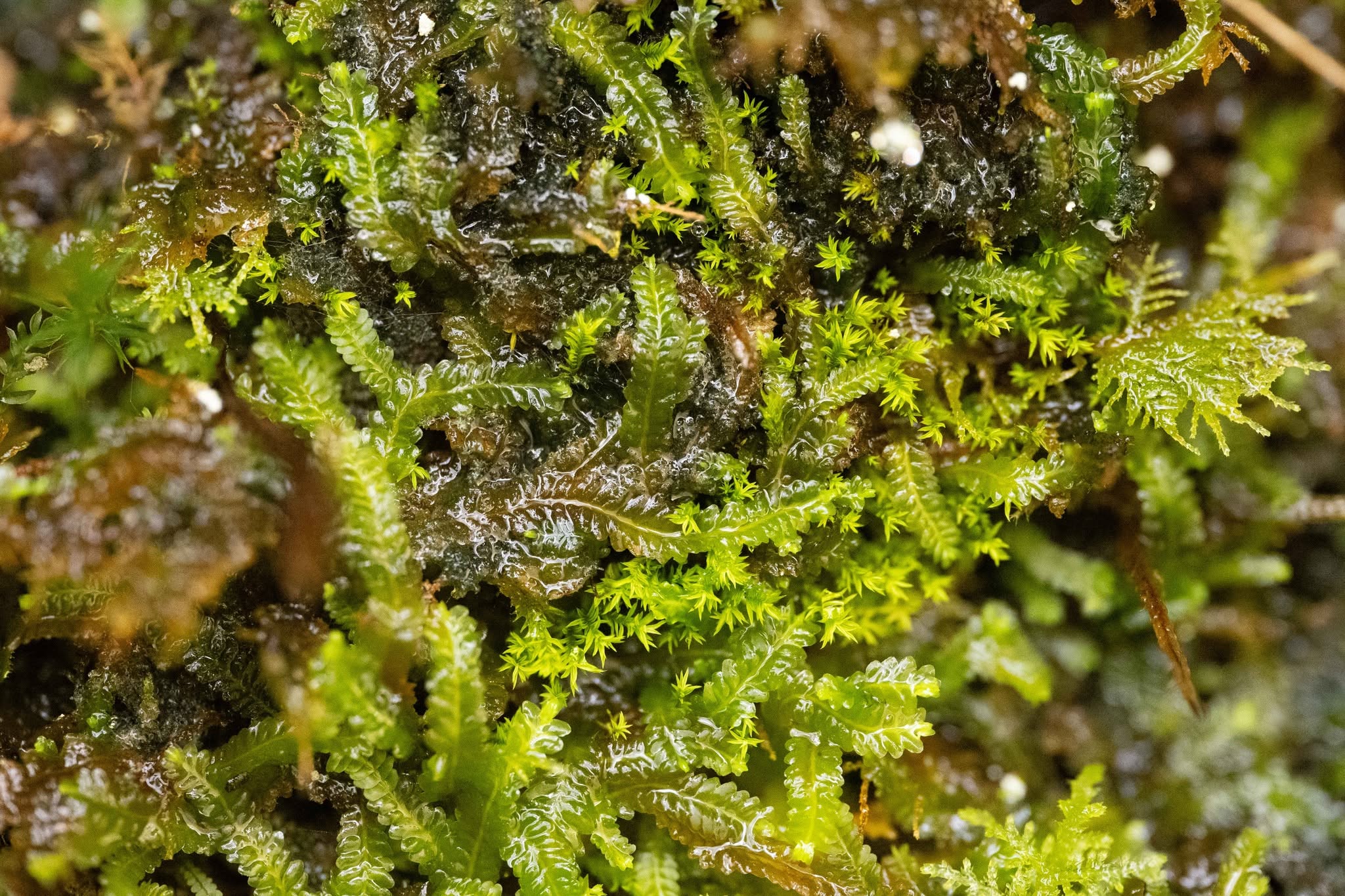
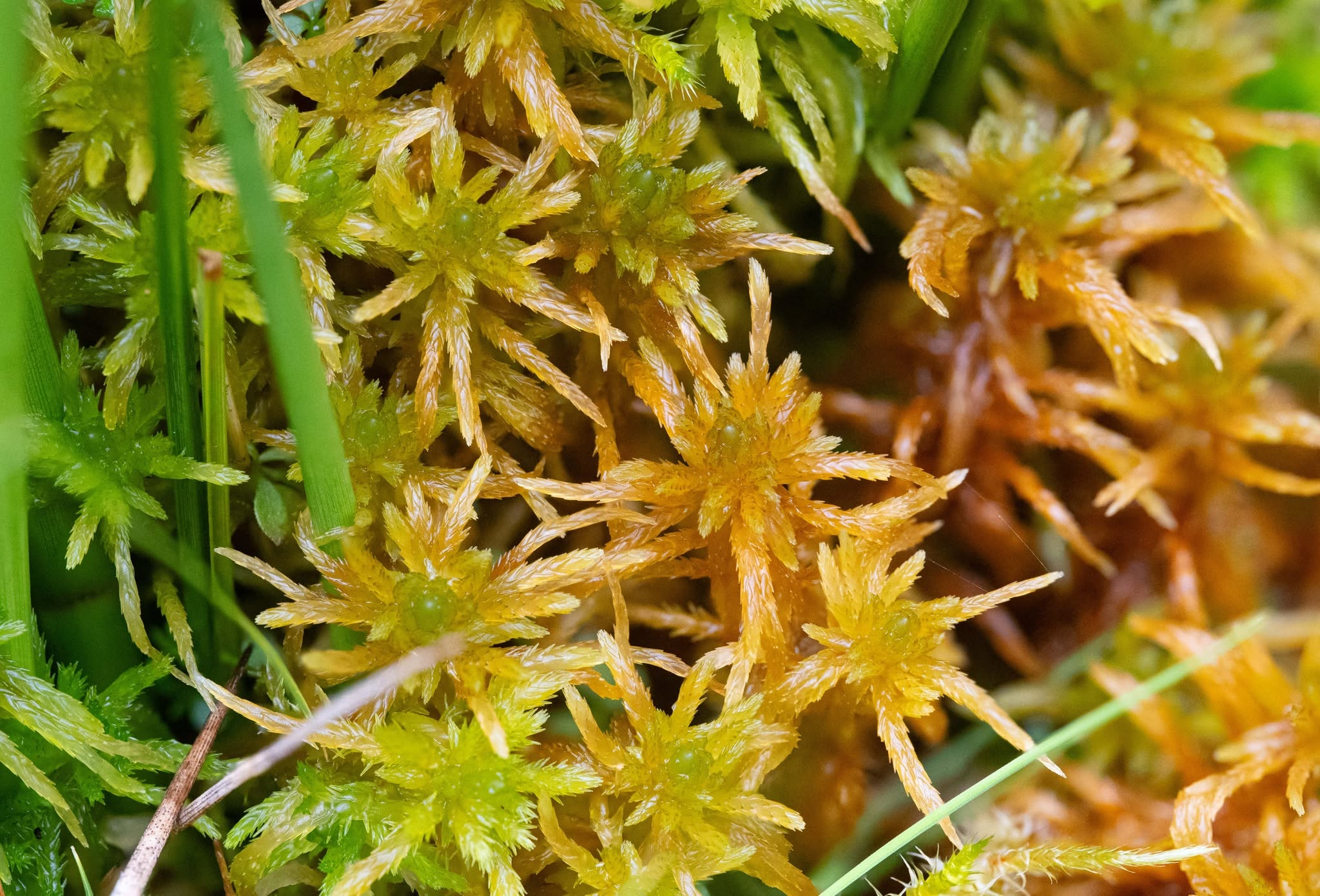
We headed back up the lane from the parking area, heading right on a track that took us uphill and then doubled back south to come down into The Combe. We immediately started to find good things – a rock with Gymnomitrion crenulatum, Andreaea rupestris, Racomitrium fasciculare, and what proved later to be Racomitrium obtusum, while the banks above the beck had Pogonatum urnigerum, Nardia scalaris and Oligotrichum hercynicum. A very wet large rock had some nice Andreaea hookeri, and there was Mylia taylorii and Gymnomitrion obtusum. Josie found a nice patch of gemmiferous Orthocaulis on a rock, with slightly attenuate shoots, which we spent a while examining, finally deciding was O.atlantica rather than O.attenuata; O. floerkei was also nearby. Wetter patches of ground had Philonotis fontana, Sphagnum auriculatum and S. subnitens, and a good flush further along had Campylium stellatum, Sarmentypnum exannulatum, Sarmentypnum sarmentosum, Scorpidium revolvens and S. scorpioides. Richard spotted some nice Odontoschisma sphagna in a sphagnum hummock. Then Kerry spotted a Bog Orchid (Hammarbya paludosa) and we were excited to find several more in this small patch. Sphagnum palustre, S. teres and S. rubellum, along with Aulacomium paluestre, were noted nearby. Paul found Scapania compacta, S. irrigua and Amphidium mougeottii. Tortella tortuosa and Ctenidium molluscum were further signs of basicity and it was nice to see some Bazzania trilobata. Richard picked up some Blindia acuta from its typical habitat on damp gravelly ground, and a bank of bare soil under an overhang had a nice fruiting patch of Diphyscium foliosum, though a little bit past its best. The bare banks also had some patches of Pohlia, including P.annotina and quite good quantities of P. flexuosa, which we also found recently at Black Combe. This is only the fourth record for vc70, the others being in 1988 and 2011, then our find at Black Combe. Vc69 has five records, all made since 1977, which makes you wonder if this is a species that is spreading. It will be interesting to see if we find more at other sites.
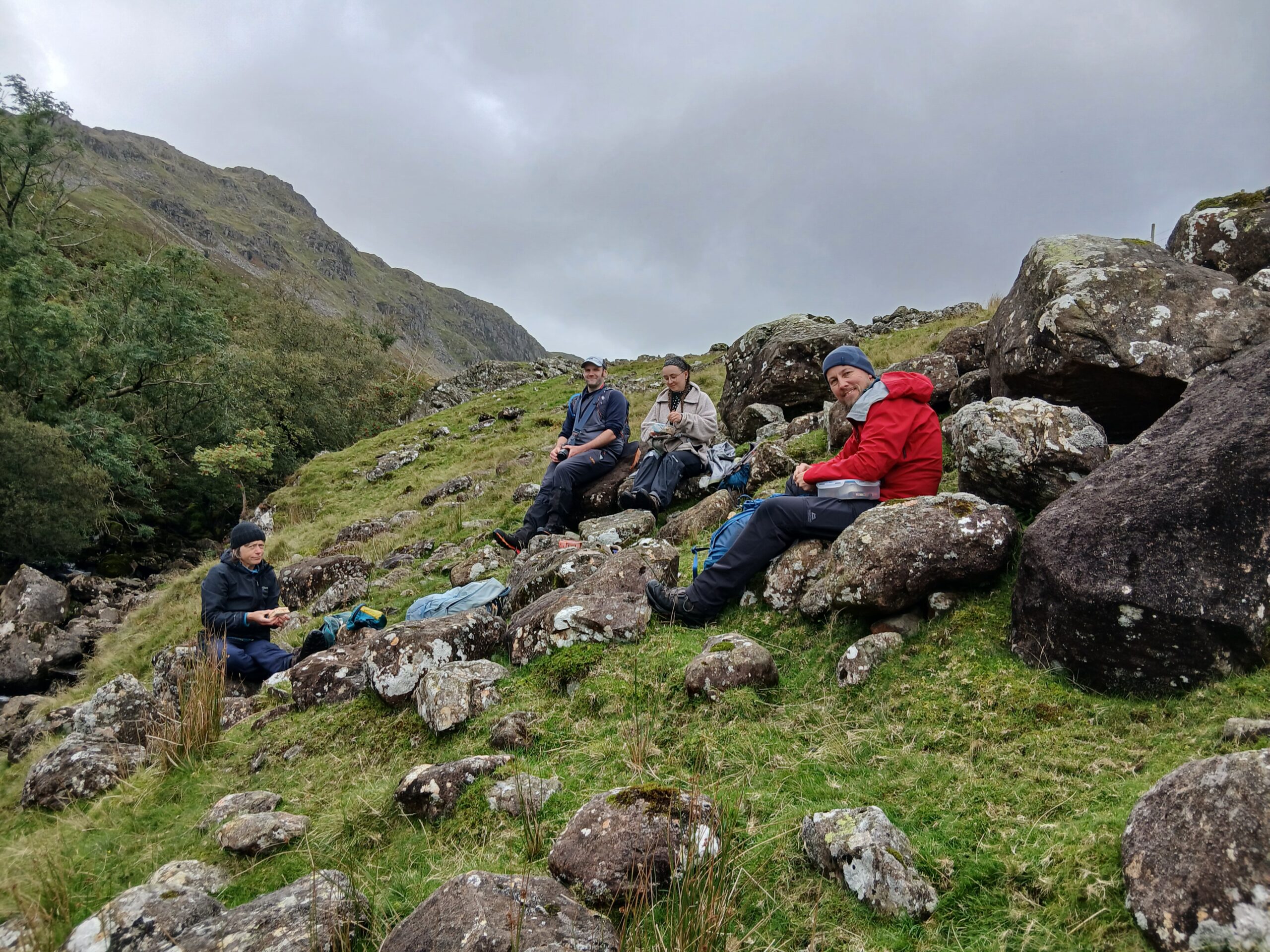
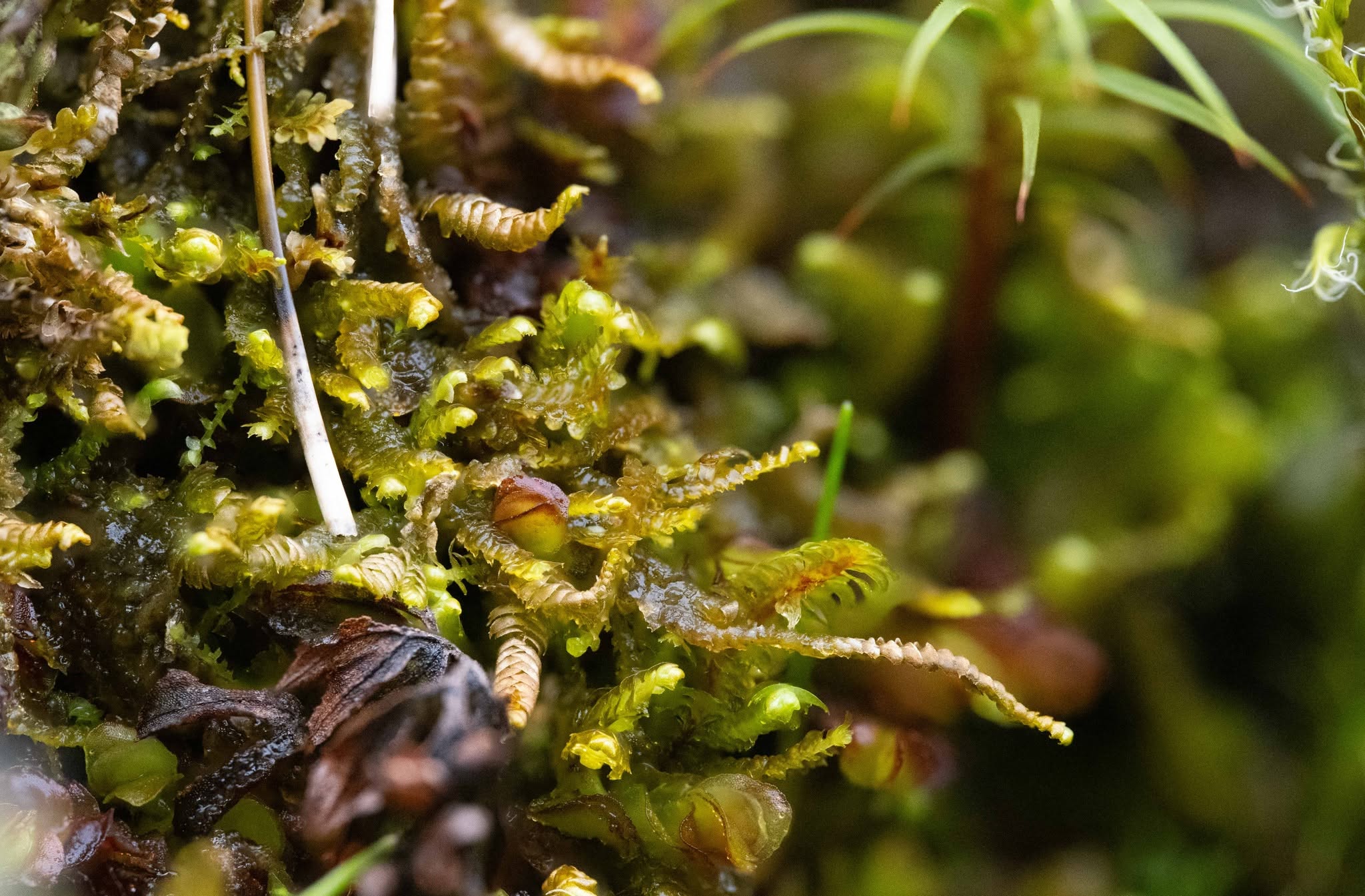
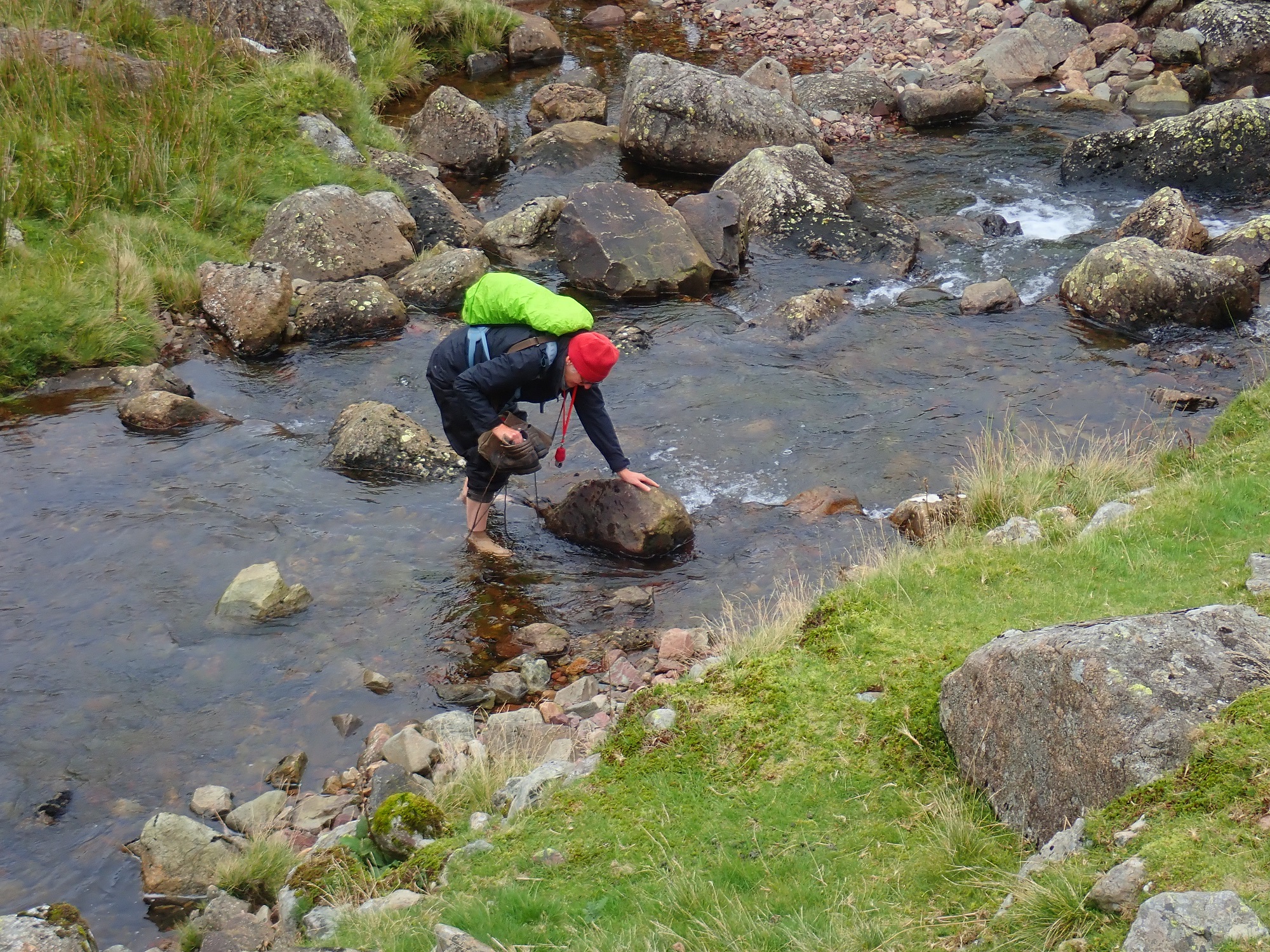
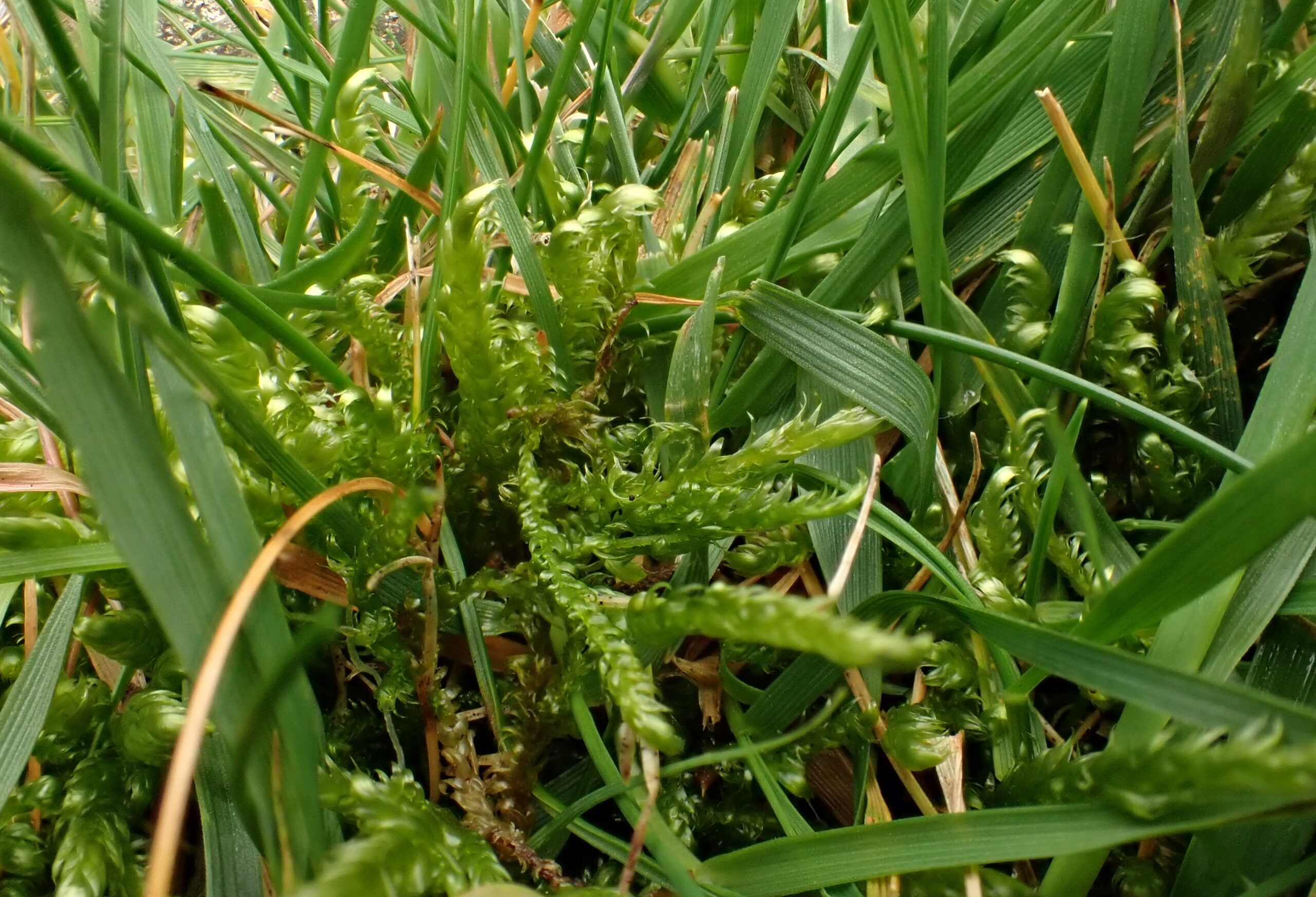
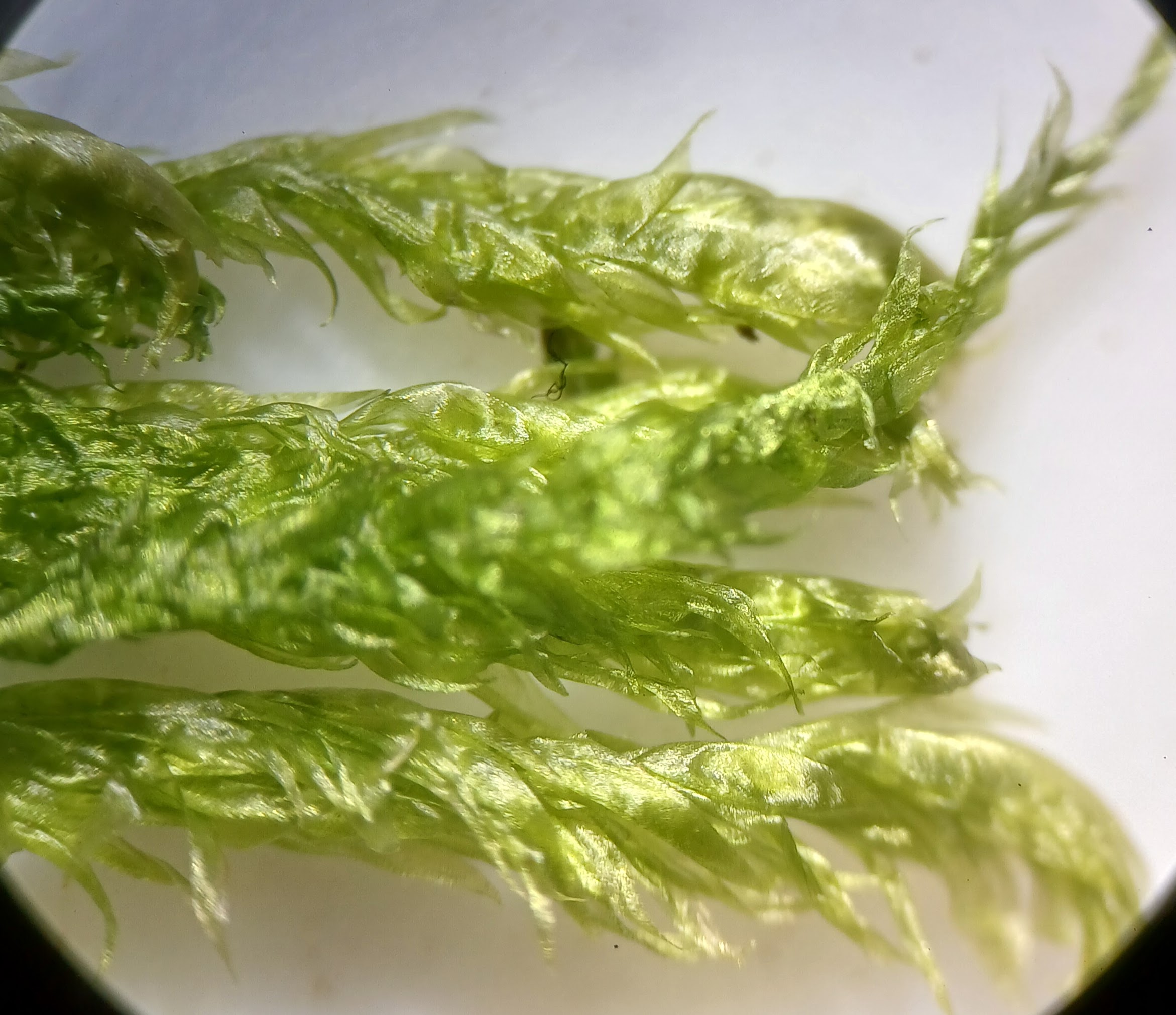
Before heading further up the beck into a gill we stopped for a quick lunch. Then we went down into the wooded gill, which was initially fairly easily accessible. Hyocomium armoricum and Plagiochila spinulosa were found here together with a number of common woodland species we had not yet recorded. However the gill was not always easily passable so we had to climb back out and in a couple of times. We soon decided we were not finding many new species and that it would be best to head up the slope into Rottenstone Gill. Whilst waiting on the grassy slope I spotted an interesting-looking, hypnum-like moss with shiny, flattened upright shoots. I thought it definitely looked different to the usual Hypnums, and later worked it out to be Calliergonella lindbergii, a fairly common moss that we are probably overlooking as we hardly ever record it. We crossed the river and headed upwards. We hadn’t seen Paul for a while – he had found a good spot in the gill and emerged quite a while later with a nice list of species – Anoectangium aestivum, Saccogyna viticulosa, Grimmia donniana, Heterocladium heteropterum, Lepidozia reptans, Lejeunea lamacerina and L. patens, and a particularly nice find of fertile Cephaloziella hampeana.
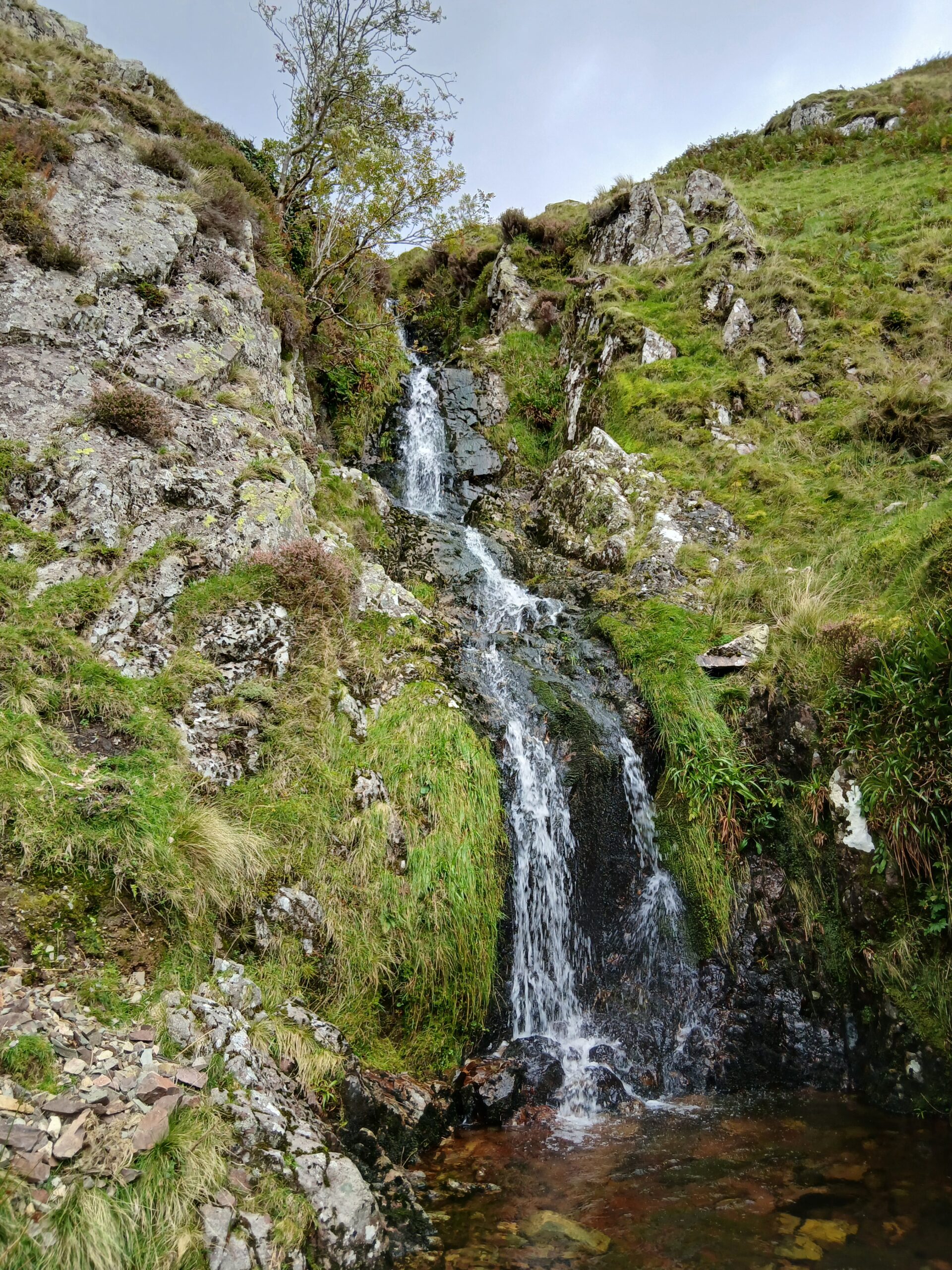
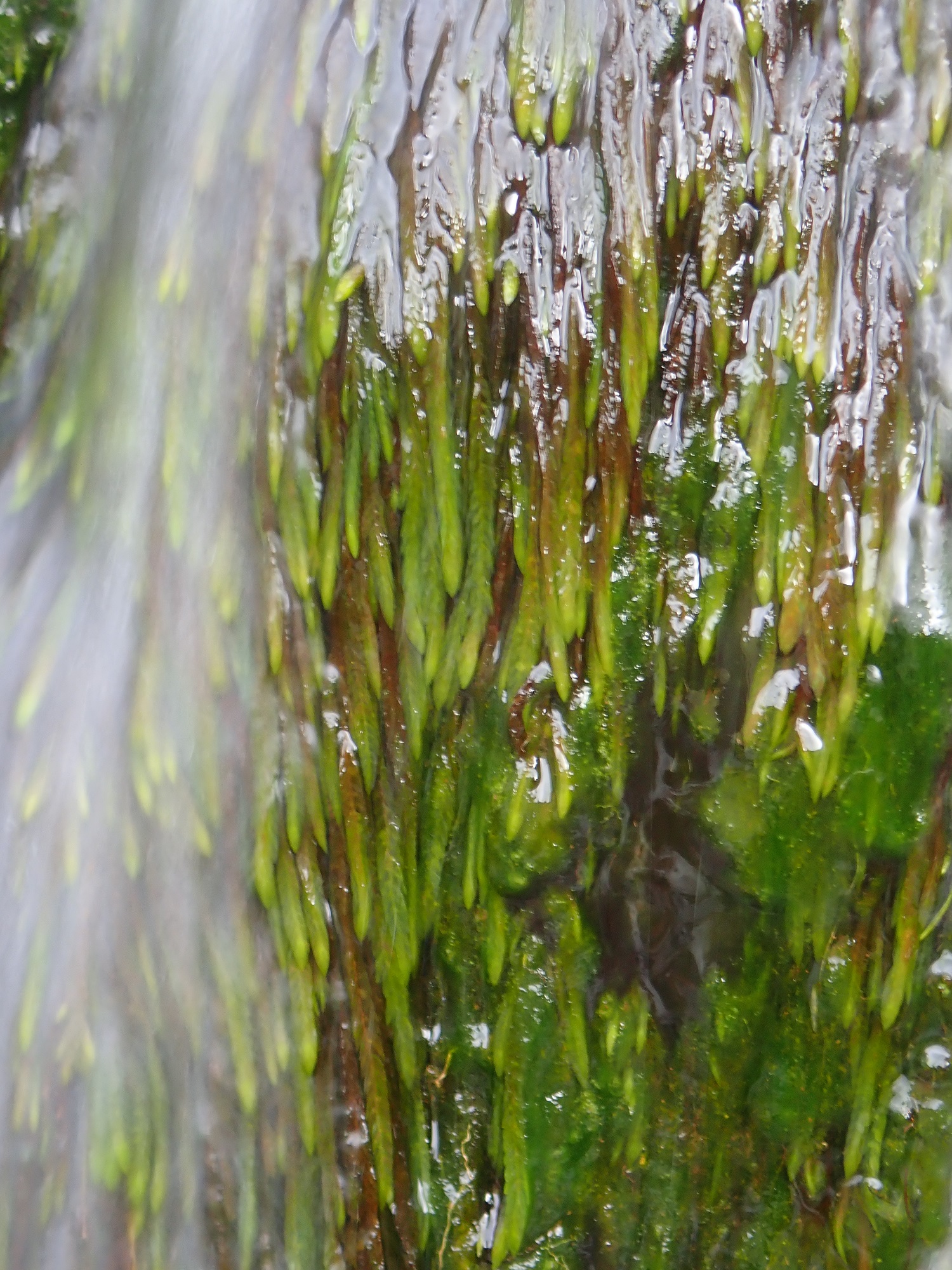
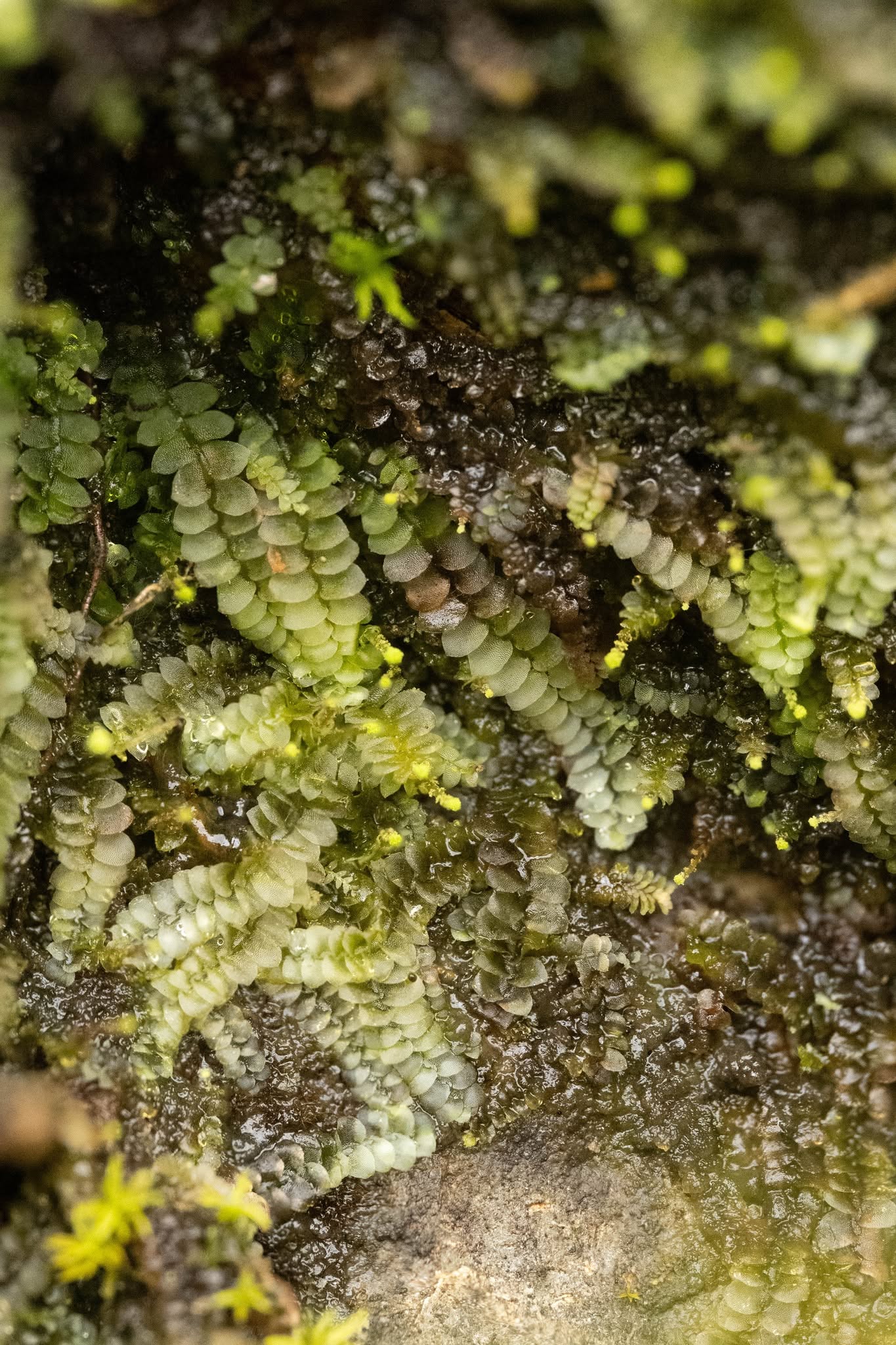
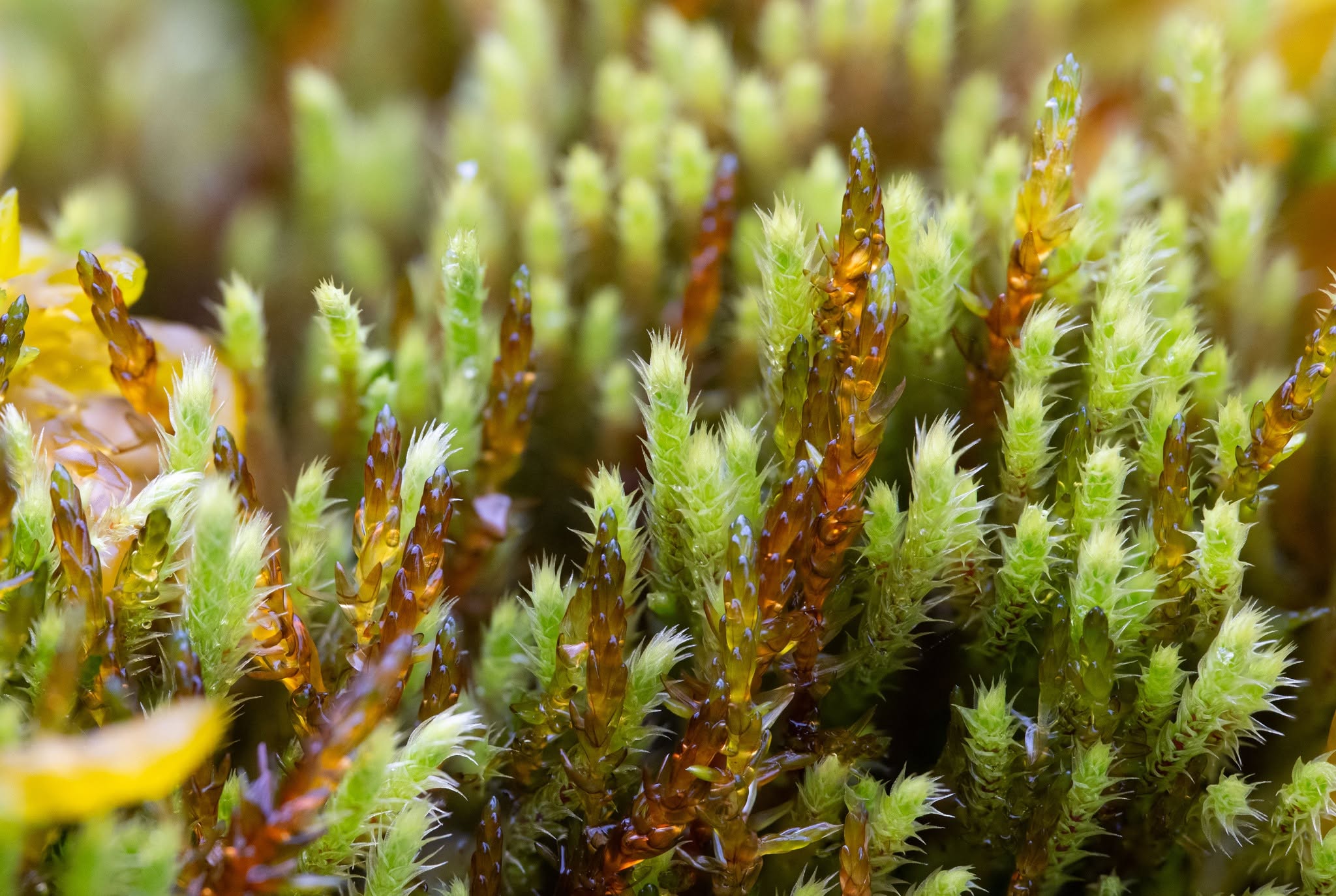
Rottenstone gill is a relatively shallow gill, with not much more than a trickle of water even after moderate amounts of rain. There was a nice waterfall with a bank of moss, including Fontinalis antipyretica and quantities of Scapania undulata. Dichodontium palustre and Sphagnum girgensohnii were noted, and Paul found a patch of Anastrepta orcadensis nearby. Bazzania tricrenata was spotted in turf on the top of a rock face near another waterfall and there was also Barbilophozia sudetica here. Paul then headed up to a small escarpment and was rewarded by a nice find of Bartramia ithyphylla. At the edge of the beck I took some Jungermannia which turned out to be Solenostoma paroica, with copious violet rhizoids and distinctive, obliquely-inserted leaves. At this point we considered whether we might continue up the steep slope to explore the upper reaches of Rottenstone Gill, and perhaps up to Tarn at Leaves, but decided to call it a day and head back down, perhaps having a look at the woodland on the way.
We returned down the hill towards the parking area, then headed off the path into the edge of the woodland where we immediately found Hylocomiastrum umbrosum, then Scapania umbrosa and Tritomaria exsectiformis were found on dead logs, with Plagiochila punctata on a tree. Access through to the rest of the woods was quite difficult, so we ended up back on the track and back to the cars for an early finish. We had a good list of 120 species (possibly more to come), but as always felt that there was possibly more to explore further up the hill into the western part of the monad. The further monads, NY2511 and NY2411, have no monad or indeed tetrad records. Perhaps we need to put a return visit on the calendar for next year?
Text: Clare Shaw
Photos: Clare Shaw, Paul Ross, Kerry Milligan