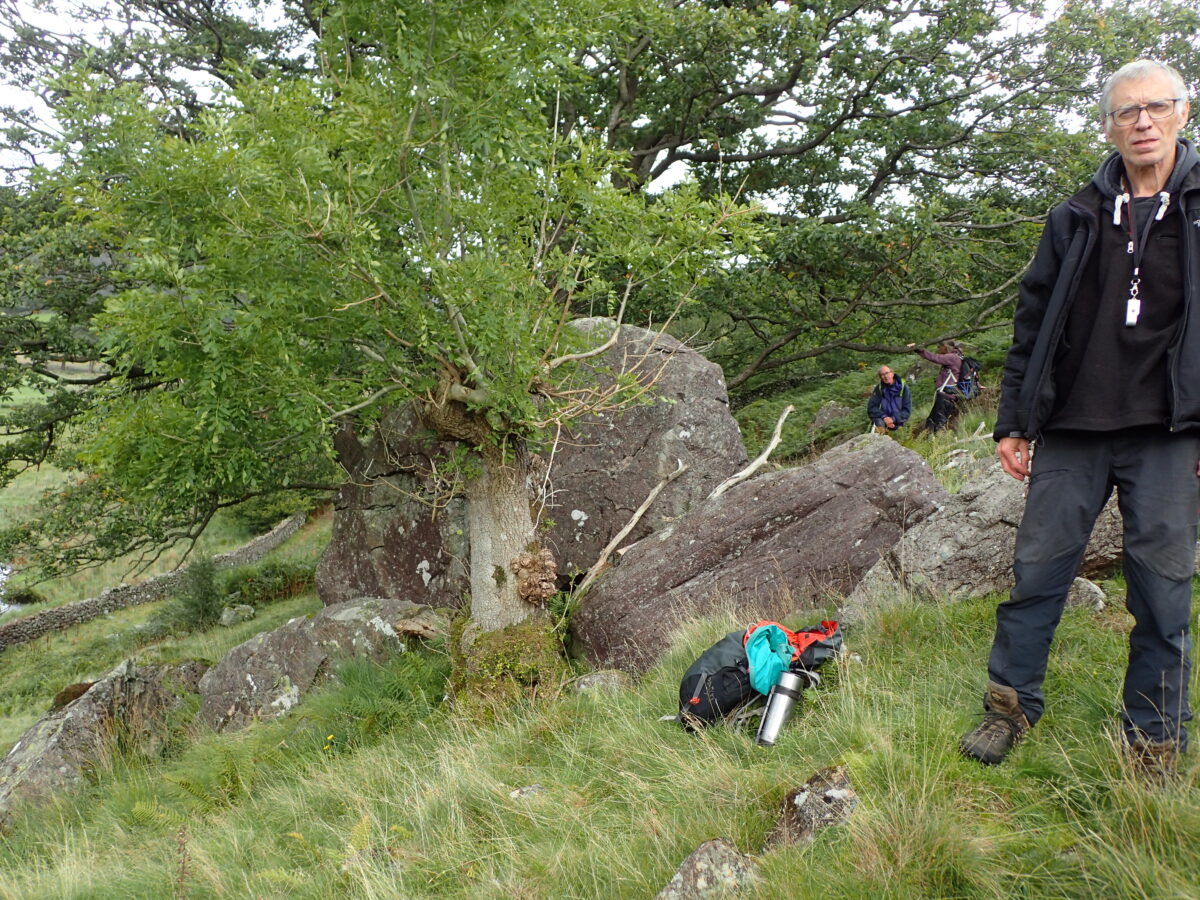
Thorneythwaite covers the NW-facing side of the Seathwaite valley at the head of Borrowdale, often regarded as the poor relative of the famous Seathwaite woods close by, but there’s still plenty to see. There are woods and scattered trees, plus steep rocky slopes with massive boulders. The geology is andesite, a silica-poor igneous rock. The area we were looking at is part of the Borrowdale Rainforest NNR which has an odd scattered distribution in Borrowdale, but isn’t a SSSI.
The bracken was largely impenetrable so we eyed interesting-looking trees up the slope but getting to them would be for a winter or spring trip. As a result, we stayed near to the low path so probably revisited trees already recorded. Not much in the way of the leafy Lobarion was seen but some more obscure crustose species from that community were nice to find.
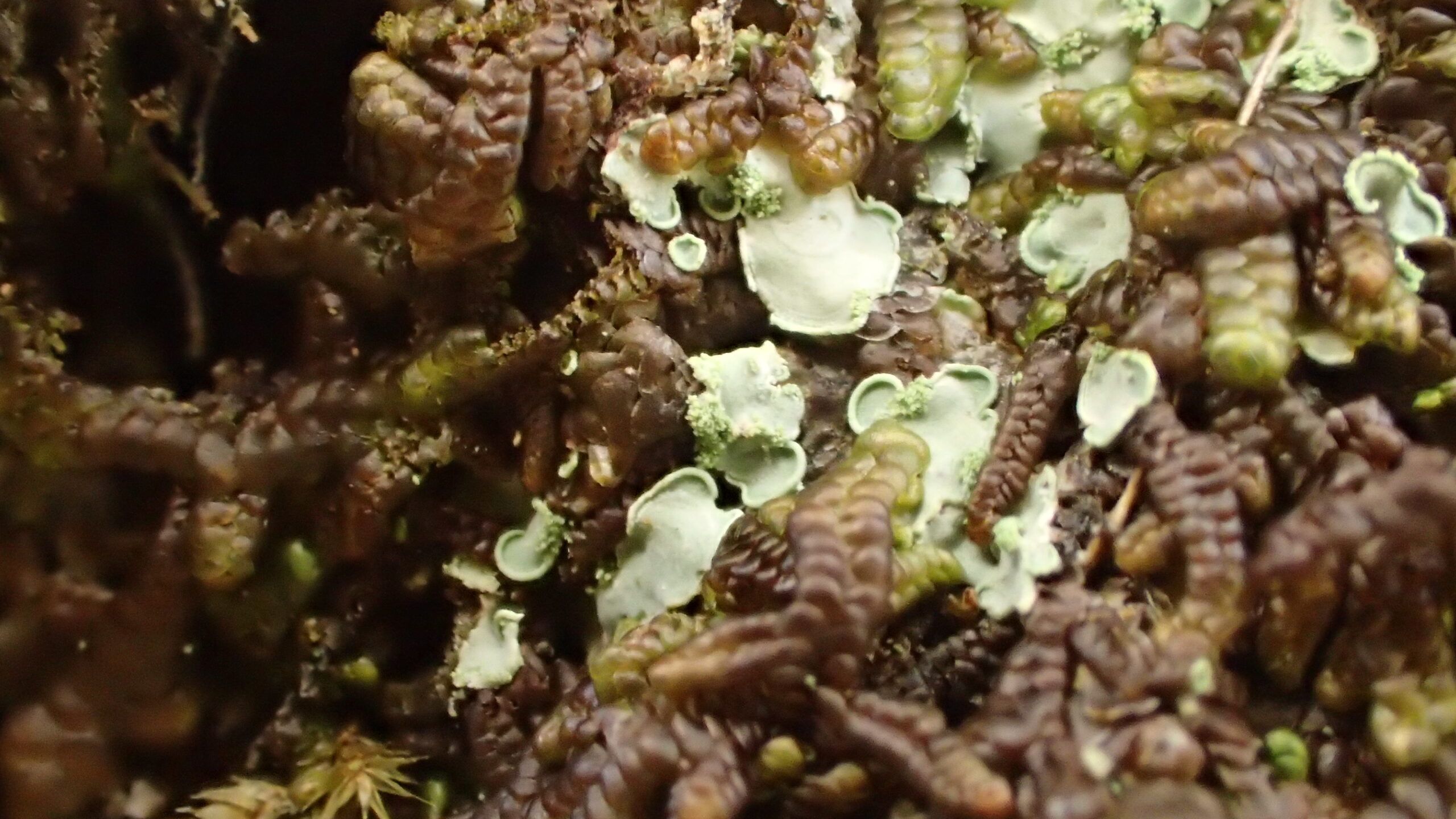
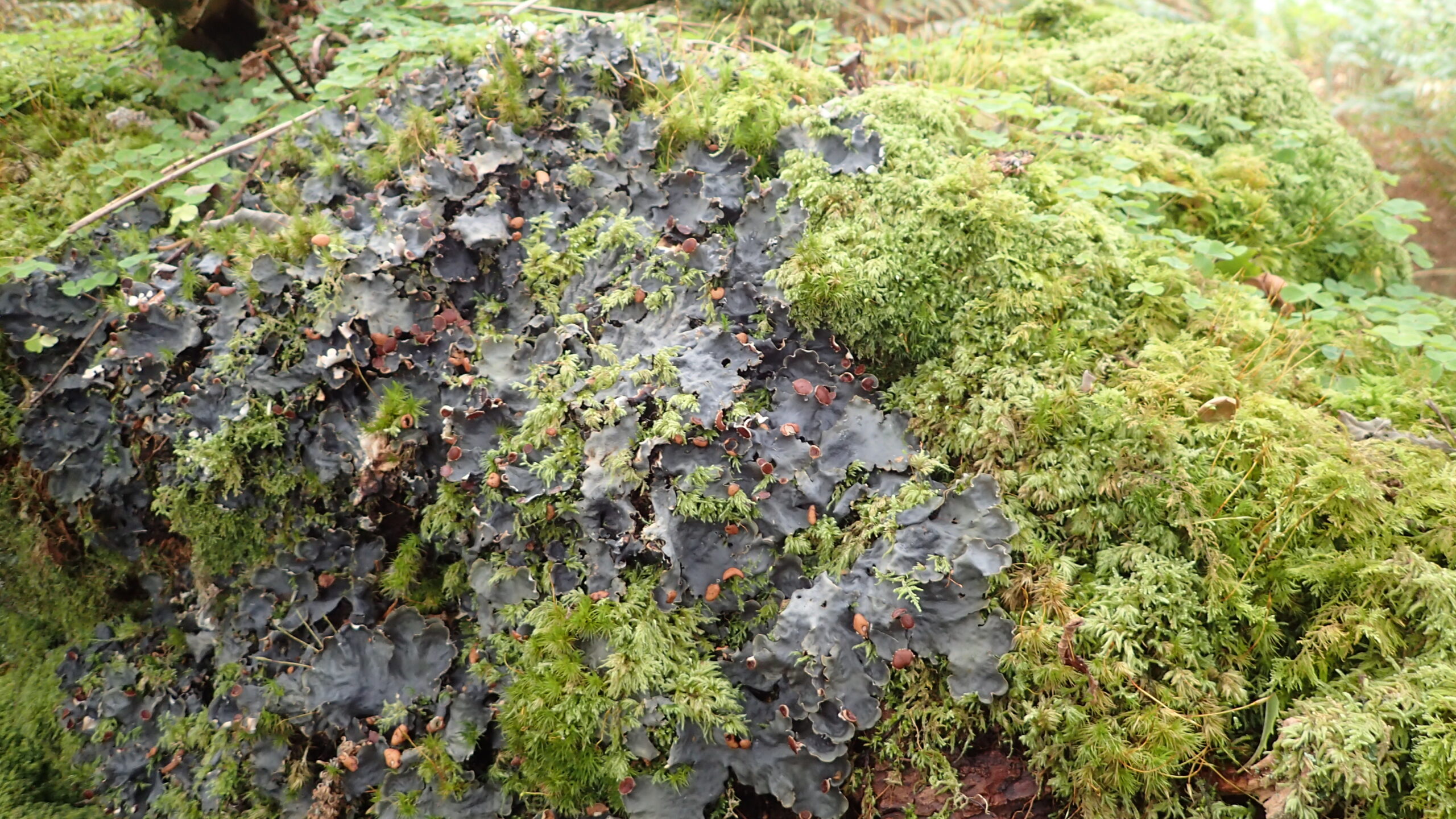
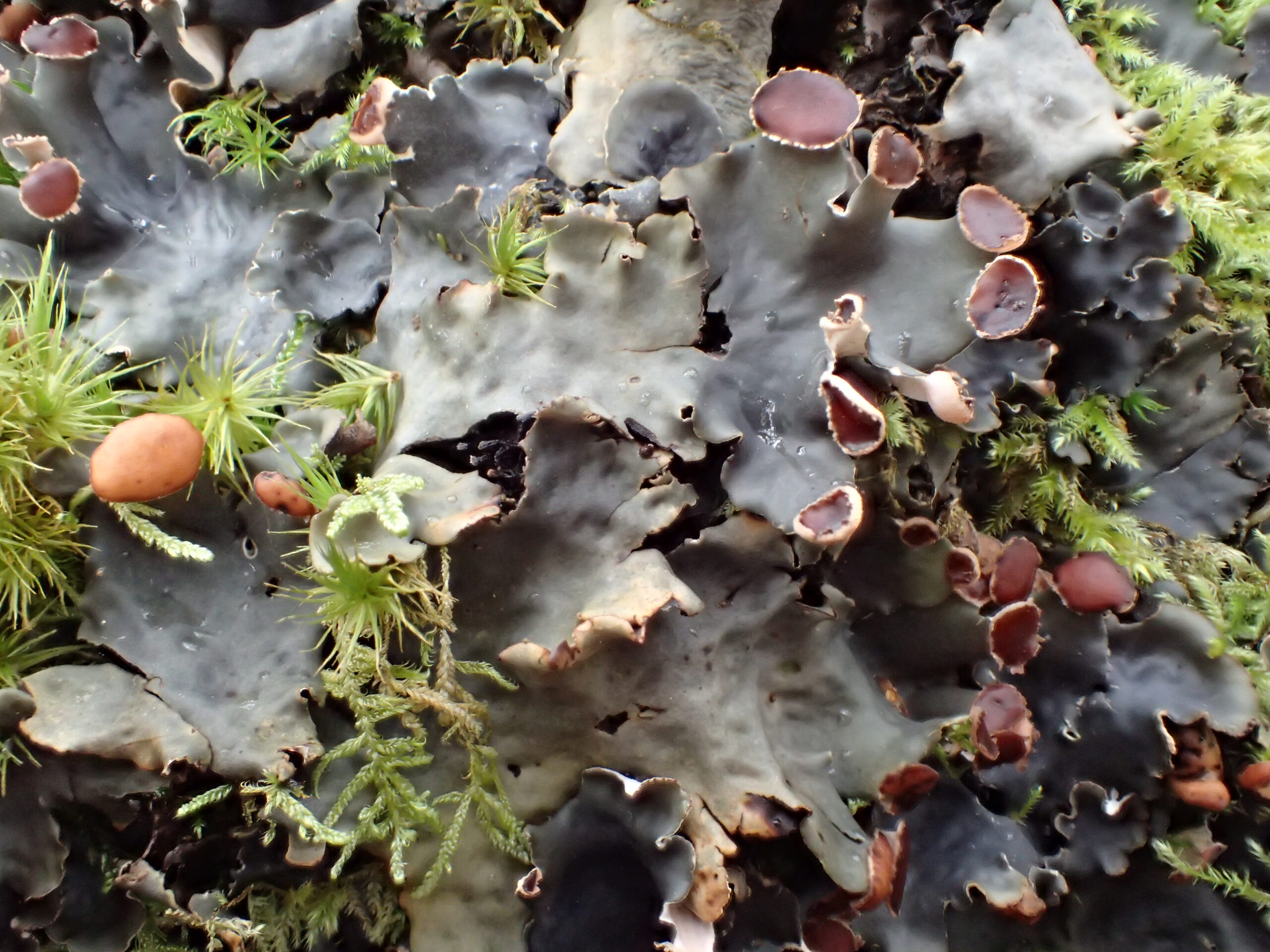
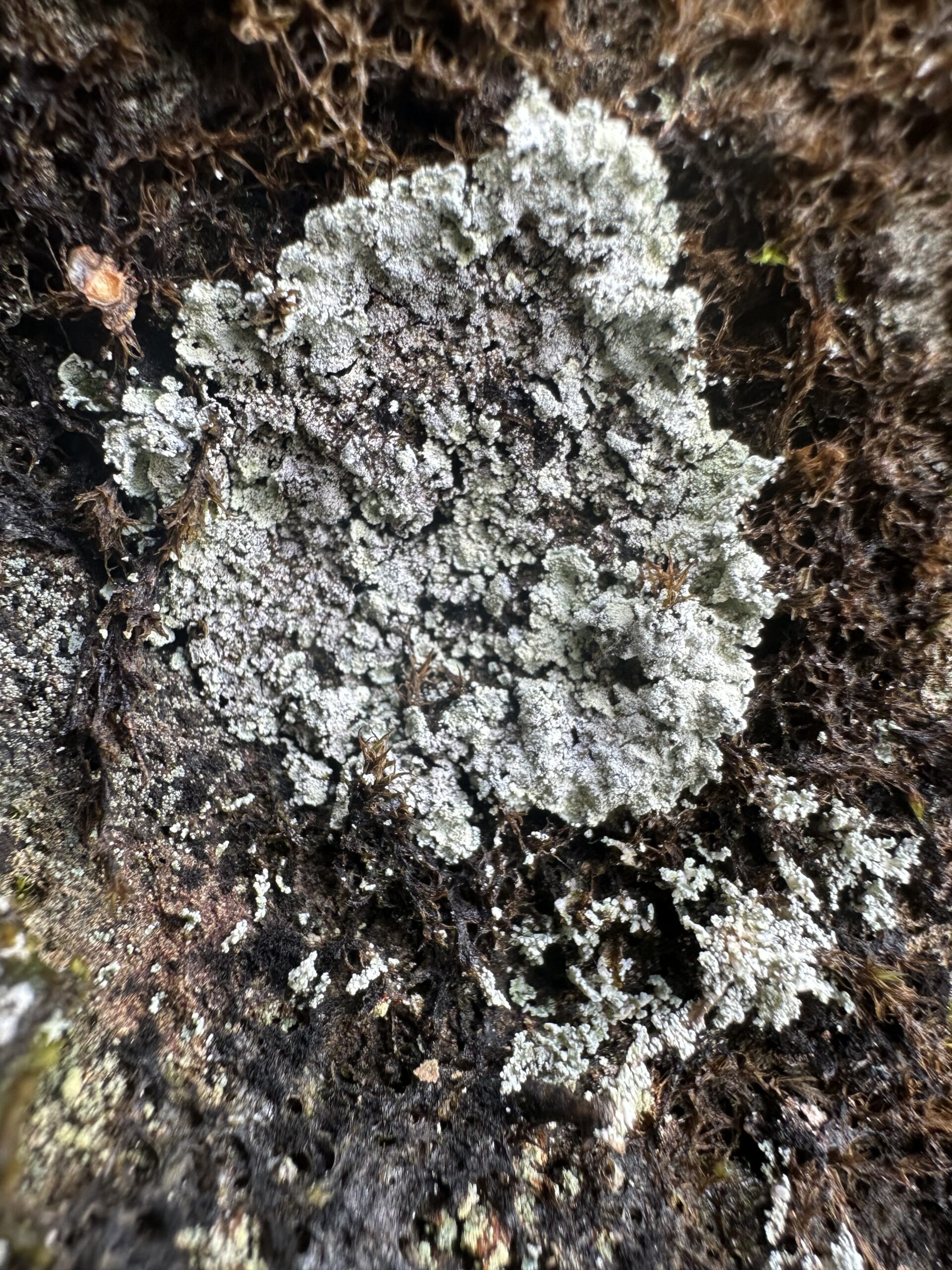
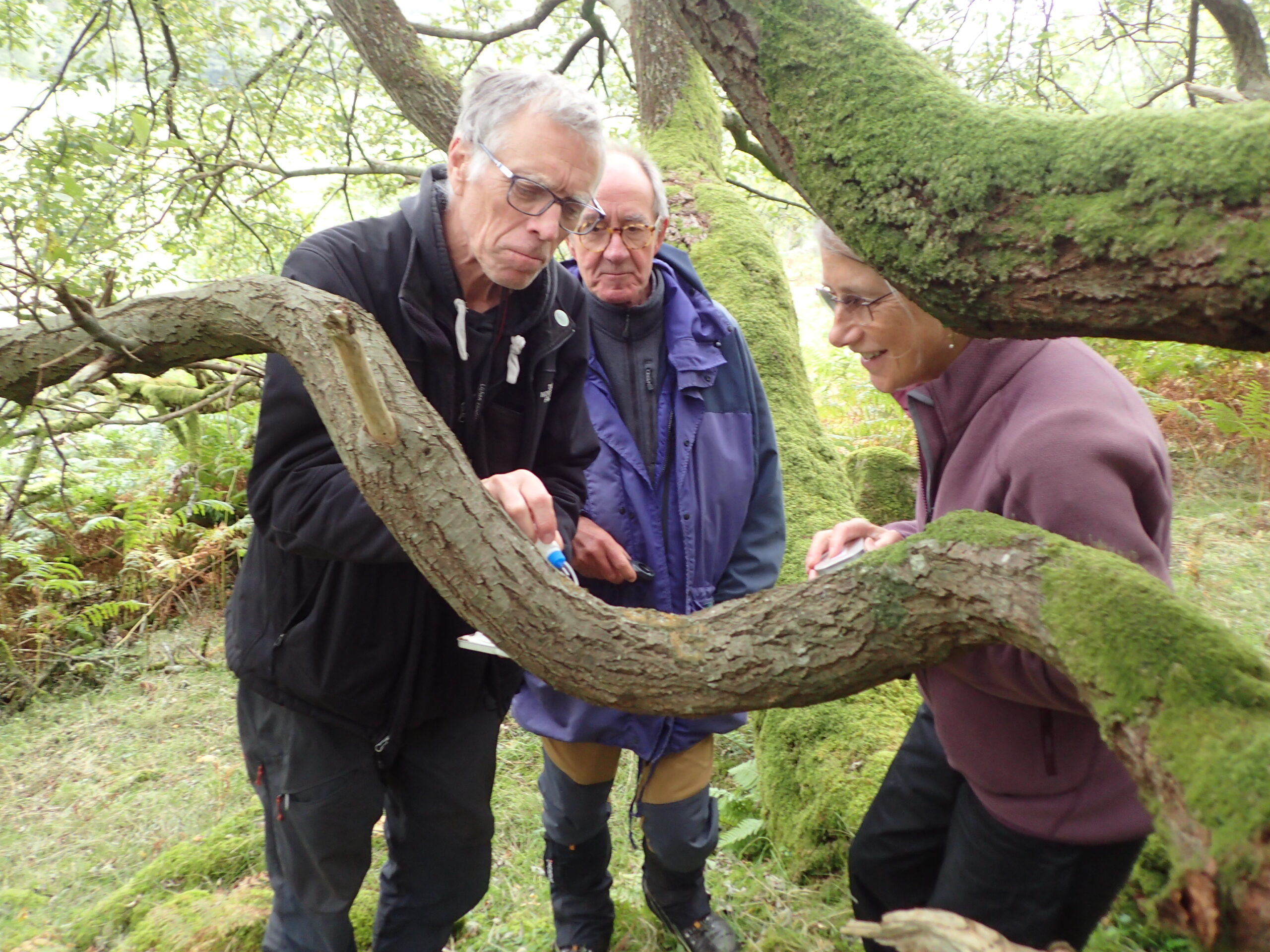
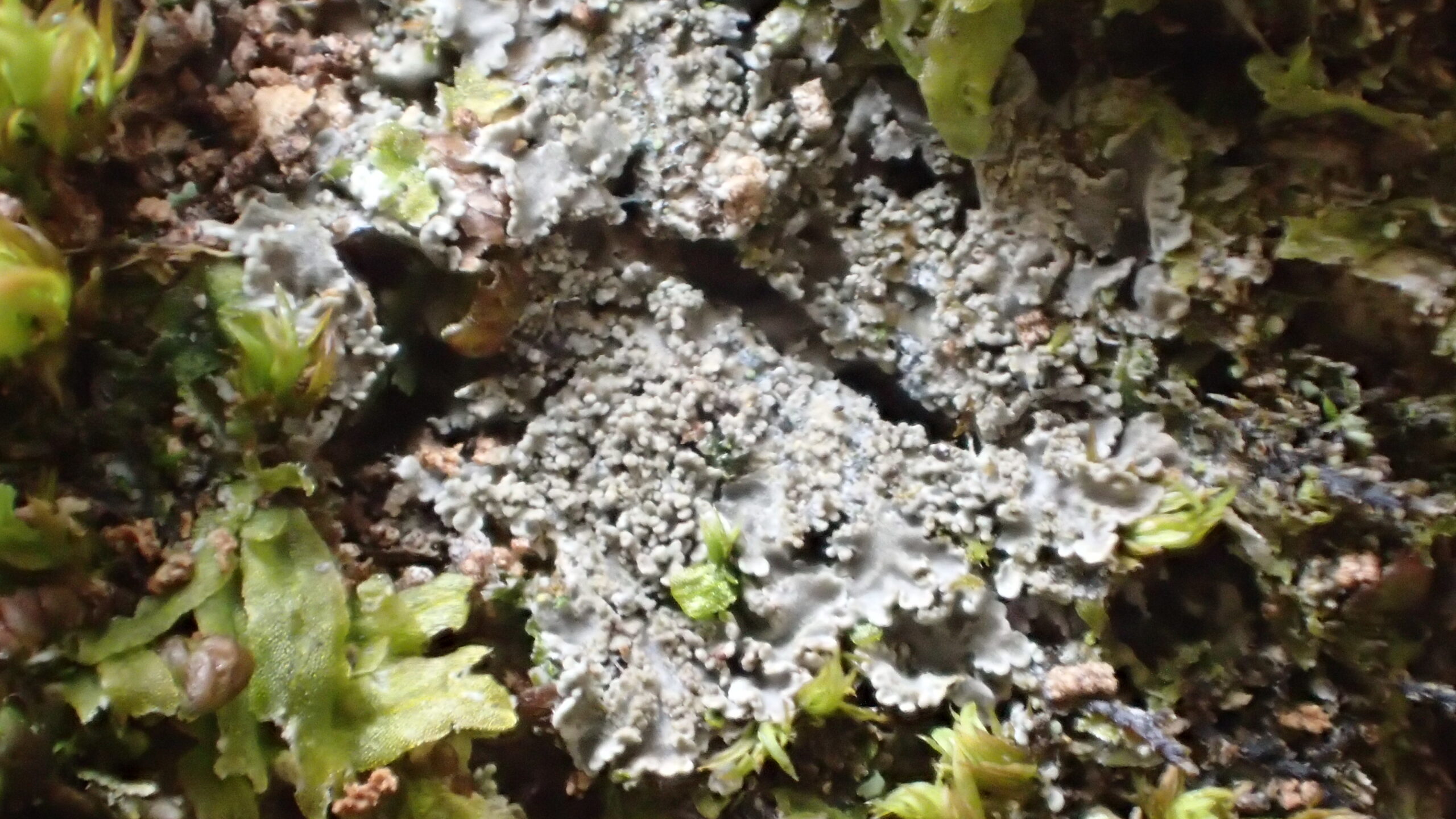
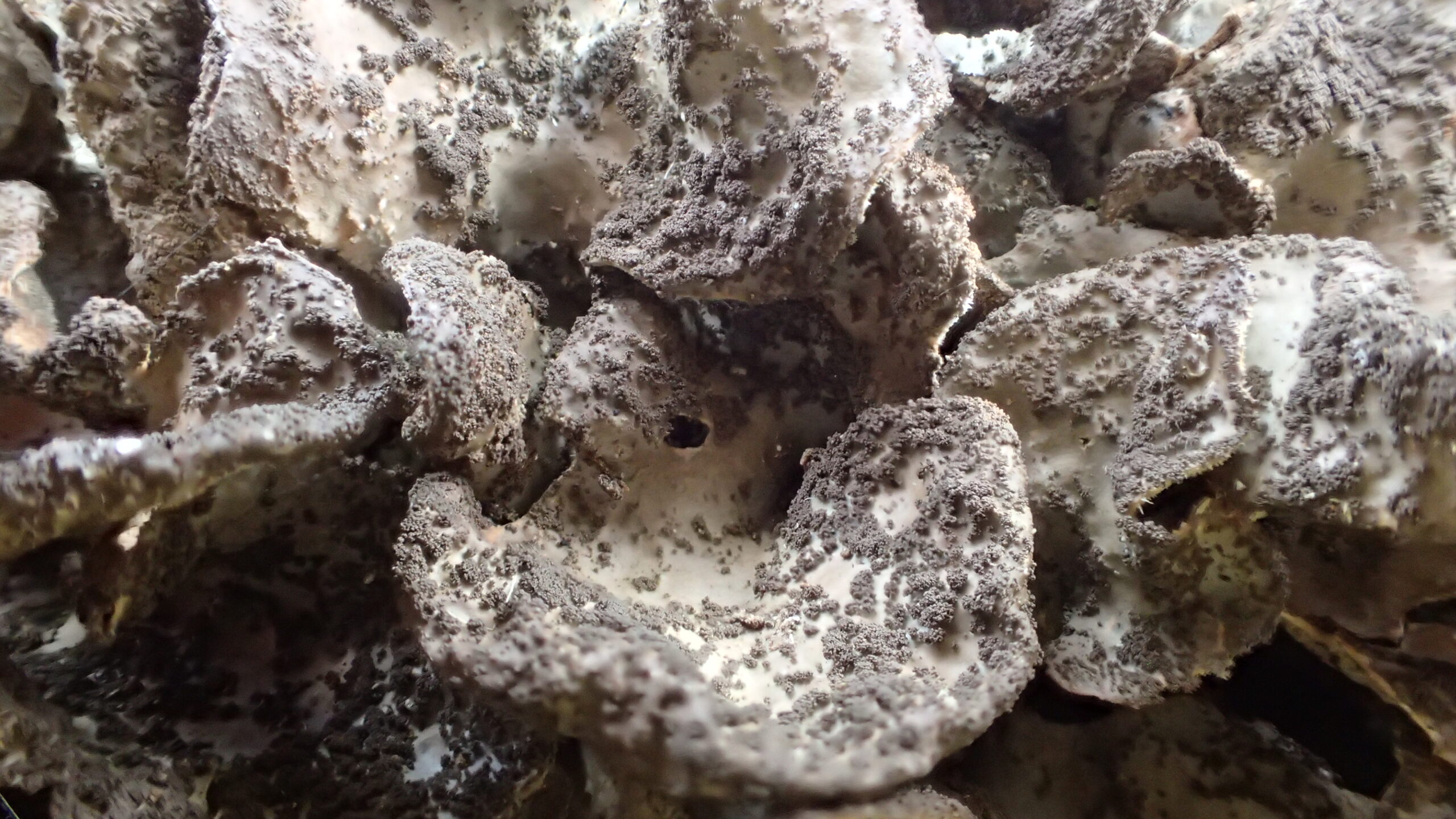
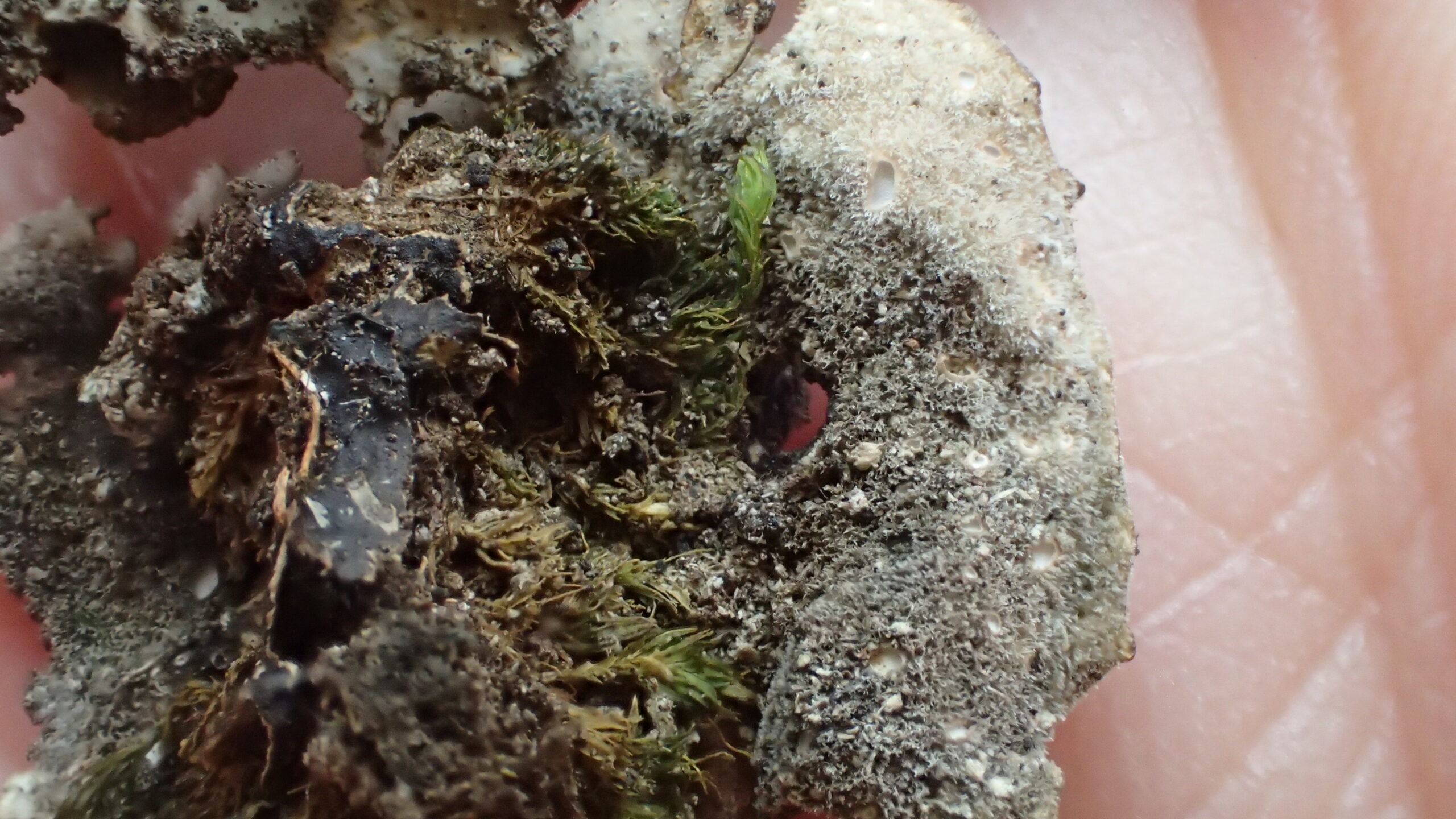
We started out looking in detail at Peltigera species on mossy rocks, Helen getting Dobson out to use the key. The first couple were P hymenina and P membranacea, the two most common ones. Later we had P praetextata and P horizontalis over moss on trees, leading to a lengthy discussion about whether the apothecia were in fact horizontal.
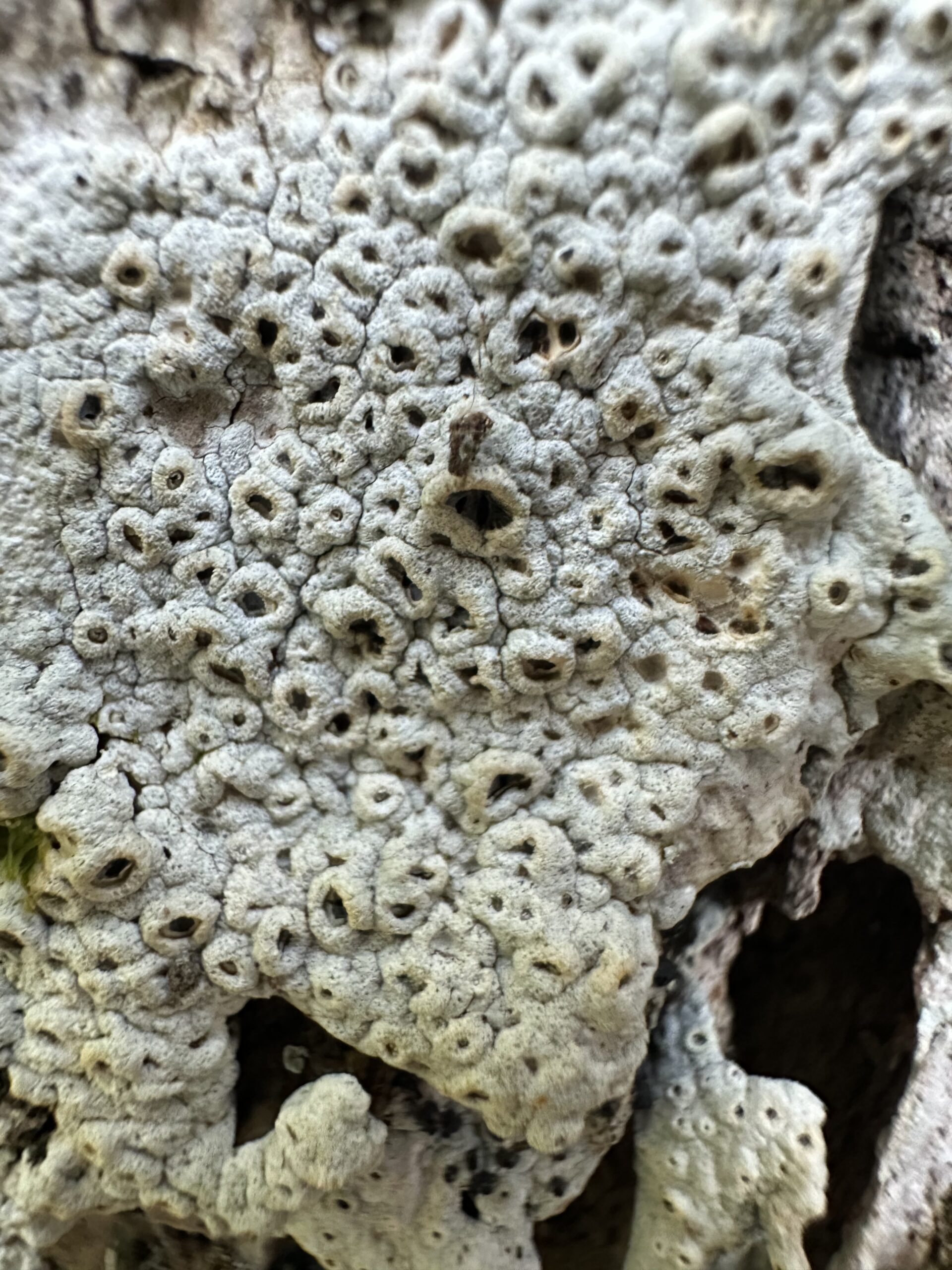
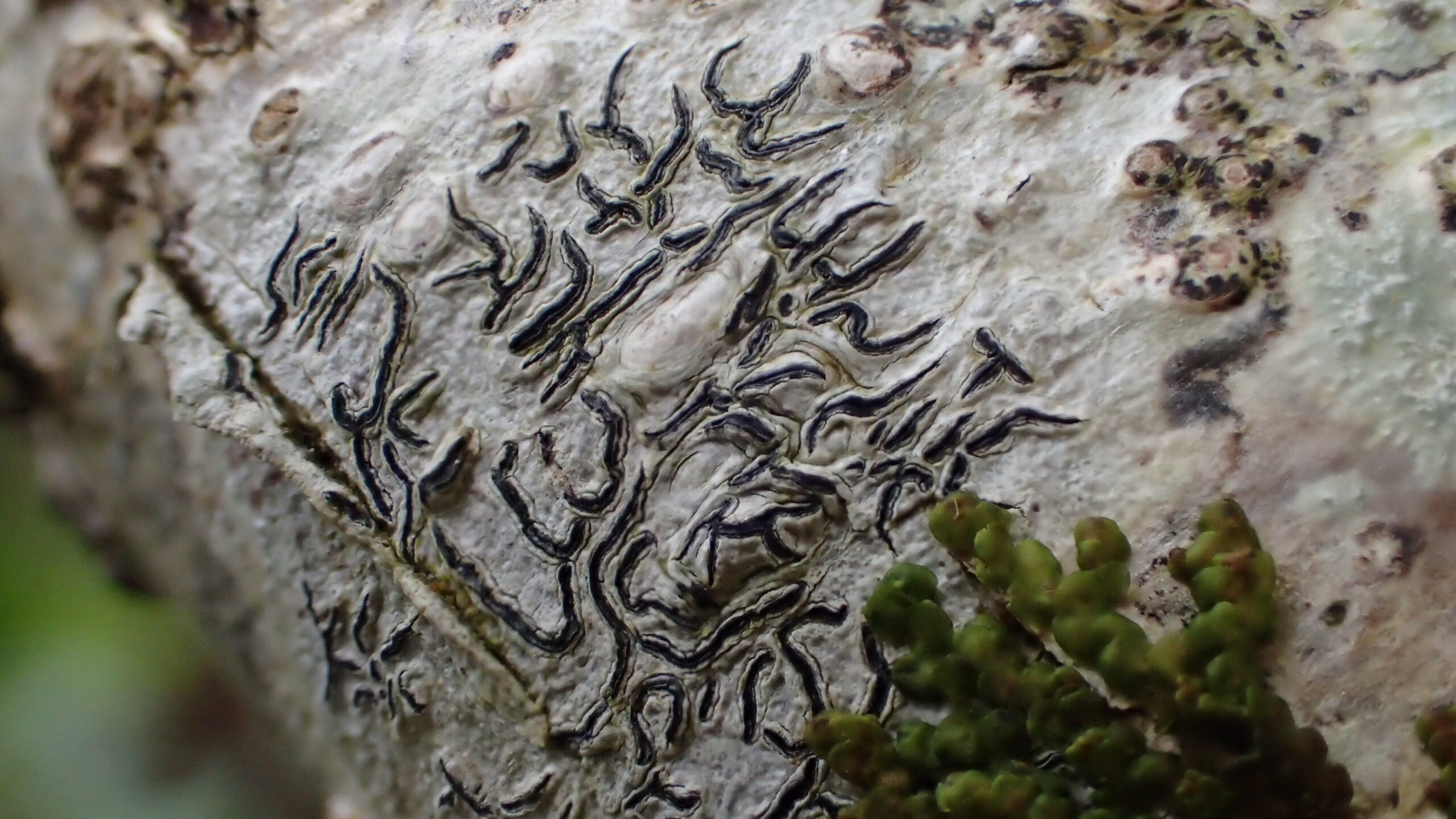
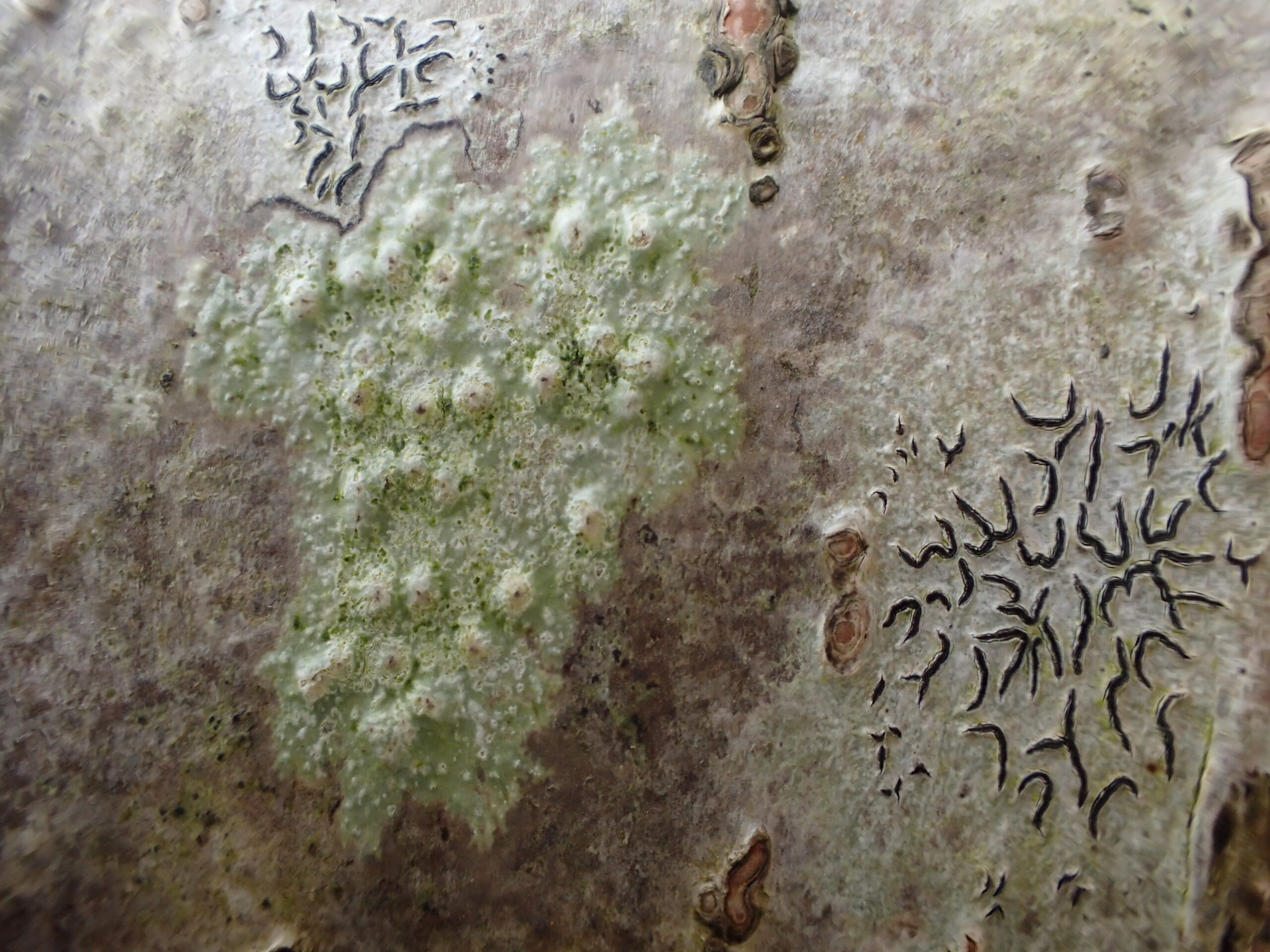
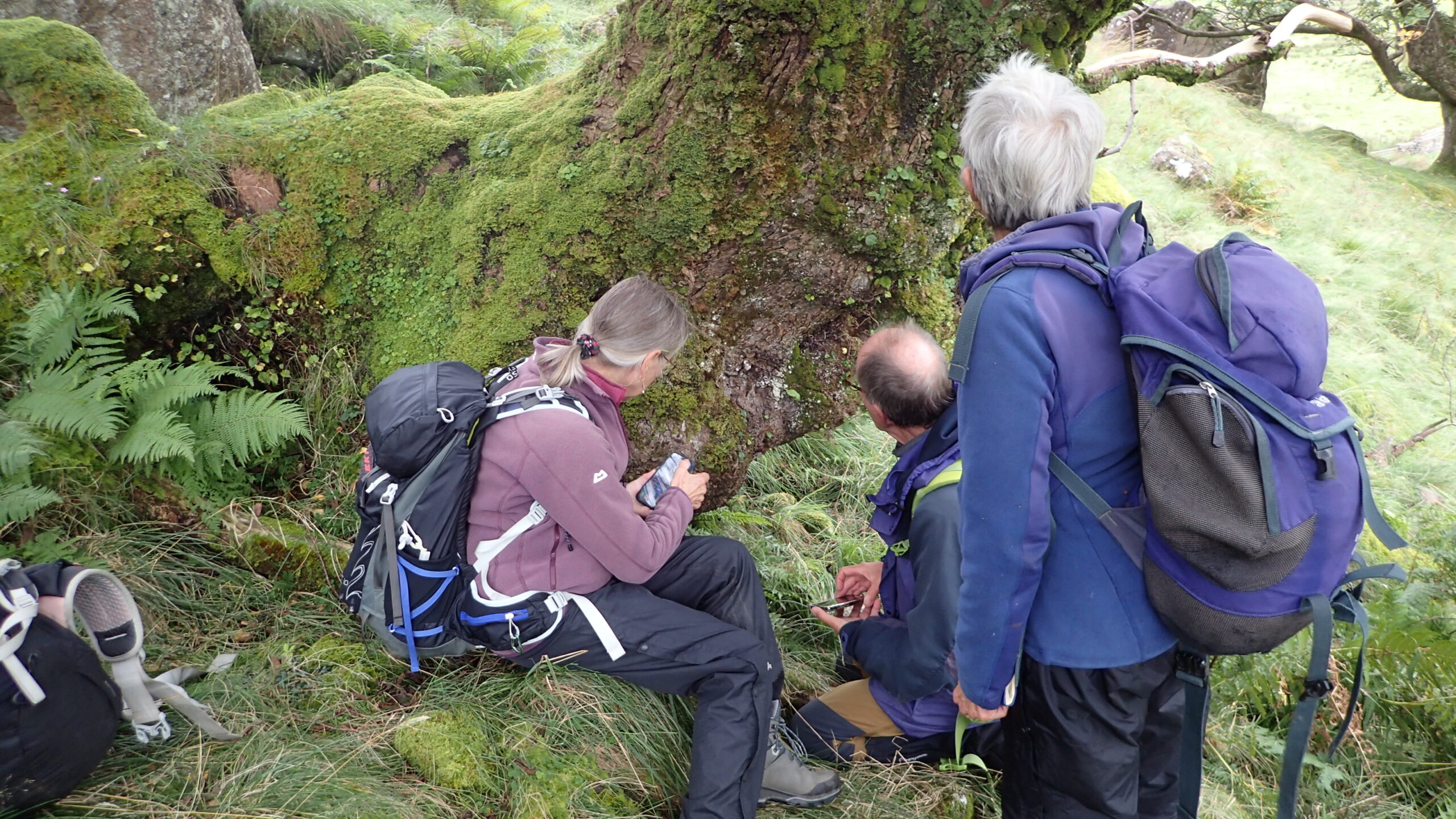
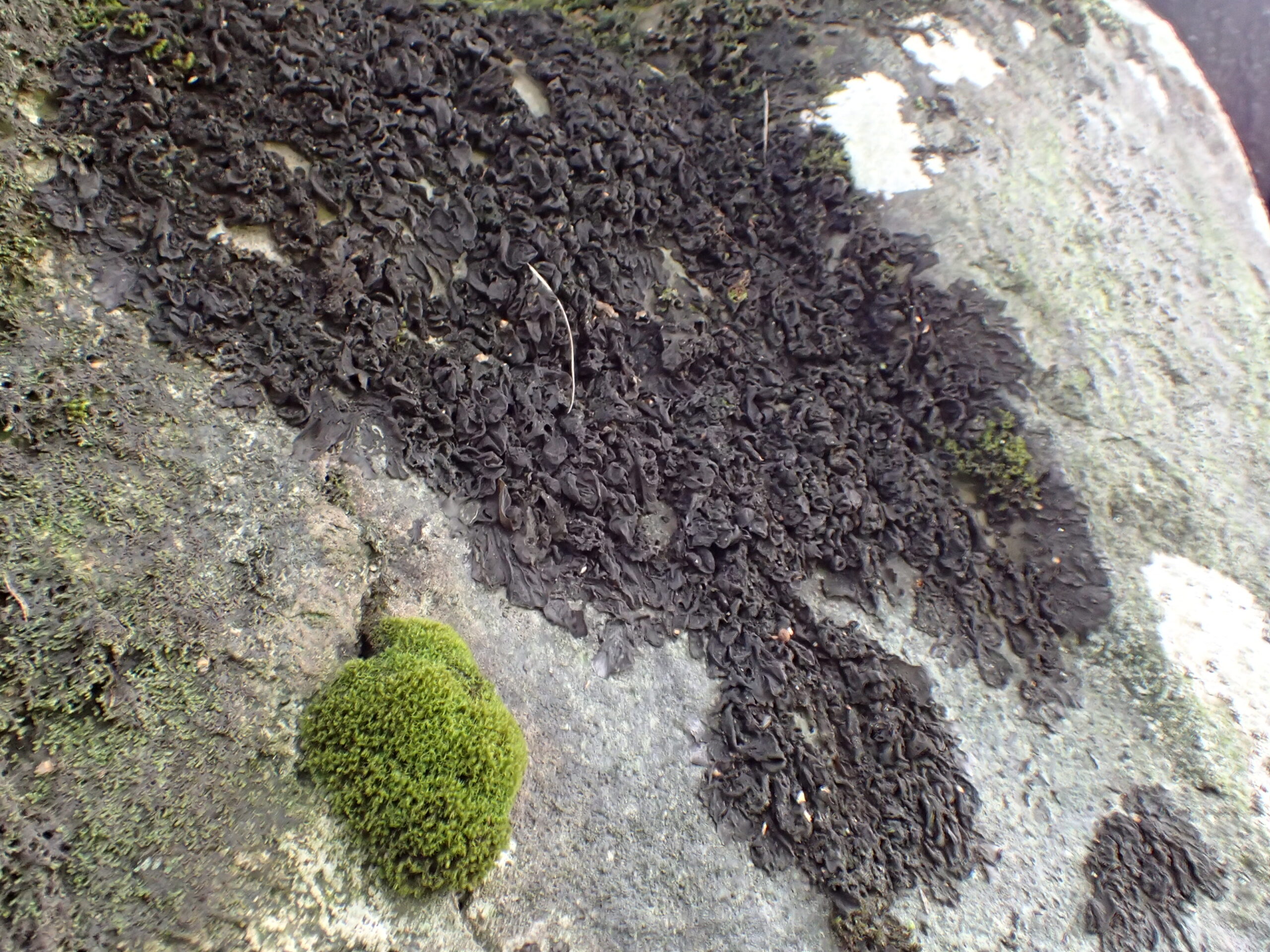
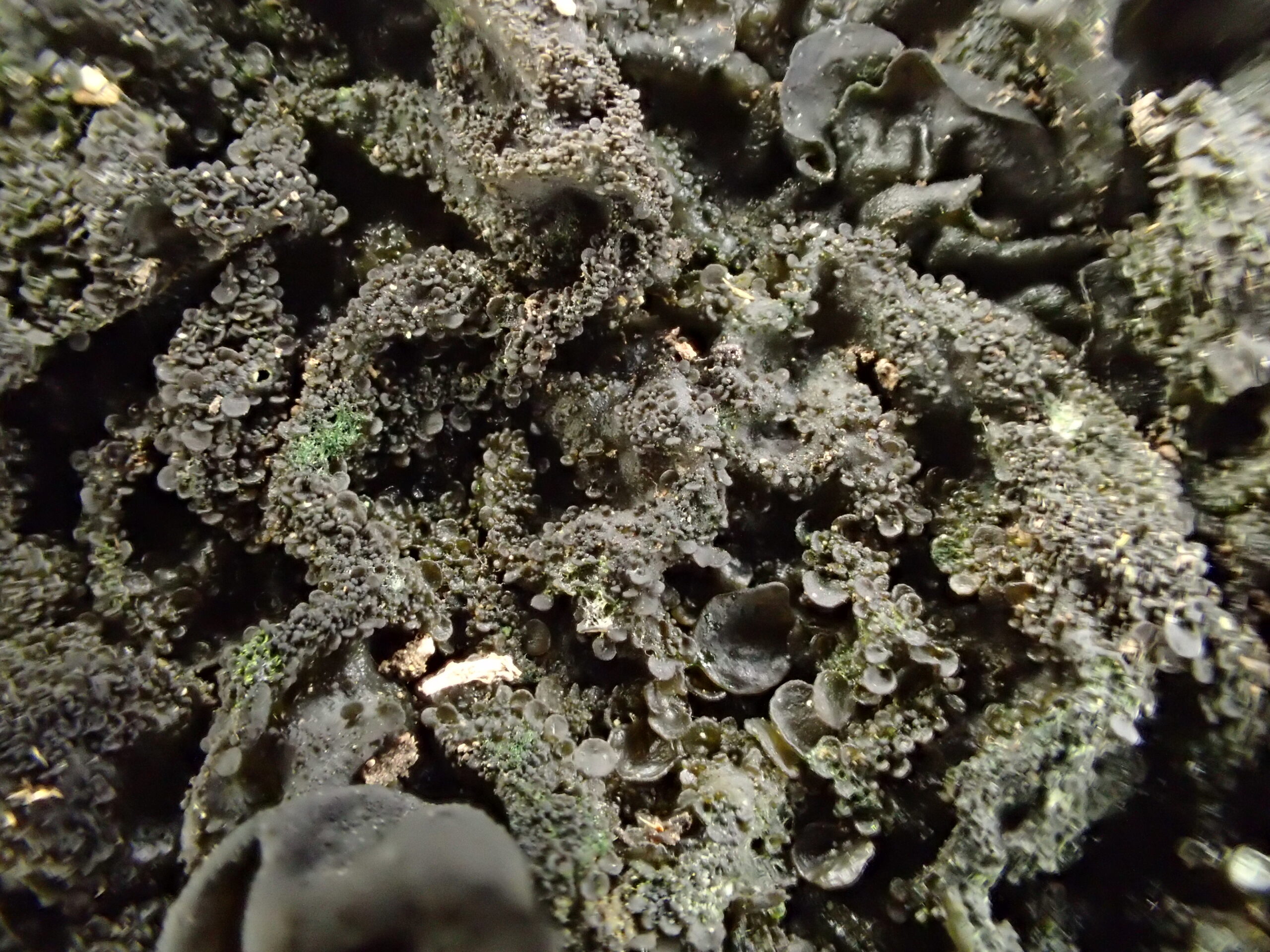
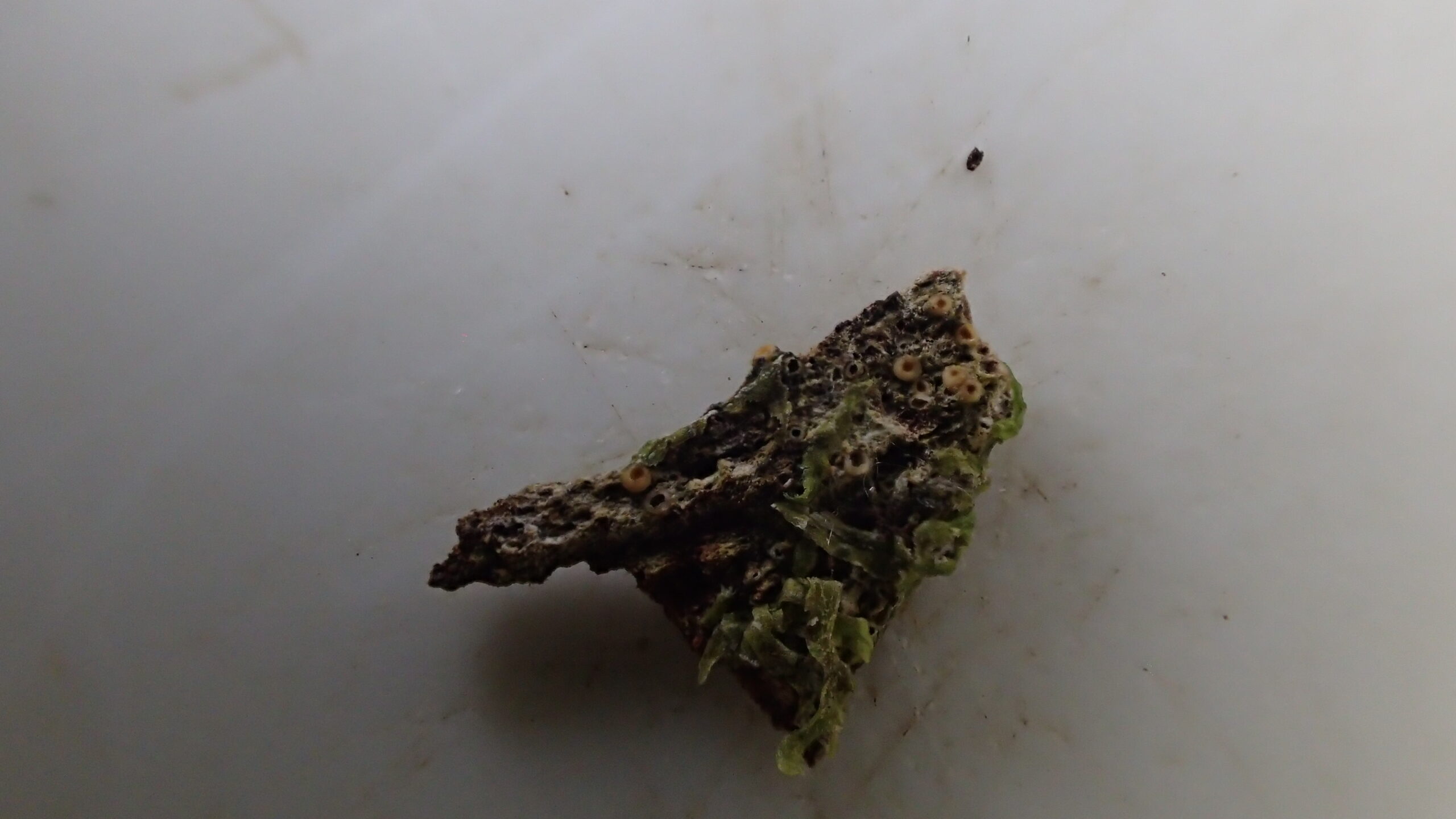
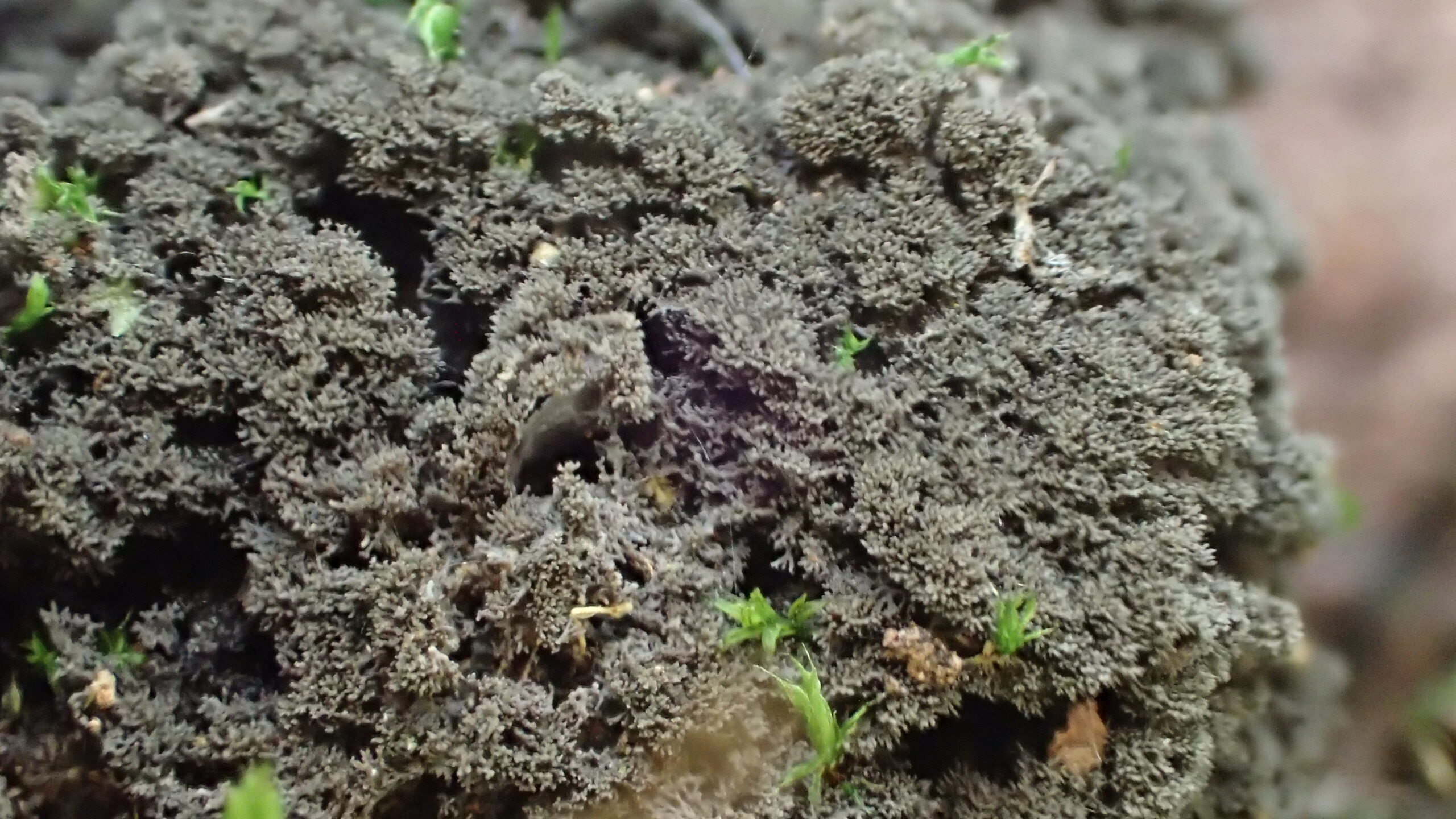
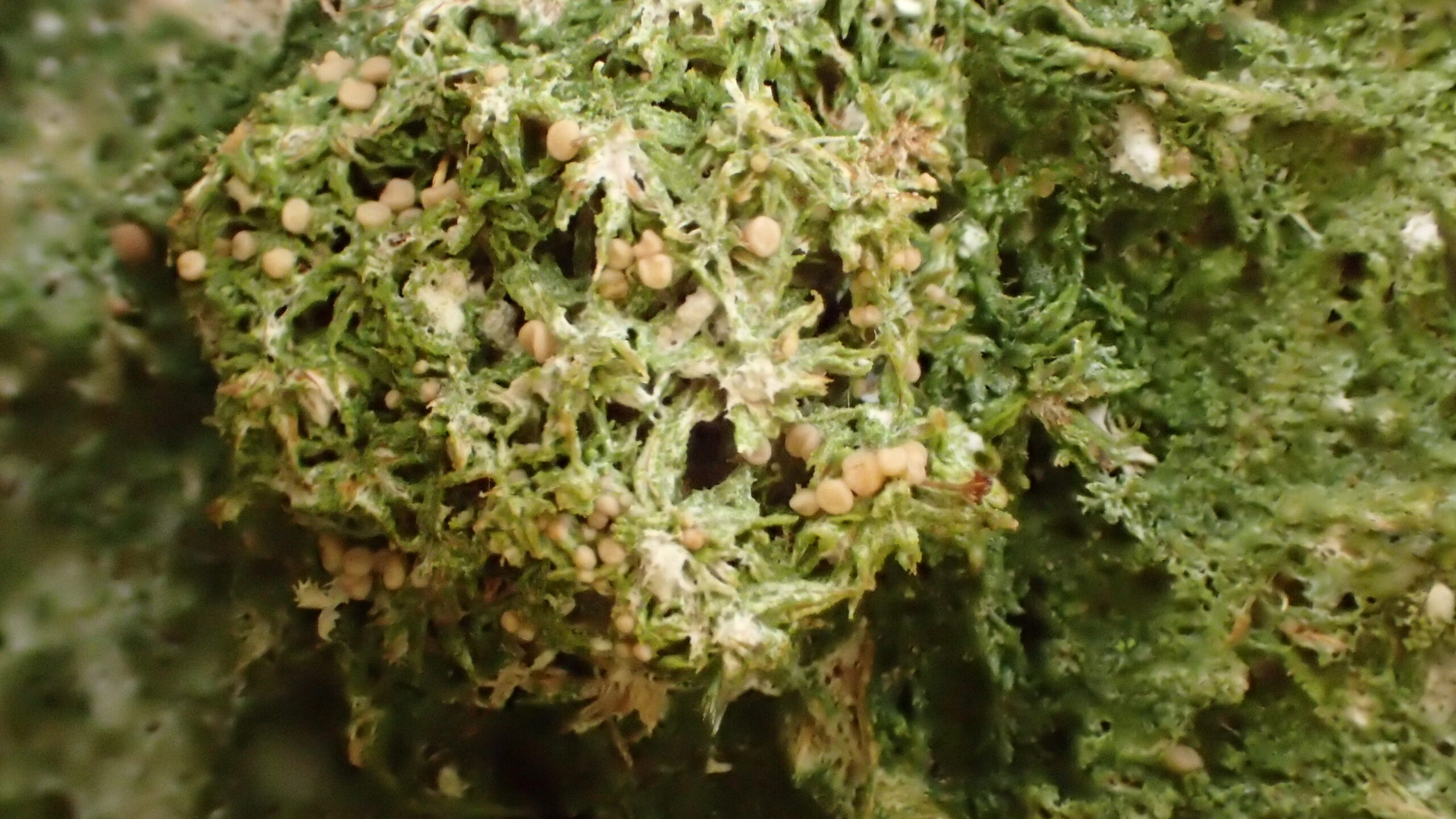
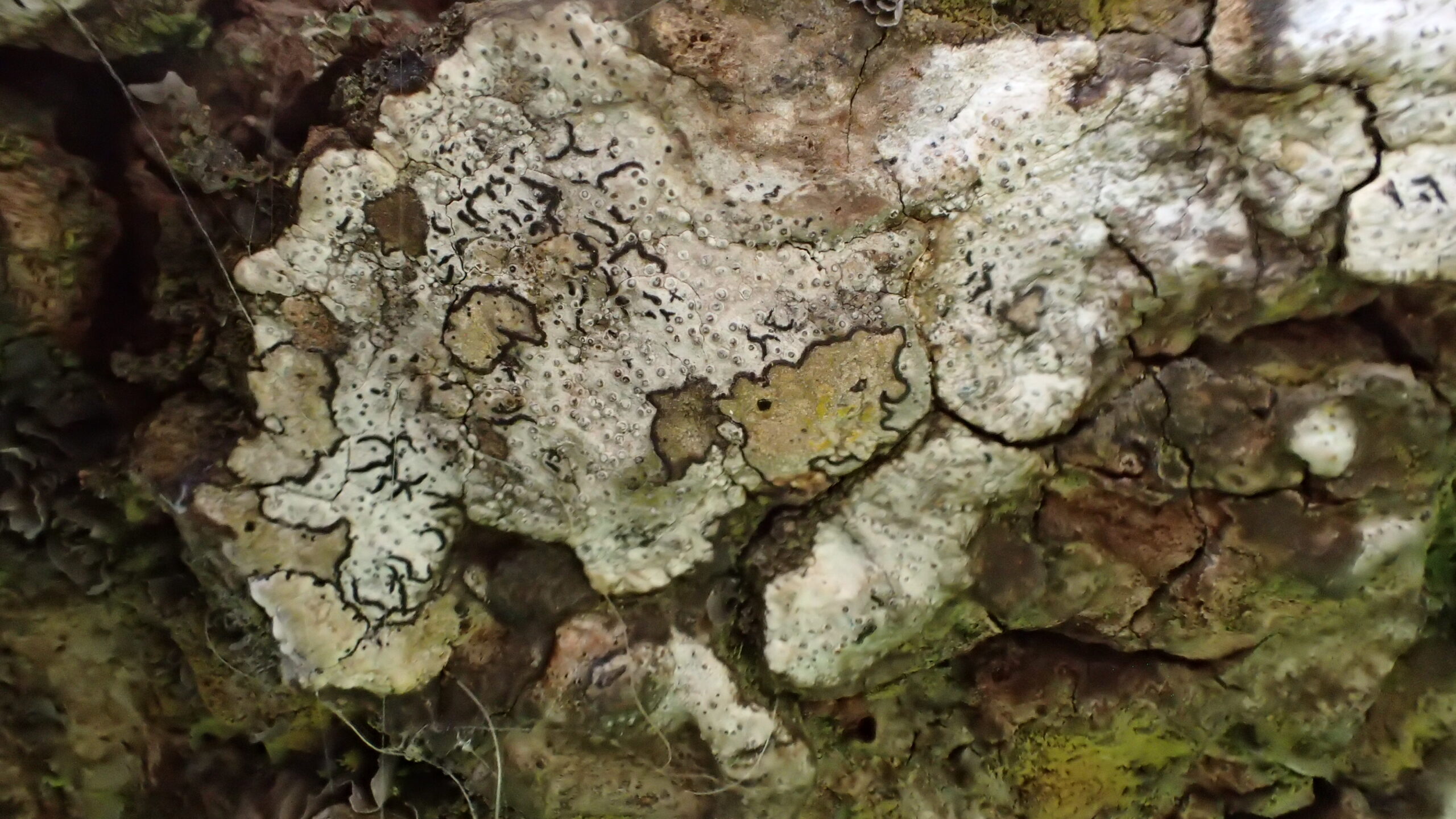
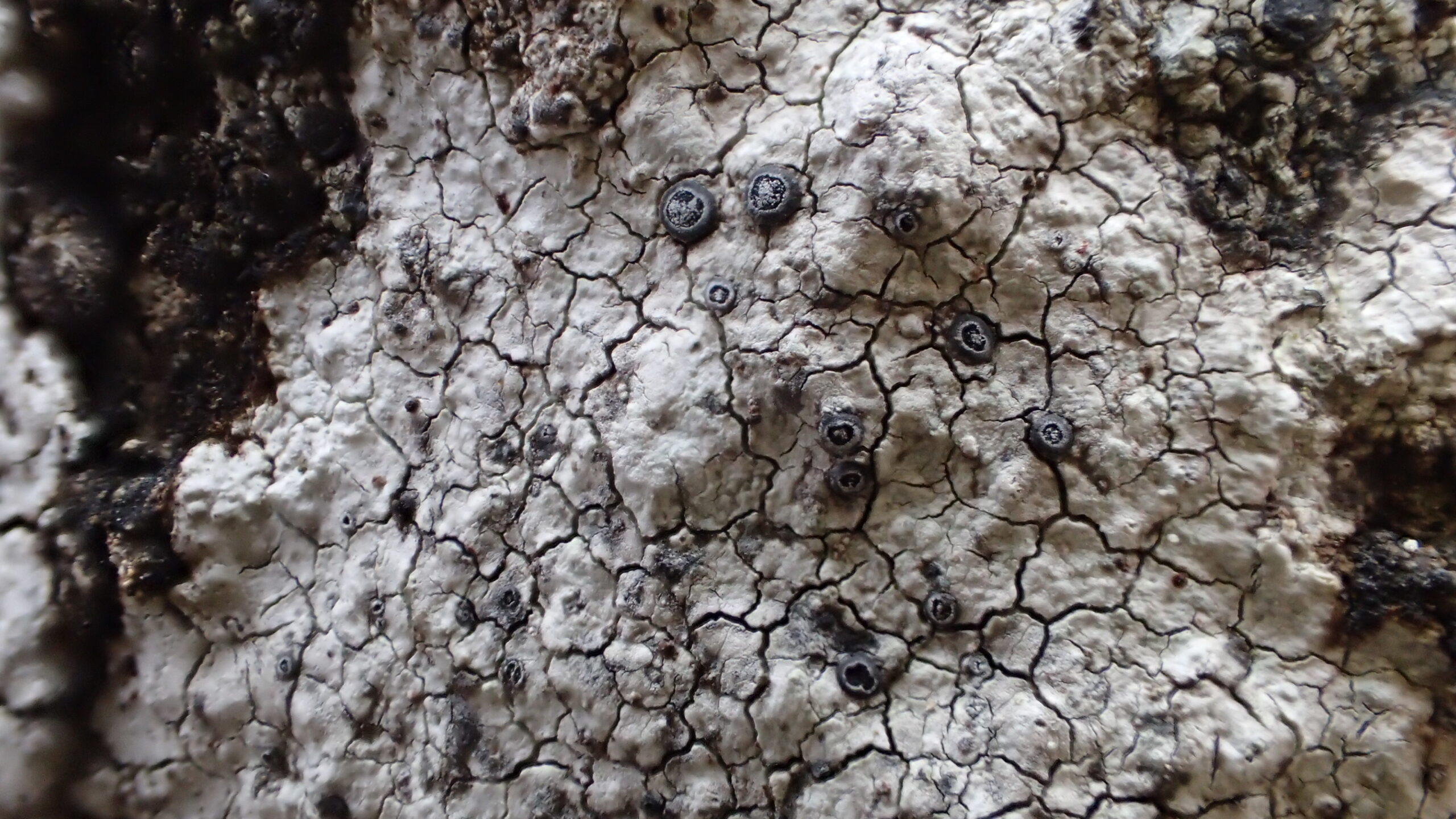
The best tree of the day was a medium-sized wych elm which we looked at for some time. It had obvious jelly lichens on the north side of the trunk – blue-grey Leptogium cyanescens and red-brown isidiate Scytinium lichenoides. Dark floppy Collema flaccidum with tiny lobelets/flattened isidia was on adjacent rocks. Looking more closely at the elm bark we found fertile Opegrapha vermicellifera with white pycnidia and black lirellae, tiny orange-fruited Gyalecta truncigena, plus Mycobilimbia sphaeroides with pink +/- globose apothecia and M epixanthoides granules over moss. A specimen with red-brown gelatinous apothecia has turned out to be Bryobilimbia sanguineoatra and a crust with orange and green isidia/granules looks like it might be Porina rosei, recorded nearby in Cumbria for the first time last year. An expert has been consulted.
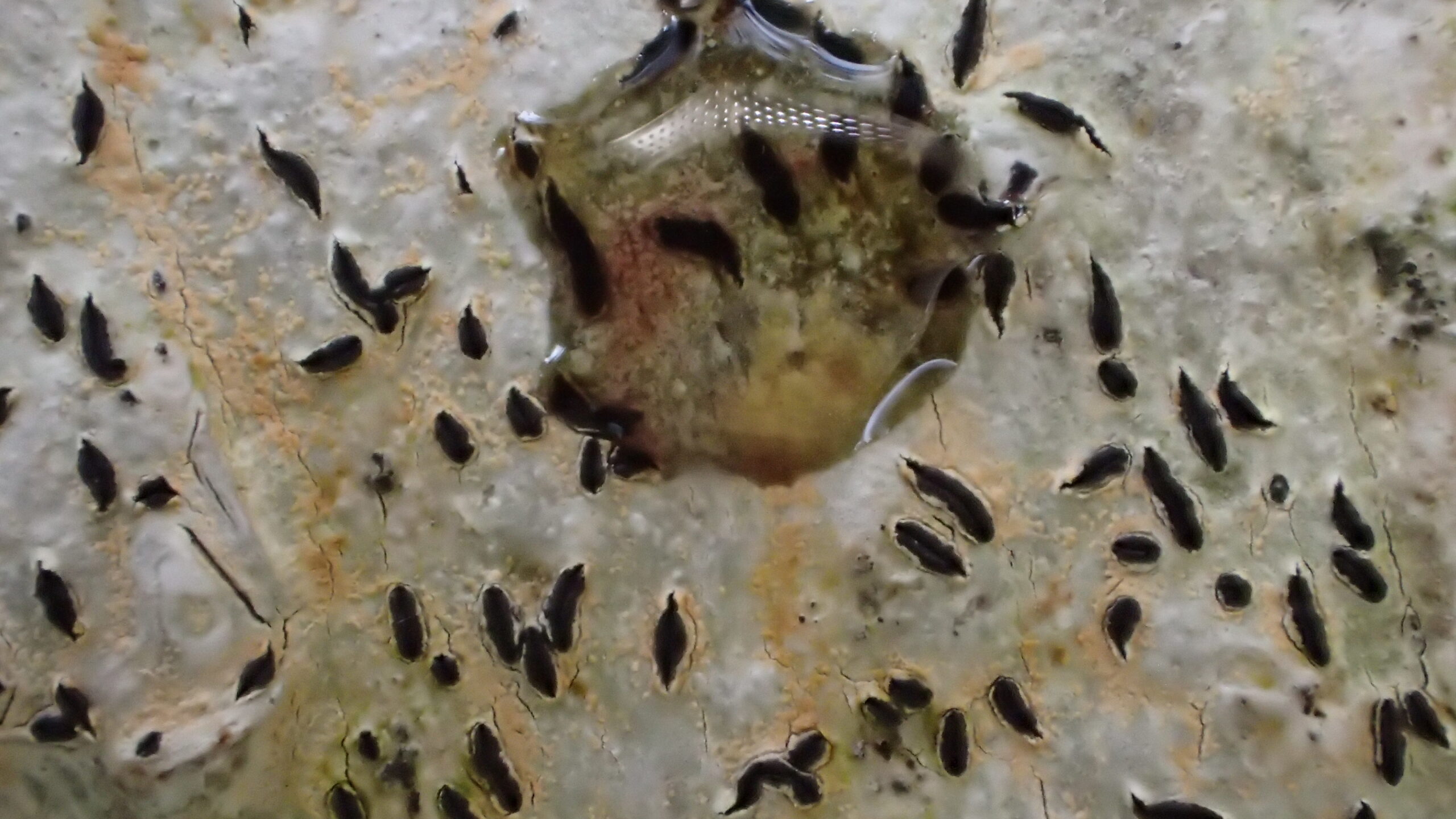
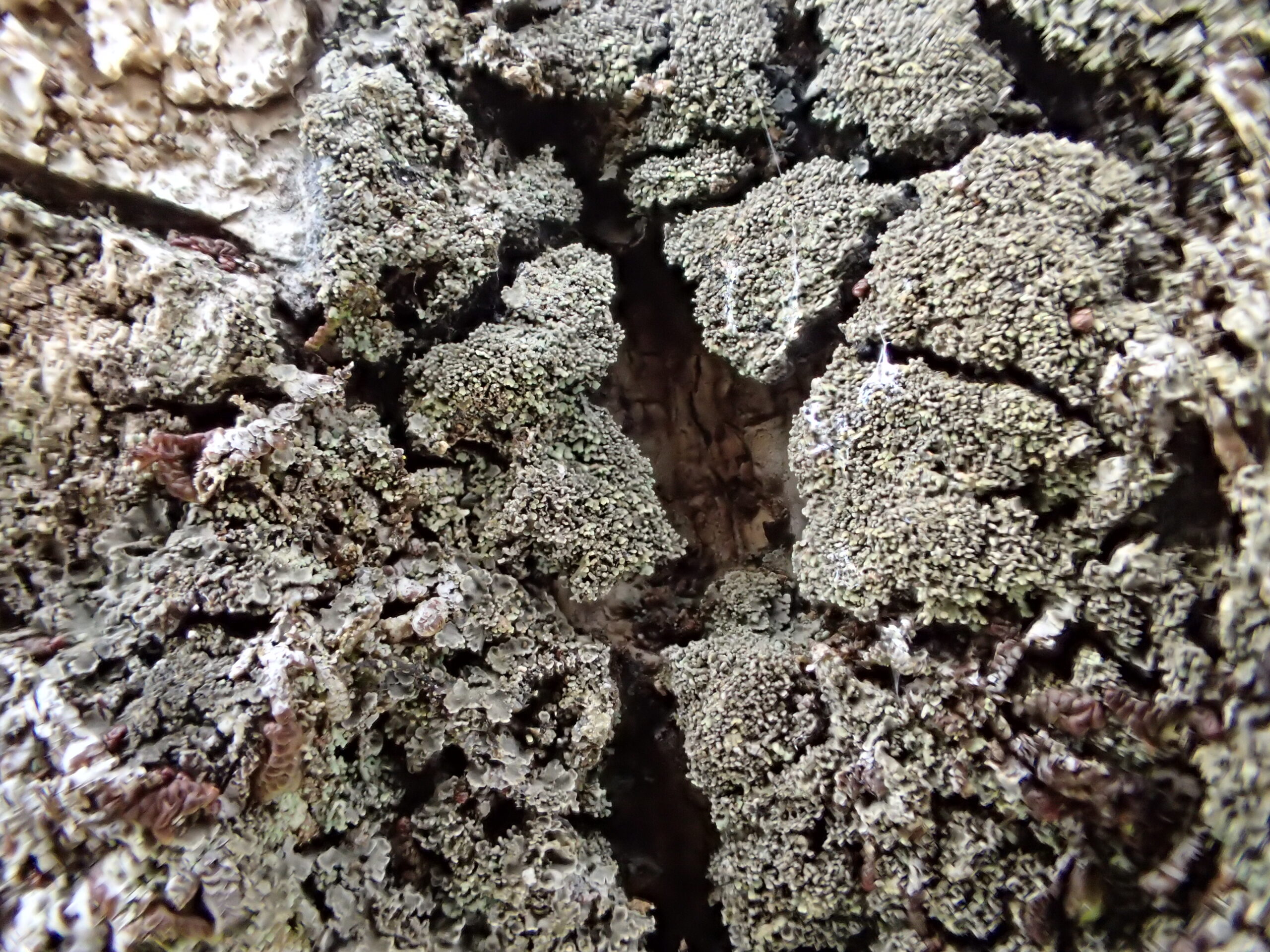
There were also a couple of good ash pollards where we saw a small quantity of Pannaria conoplea and copious Sticta sylvatica, though the latter is likely doomed as the trees it was on had died so the bark with the lichens attached will fall off in a few years. A sprawling mossy willow had a good patch of distinctive Peltigera horizontalis. Hazel contributed Normandina pulchella over moss and an assortment of lirellate crusts, one showing purple-red pigment bleeding out of the black margin of the fruiting bodies. Hopefully a specimen will allow this to be identified.
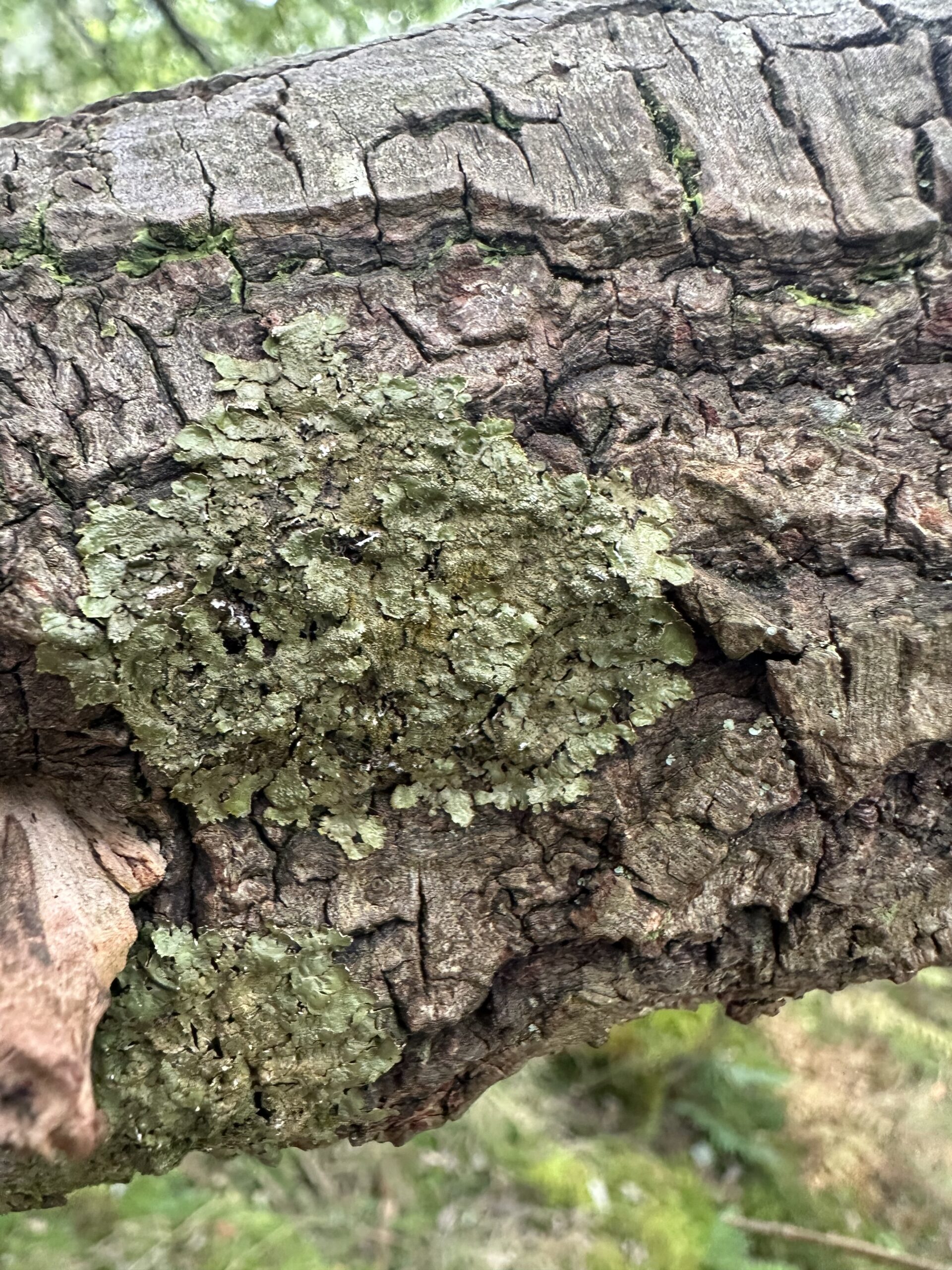
At the mossy willow we had lunch and used a patch of Melanelixia glabratula to compare Chris C’s thick bleach with Helen’s thin Milton – both were a similar red on the medulla.
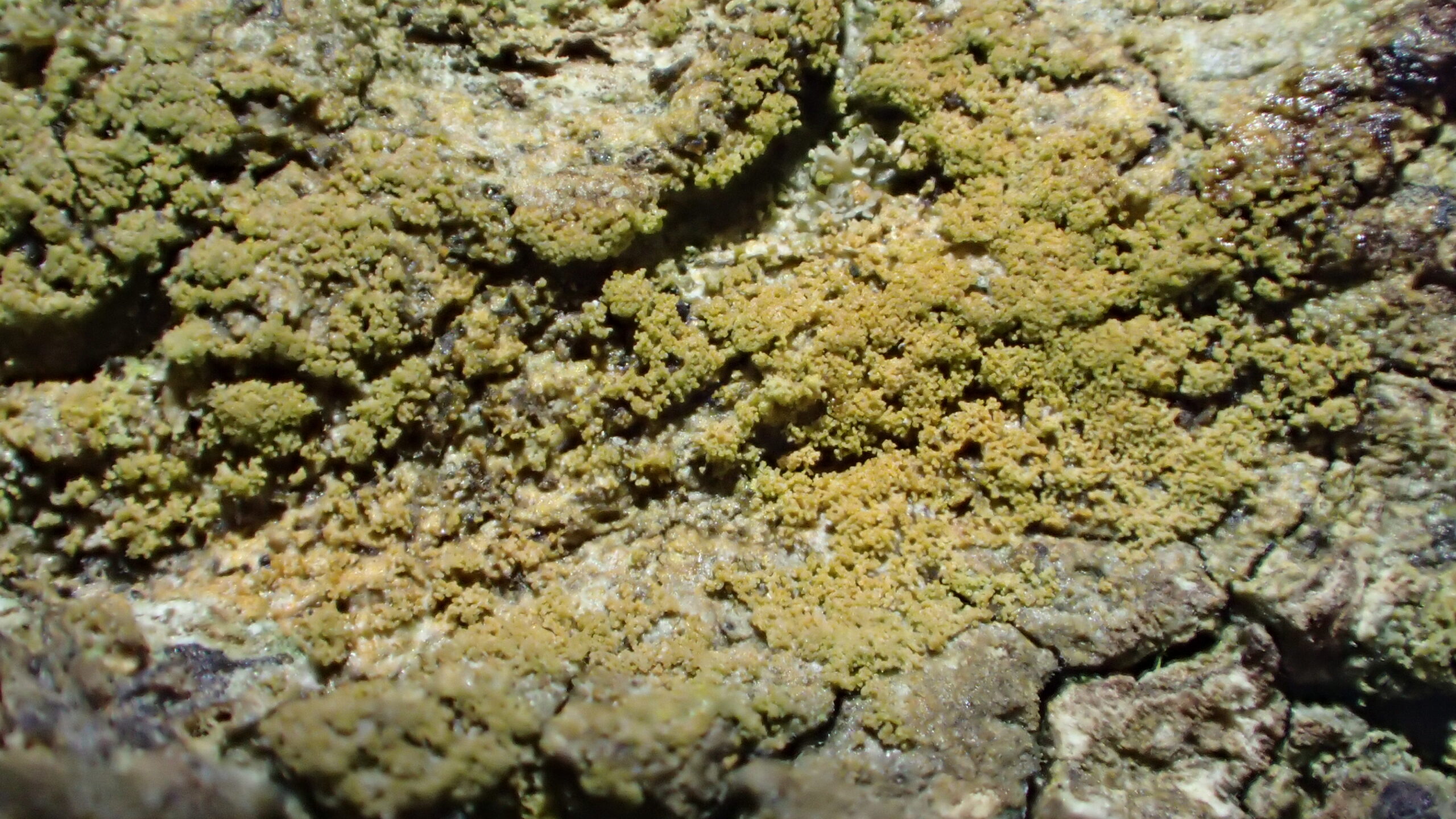
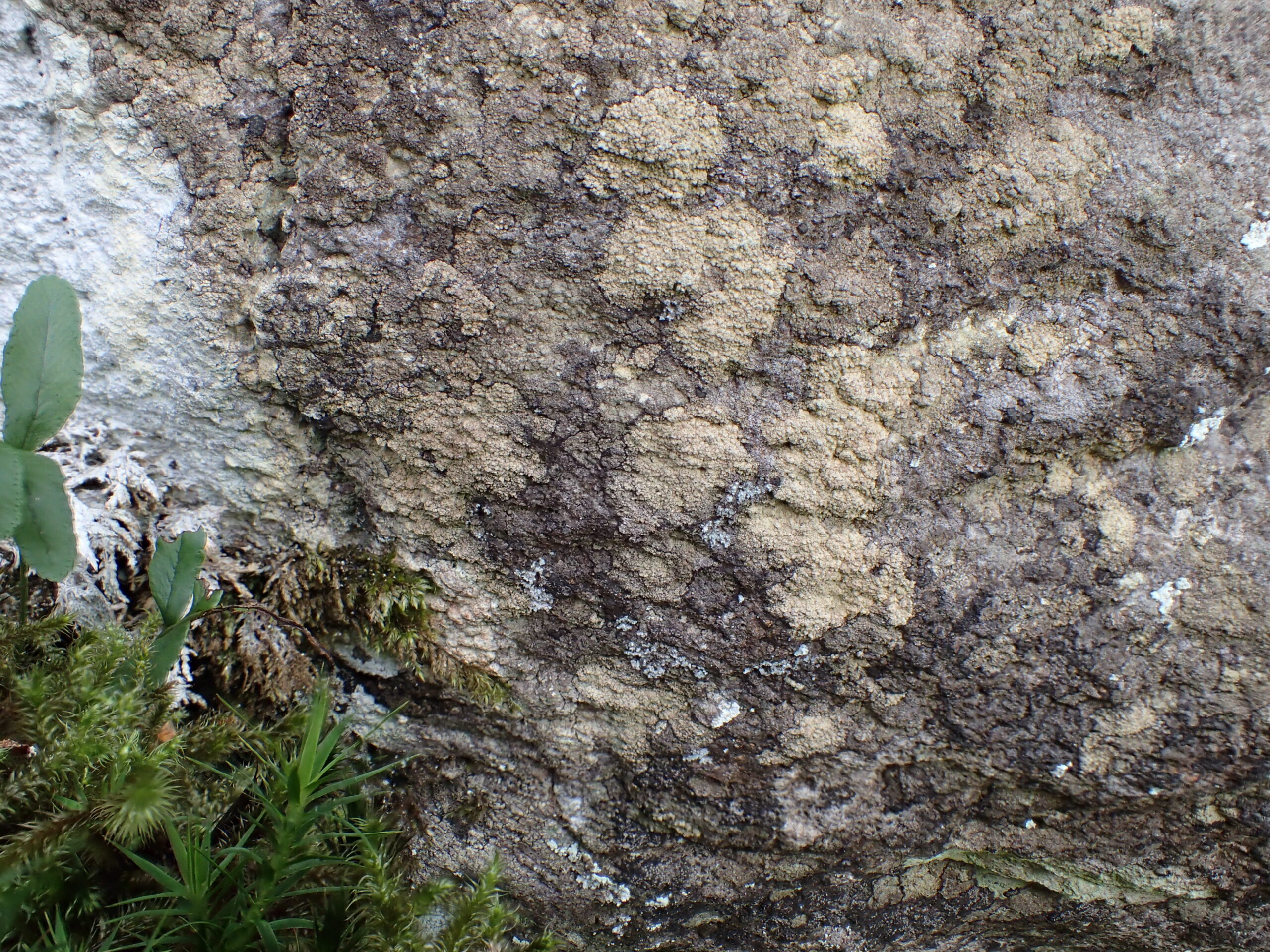
The rocks were interesting and would have needed a trip in their own right. As it was, we didn’t take many saxicolous specimens, but one thing turned out to be Porpidia contraponenda with distinctive-looking slightly pruinose apothecia with a thick margin. On the sheltered side of huge boulders we found Schismatomma umbrinum, soft cushions of pale brown soredia with a bright white medulla under UV light. Pale yellow powdery Psilolechia lucida, orange in UV, was nearby. There wasn’t a great deal of yellow Rhizocarpon geographicum, perhaps indicating the less acidic nature of the rock.
It’s unlikely many lichenologists have ventured up the rocky slopes so there’s further scope for exploring that area another time.
Text: Caz Walker
Photos: Caz Walker, Chris Cant, Chris Hind