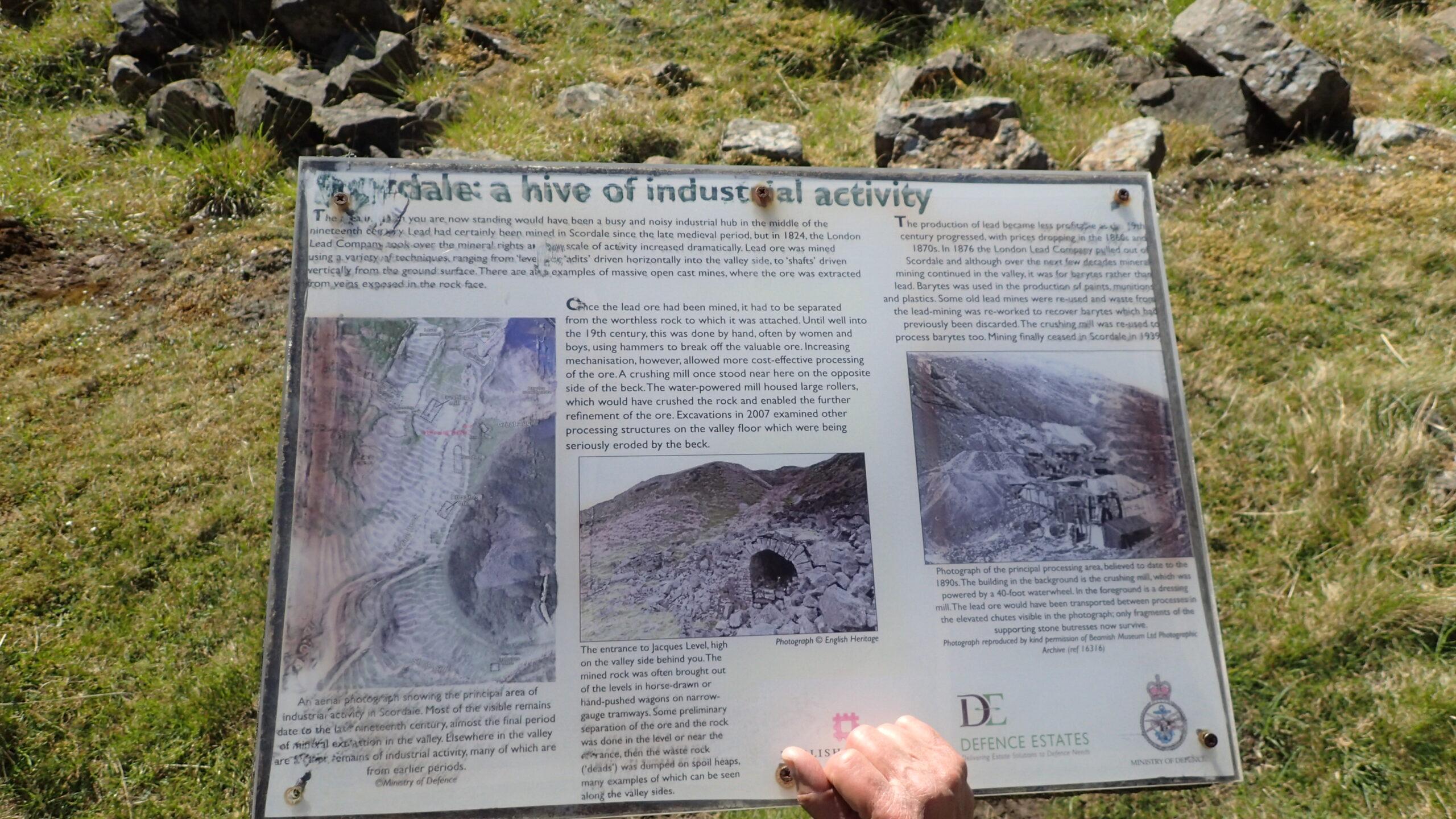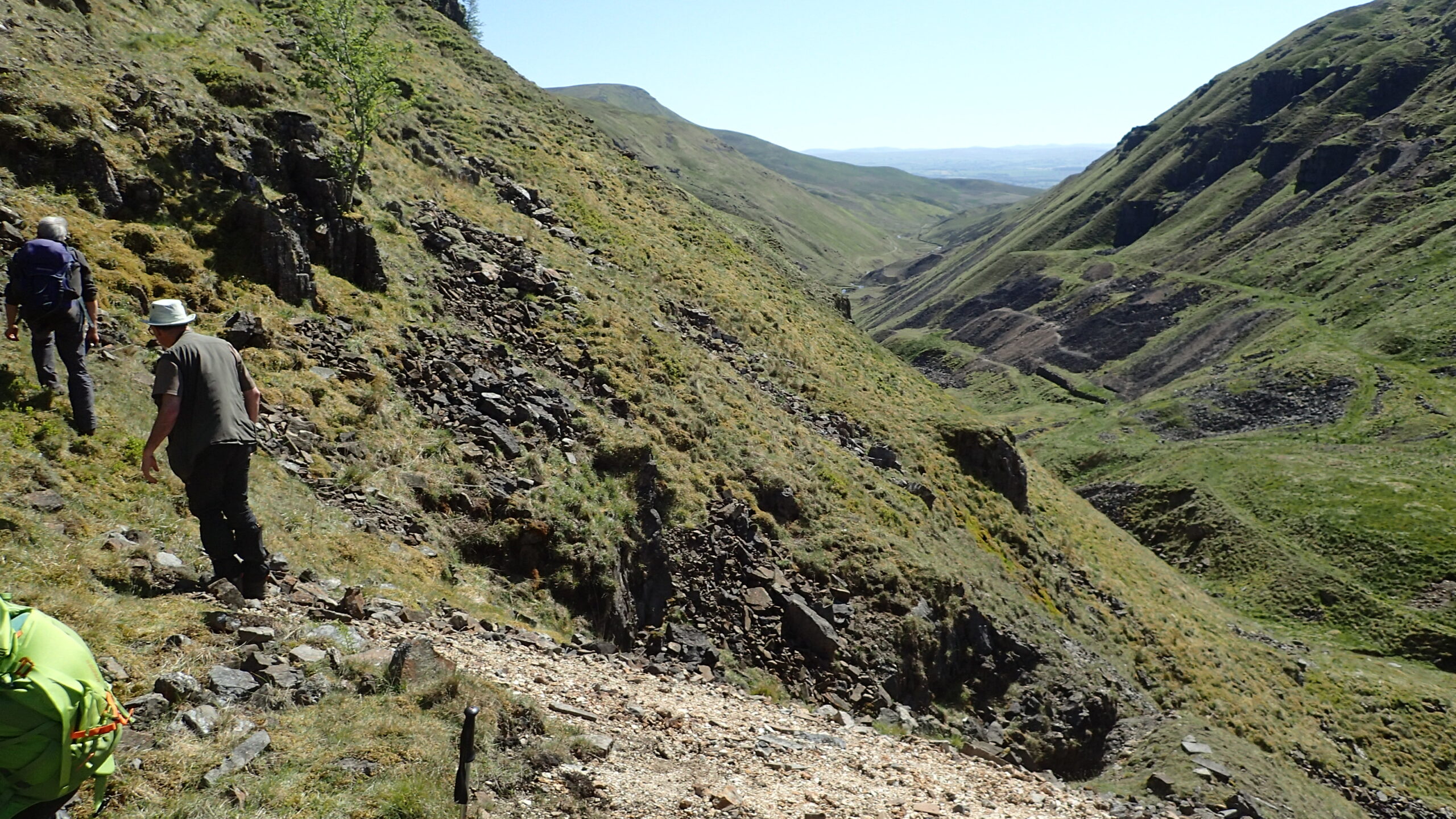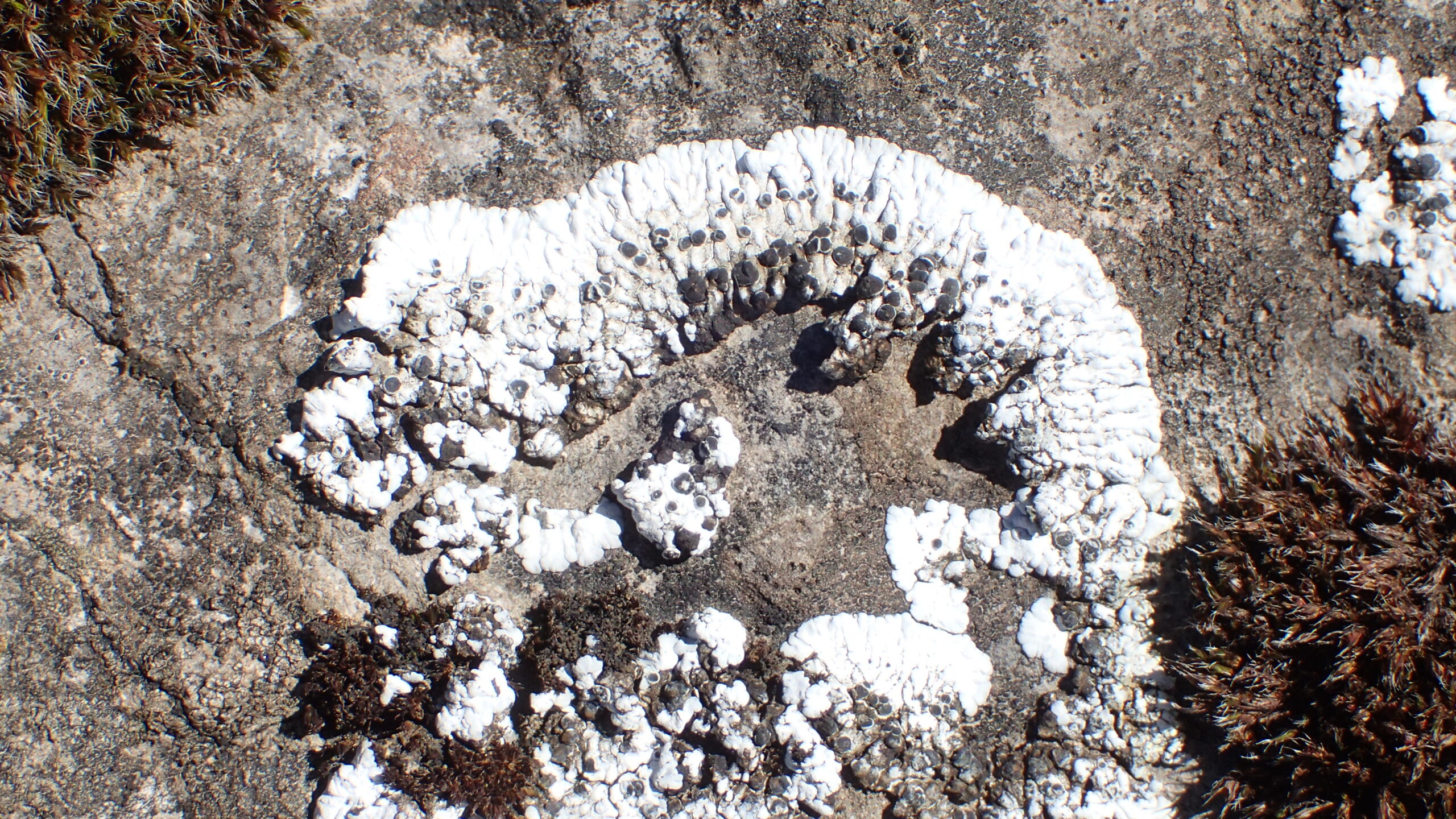
Spring Bank Holiday Sunday, and a fine forecast: what could make that better? Well, being in an interesting place, that’s what! We were headed for Scordale, an old lead-mining area in the Pennines on one of the Ministry of Defence’s public access days. We met in the car park at Murton, on the East Fellside, early to beat the crowds to what we hoped would be a feast of metalliferous lichens together with some limestone and siliceous stuff.
Armed with eight pages of instructions from the MOD, which my memory summed up as “don’t go far off the paths and don’t touch anything suspicious”, six of us headed across the open fellside, resolving to follow the instructions and not get distracted on the way.
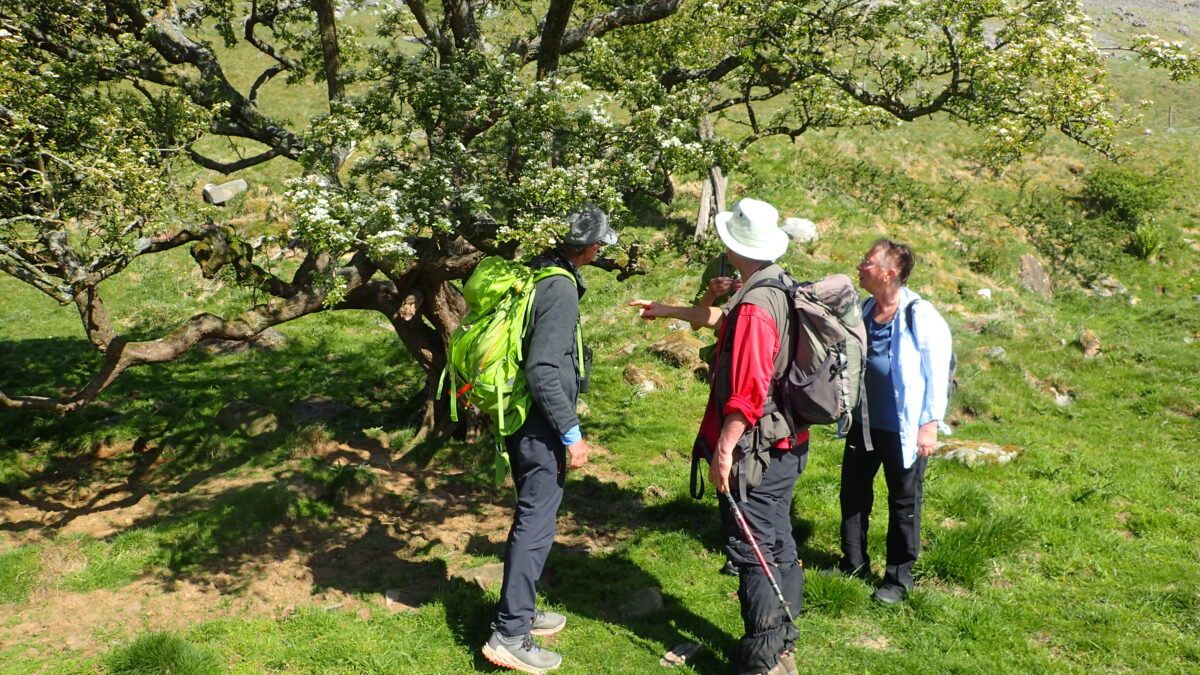
And we weren’t distracted, at least we found some hawthorns on the descent to the bridge in Scordale. These provided good revision on common leafy species like Parmelia saxatilis and P. sulcata (the former with isidia and the latter with soredia). There was also Evernia prunastri: whilst it “dangles” like a fruticose species it has a different top and bottom (or is dorsiventral to give it the proper term), which makes it a foliose species. Potential lookalikes were there to be examined: Ramalina farinacea (fruticose, soredia in oval soralia on the edges) and Pseudevernia furfuracea (foliose, greyer and with spikey isidia).
We found the third Parmelia of the day on rocks just below: P. discordans (dark, few pseudocyphellae and a K- medulla. Other pleasing saxicolous species included Ophioparma ventosa and Sphaerophorus globosus. Limestone boulders had Variospora flavescens and Verrucaria nigrescens. And at this point I realised the day wasn’t going to be quick, wasn’t going to be energetic and that the bank holiday sunshine was there to be enjoyed. So I did.
The boulders by the river proved to have something of a lack of species other than on the more basic bird perches. These had a good selection of grey Physcia species (tenella, adscendens and caesia) and the oranges of Xanthoria parietina and Athallia holocarpa s. lat.
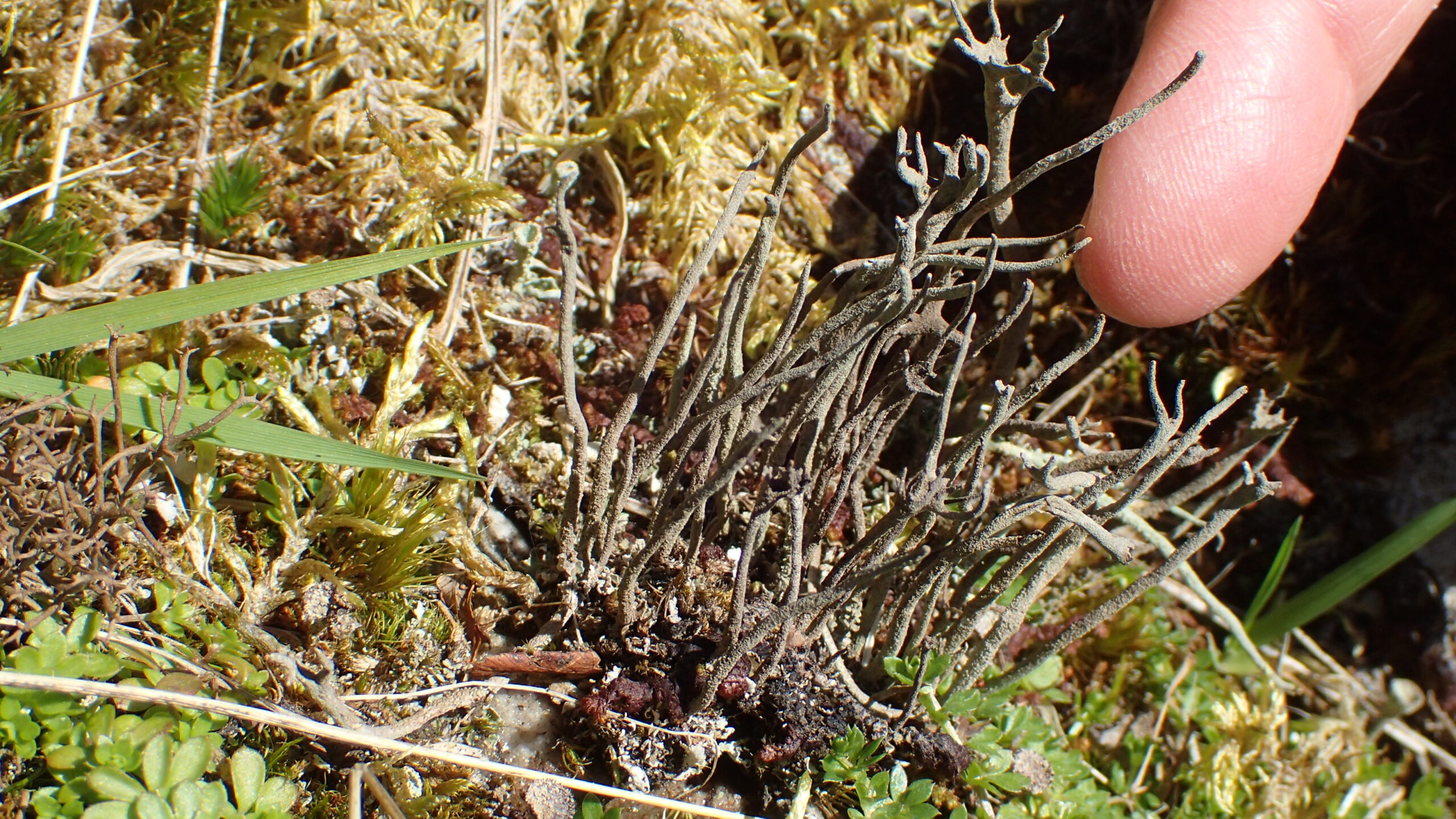
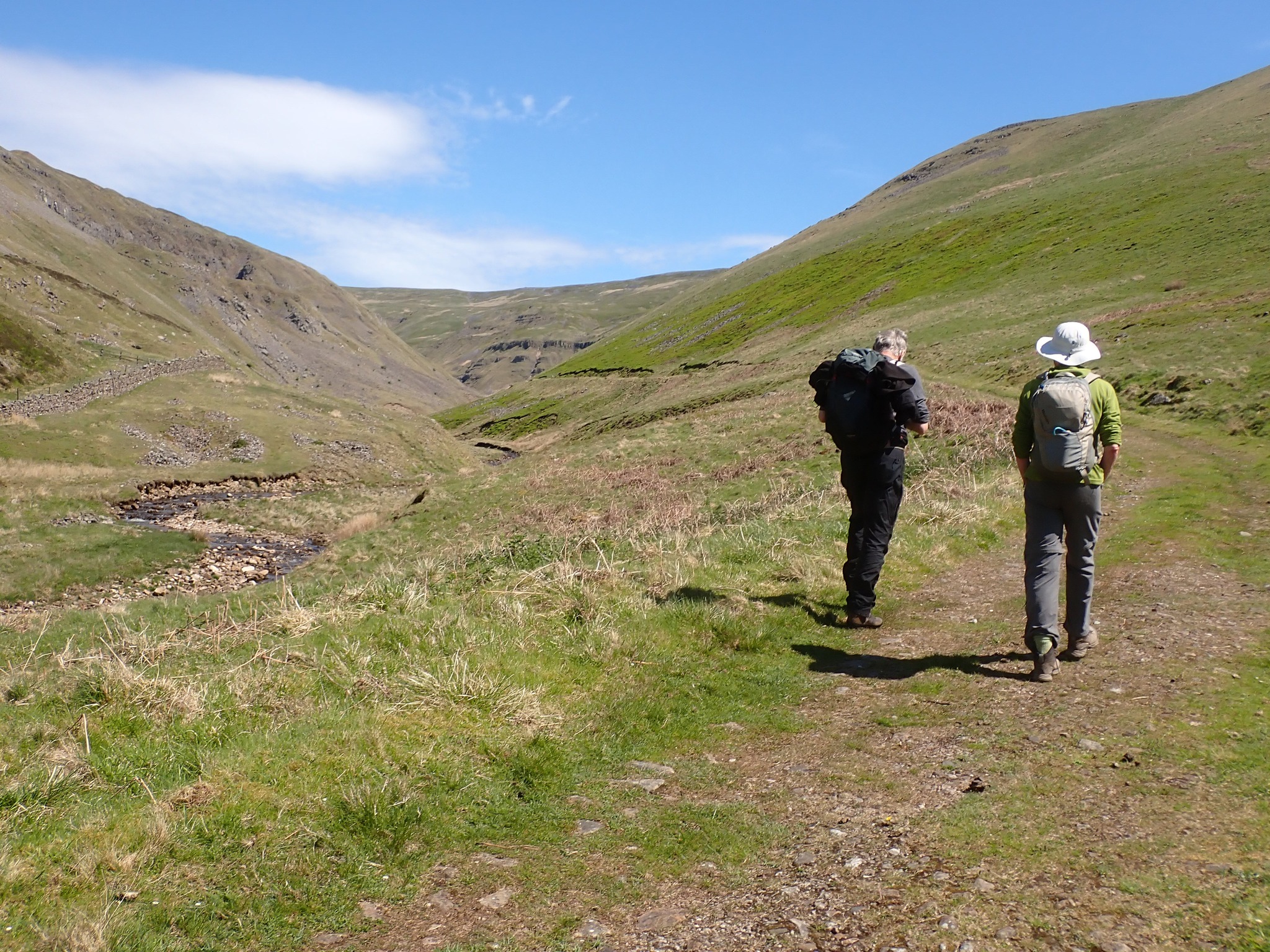
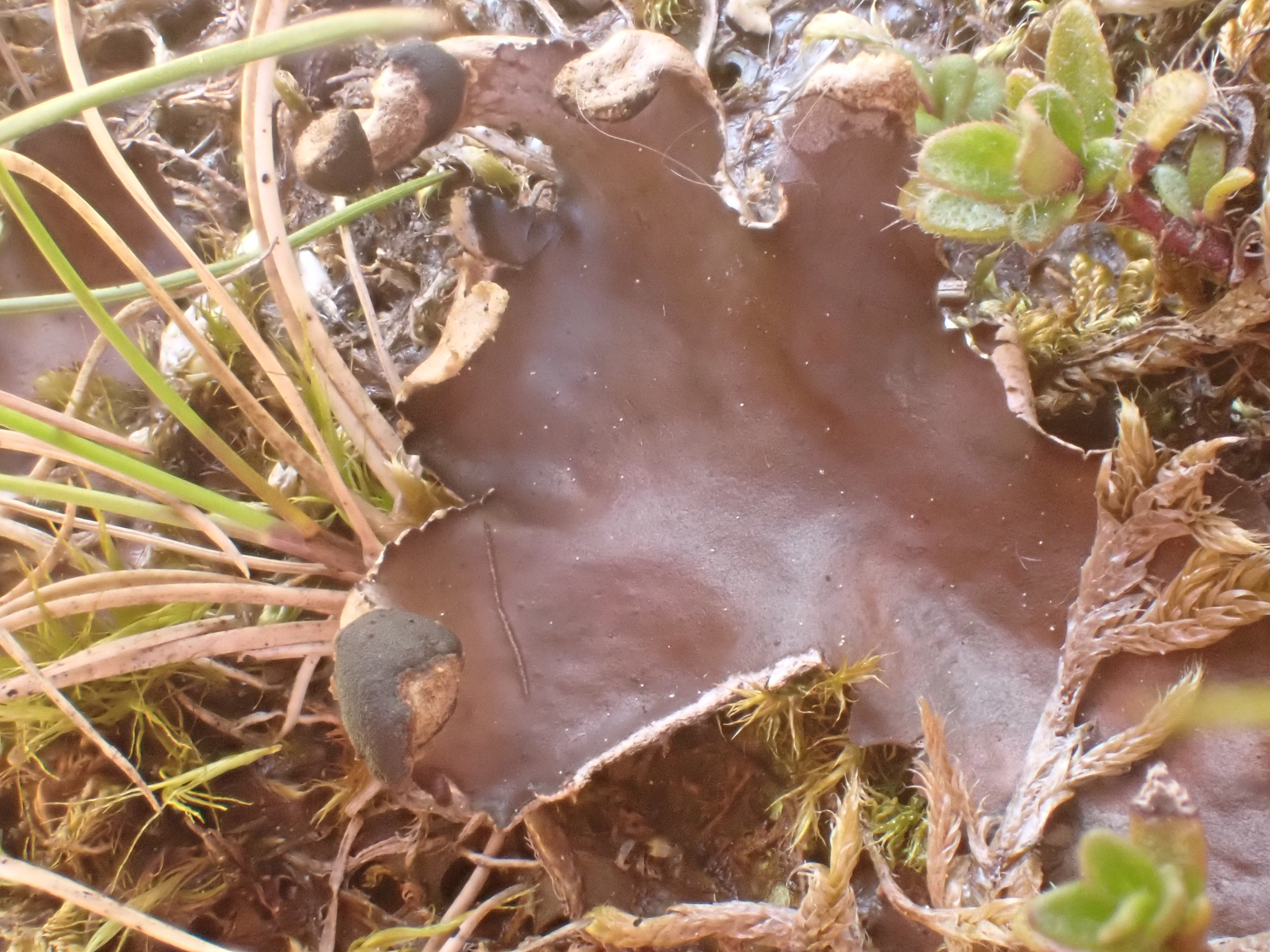
We headed up the valley: it’s a dramatic place with crags above us on both sides (which is the Whin Sill? What’s from mining?); scree slopes (or spoil tips?); gouged-out hushes (or is that a natural gorge?) and the ever-present tumbling beck. A leisurely lunch spot saw some put their feet in the water, whilst others looked at Myriospora smaragdula and discussed Cladonias. Setting off, we quickly found Peltigera neckeri, just where Chris said it would be, the black apothecia giving it away. There were pinky-grey thalli of Placopsis lambii too.
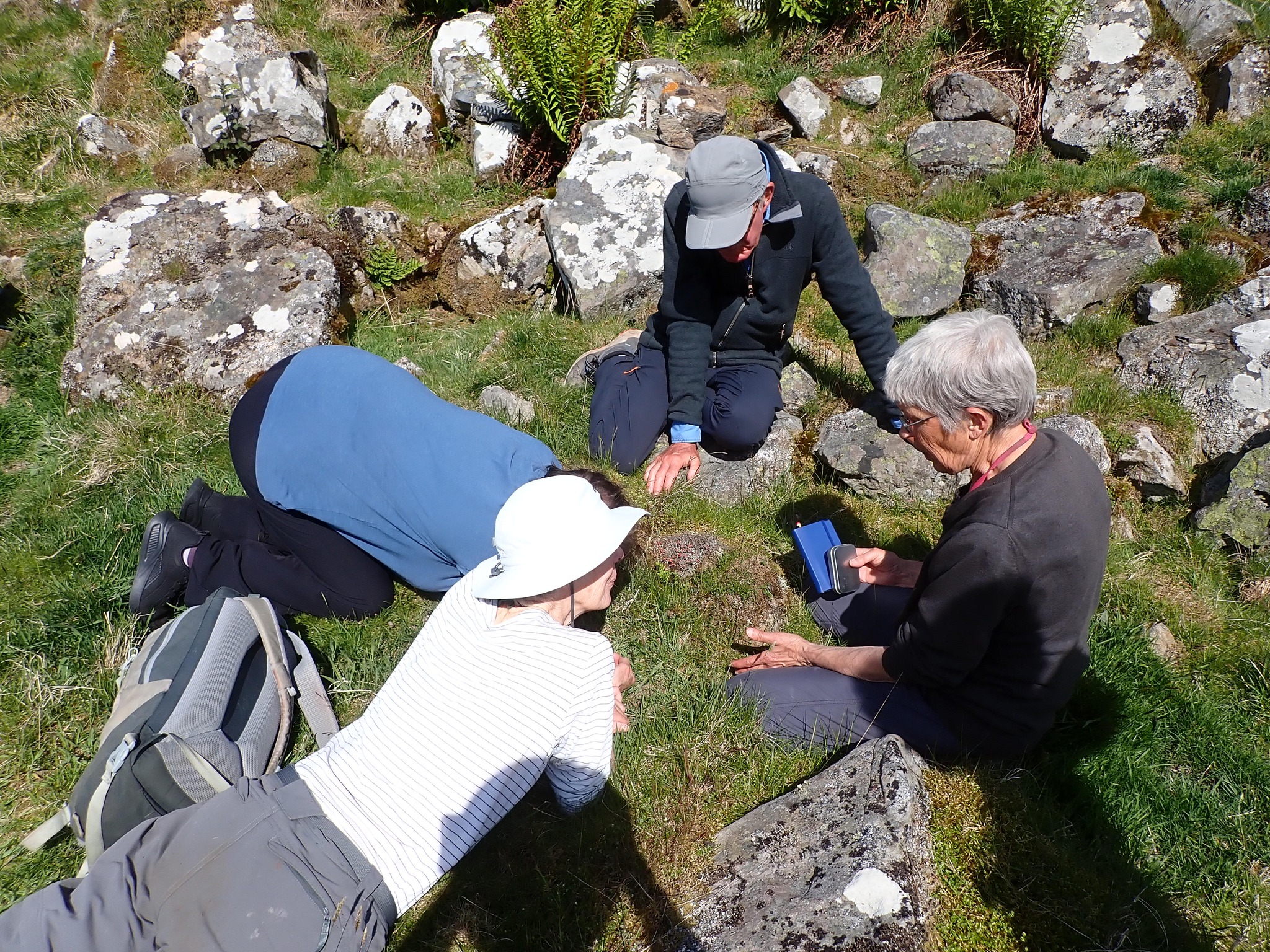
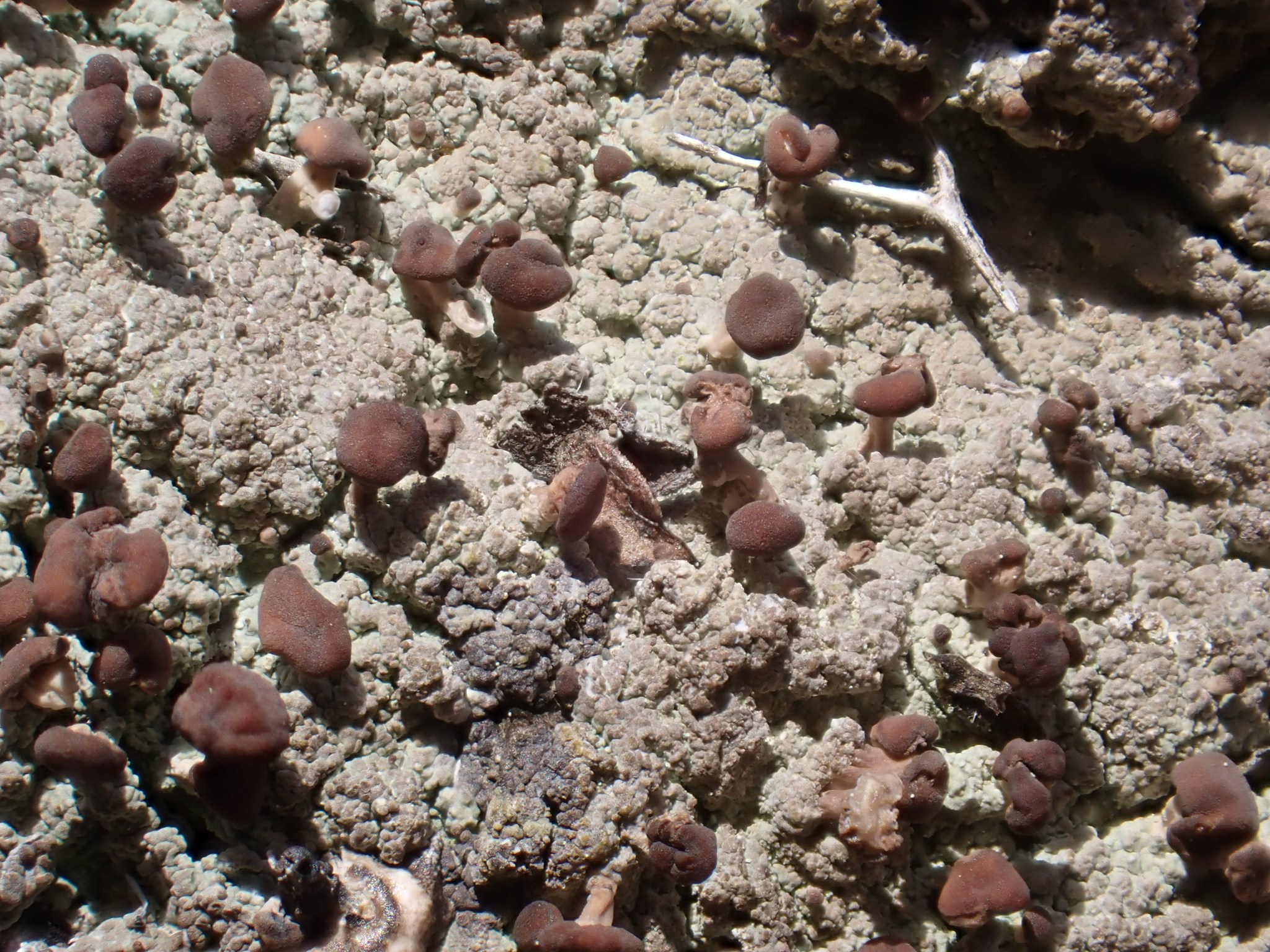
The army have demolished the old mine buildings: we spent some time hunting around them for interesting species. There were lots of enticing red splodges, but, to be honest, we didn’t find many lichens of interest. In fact, it was a bit disappointing, the red patches often just rust. We had to do a lot of work for things we would expect to find easily: Placynthium nigrum, Bilimbia sabuletorum and Agonimia tristicula in basic places; Stereocaulon species on acid rocks. Caz found the squamules of Baeomyces placophyllus on a vertical peaty face. After much debate, we decided a jelly lichen was Lathagrium fuscovirens after all.
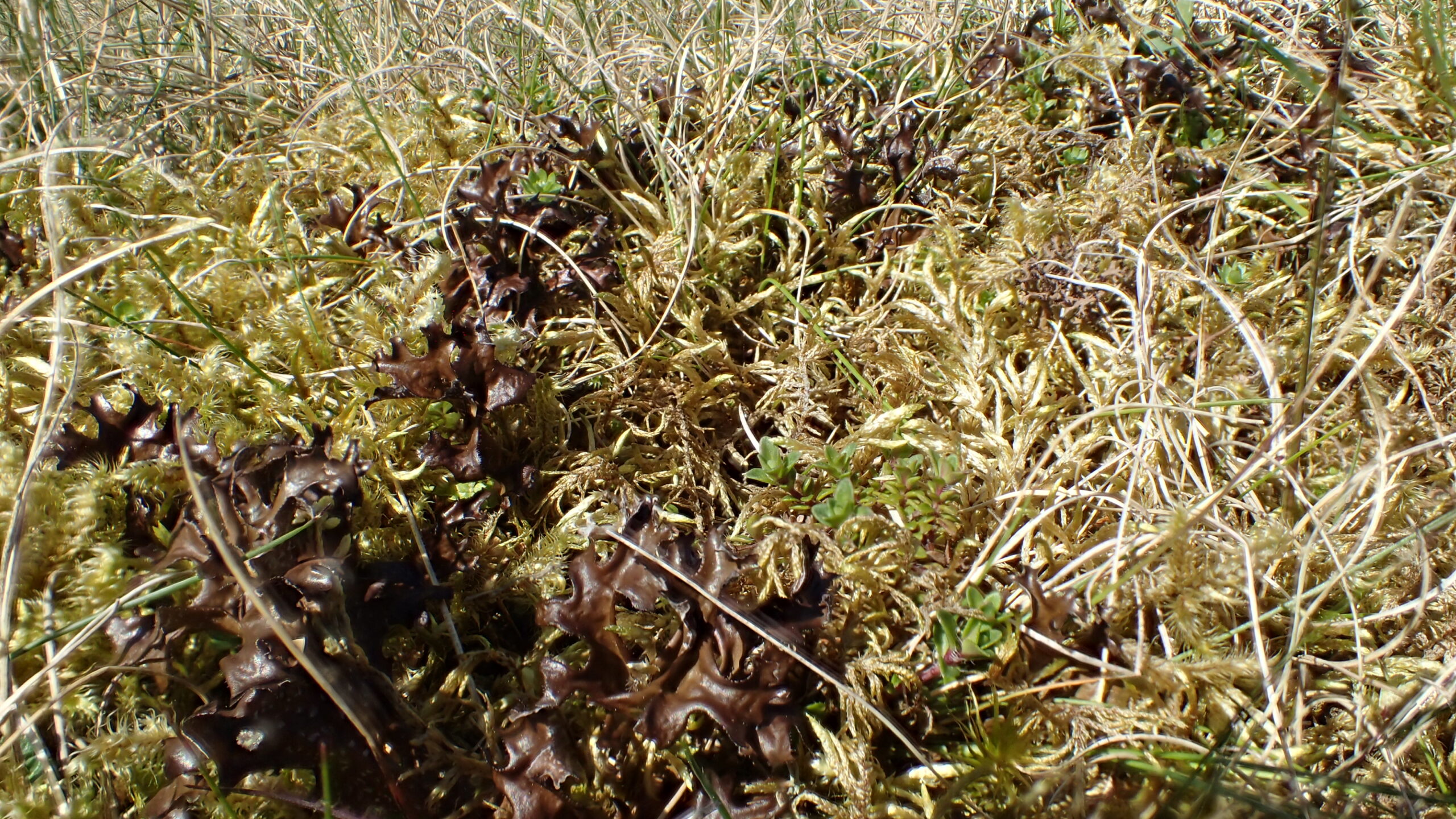
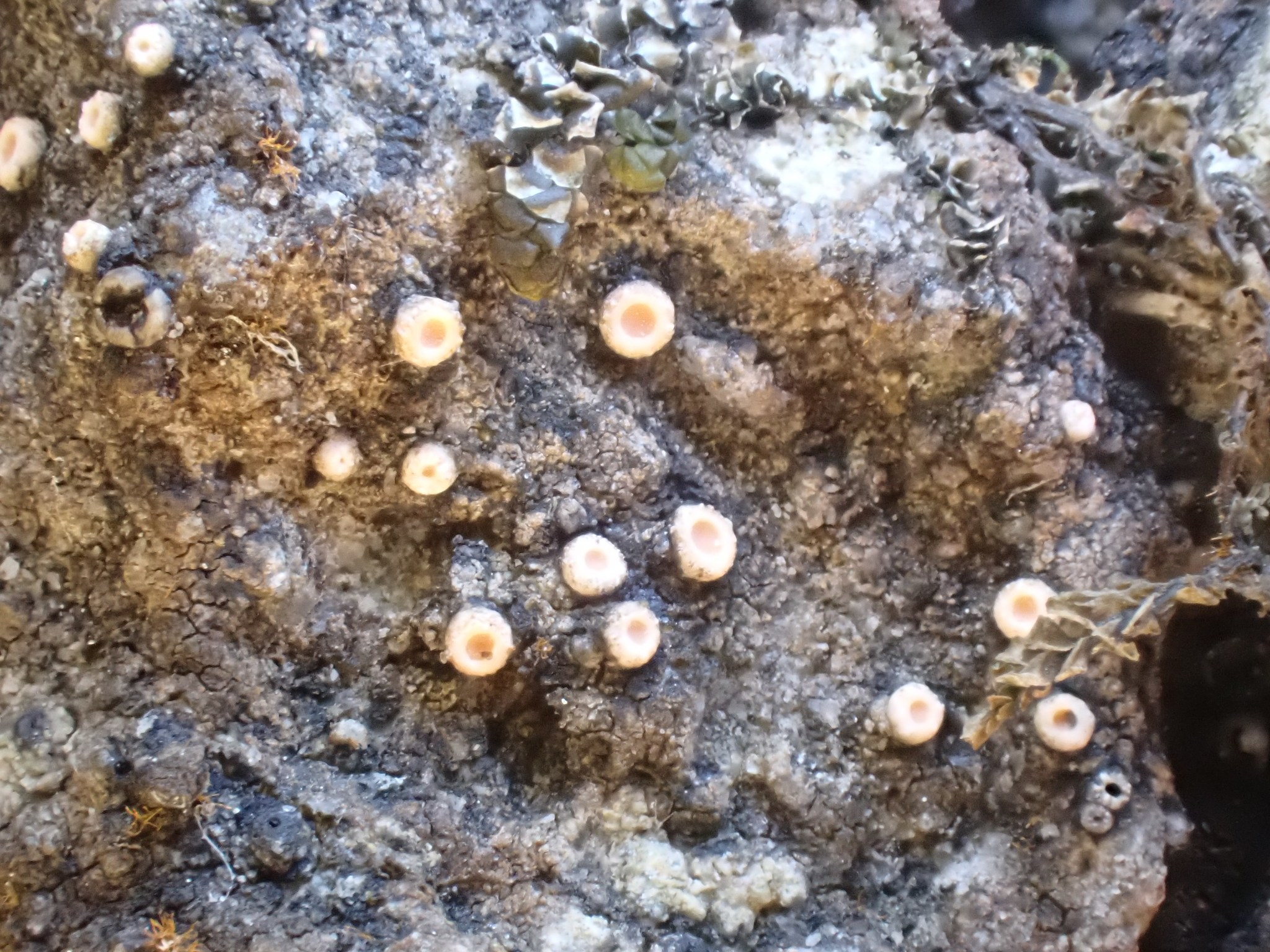
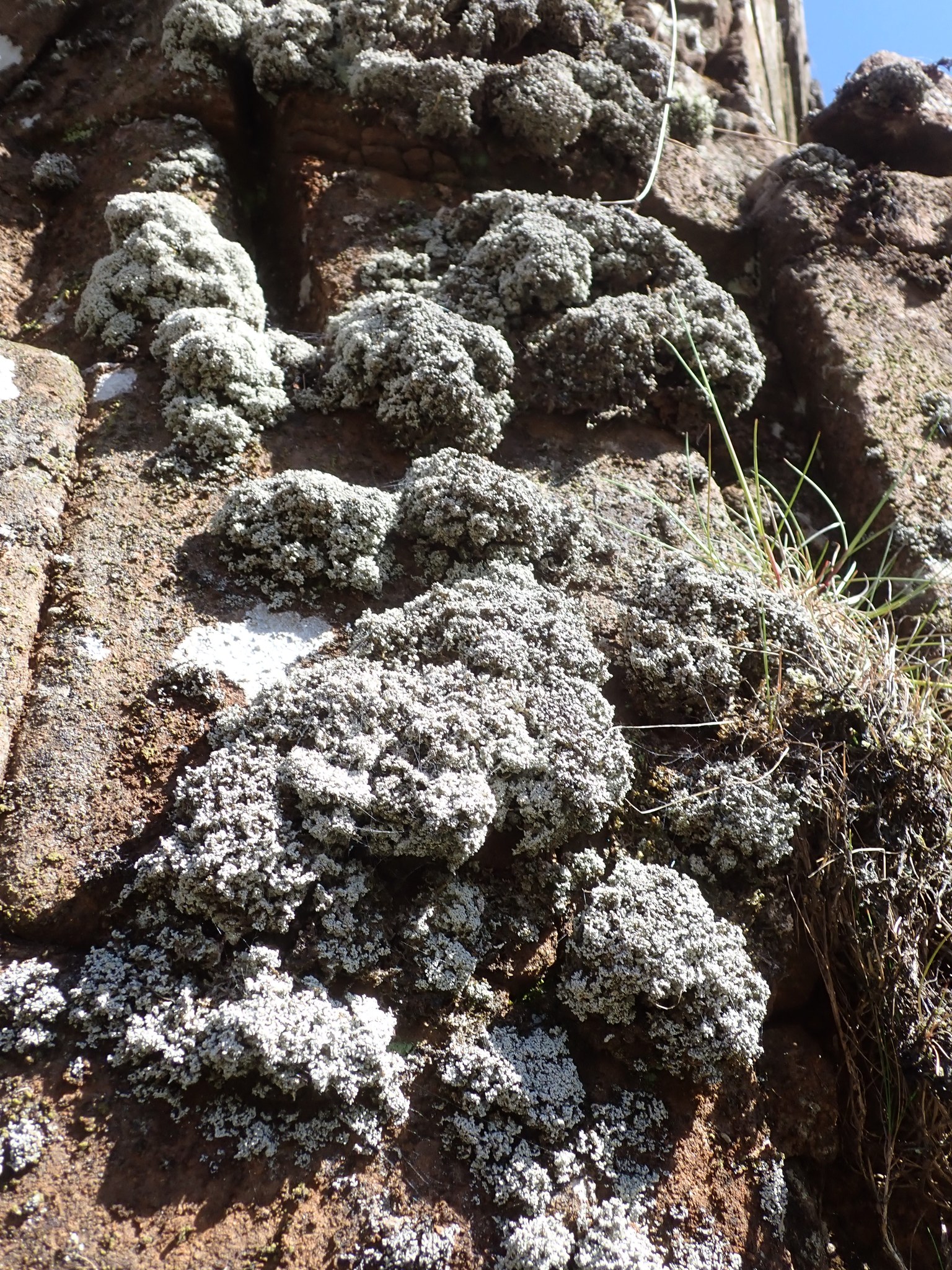
Eventually, higher up, things arguably became a bit more promising. There was a mossy bank with prolific Cetraria islandica and C. muricata. A shady area of basic rocks had Secoliga jenensis and Clathroporinopsis nidarosiensis. There was white Dibaeis baeomyces on the peaty soil. Cascading tufts of Stereocaulon vesuvianum tumbled like a waterfall. We sat a while drinking tea and discussing books… before heading down again. It was a long day, and we maybe hadn’t found that much of great excitement. But it was a good day nevertheless and there is almost certainly a lot more to be discovered in Scordale, if ever we decide to go back.
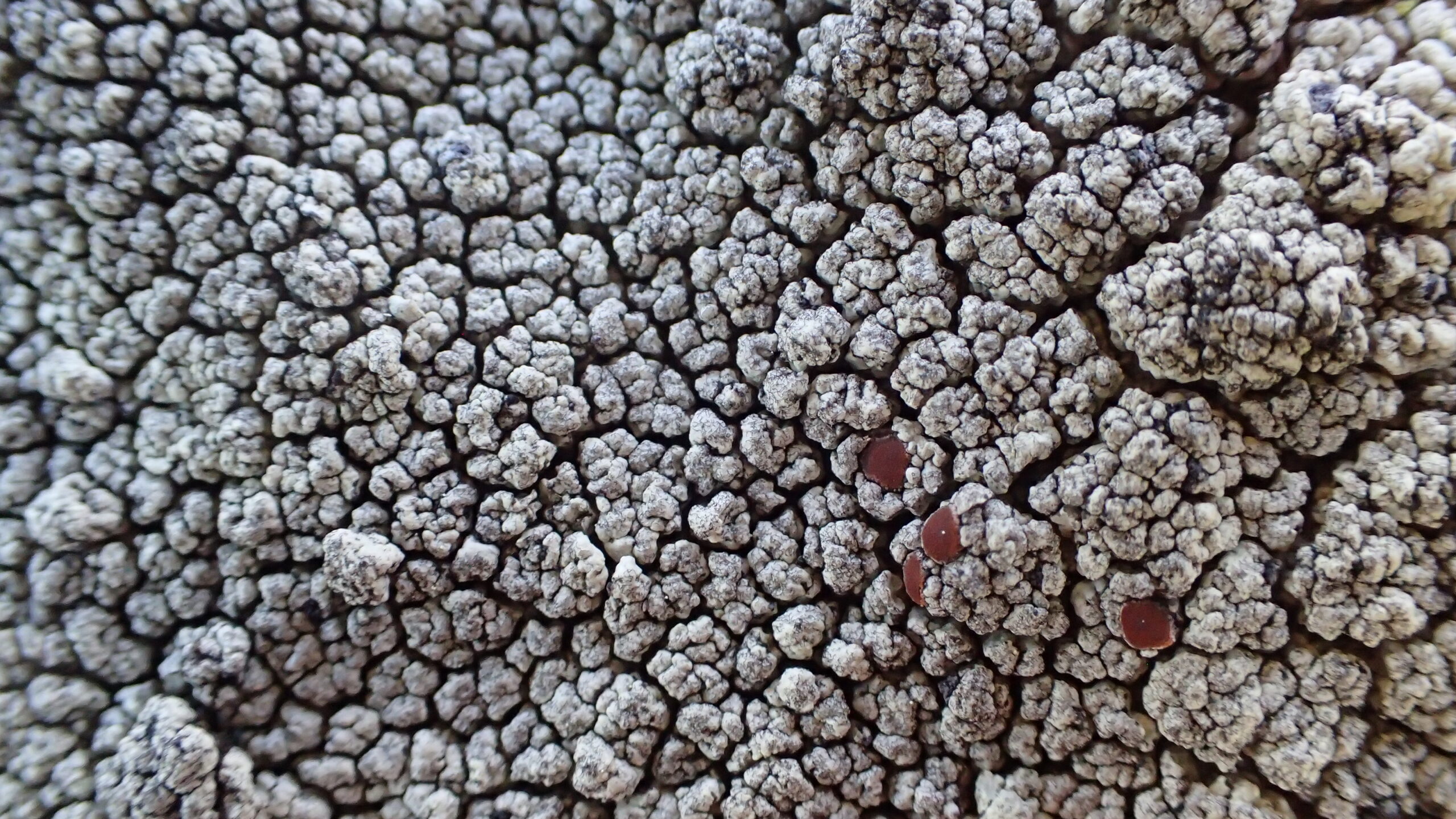
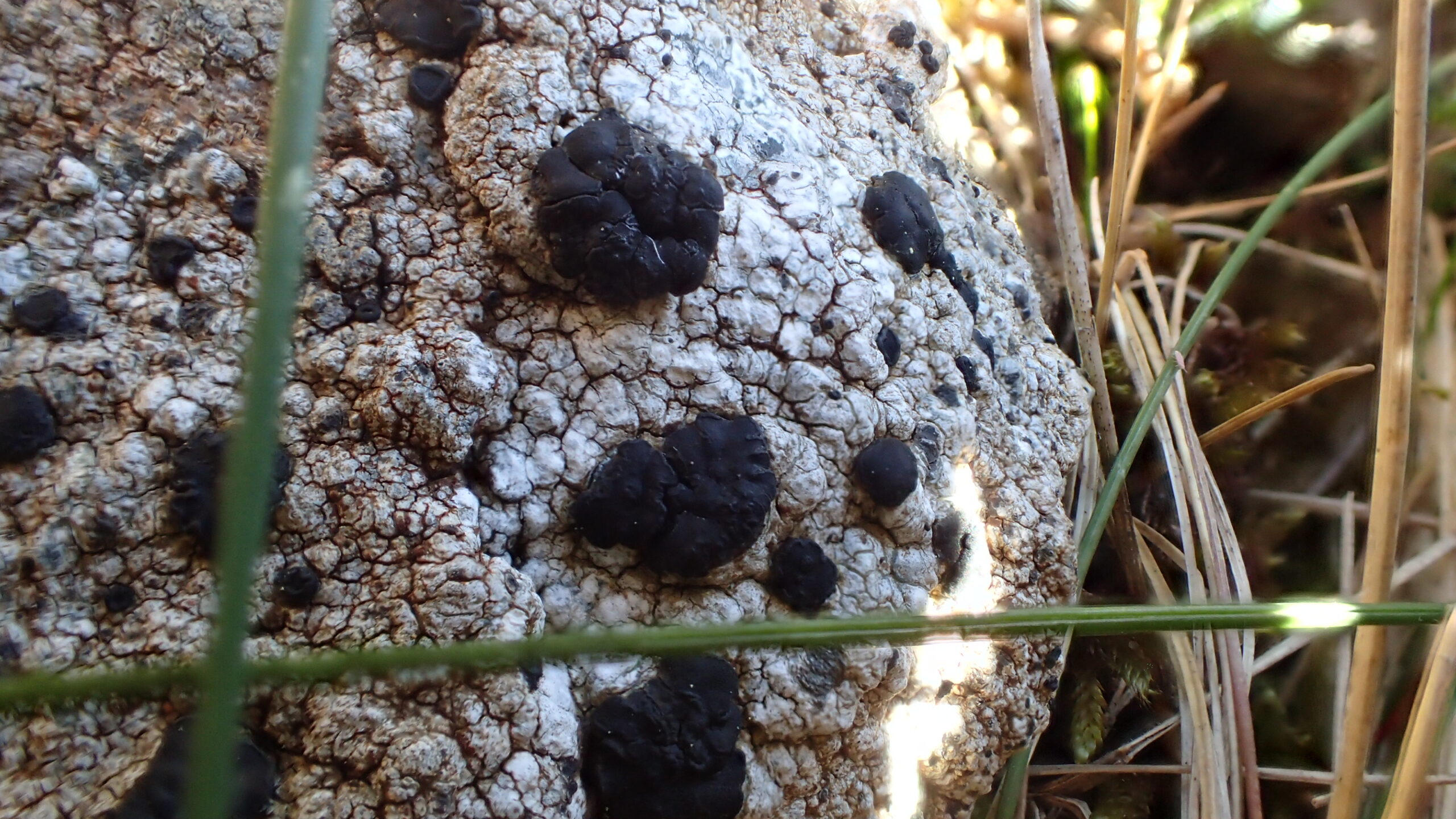
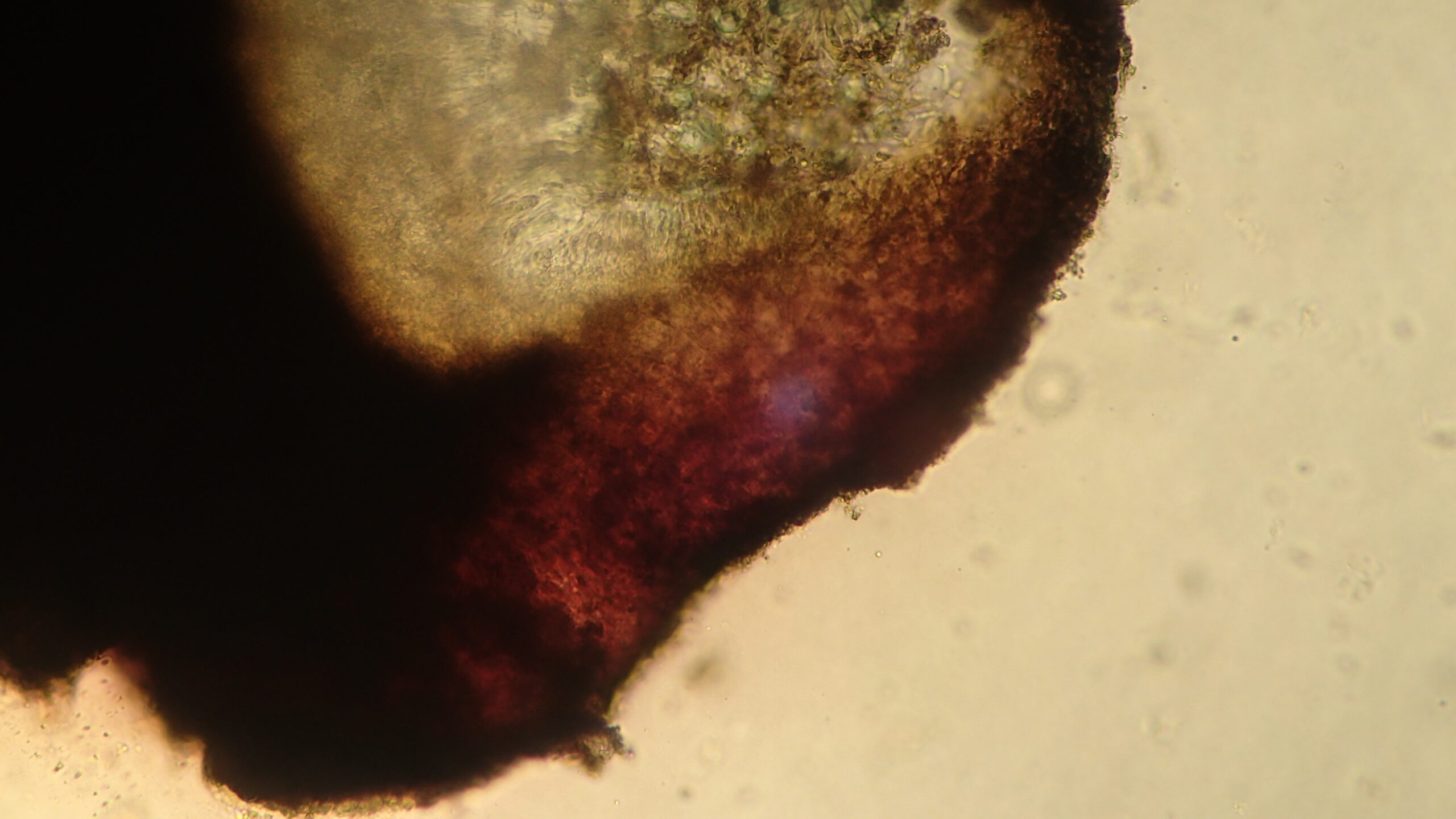
Addendum: A Porpidia macrocarpa that Chris collected turned out to be a rarer f. nigrocruenta which has a K+ red reaction on part of apothecia exciple. This is being sent to RGBE for DNA sequencing.
Text: Pete Martin
Photos: Chris Cant, Pete Martin