Some things change, some things stay the same.
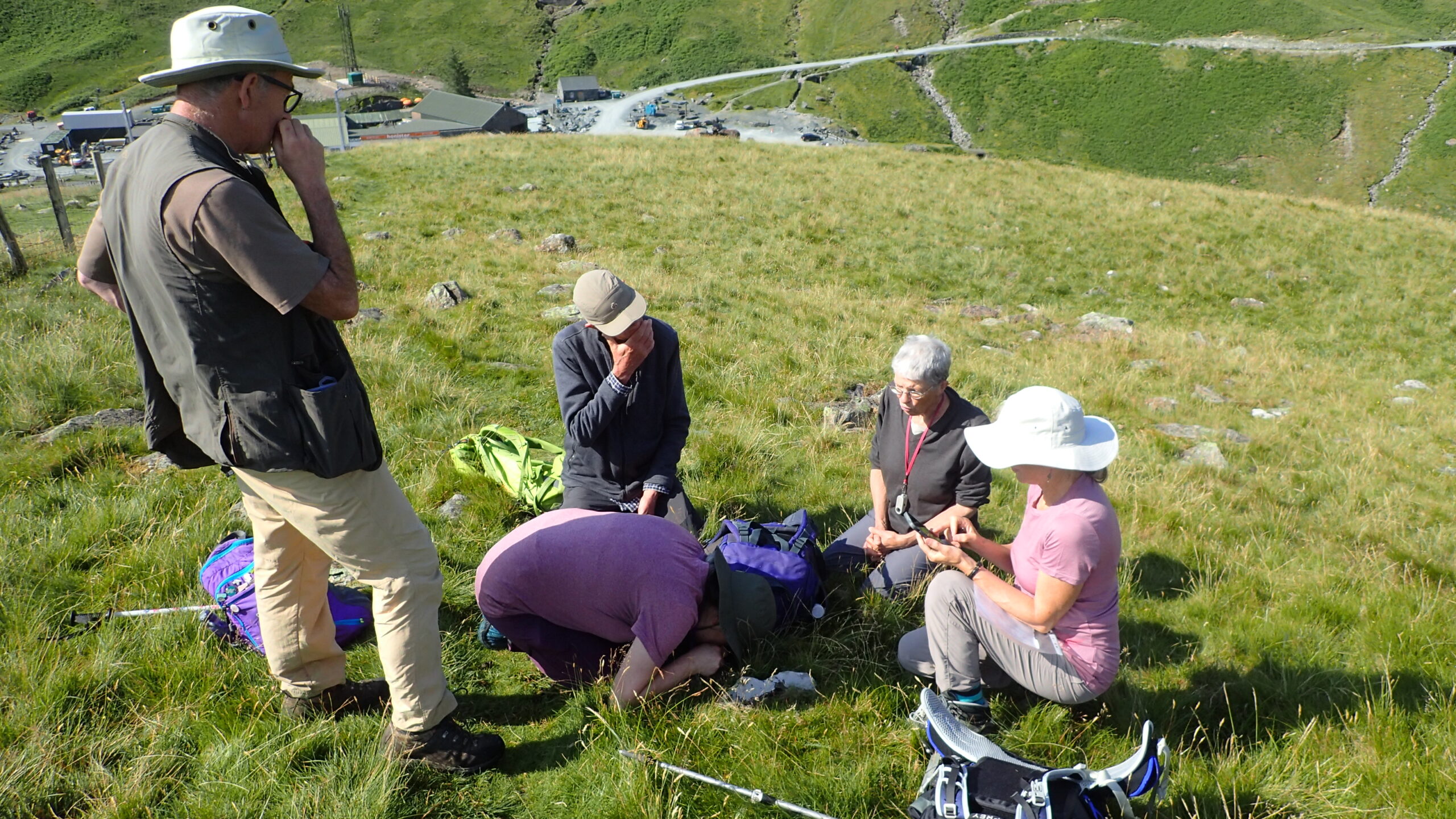
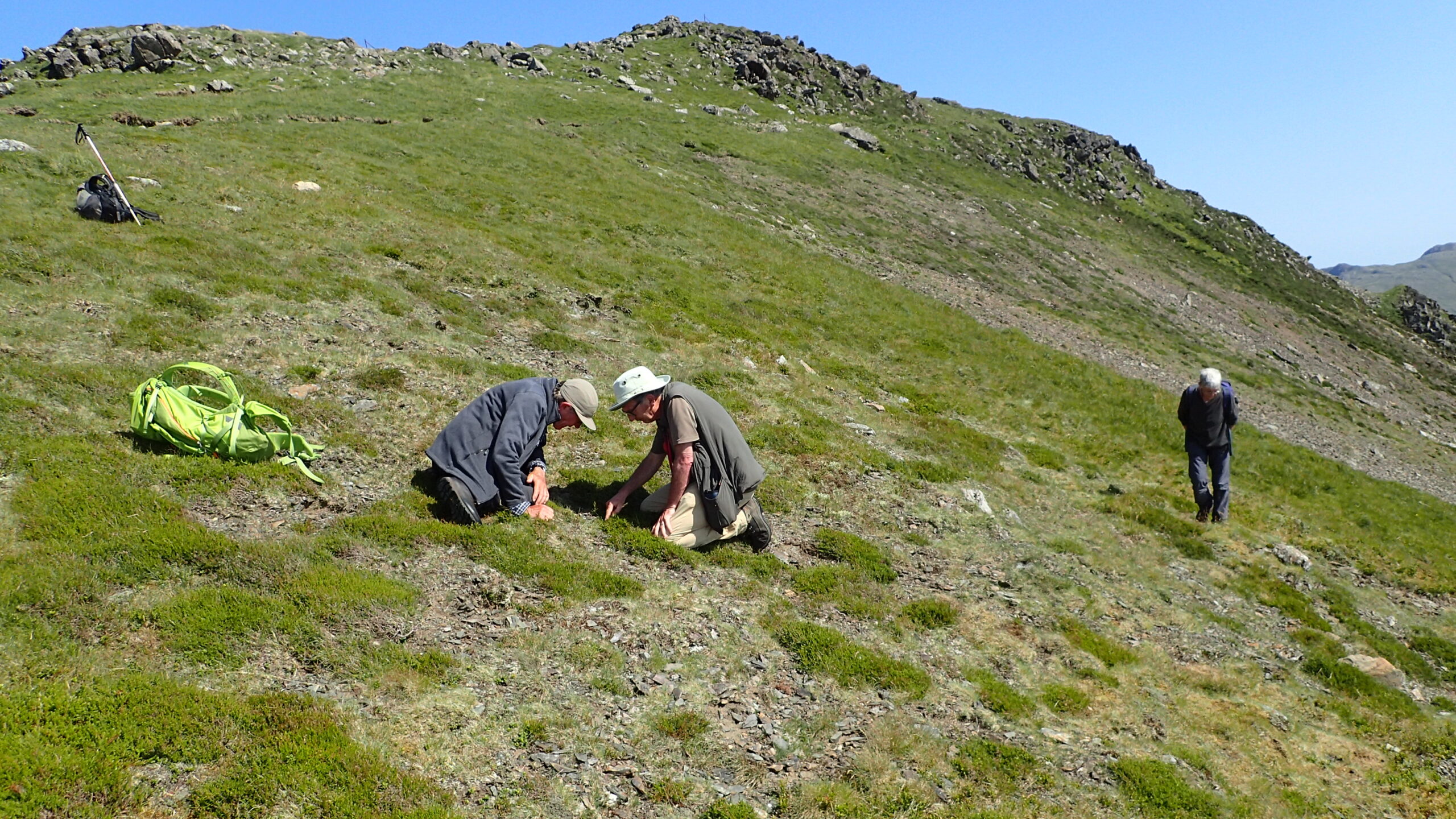
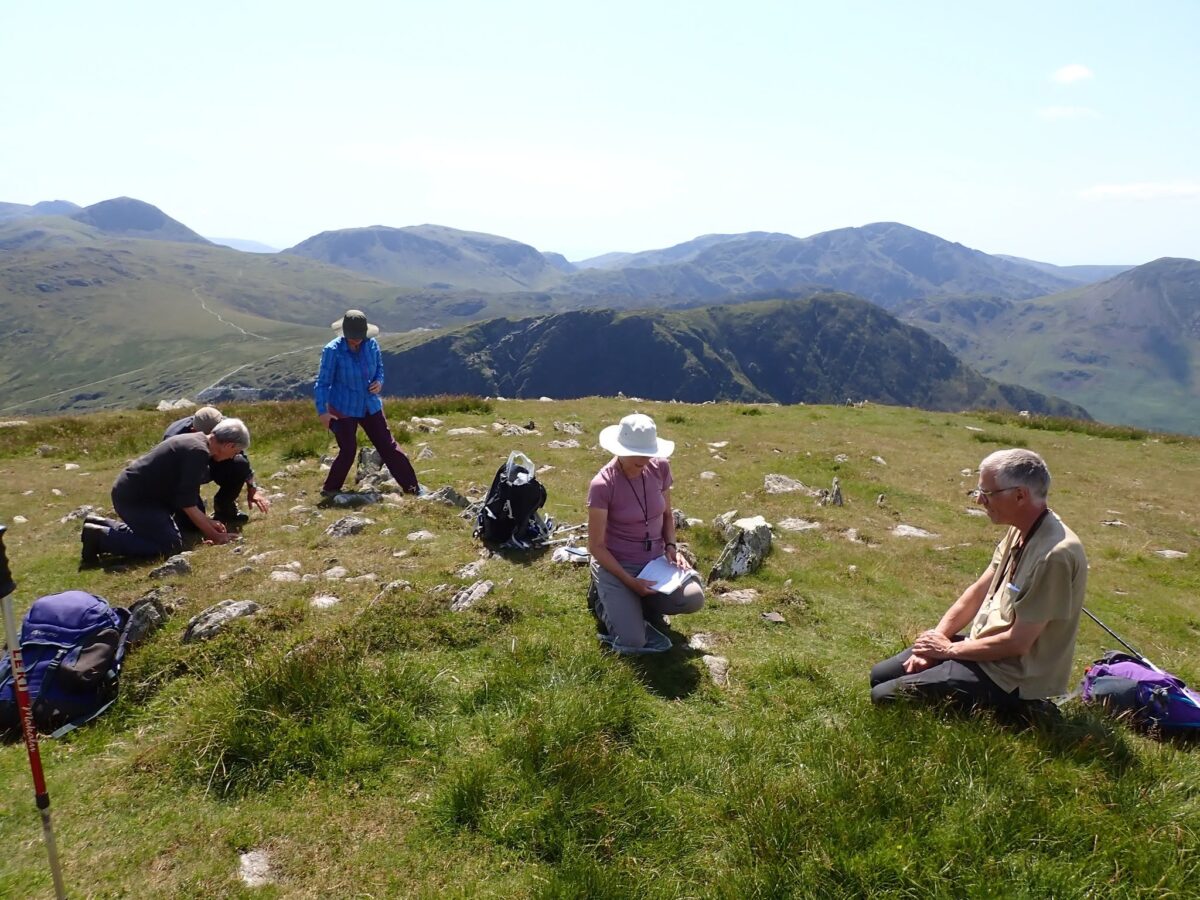
For the last few meetings we’ve done something different: meet at 9am rather than 9:30. I haven’t heard any complaints, and the car park at Honister was already pretty full, so maybe we needed to. A hot day was forecast, though maybe not quite as hot as recent days, and anyway we are slow movers. So after the necessary introductions, we headed off up the slopes to the north of the pass. Within a few minutes we were looking at rocks and… time just passed quickly, as it always does.
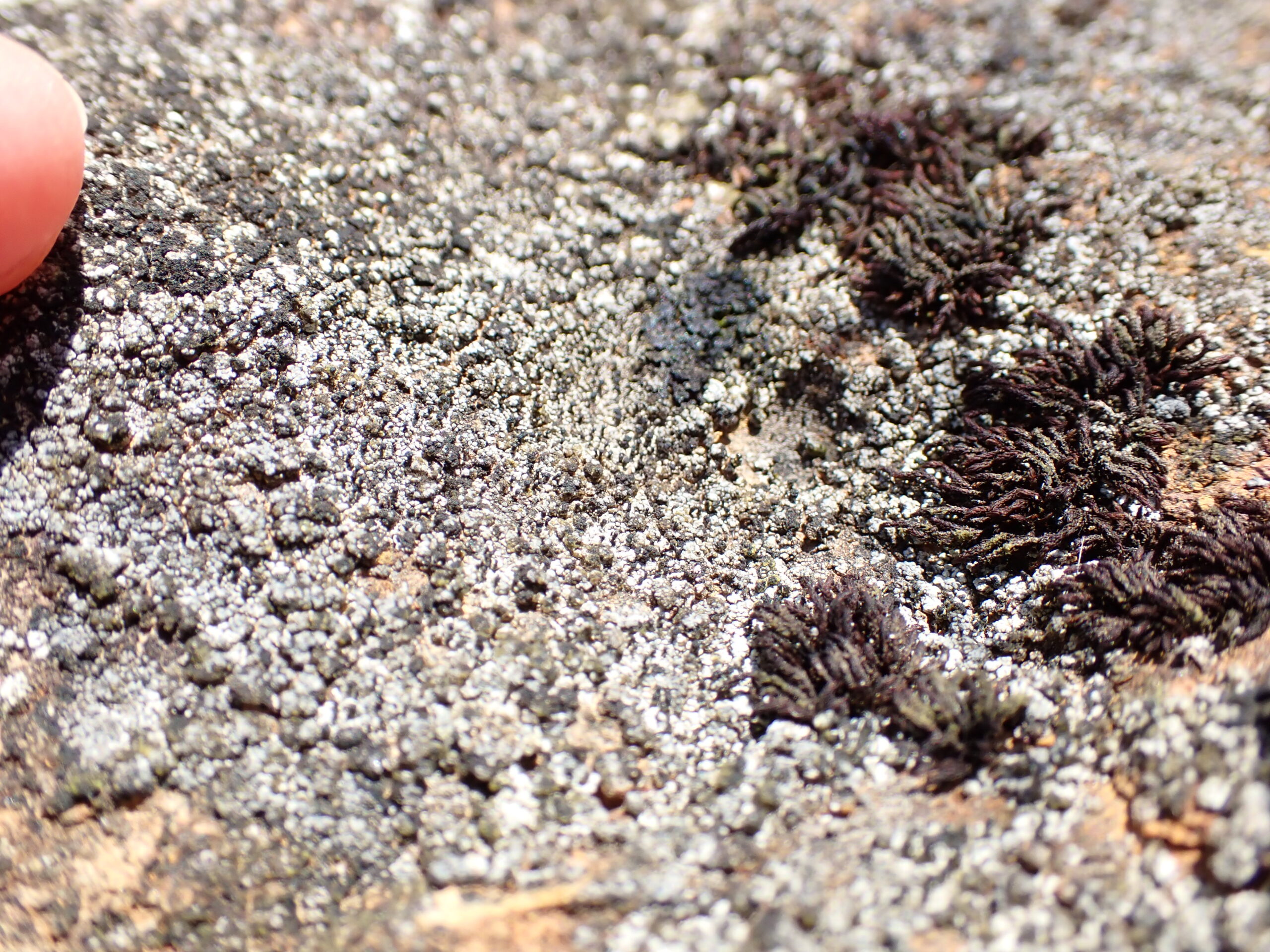
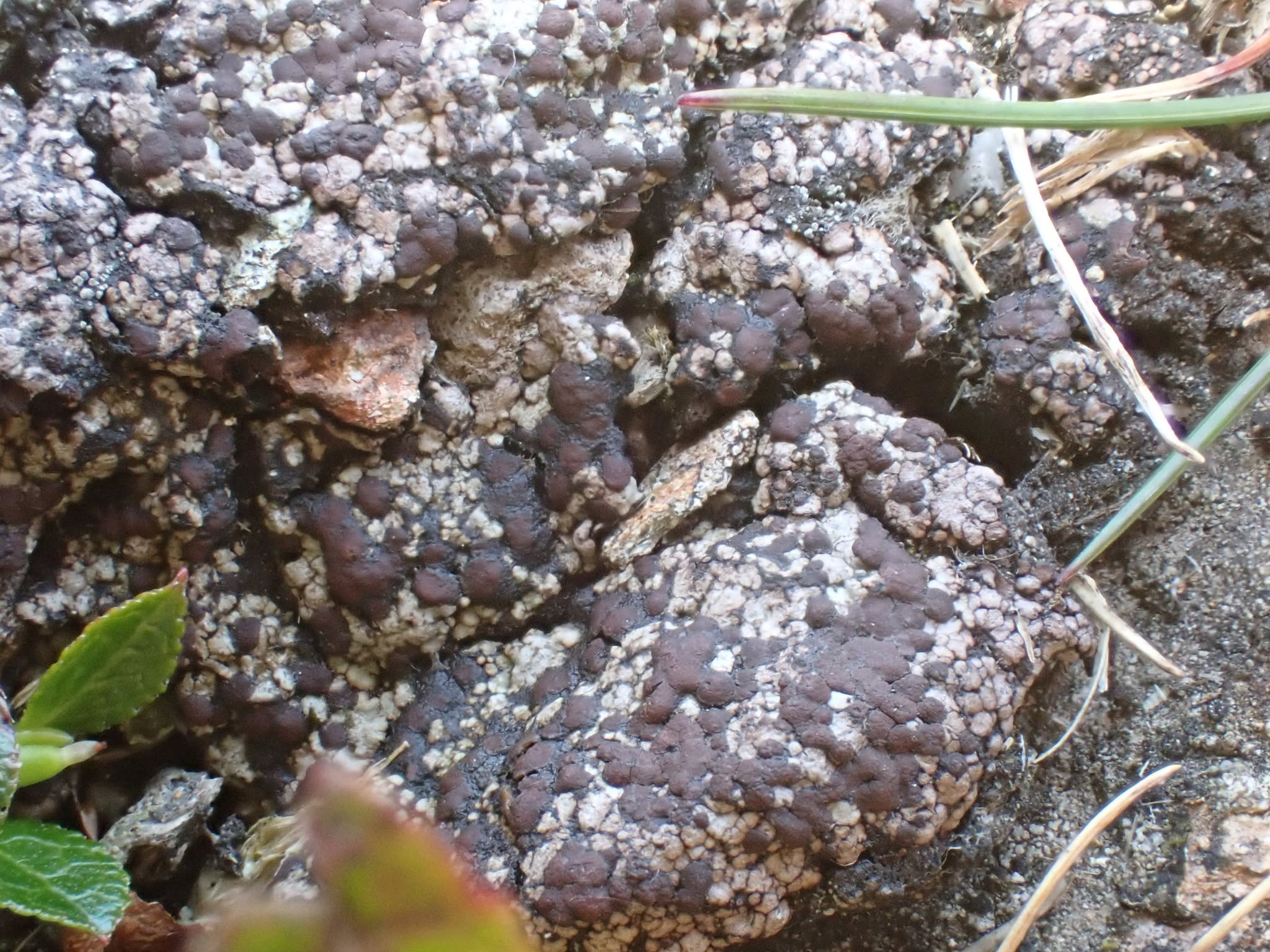
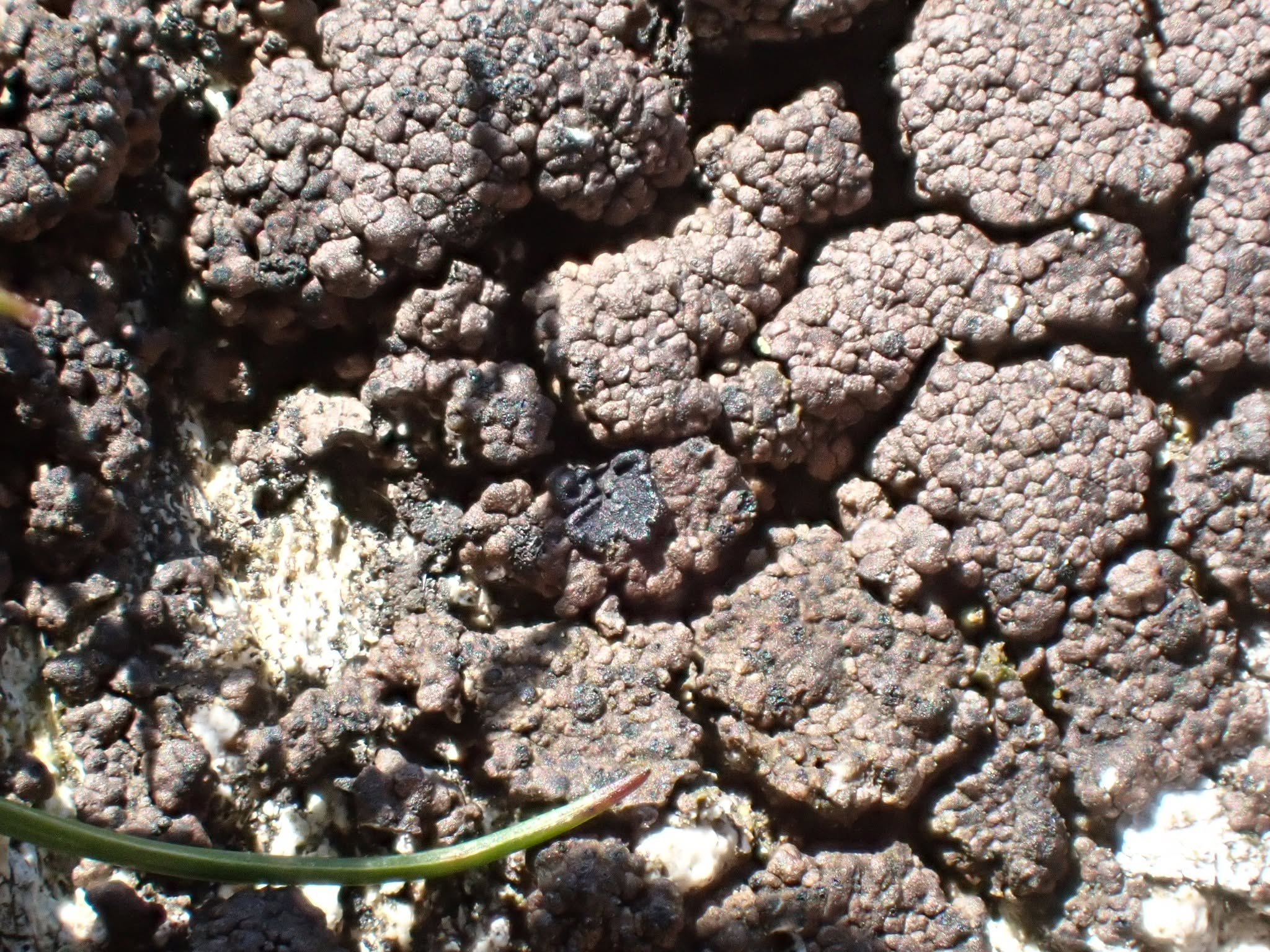
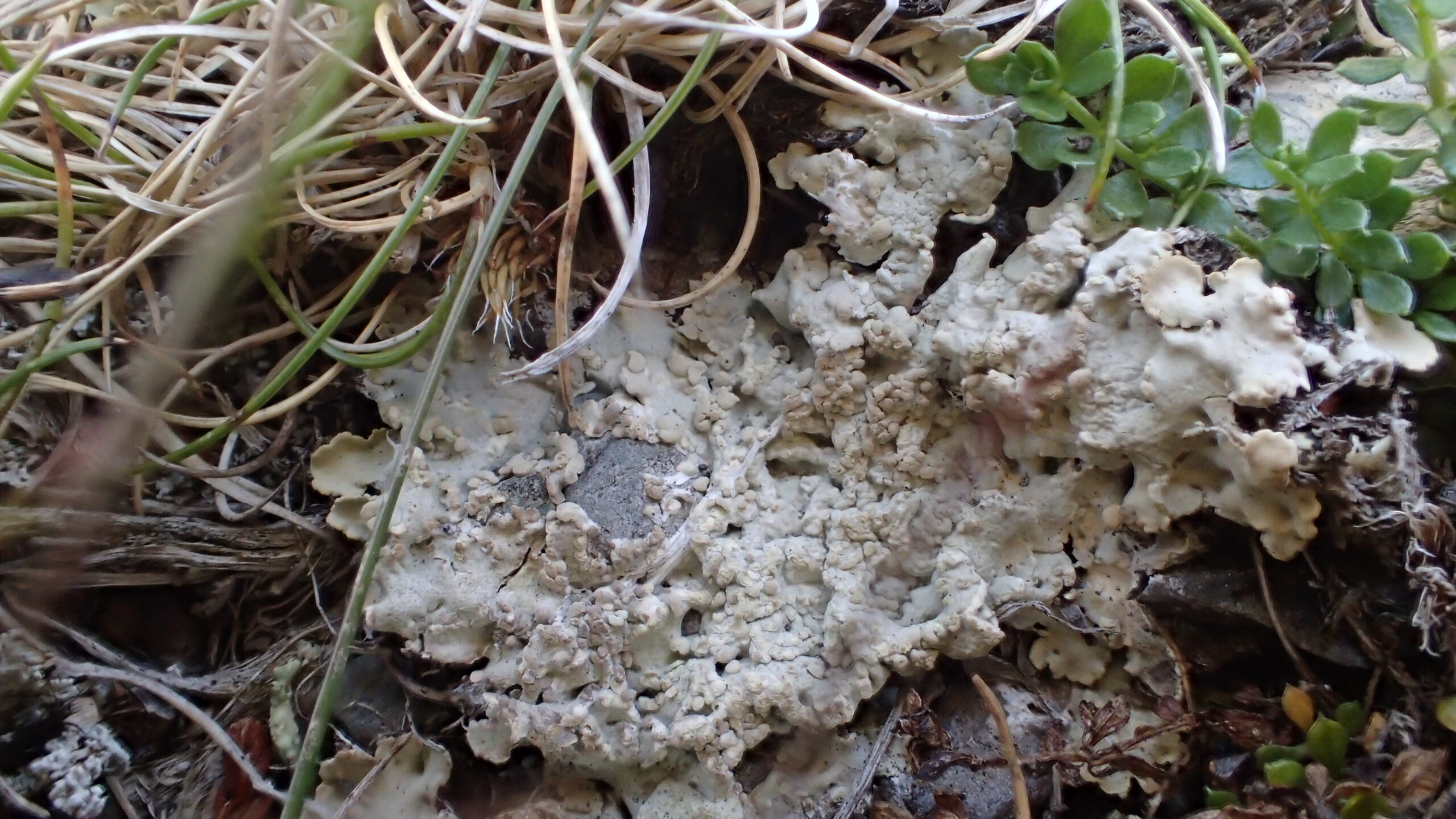
There was a good selection of common acid-rock lichens. Particular attention was paid to Lepra corallina, and its chemical reactions (a consistent K+ yellow); the not-often-recorded-as-it’s-tiny-but-probably-very-common Pilophorus strumaticus (like tiny black fruited Cladonia) and Trapelia placodioides. The latter isn’t really placodioid (crustose but with lobes). Dobson describes it as being “almost” so. But it is a very recognisable colour; a pinky-grey off-white. What one would call that colour I’m not so sure. But it is very recognisable.
A little higher up and we found Umbilicaria cylindrica, with its pruina, dark marginal fibrils and impressive “raised ridges on a brooch” apothecia. Stereocaulon evolutum gave an opportunity to consider how the phyllocladia differ from that on the more common S. vesuvianum, and also to check with a KC test: there’s a fleeting hint of violet on tissue paper. There was also the bloodspot lichen, Ophioparma ventosa, and the cracked mud of Acarospora fuscata.
Old wooden fenceposts often have some interesting lichens on them. We found the inflated hollow lobes of both Hypogymnia species: physodes with soredia on the split lobe ends (like lips) and tubulosa, where the soredia are on the ends of projecting lobes (like little fists). Leafy species included Platismatia glauca (the frilly lettuce lichen) and Pseudevernia furfuracea. There’s a couple of chemical varieties of this. Here, the medulla went red with C, so it was var. ceratea.
We’d been putting it off, but there was time for a Cladonia discussion before lunch. Red fruited species found included C. polydactyla (in this case living up to its name with splayed podetia ends, as well as having squamules at the base of stalk, granules higher up, and going yellow with K). Cladonia bellidiflora, on the other hand, had squamules to the top of the podetia and was K-.
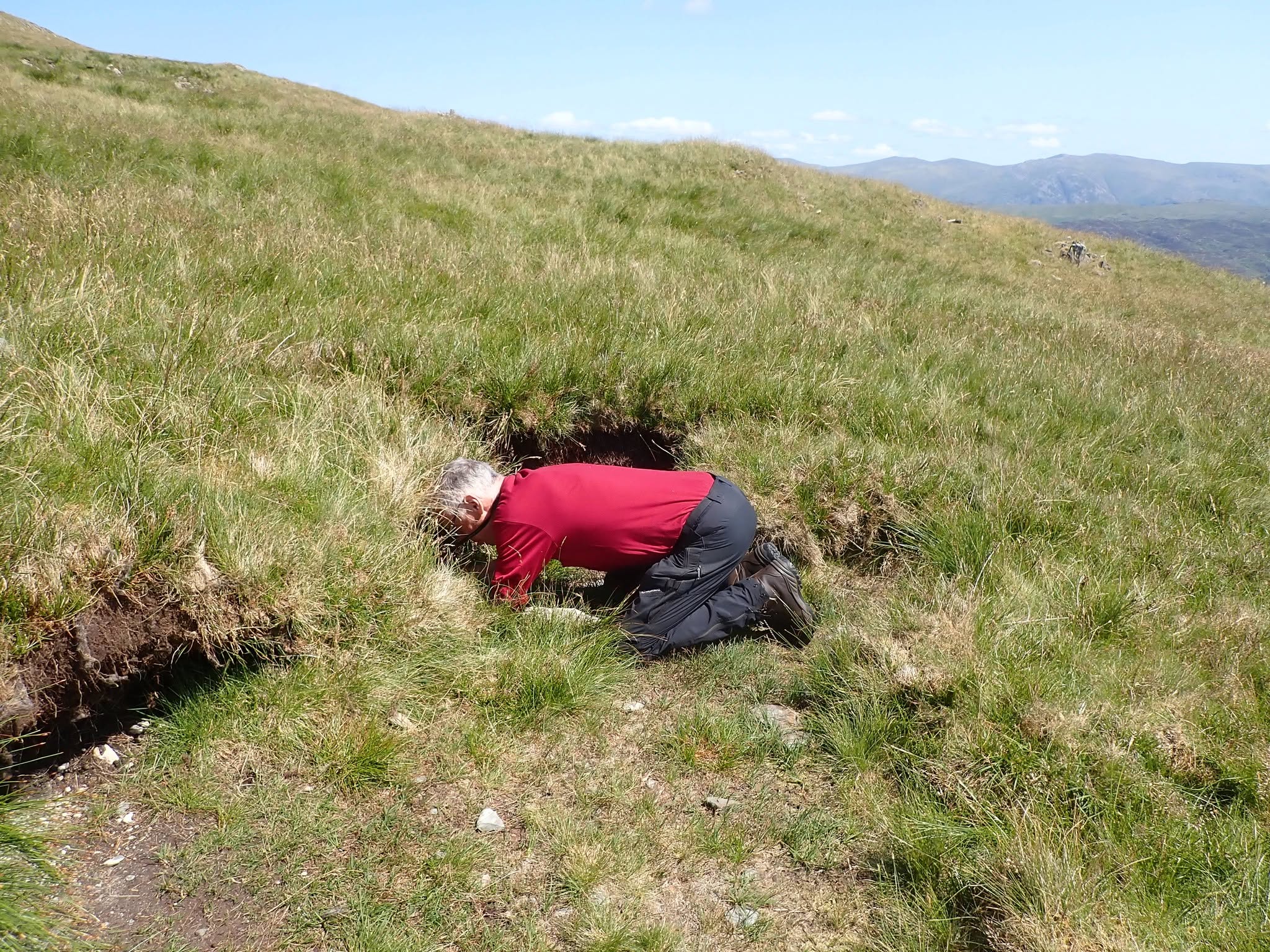
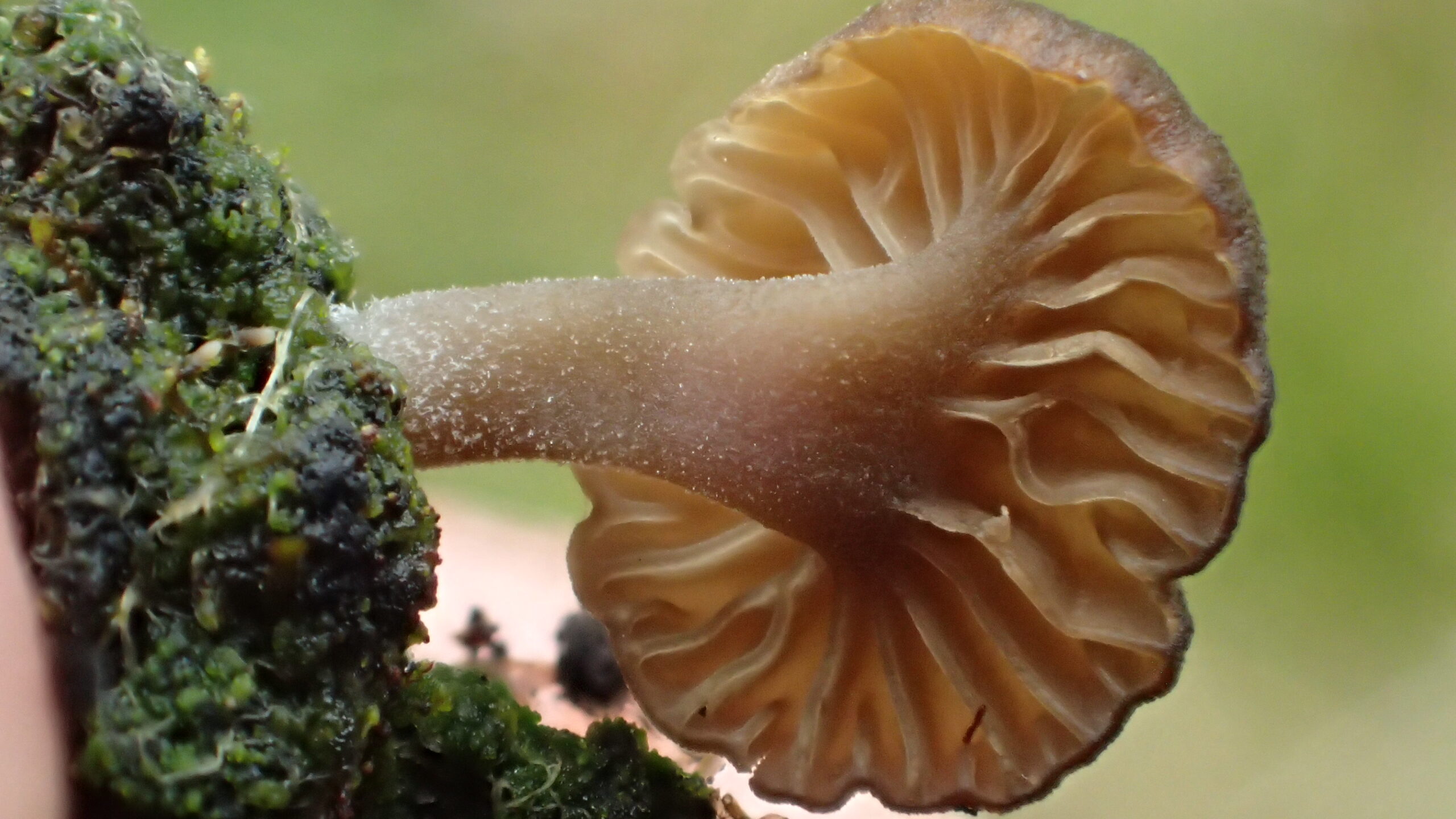
Lunch was taken near to where Caz and Chris had found Lichenomphalia velutina on their recce. We had to take their word for it really: the green granules could have been from any Lichenomphalia, and the fruiting bodies were too small for close inspection with a lens. Still, it was amusing to see them burrowing into the peat hags.
Suitably refreshed, we strode out for Dale Head summit, and for once were barely distracted on our journey. Once there, we examined the bare-ish ground to the west in perfect conditions for lying about on the top of a hill. There was Lecidoma demissum, with brown melted chocolate apothecia on brown-grey areoles. It didn’t look anything like the proverbial cowpat. Schaereria cinereorufa had beautiful scaly squamules. We found three Ochrolechia species: tartarea with brown apothecia just breaking through, the fishbone splat of frigida and the C+red soredia of androgyna.
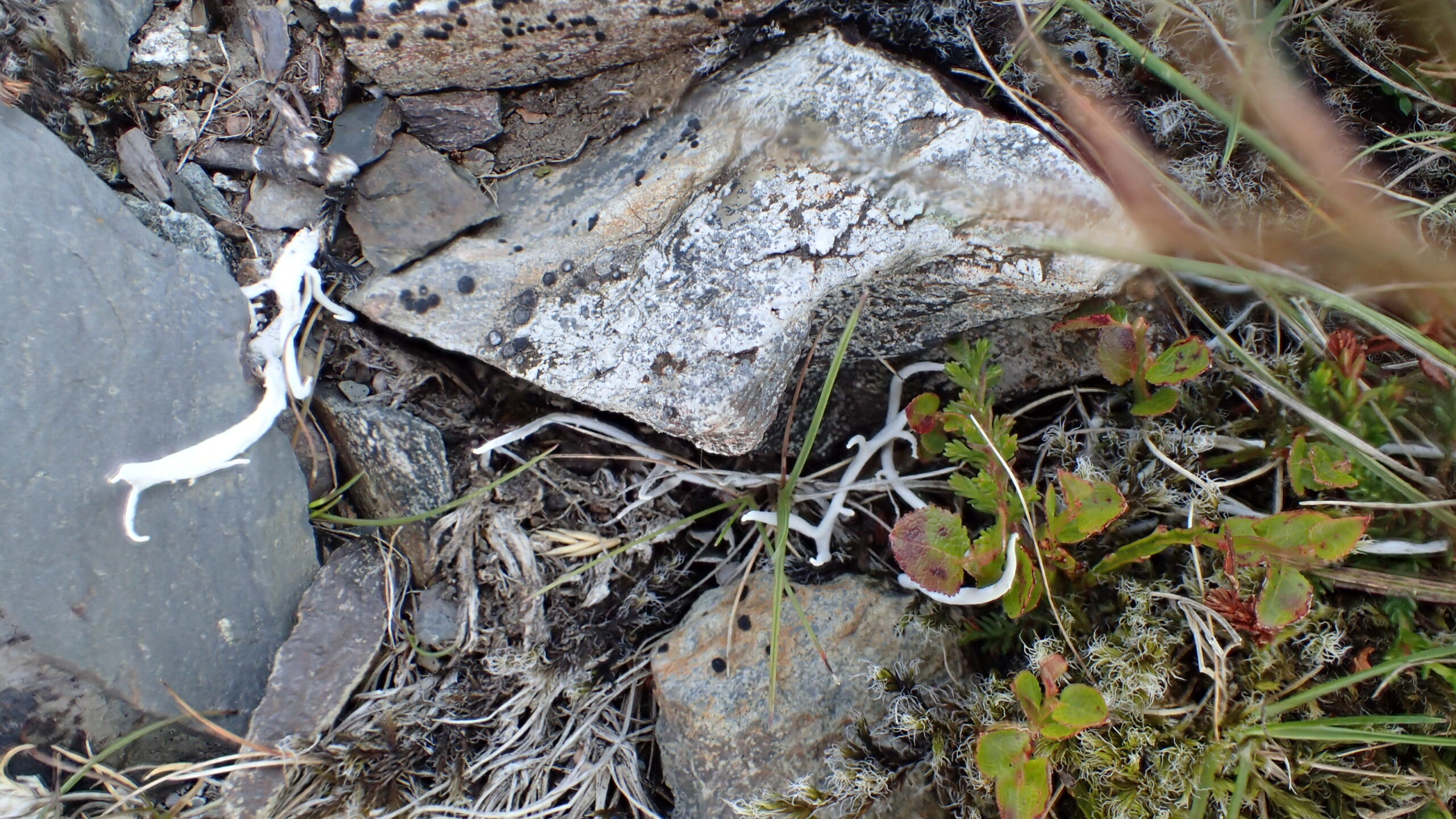
Further along the ridge, and down towards the col, a bigger area of bare ground had good examples of the shiny Cetraria species: muricata (with lots of spines) and aculeata (with depressed hollows containing pseudocyphellae). There was also a little Thamnolia vermicularis: “white worms”. This is a strange species, the white hollow tubes have no obvious method of sexual reproduction. Presumably the broken off bits get carried around on birds’ feet and walkers’ boots. It doesn’t seem to be doing well (too much grazing?, too many walkers? nitrogen pollution? climate change?), so it was good to see it surviving here.
And that was that: time to stroll gently down to the cars at the pass. And now for a change! I usually end these reports by saying “we should be coming back here”. But to Dale Head? I’m not so sure, certainly in the short term. For being up high on a clear day gave us a cracking opportunity to look at other places (ooh the views!). So there were several conversations along the lines of “we should go down there” and “over there looks really interesting” and “I’m not sure anyone has ever gone over there to look at lichens”! On the other hand, at some point someone will need to come back and see if the Thamnolia is surviving…
Text: Pete Martin
Photos: Helen Baines, Chris Cant, Pete Martin