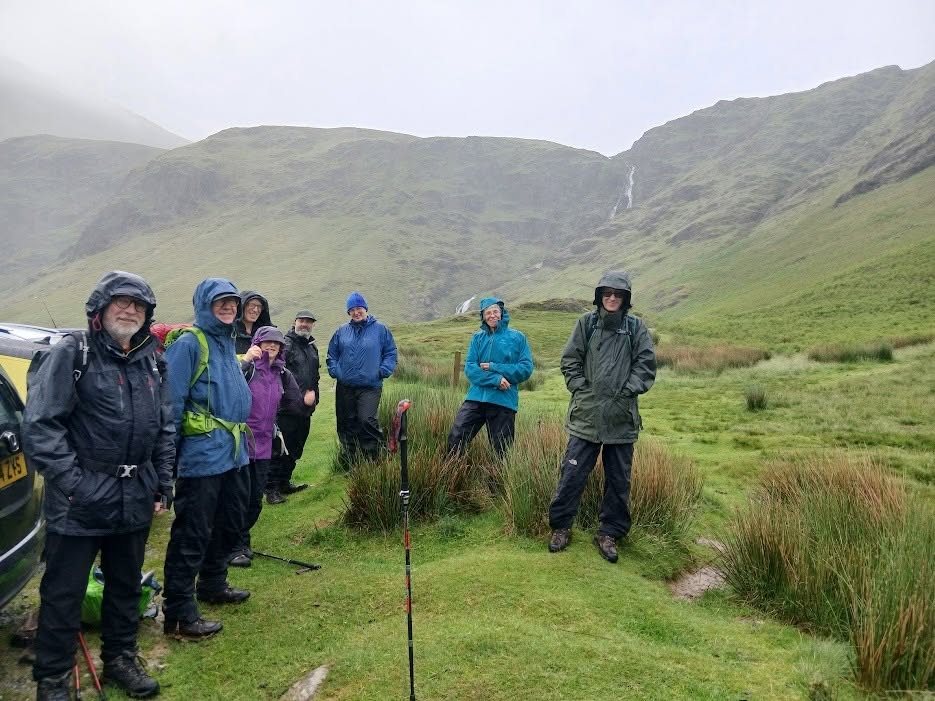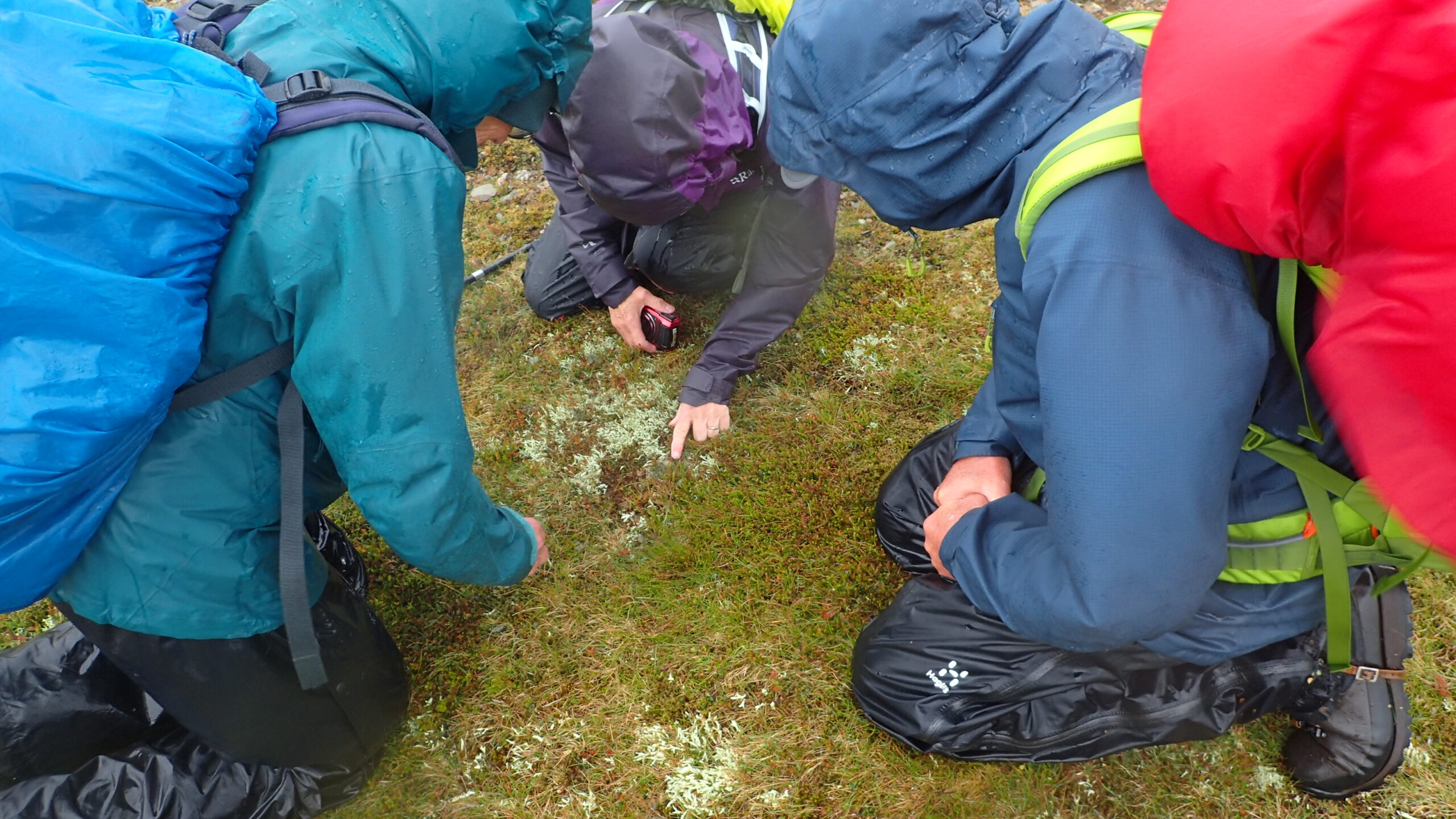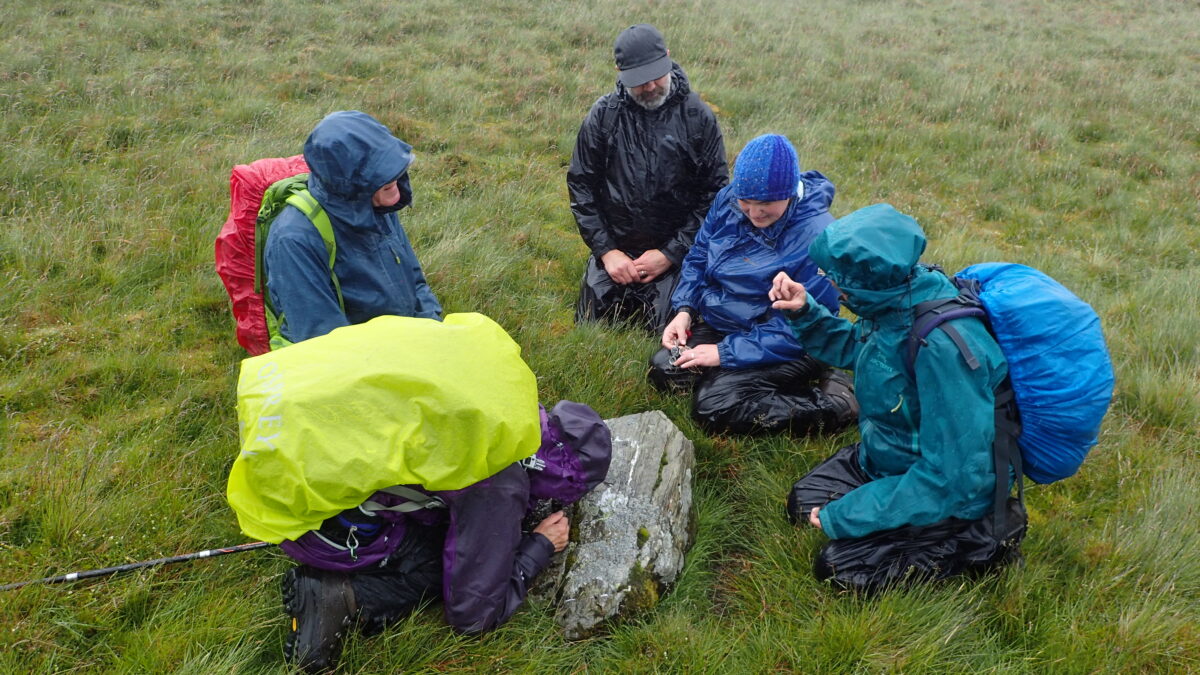
Ten hardy souls met in the rain and wind at Newlands Hause car park and voluntarily opted to go up Robinson as planned, despite being given the option of a lower level furtle around Moss Beck. At this point Moss Force nearby was looking somewhat in spate ….
We were in the Buttermere Fells SSSI, a large area of fells designated for many features though with no mention of our site. At a height of 737m, Robinson is easily accessed from the car park at 333m on the Newlands Valley to Buttermere road.
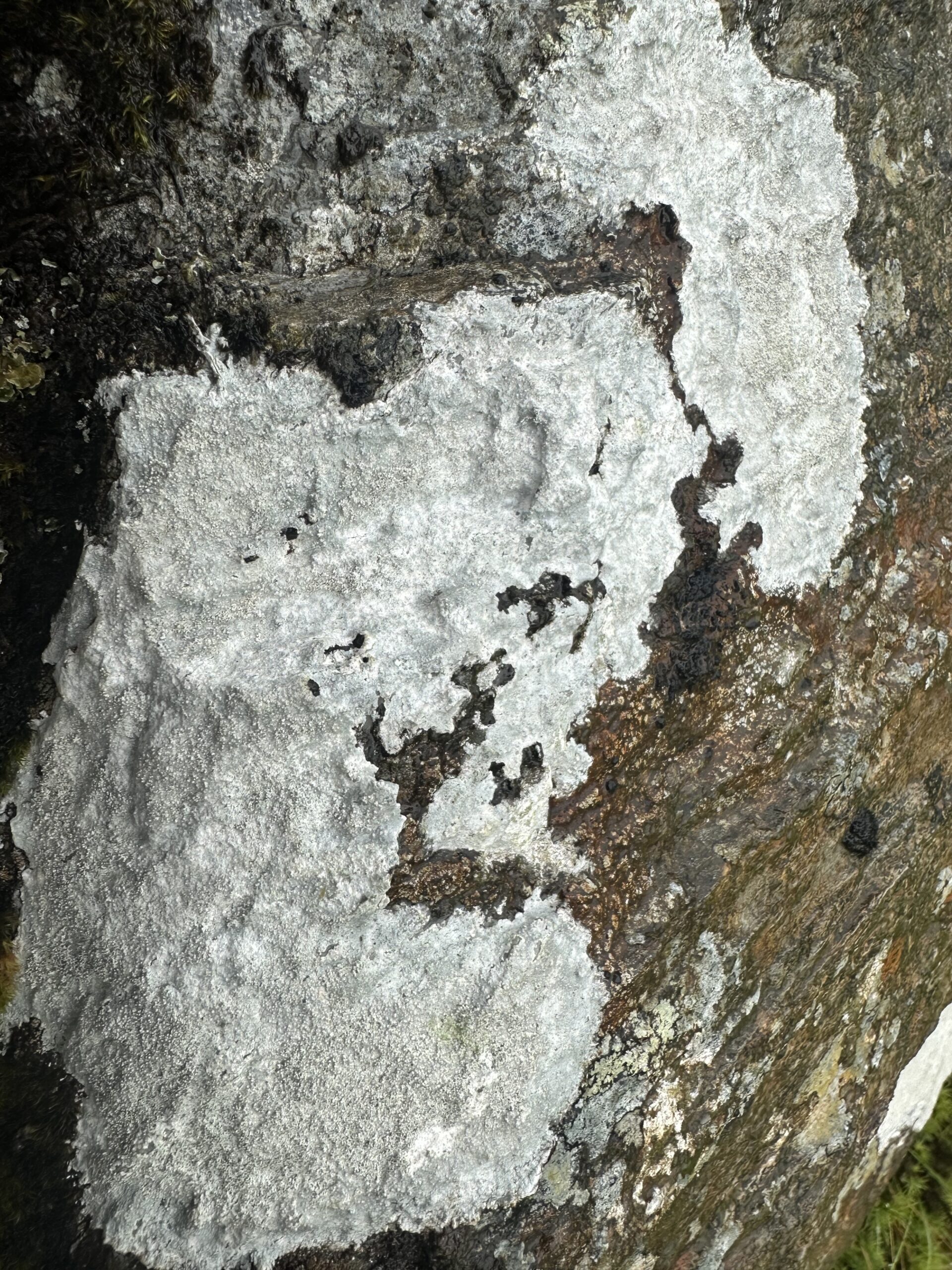
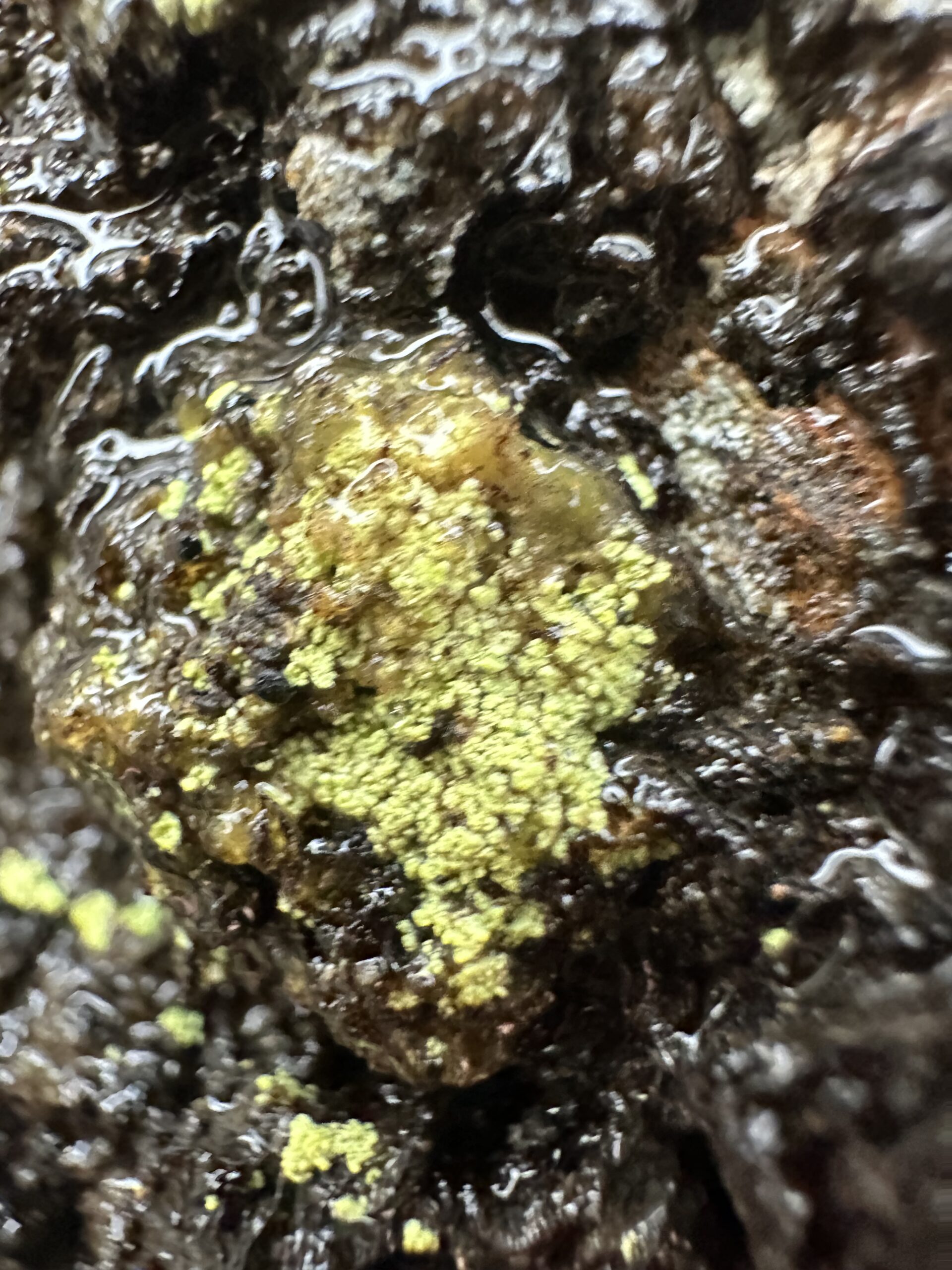
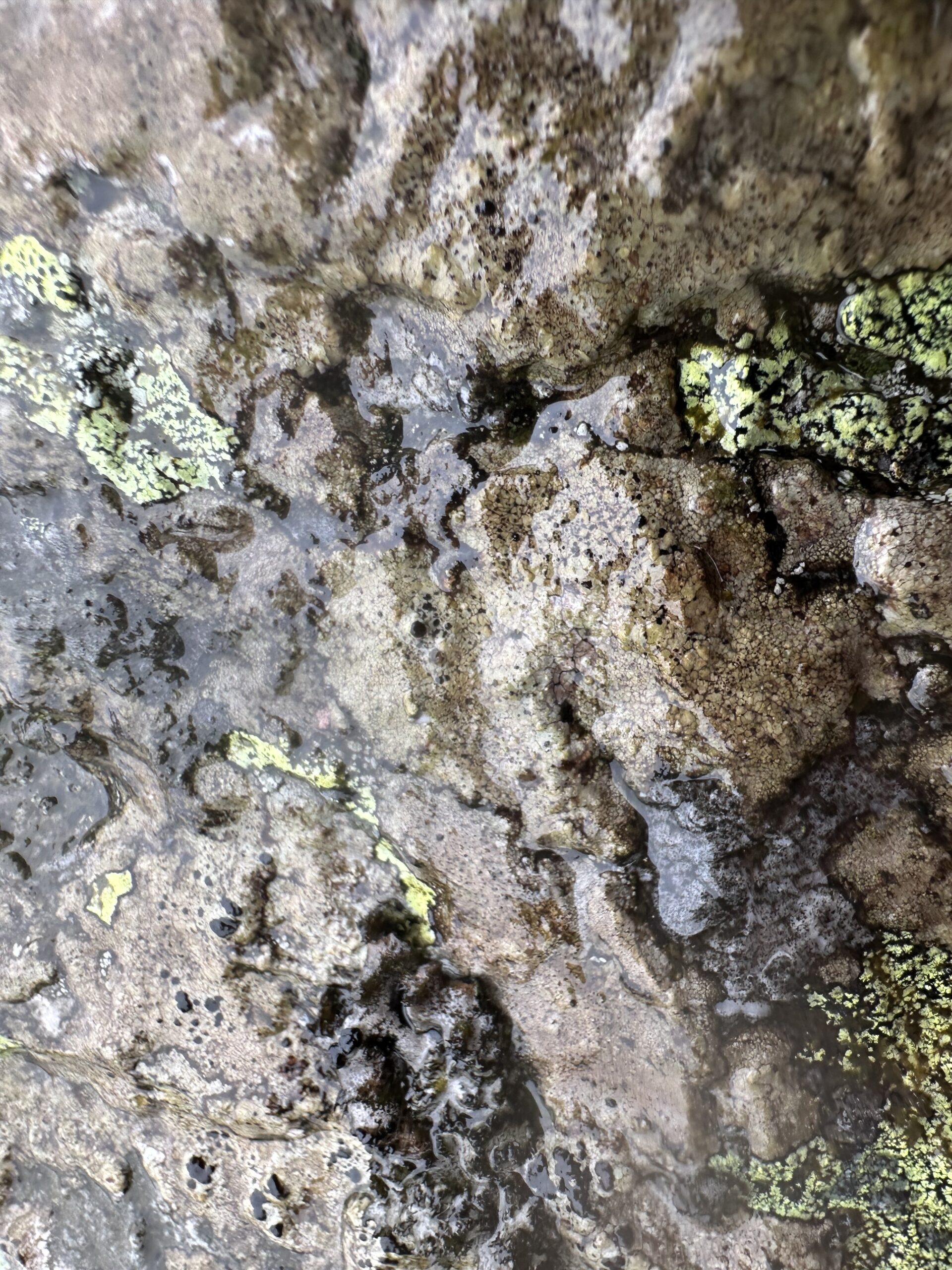
It was obviously not a day for much lichen recording and note books eventually turned to papier-mâché whilst inside pockets. We concentrated at looking at what we could on rocks and outcrops near the path which threw up a good range of common species that can be identified, wet or dry, by their external features: leafy Parmelia saxatilis with brown isidia, crustose white Lepra corallina with isidia and in some cases black dots of the lichenicolous fungus Sclerococcum sphaerale, yellow and black Rhizocarpon geographicum (aka map lichen), pale scaly stalks of Stereocaulon vesuvianum and greenish crusts of Baeomyces rufus with brown-pink apothecia on tiny stalks.
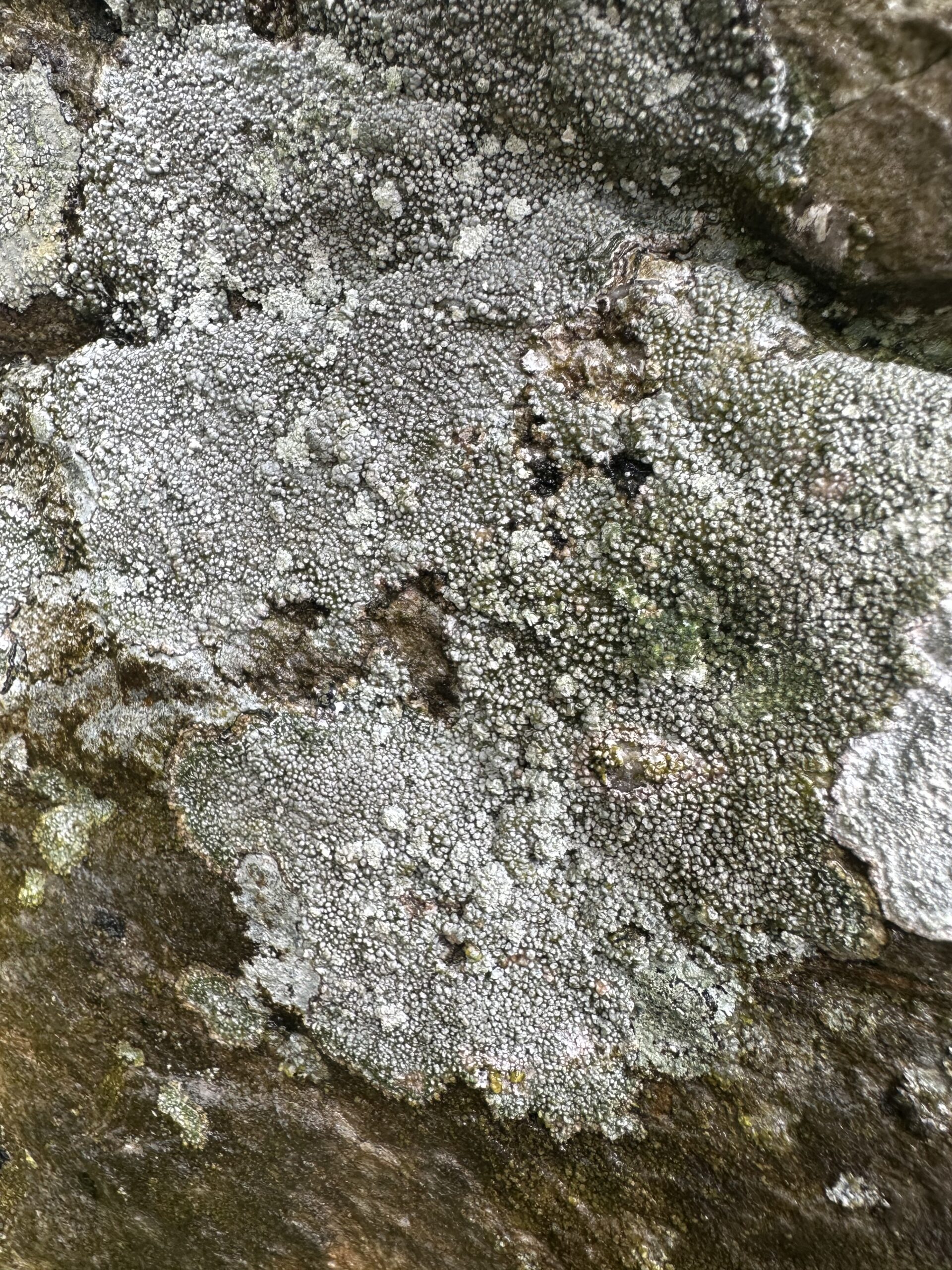
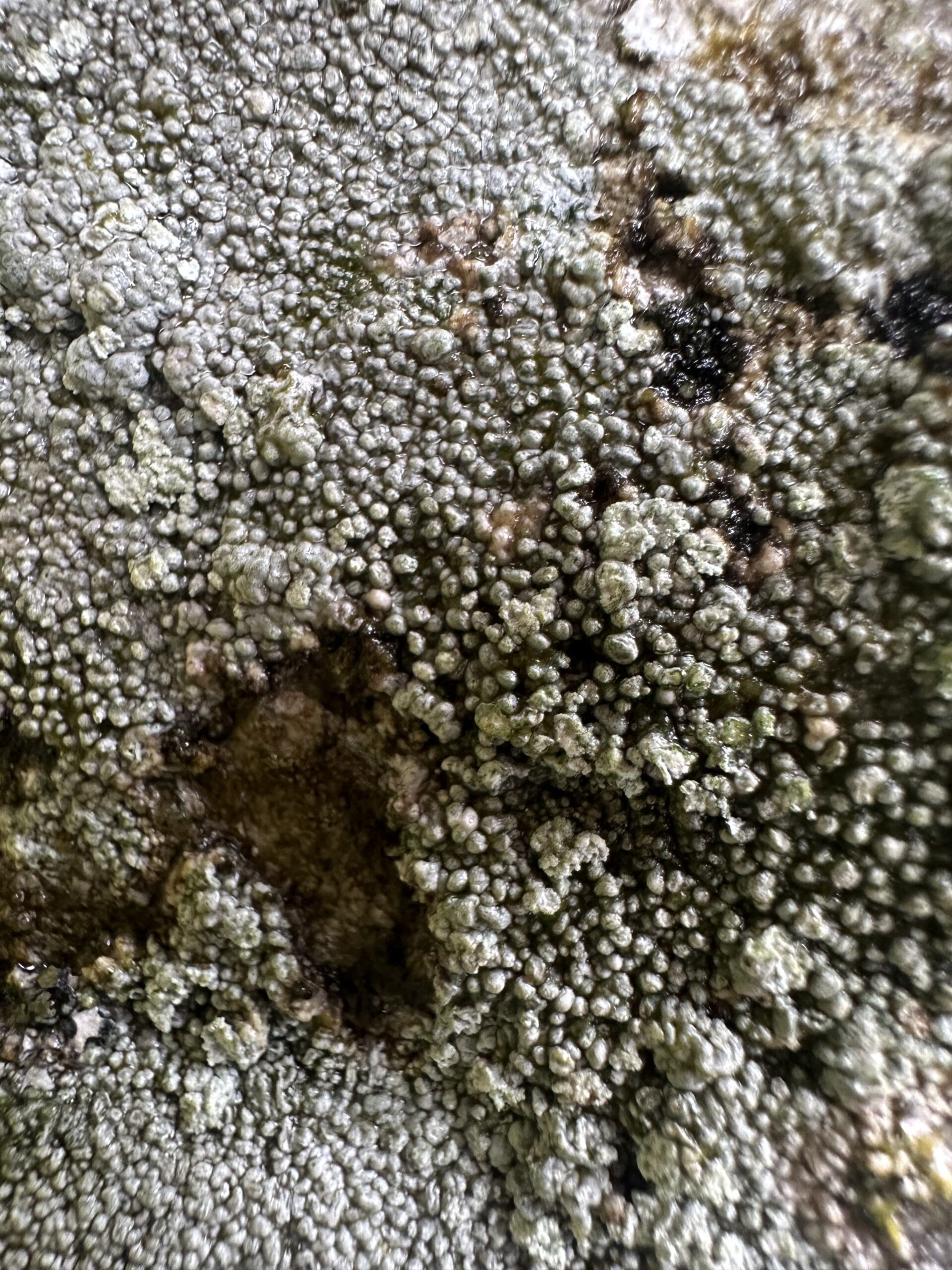
One small rock near the big bog below the hill had a distinctive-looking dark grey crust densely covered with fat papillae (like chunky isidia). Coincidentally a couple of us had recently been looking at this near Ullswater – the bitter taste and KC+ purple reaction confirmed the ID as Lepra melanochlora, Nationally Rare, though in the sodden conditions it was a surprise that the chemical test worked well (reactions tend to become very diluted in the rain).
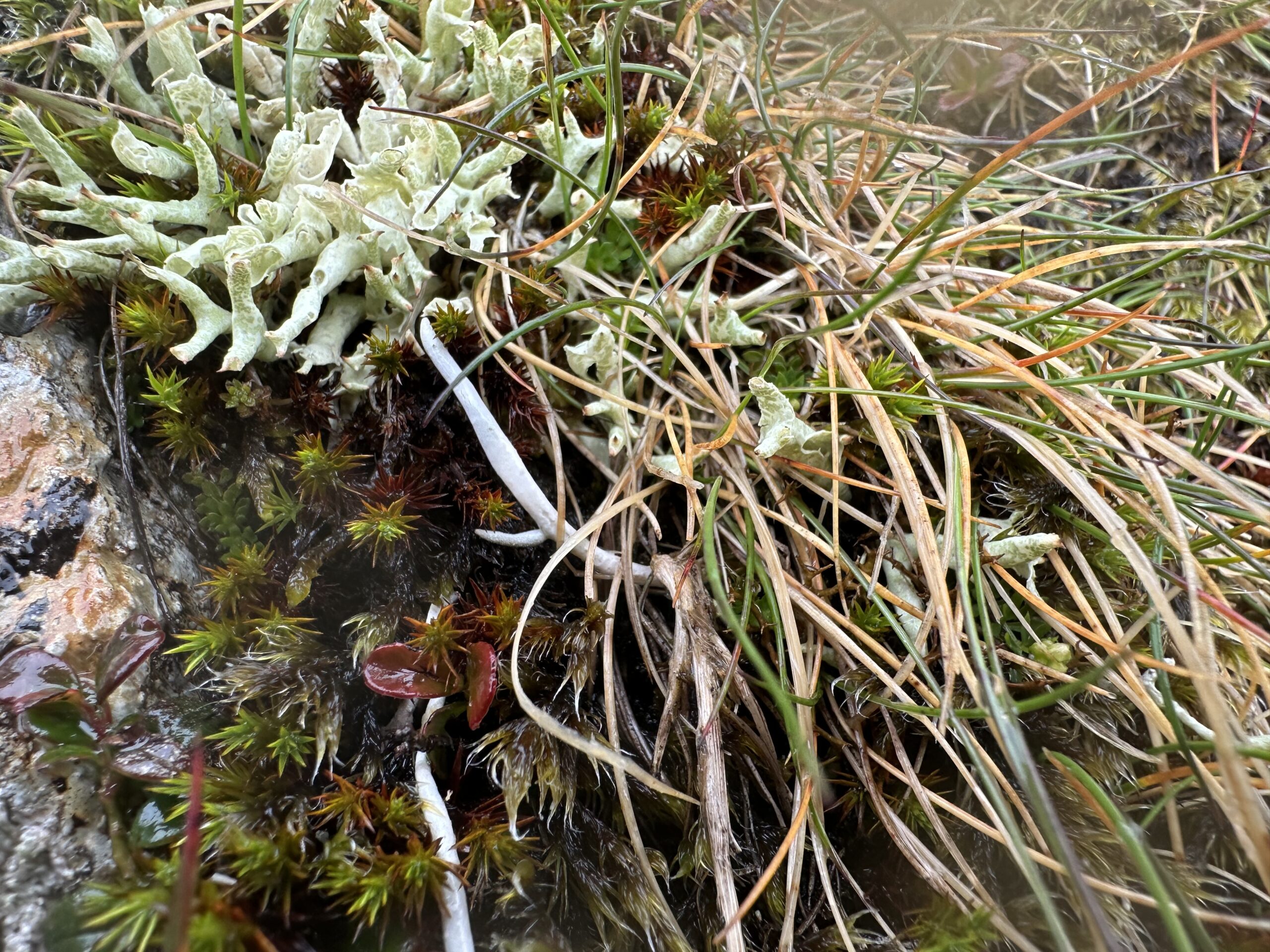
A drier mound in the middle of the adjacent bog we traversed had nice clumps of Cladonia ciliata, C arbuscula and C uncialis subsp biuncialis as well as red-fruited C coccifera agg.
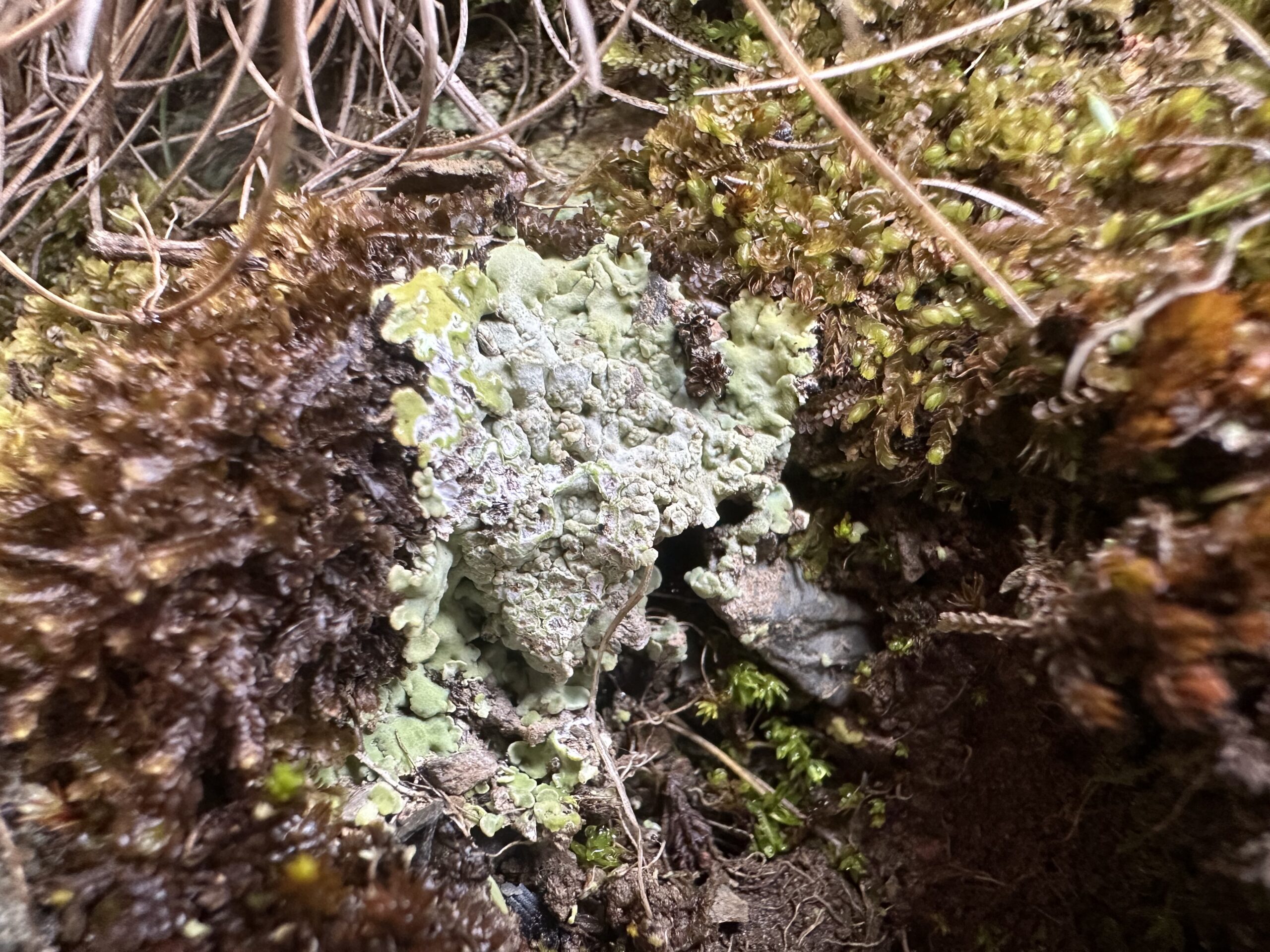
Once on the slope up to the top of Robinson there were more outcrops and boulders with a good range of crusts – yellow granules of Arthrorhaphis citrinella on black moss, Lecidea and Porpidia species that would need specimens taken to identify, small rust-red thalli of Tremolecia atrata, brown Fuscidea cyathoides and Umbilicaria cylindrica with grey spiny lobes. On the ground nearby were several thalli of Baeomyces placophyllus, an upland and mine-spoil specialist with grey-green lobes unlike B rufus which is more obviously granular/squamulose.
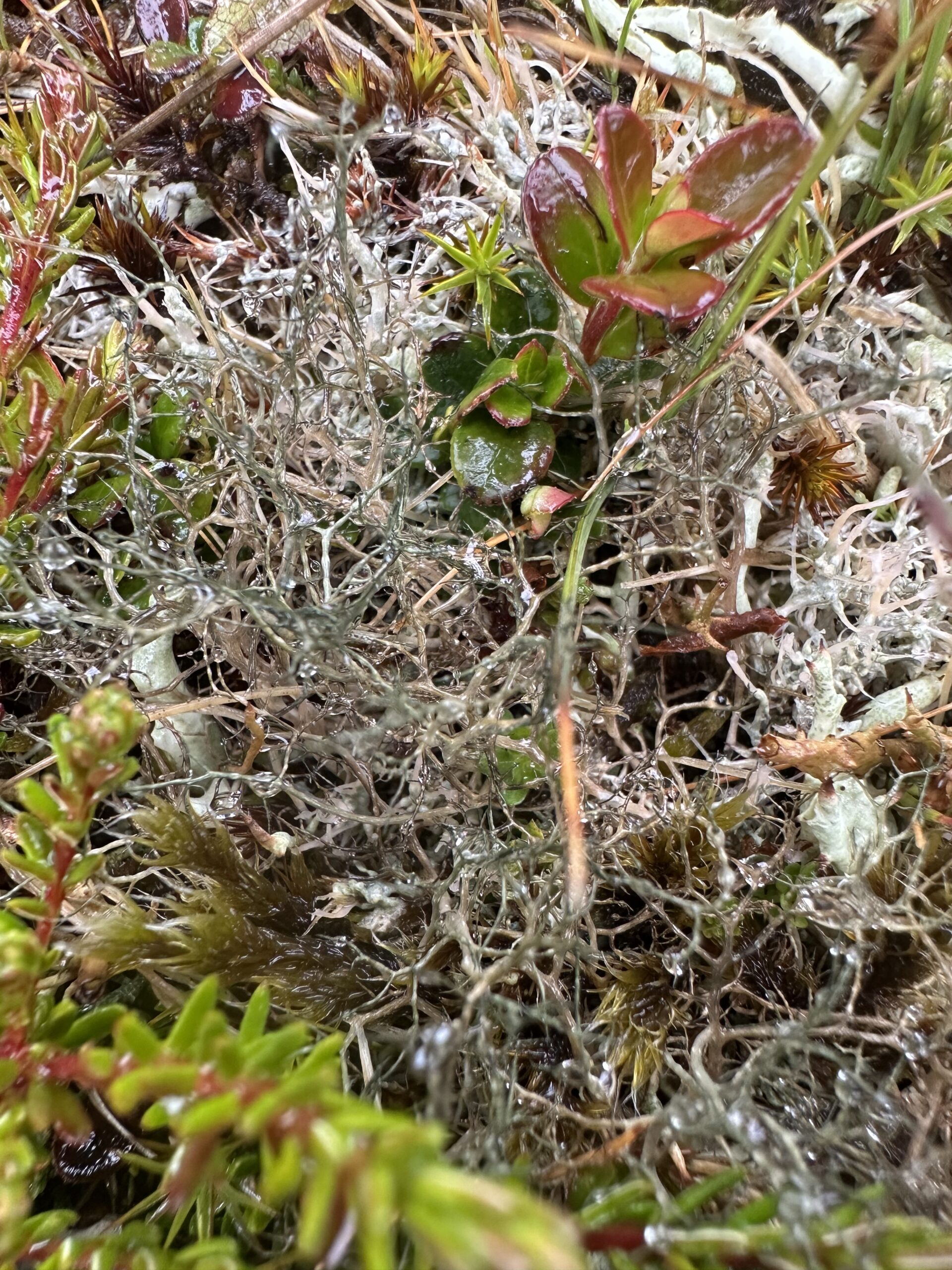
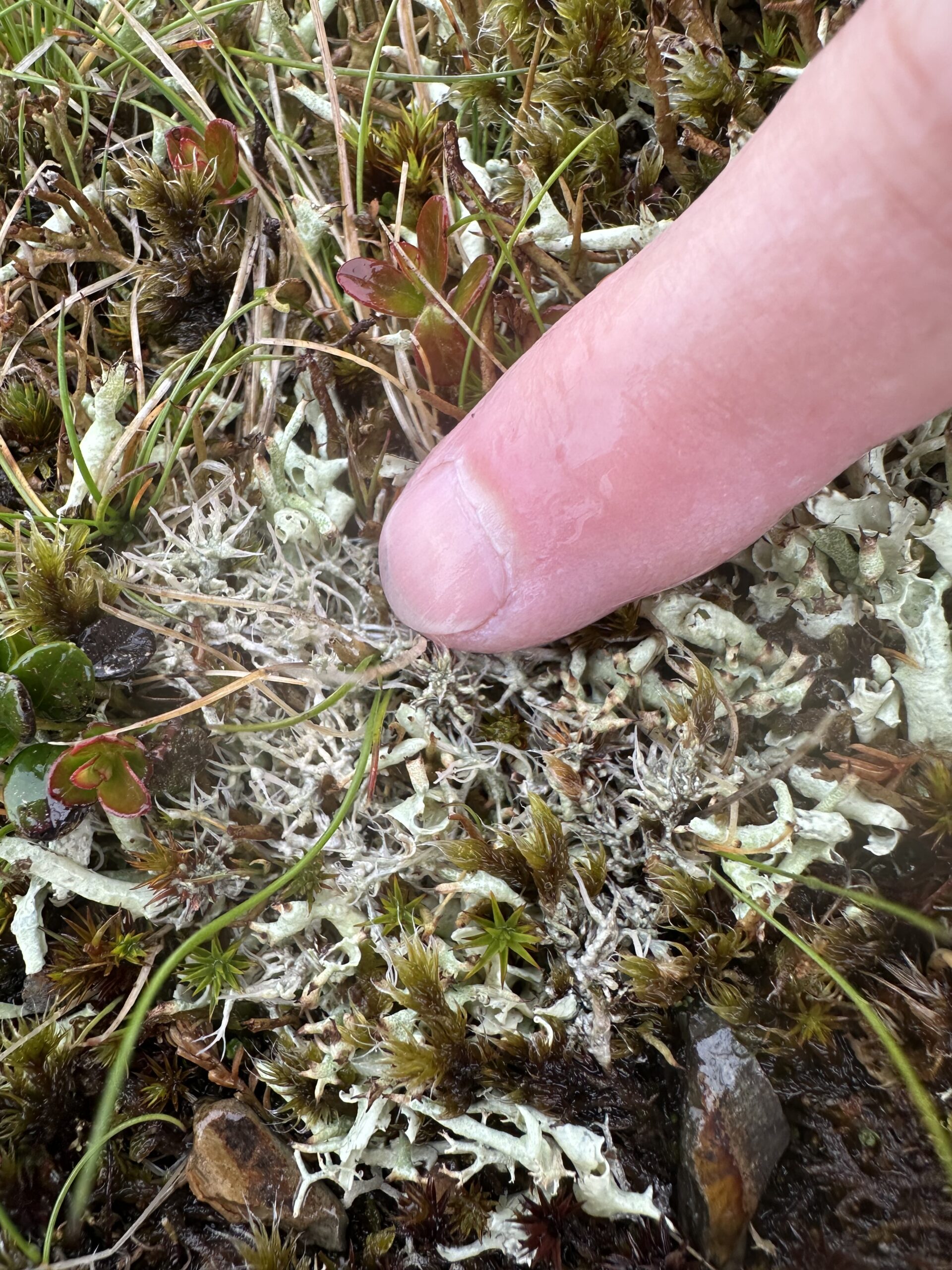
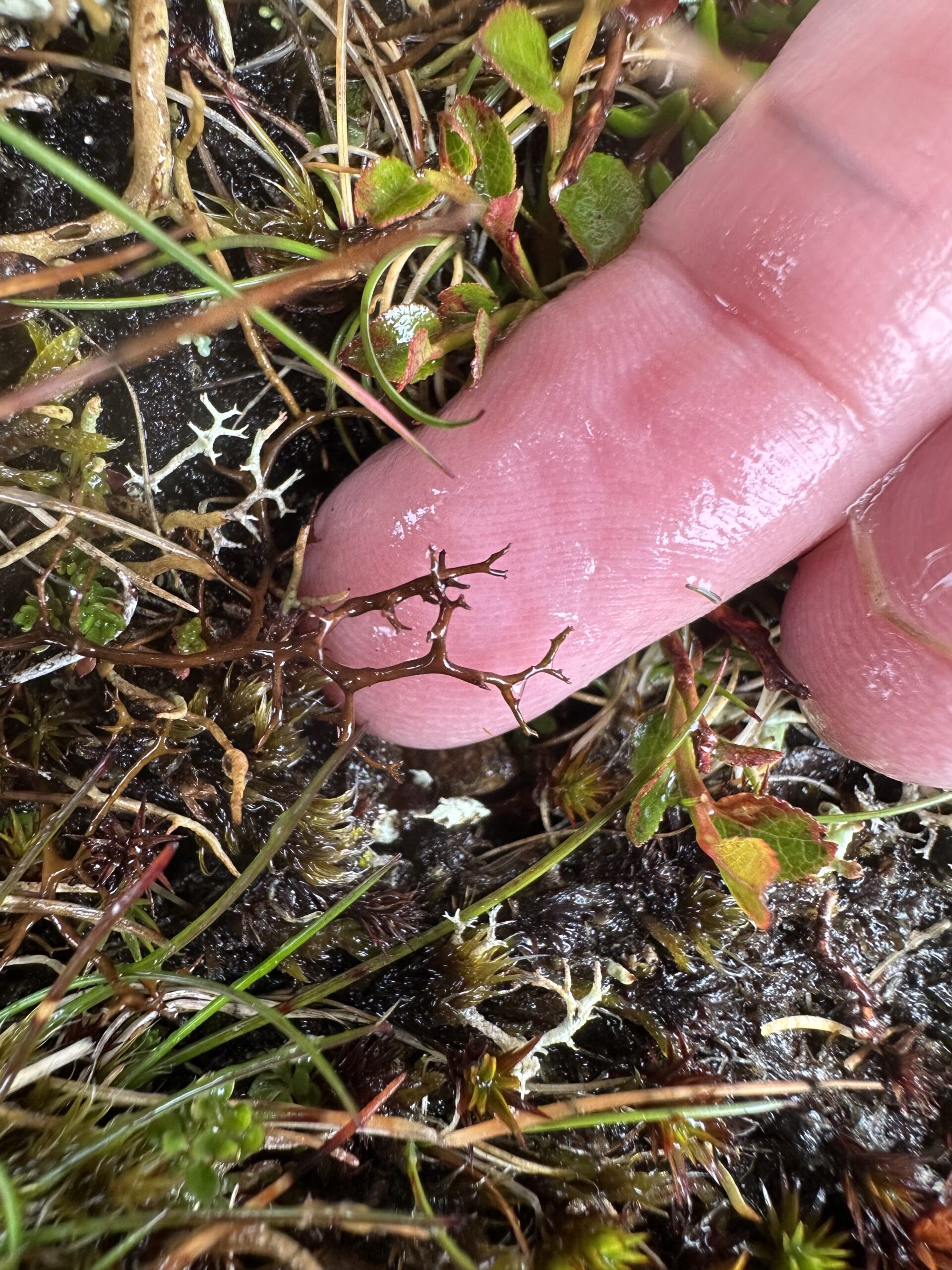
Arriving at the large flat summit area in the teeth of the gale, we found new instances (compared to our recce visit) of two species typical of good quality exposed montane conditions: grey-green hairy Alectoria nigricans and white worm-like strands of Thamnolia vermicularis on the ground beside the path in montane heath – bare gravelly patches with moss and very low vegetation. These species are not common in England with most recent records being from Cumbria. Also found were Ochrolechia frigida with pink-grey flattened spines and tiny terricolous Stereocaulon condensatum. Having seen the headline species we came for, we agreed the conditions were too unpleasant to stay longer so we headed back down the path, though there’s surely more to find another day.
It felt like a worthwhile day (afterwards…) and we saw some good lichens. The lichen and bryophyte people stayed together which doesn’t happen often and we all agreed that we should make a return visit when the weather allows a better search for interesting species. As we reached the cars much earlier than usual at about 1.30pm, wet through, Moss Force had turned from white water into a brown Niagara.
Text: Caz Walker
Photos: Chris Cant, Chris Hind, Clare Shaw