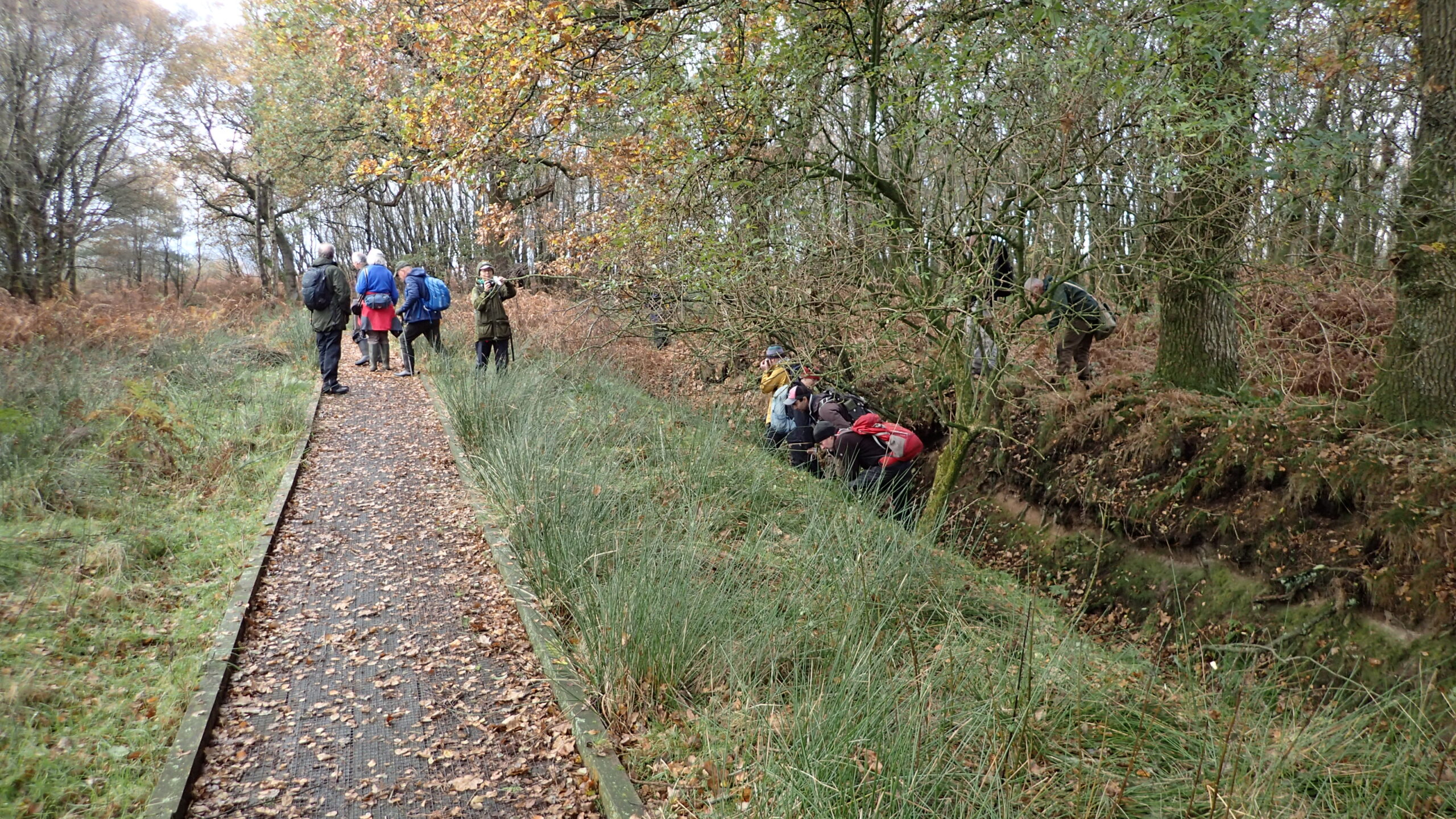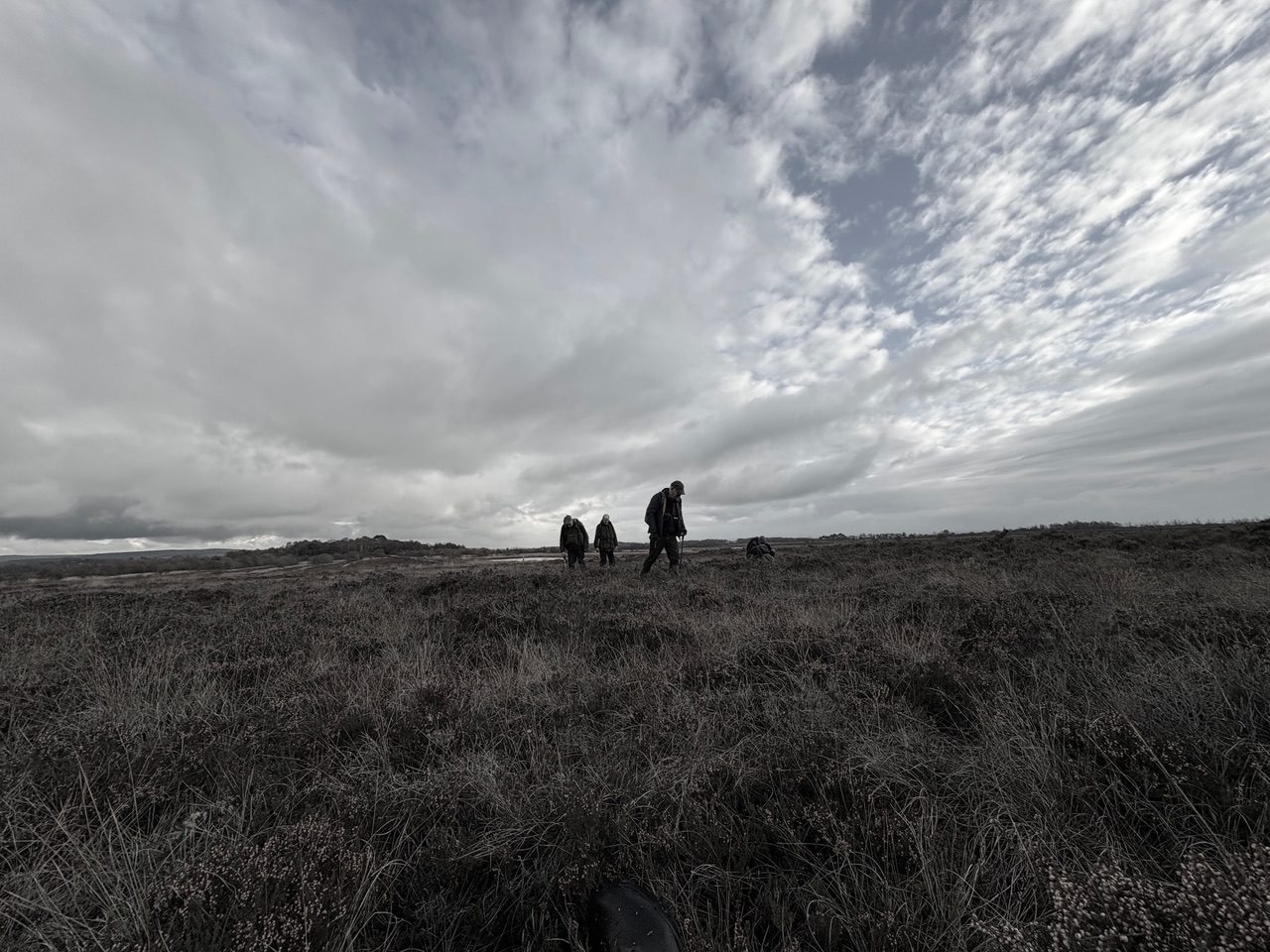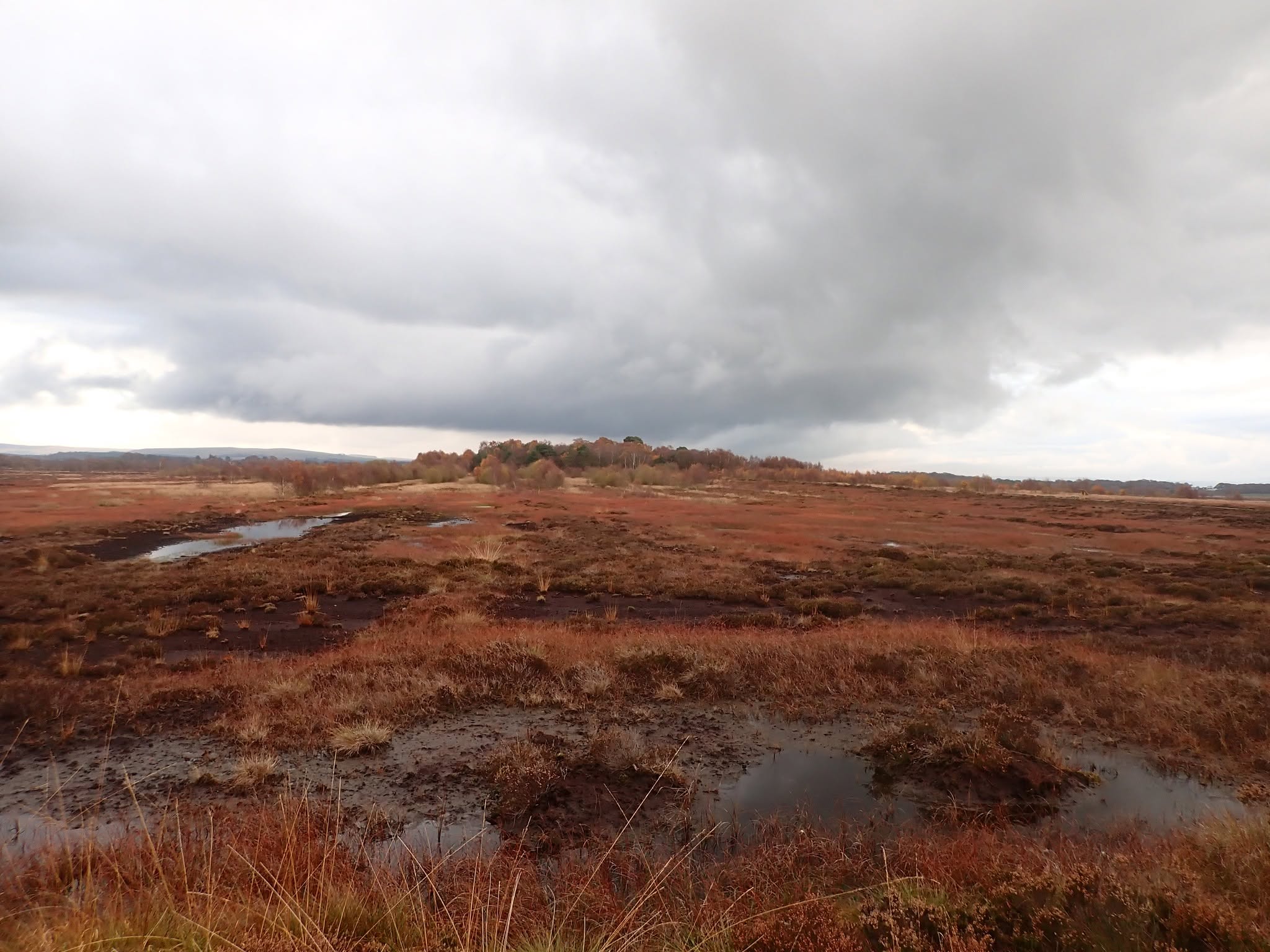
Bolton Fell Moss, north west of Brampton in north Cumbria, was bought by Natural England in 2013 and became a SSSI in 2015. The Natural England SSSI citation says:
Bolton Fell and Walton Mosses SSSI is of special interest for its nationally important lowland raised peat bog habitat and associated vegetation communities …. Peat has been commercially extracted from the Bolton Fell site since 1959 and although now ceased, these peat workings extended over much of the area. Significant areas of raised bog habitat remain where peat has not been extracted.
There are ongoing attempts to restore the area but it will be a very long time before natural hydrological processes and active peat formation return – a huge volume of peat has been removed so lowering the ground surface and therefore water table for much of the site. Nevertheless it is a very interesting place, especially seeing some sort of vegetation succession occurring on previously bare peaty areas. Also there were no lichen records, so the seven people in the lichen party got stuck in to record everything we could. Our guides were Chris Hind and Guy Broome who volunteer at the site and know it well.
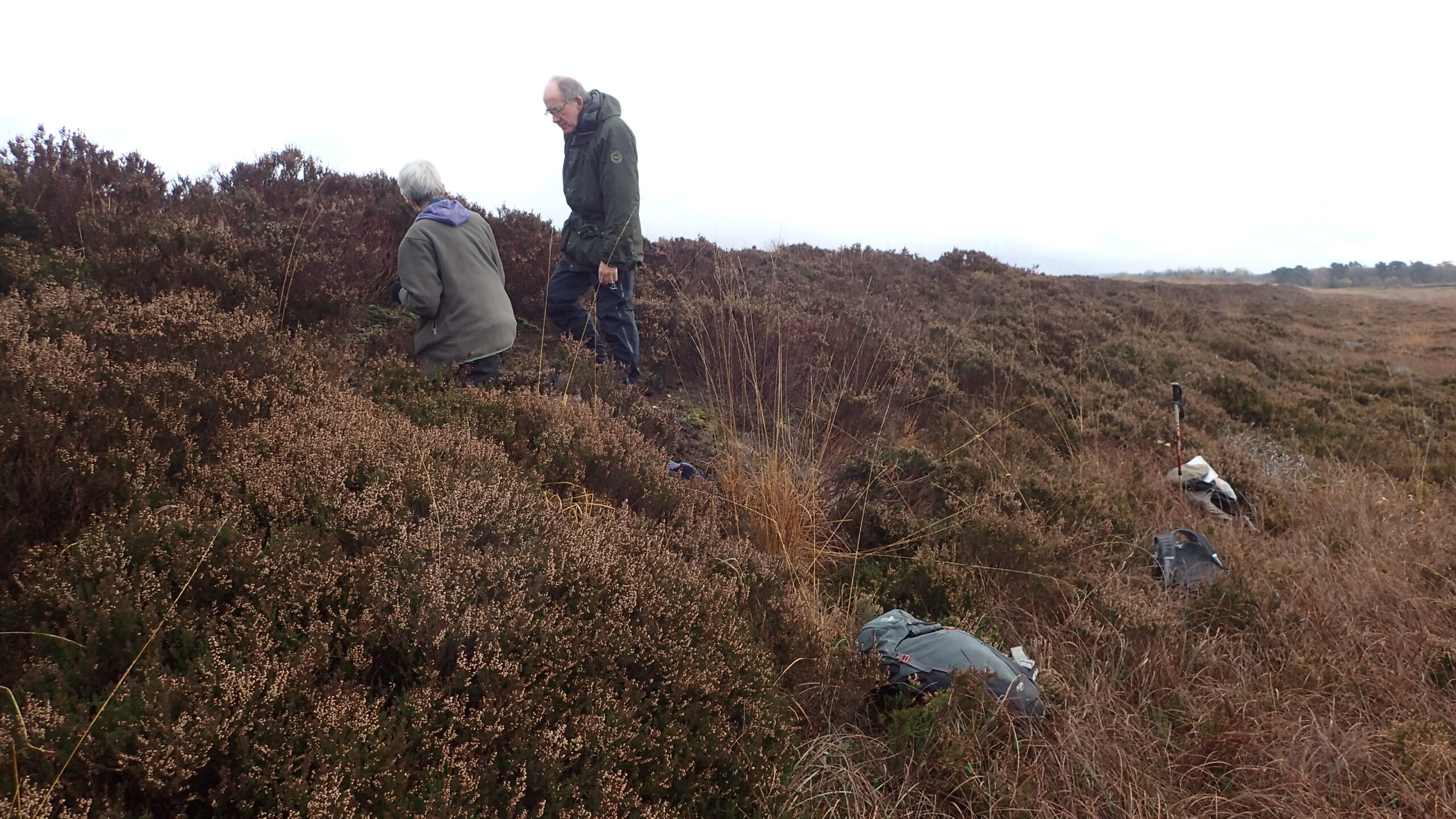
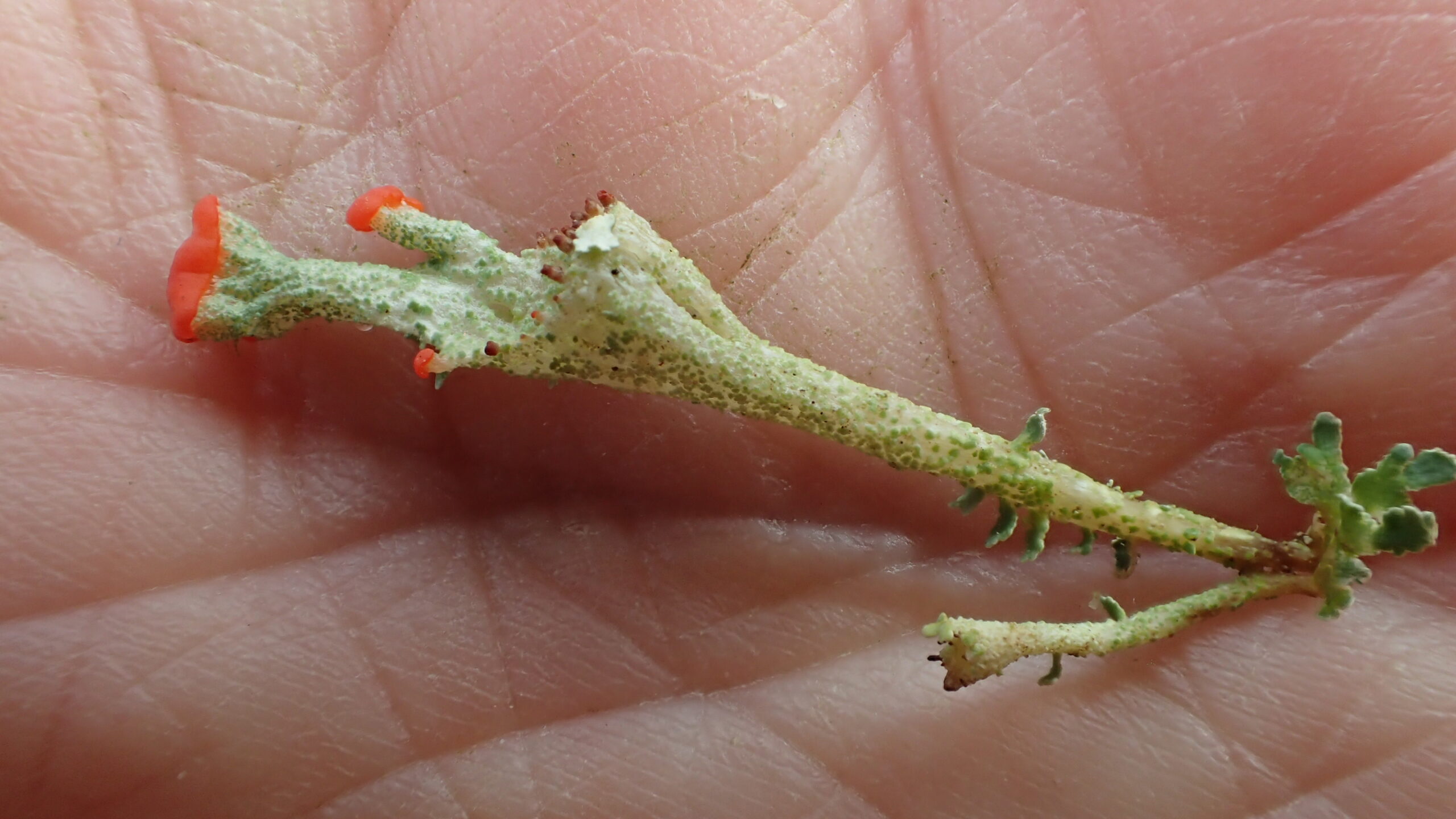
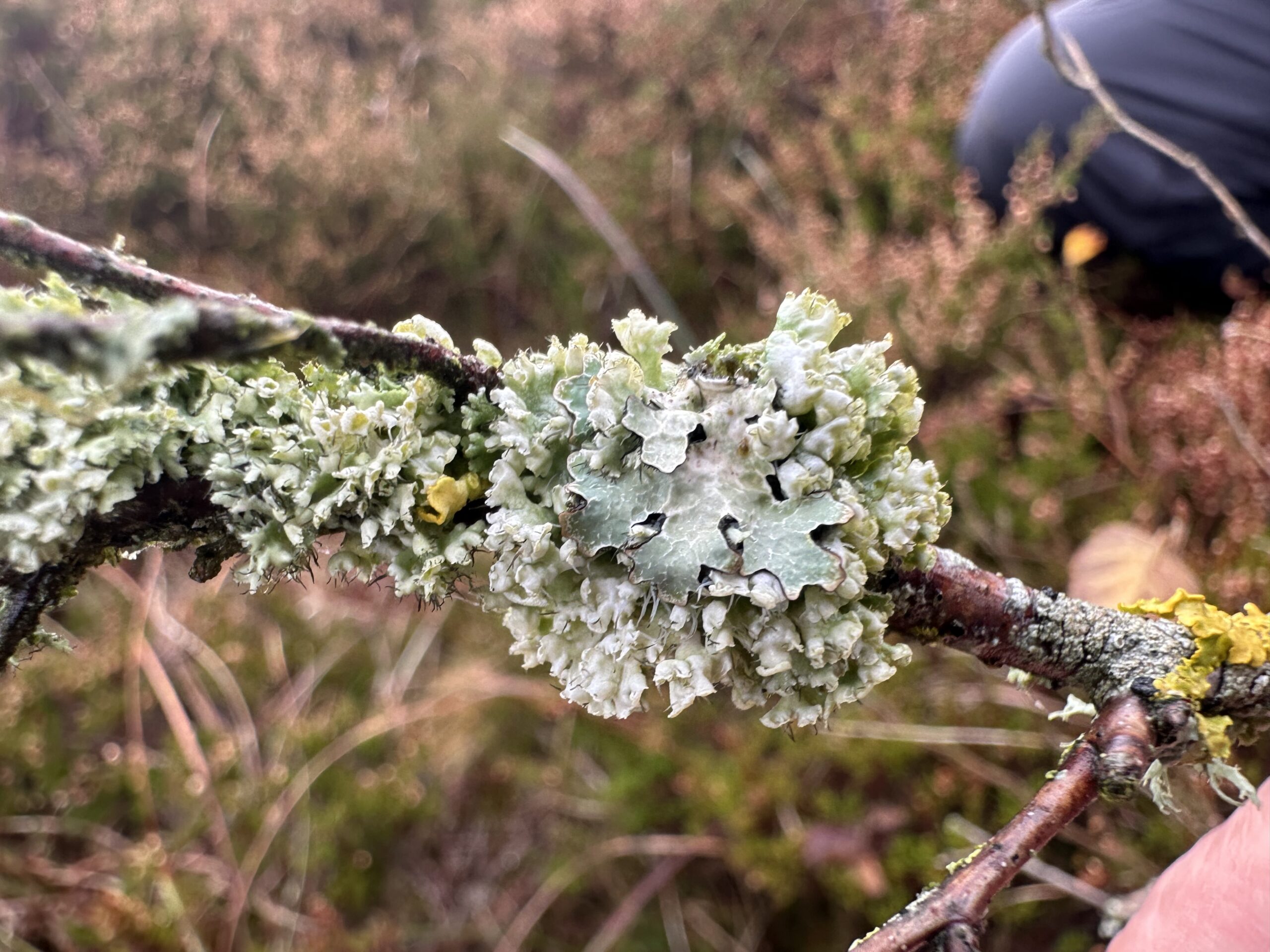
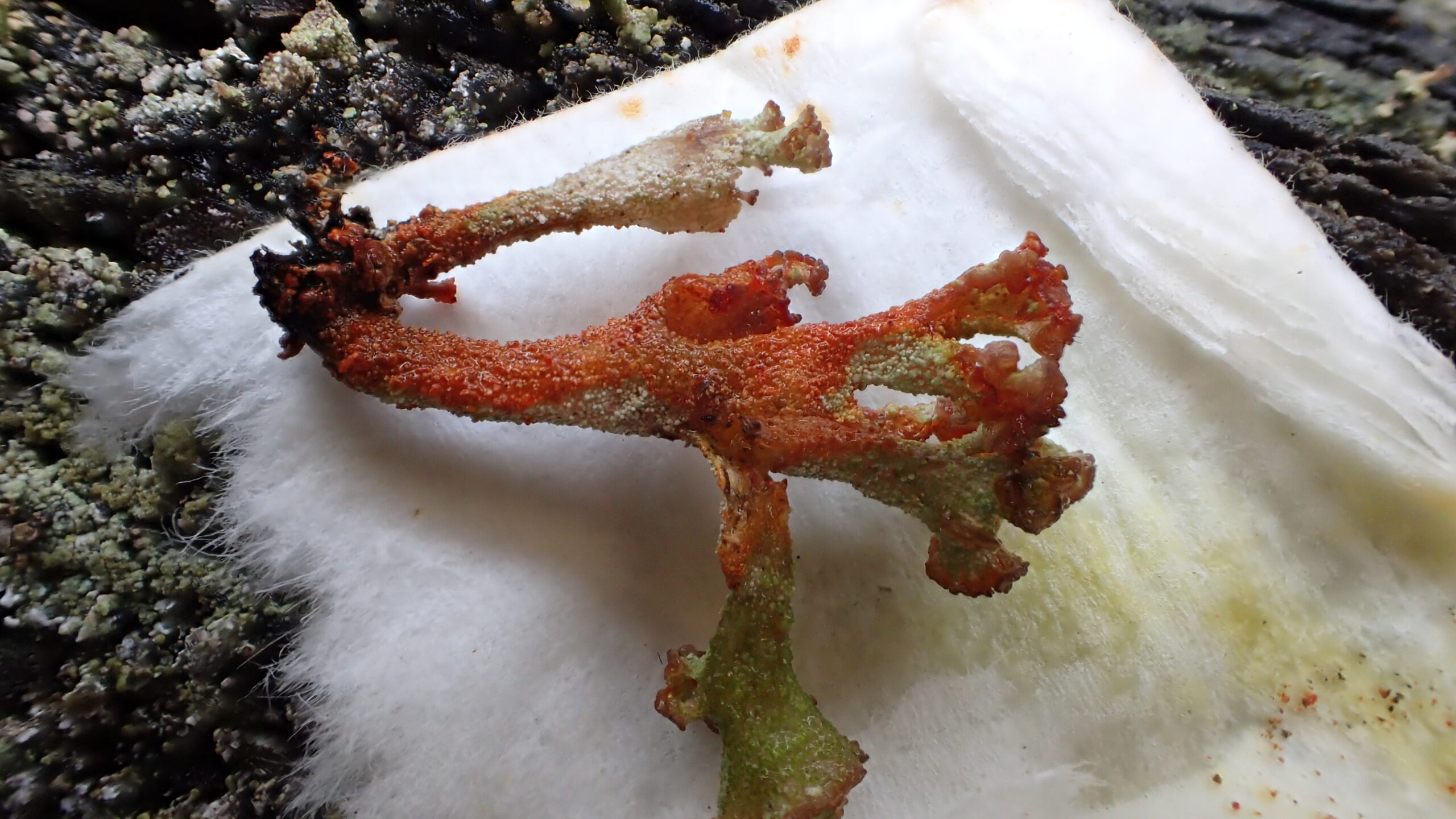
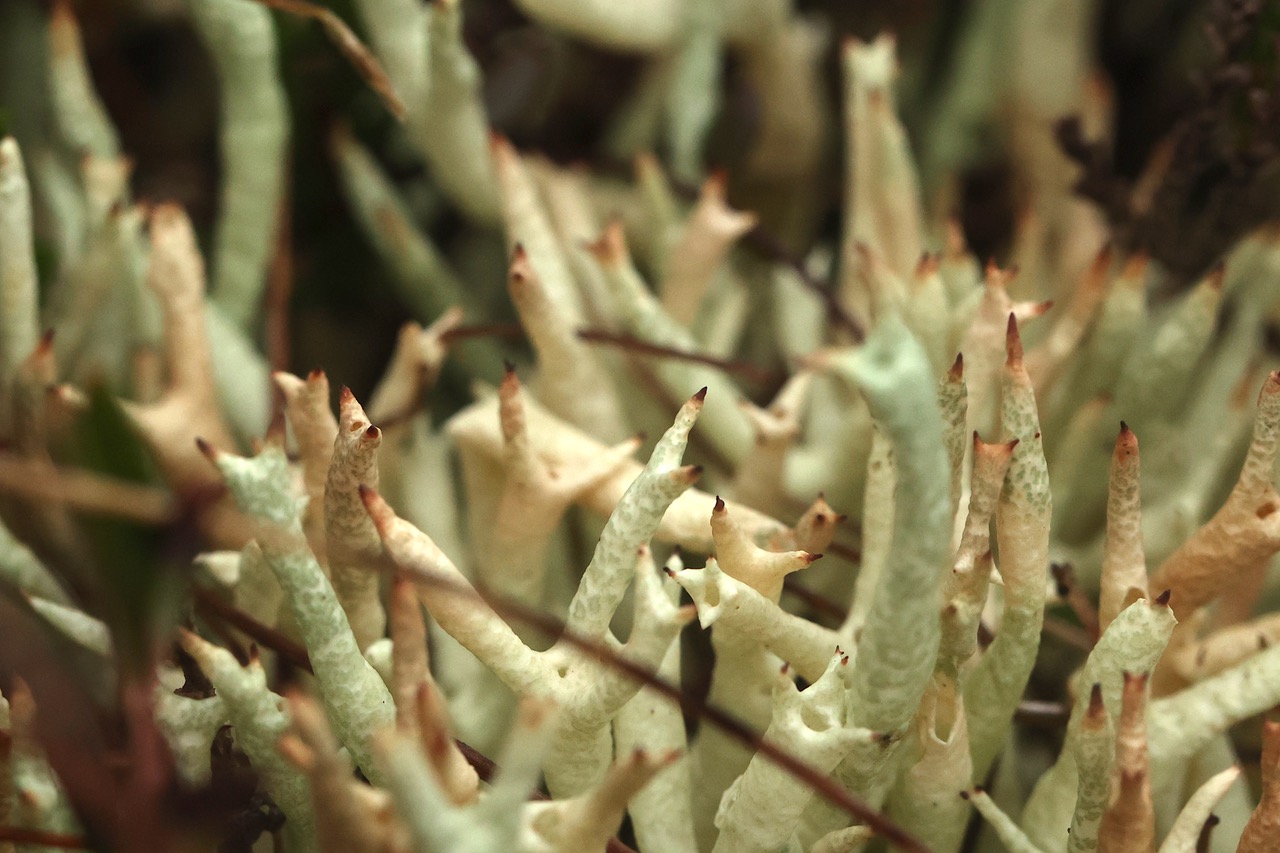
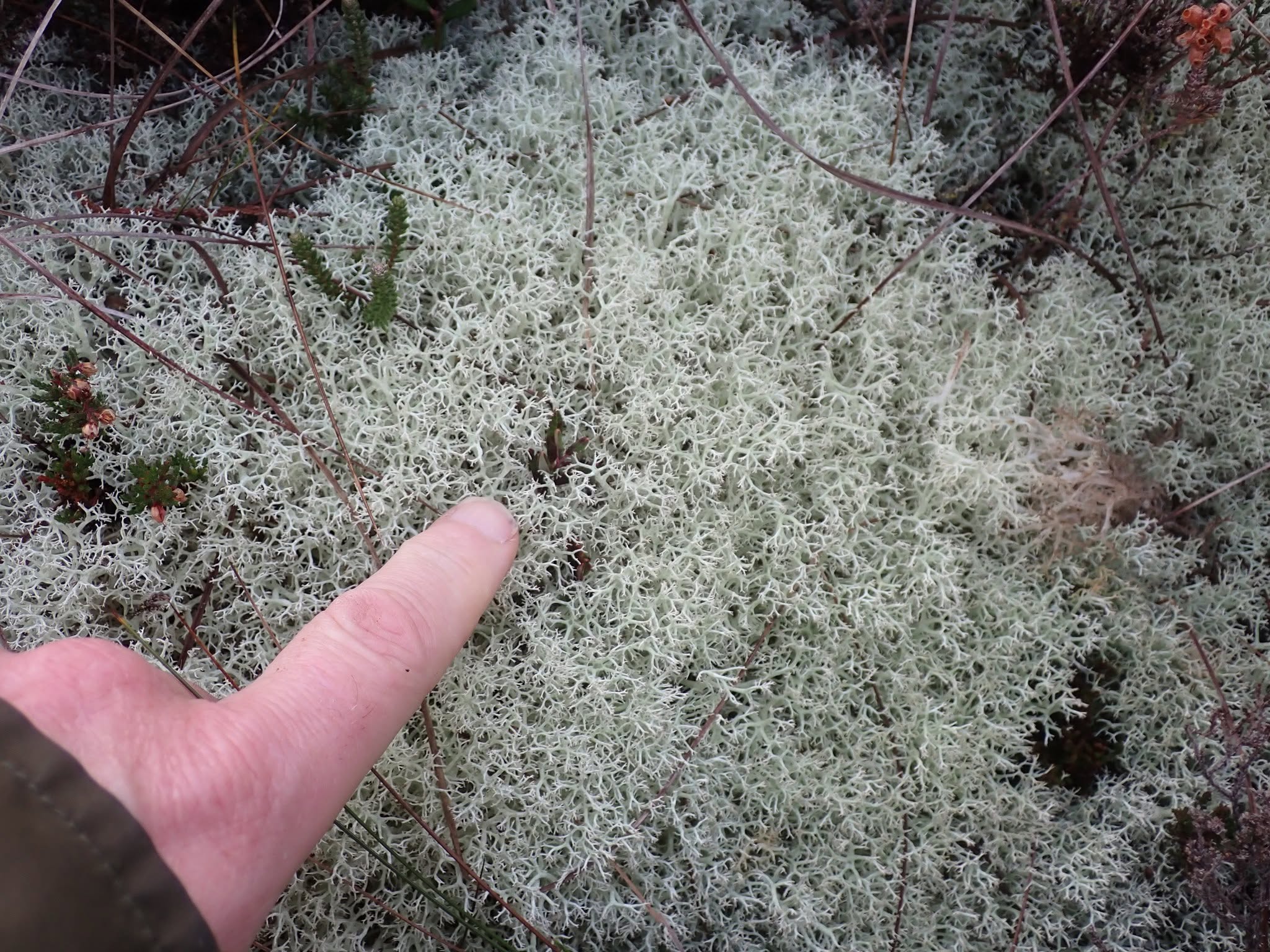
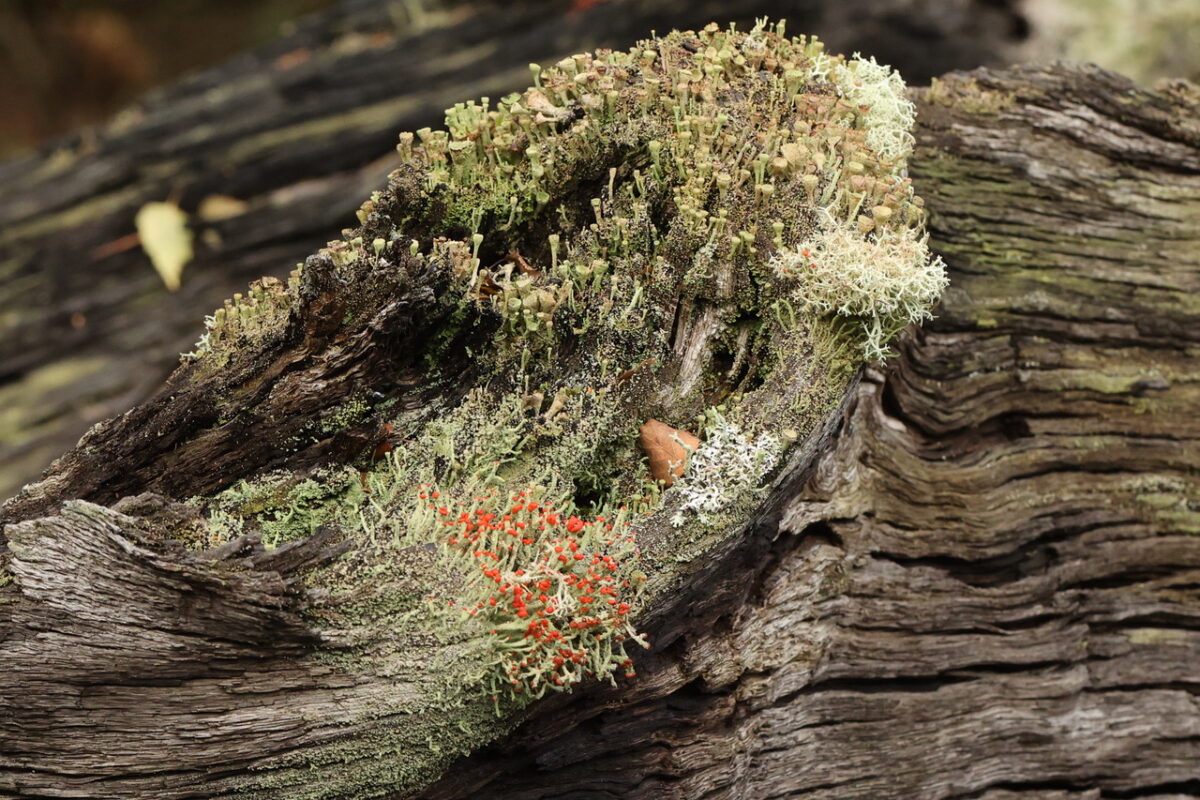
The first stop was an old railway embankment, once used to move cut peat, but now well vegetated. On the ground amongst tall heather we found several common Cladonia plus red-fruited C sulphurina, C polydactyla, C bellidiflora and C coccifera s str. Several small birch saplings had a collection of common foliose and crustose species.
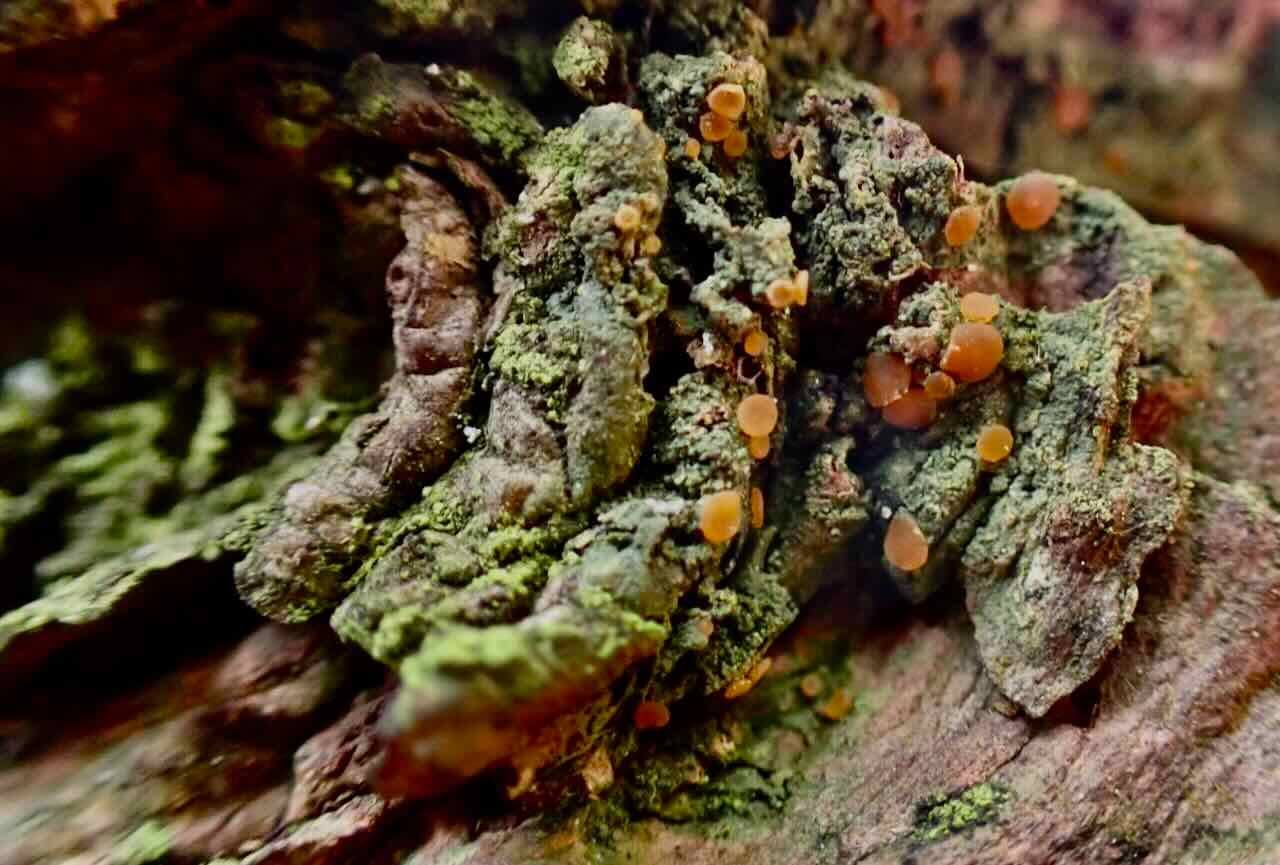
Moving on along the boardwalk to a patch of woodland we found some unexpected Coenogonium luteum with orange discs and nearby diminutive pink-grey apothecia of C pineti. Looking more closely here gave us a further list of typical corticolous species. Nearby a lirellate specimen turned out to be Phaeographis smithii.
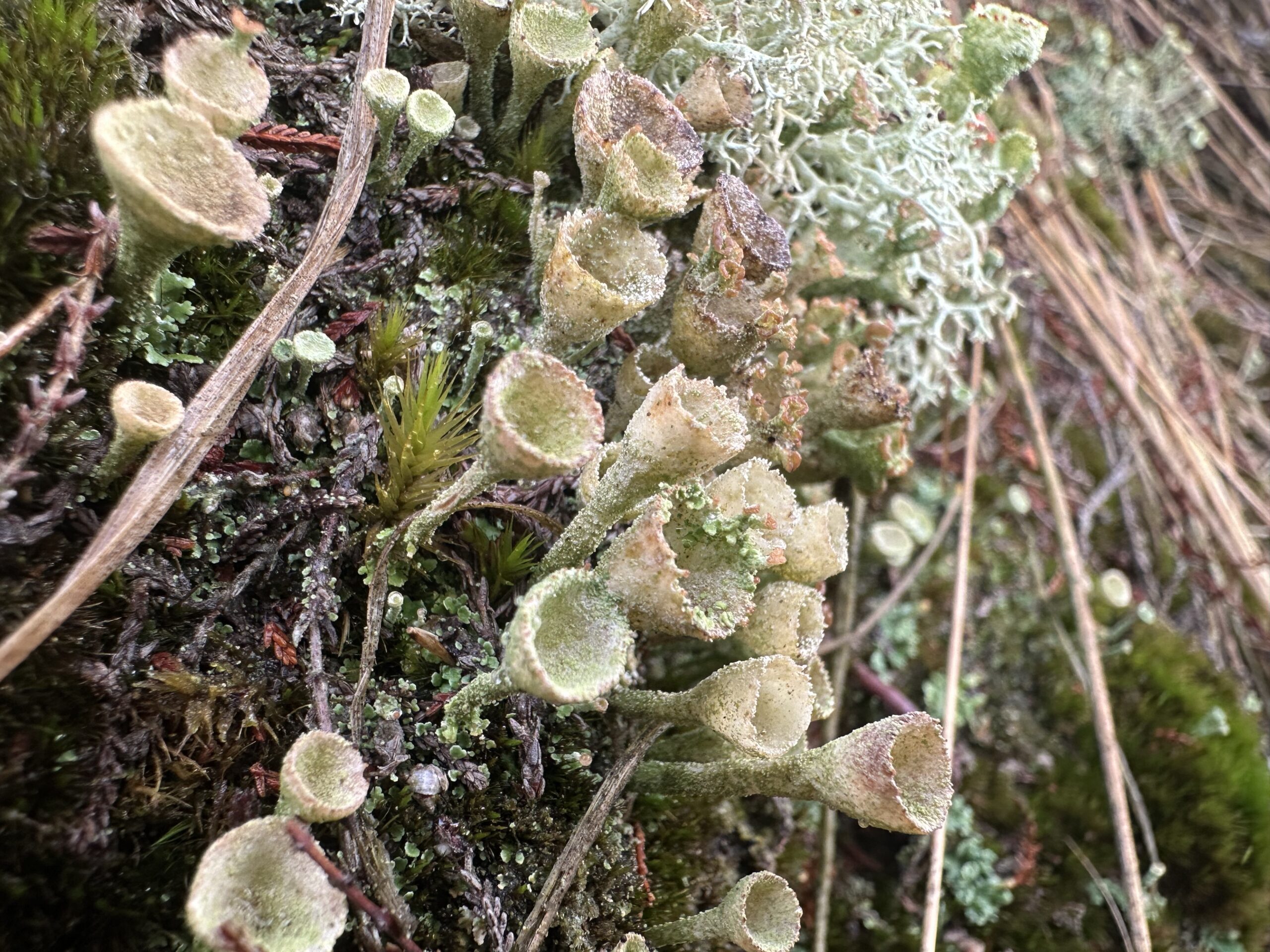
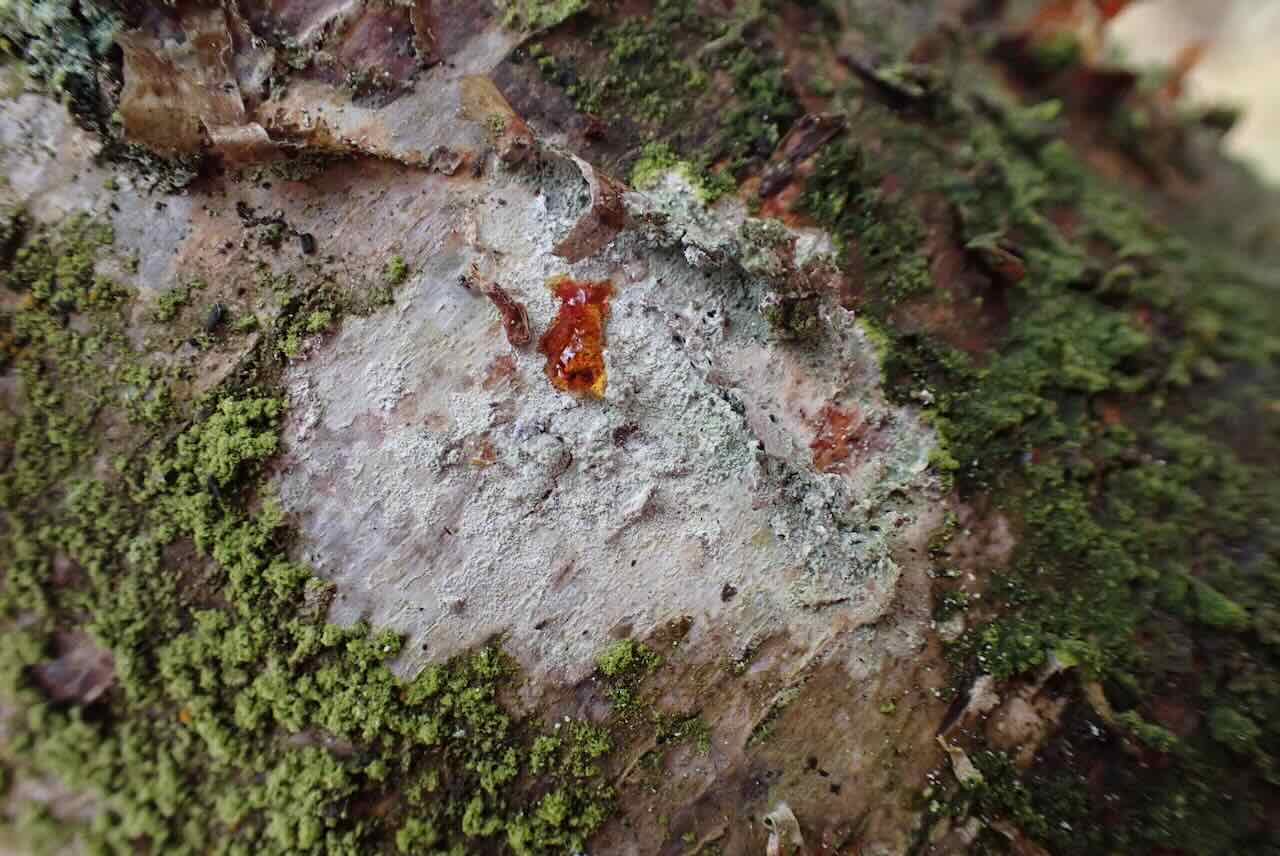
Next we visited a hulk of bog oak, pulled from the peat in recent years. It’s now rotting but supports sheets of lignum-liking species – Trapeliopsis and Micarea amongst others, including something which turned out to be Micarea nitschkeana, new for VC70 Cumberland. Swards of Cladonia with deformed large cups, neat granules on the podetia and pale brown apothecia had us stumped as it didn’t look typical – but turned it out to be C ramulosa, confirmed by the chemistry. Watching us wrestle with the key, Guy commented “Cladonia : the almighty’s punishment for us not being in church on a Sunday”.
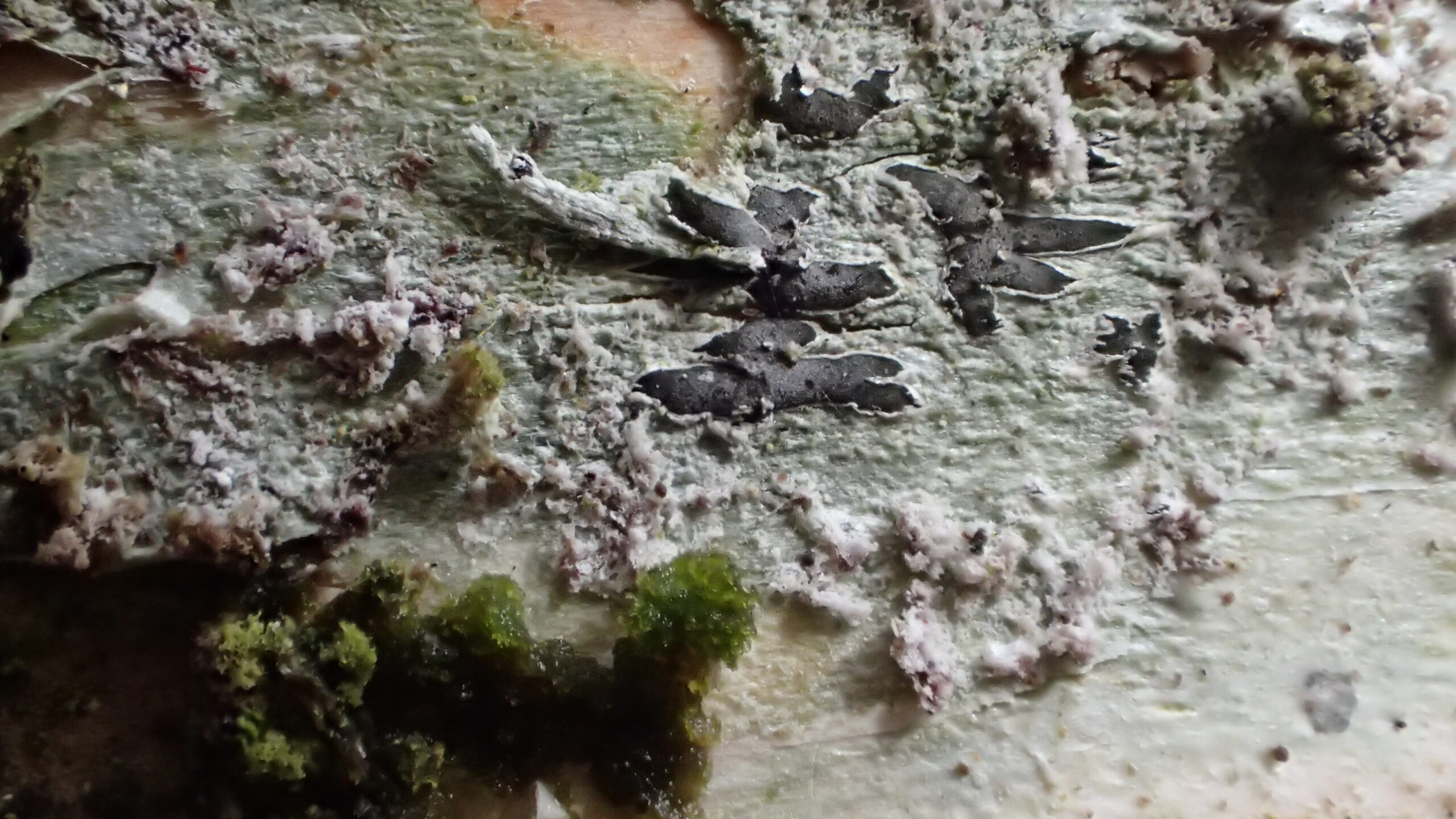
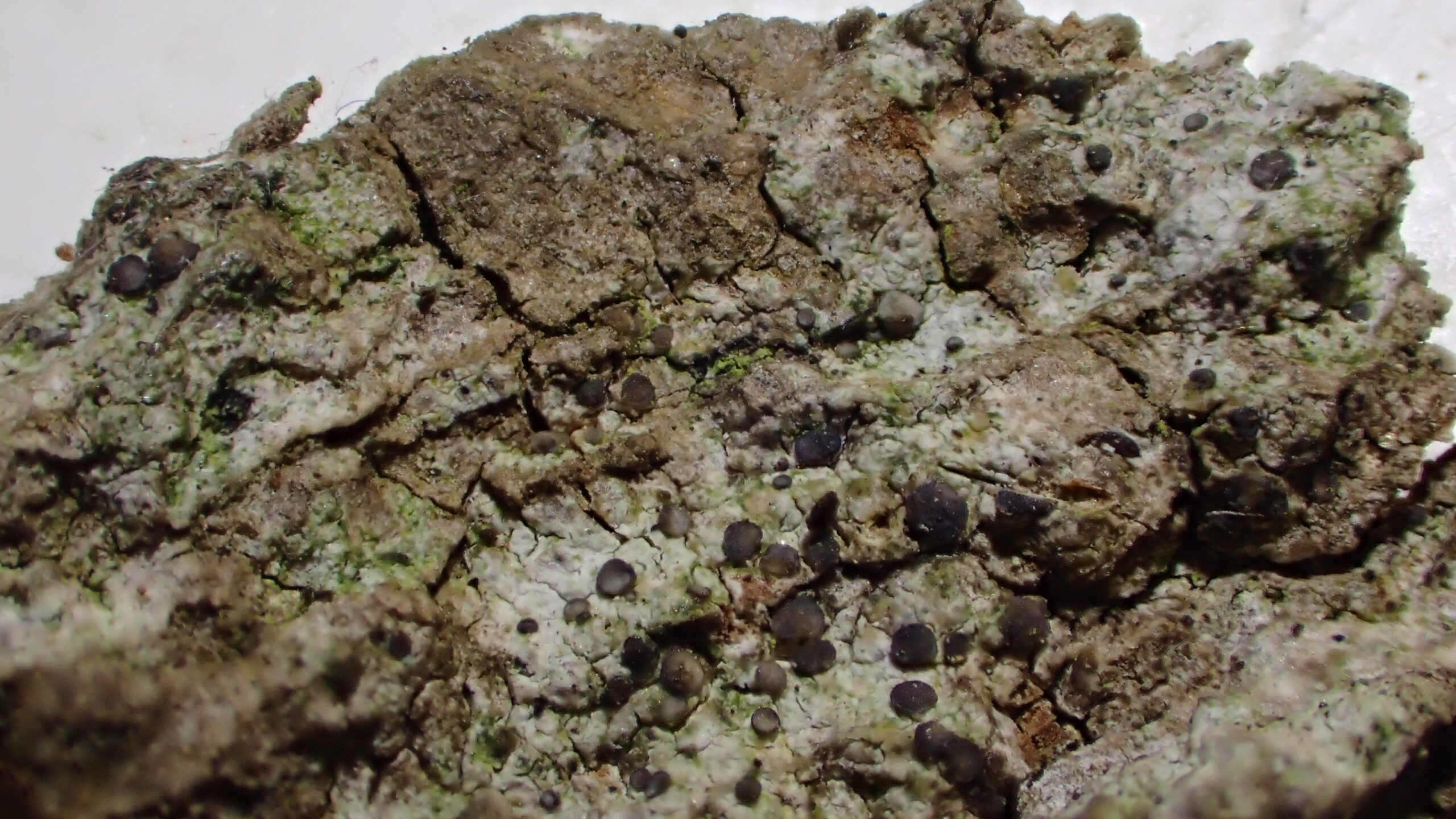
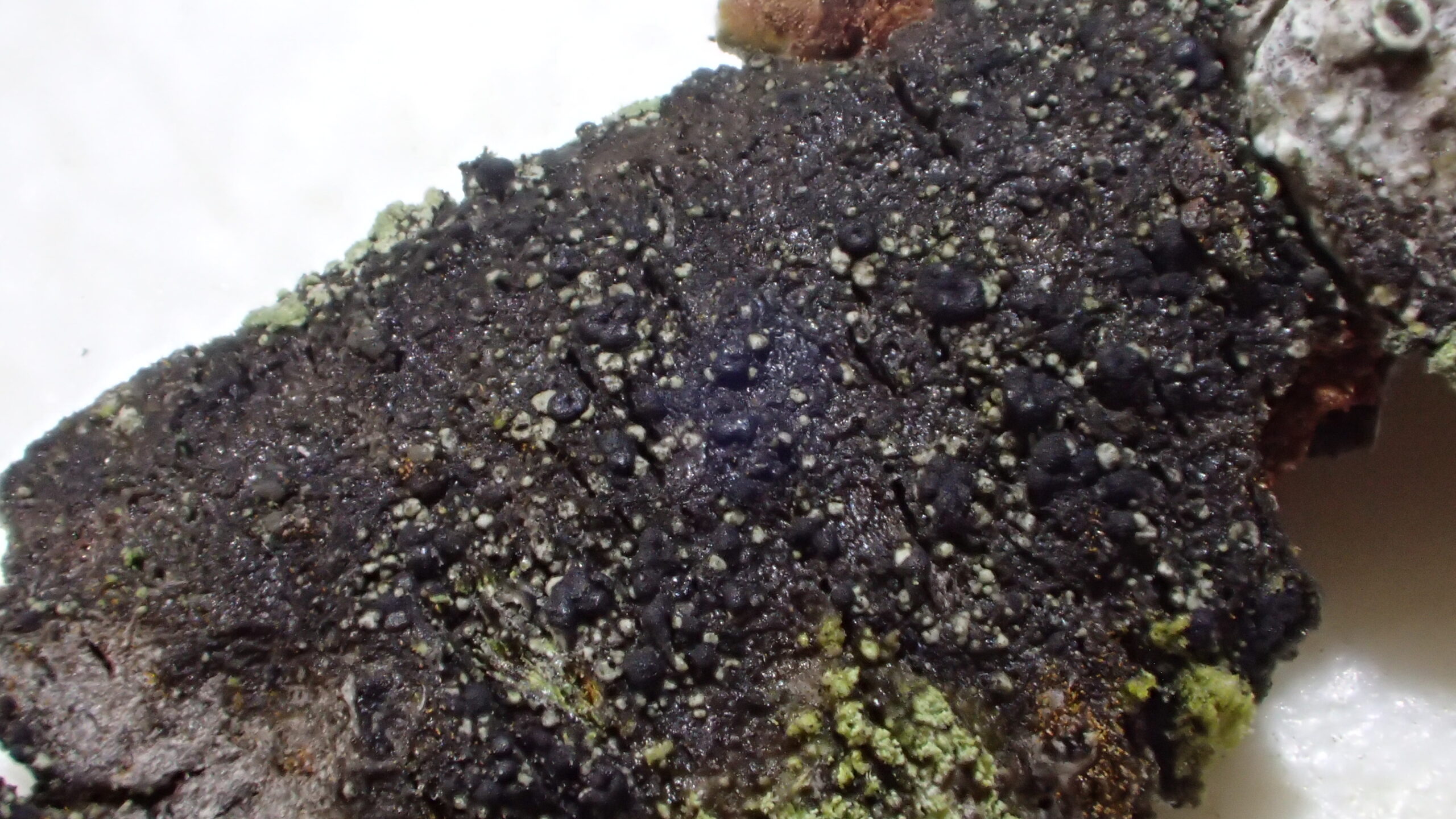
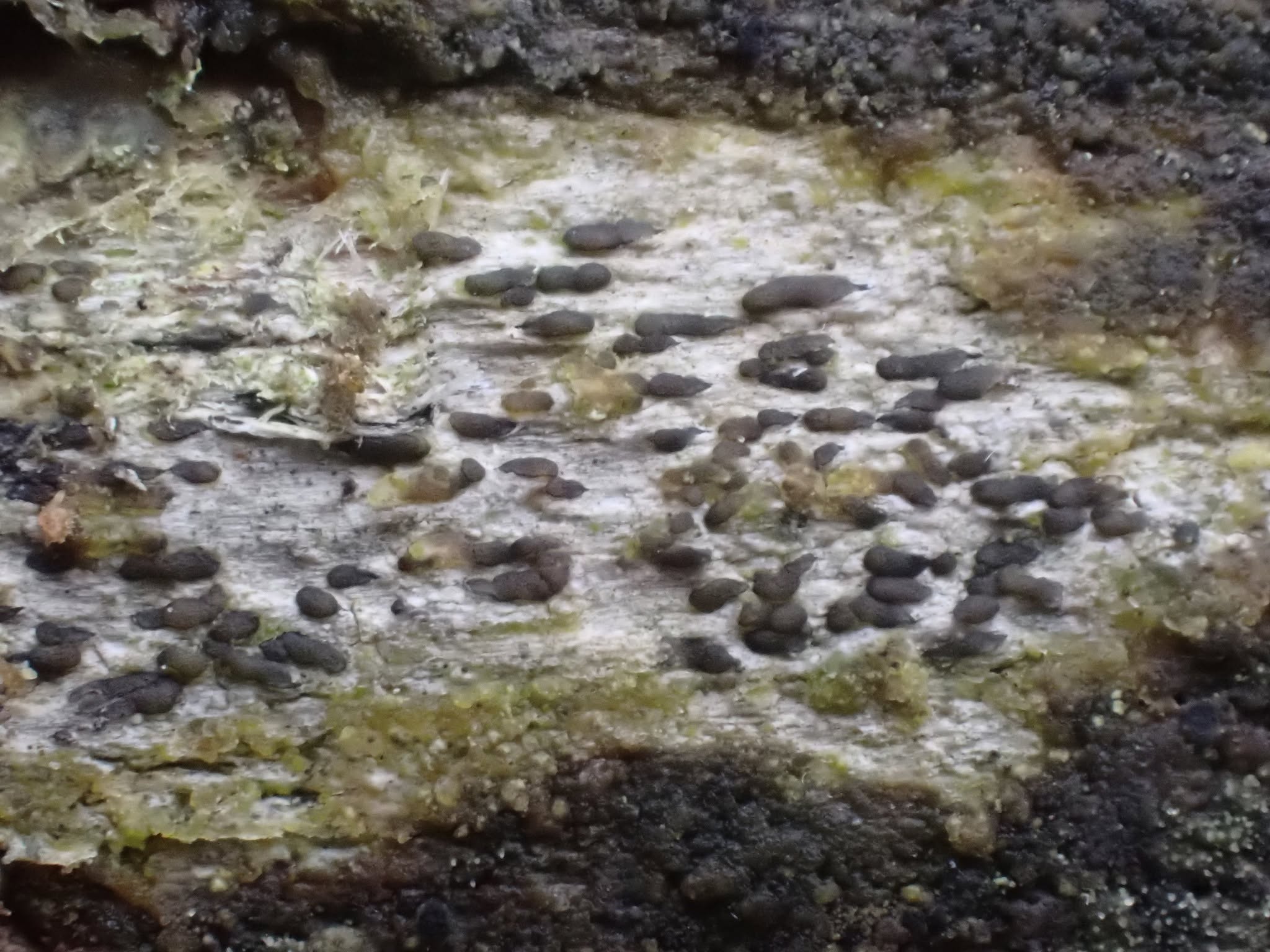
The furthest point of the day found us at an area where the original peat is intact, though affected by a lowered watertable. Here bog rosemary, cranberry, crowberry and heather grew, with stumps and trunks of felled pine dotted about. These supported Micarea alabastrites and Xylographa parallela, the latter a third record for Cumbria. The Cladonia on the ground seemed a little more sparse but we did see C glauca, one of the thin grey “heathtail” species, confirmed by its bright white fluorescence in UV. Sadly there was a coating of green-grey Klebsormidium algae over much of the vegetation.
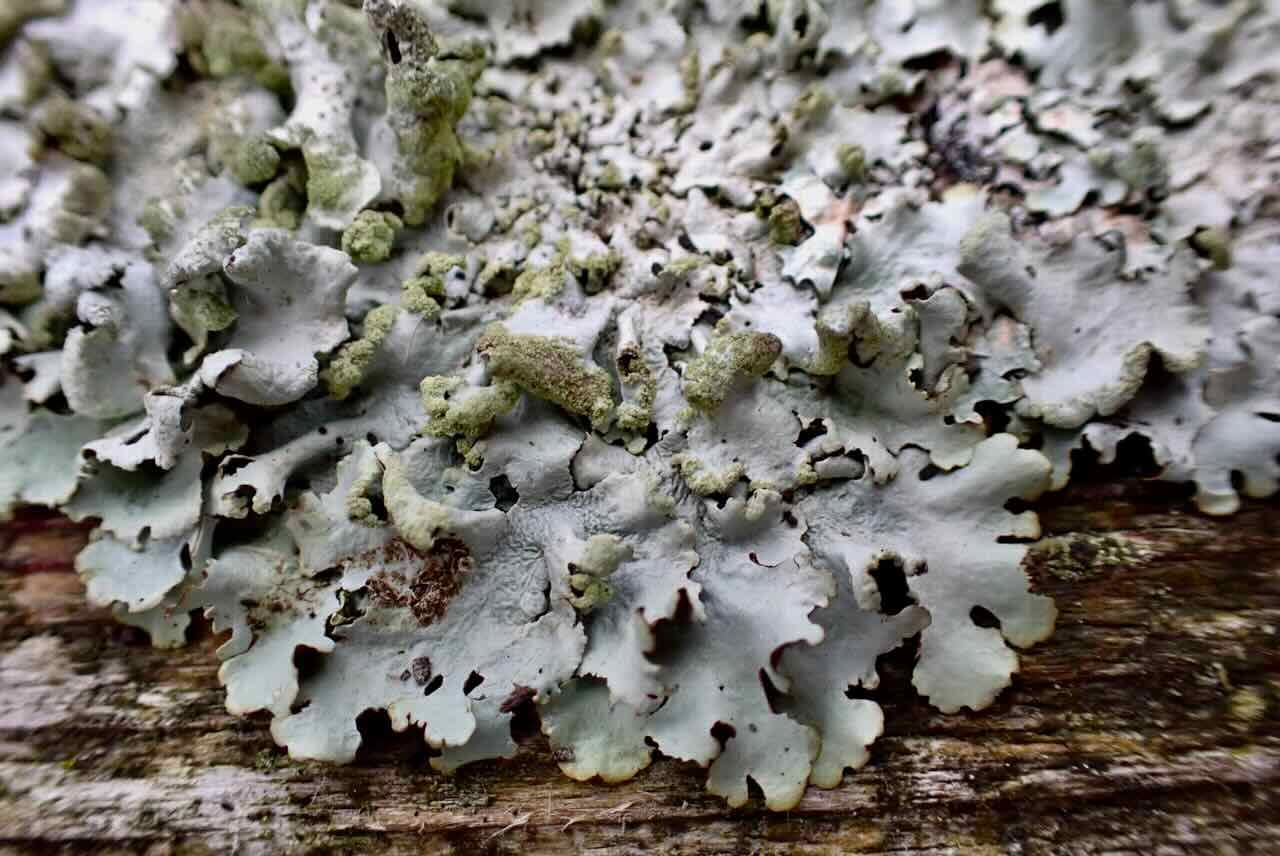
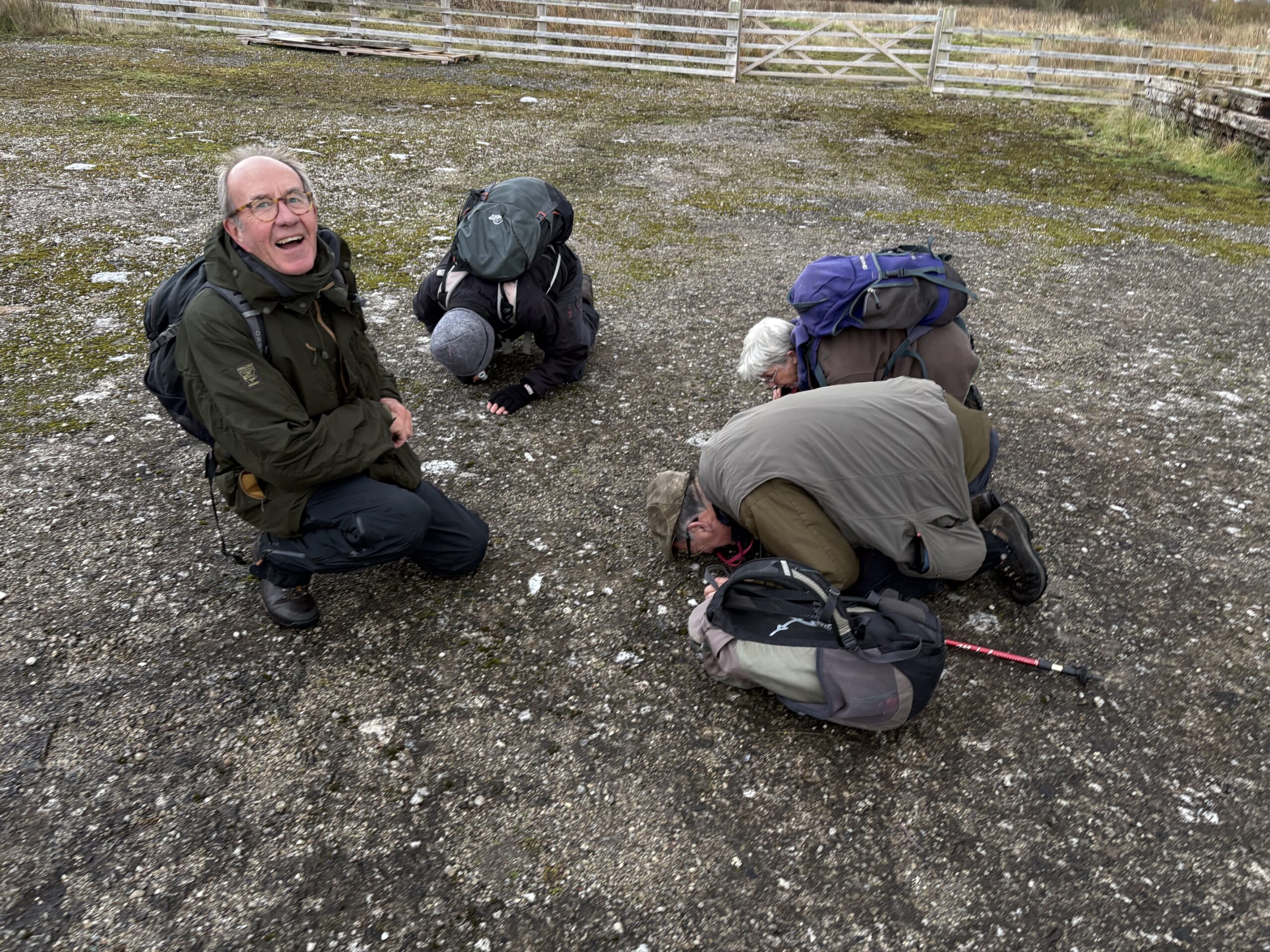
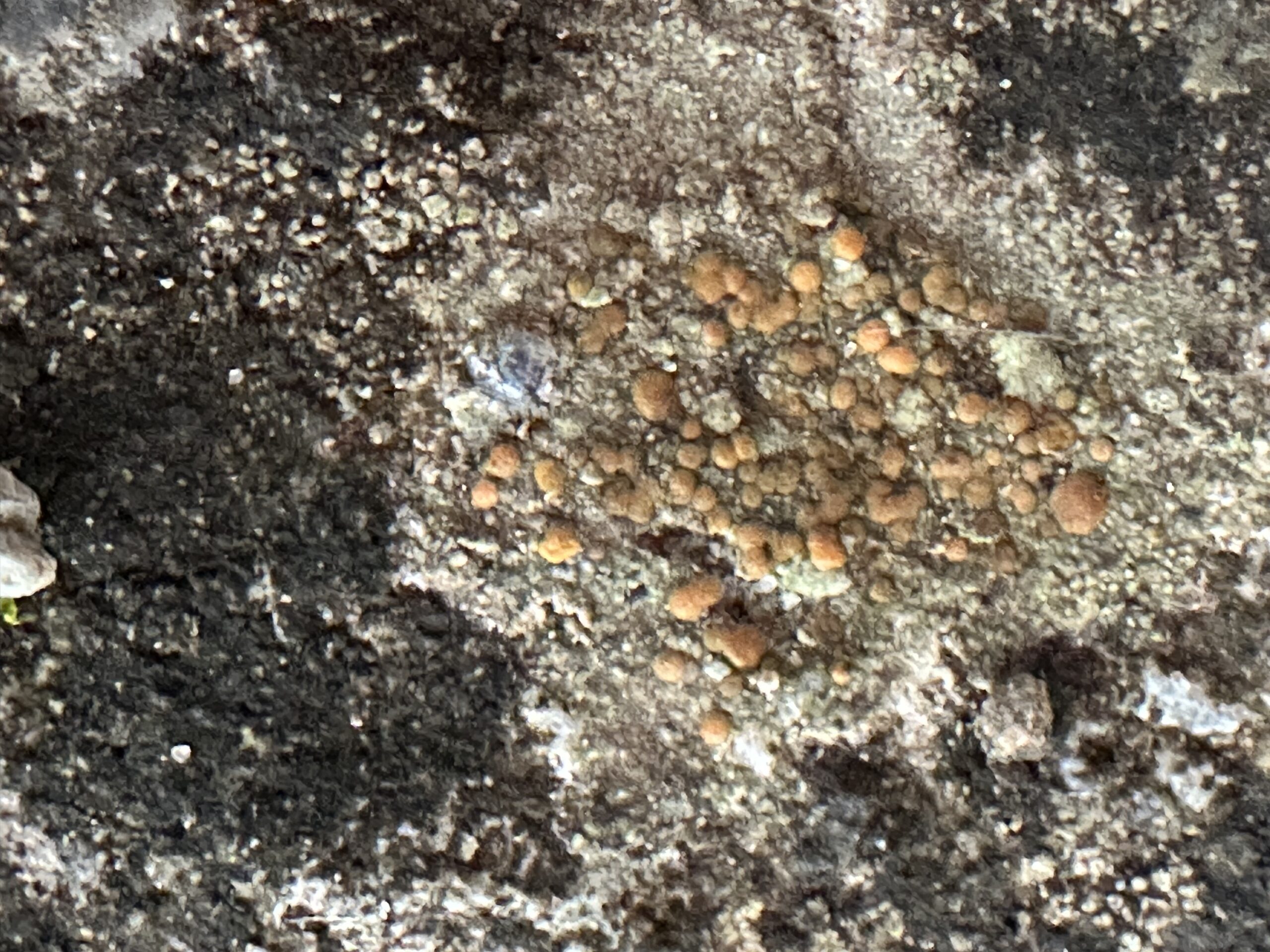
Back at the car park there was a lot of concrete with inevitable jelly lichens, as well as Circinaria contorta and Protoblastenia rupestris, plus some species on timber fence rails.
The site was not what we expected, eg there were far more trees of all ages growing even on wet ground and it often didn’t feel like a peat bog. The view point at the start of the boardwalk had information panels looking out over what was in 2015 bare peaty ground that had been industrially stripped. These panels describe planned restoration to bog vegetation, but developing wet woodland is what’s visible now. It looks like the site could eventually become ecologically valuable as a mosaic of patches – wet woodland, bog, standing water, some drier areas. This means it has lots of potential to become an important place for wildlife, though it will probably be many years before it’s a top spot for lichens. Nonetheless we had a good day and enjoyed exploring a new site.
Text: Caz Walker
Photos: Chris Cant, Pete Martin, Guy Broome, Chris Hind, Jane Orgee