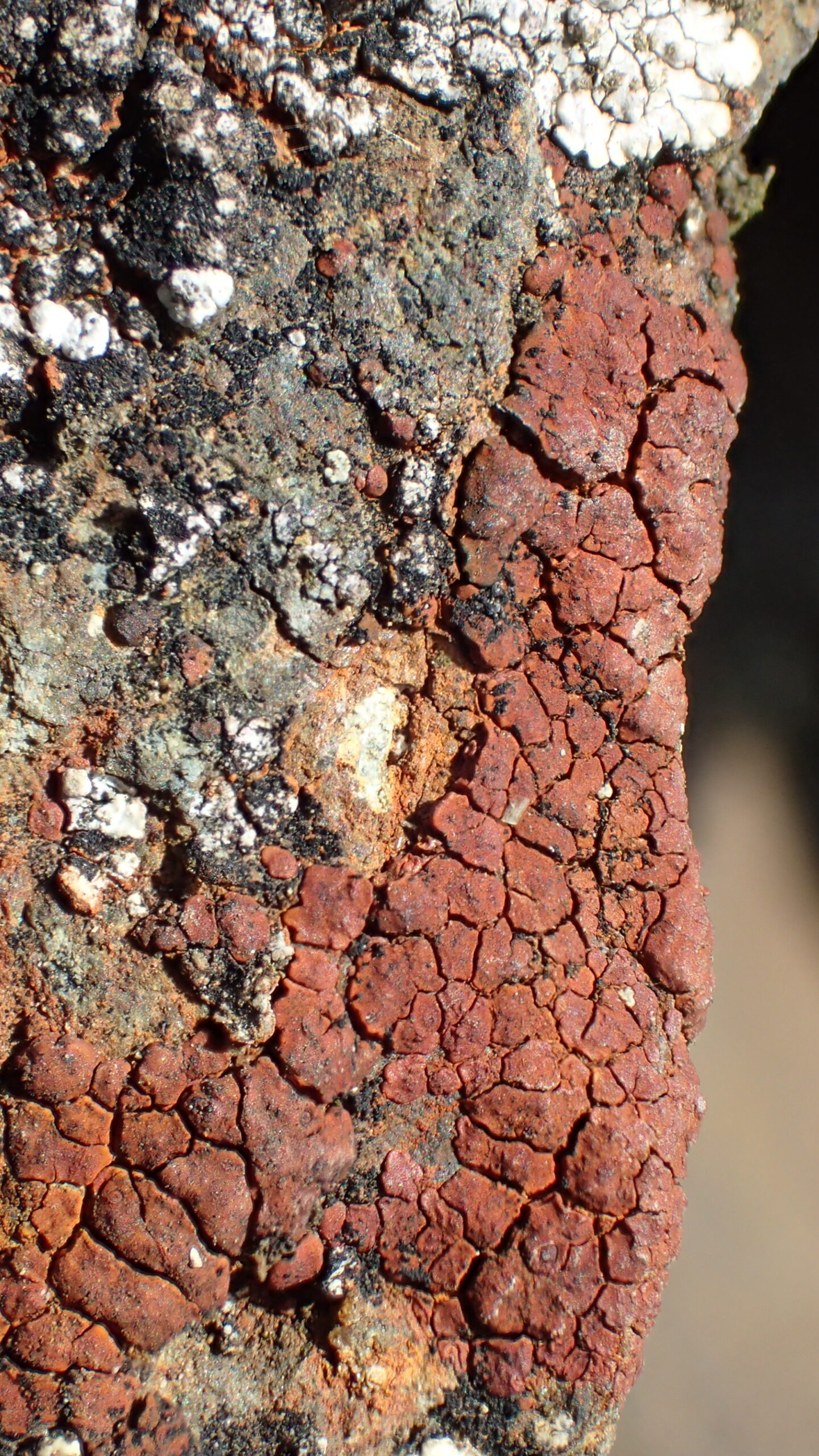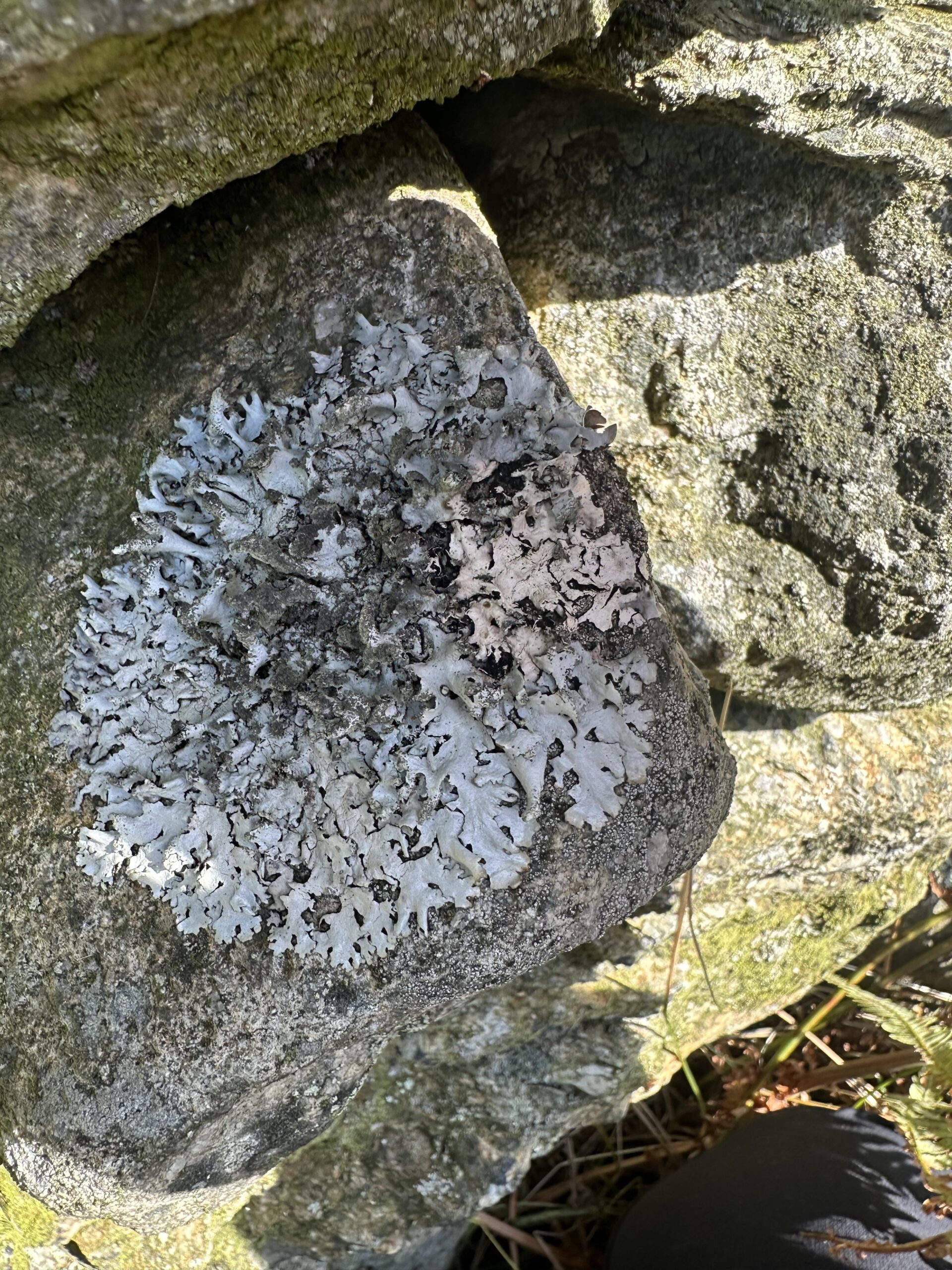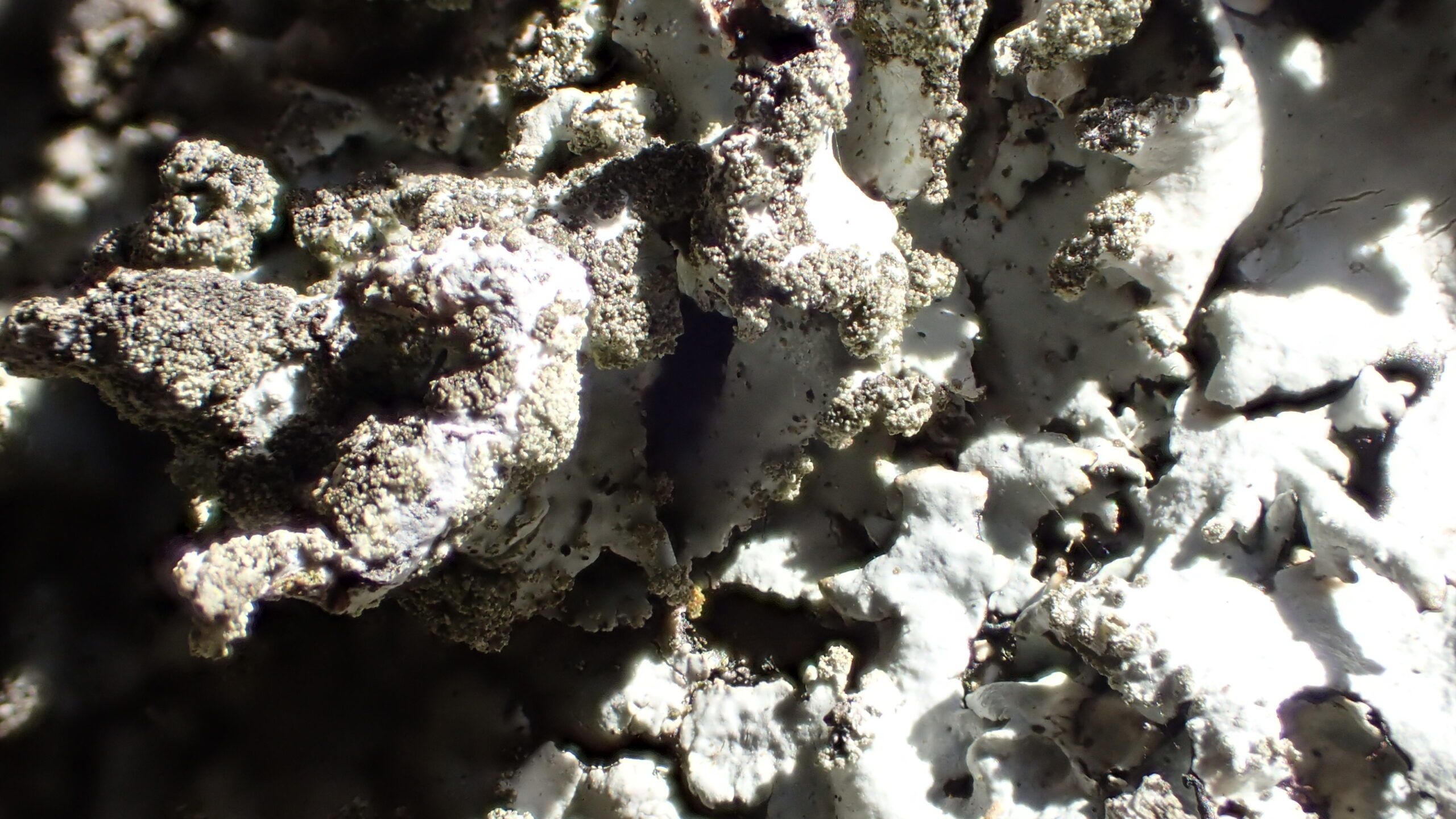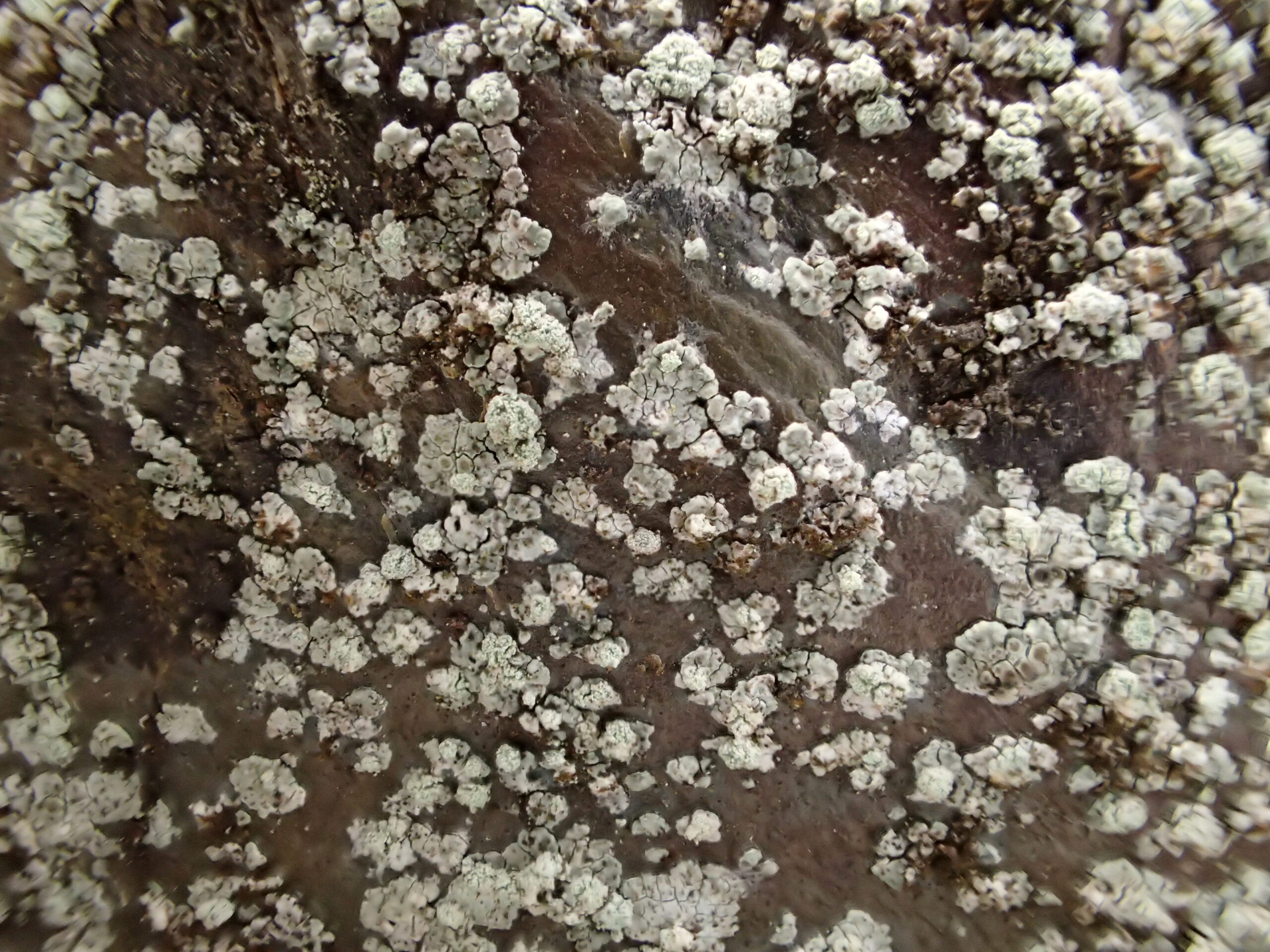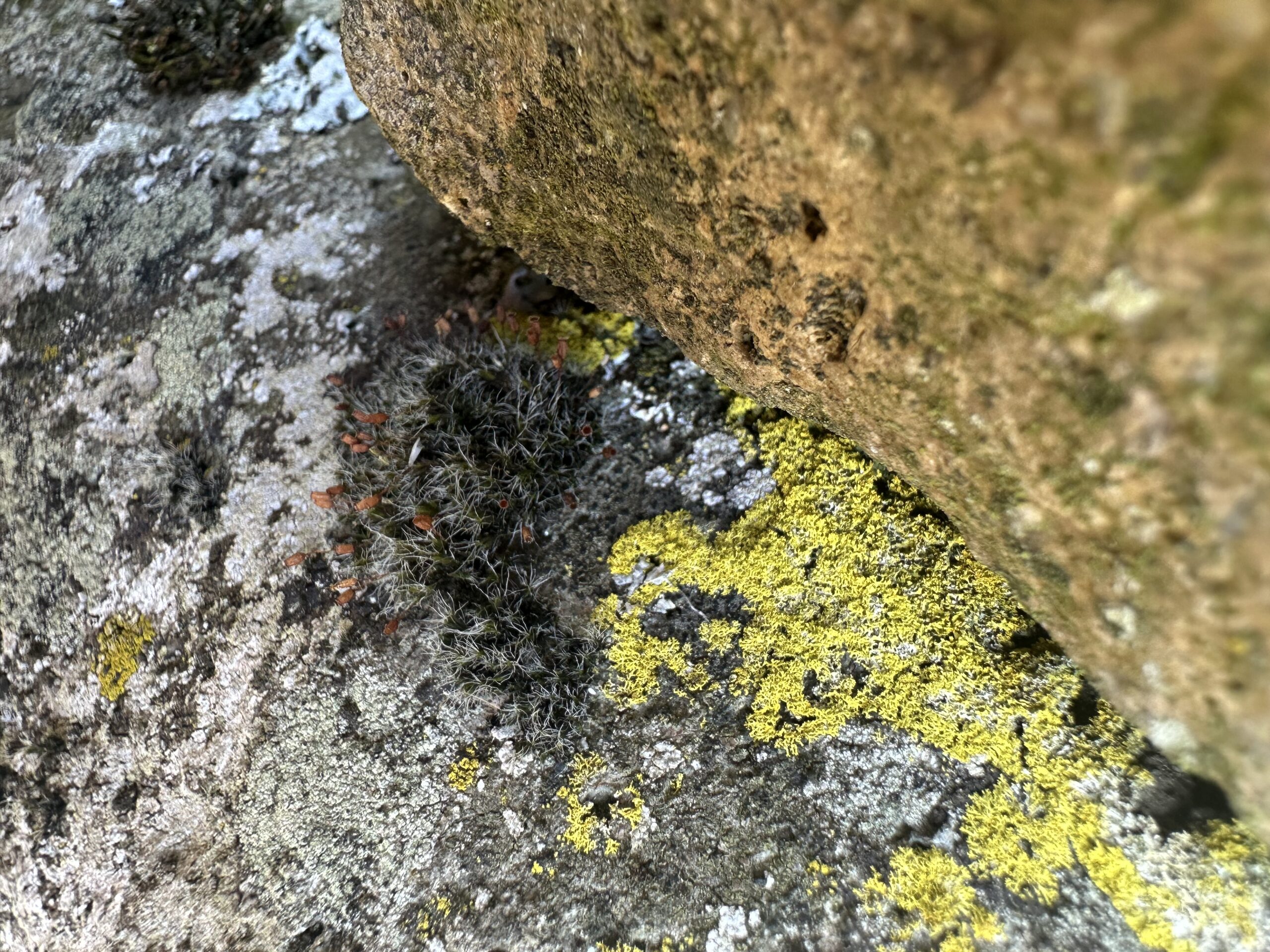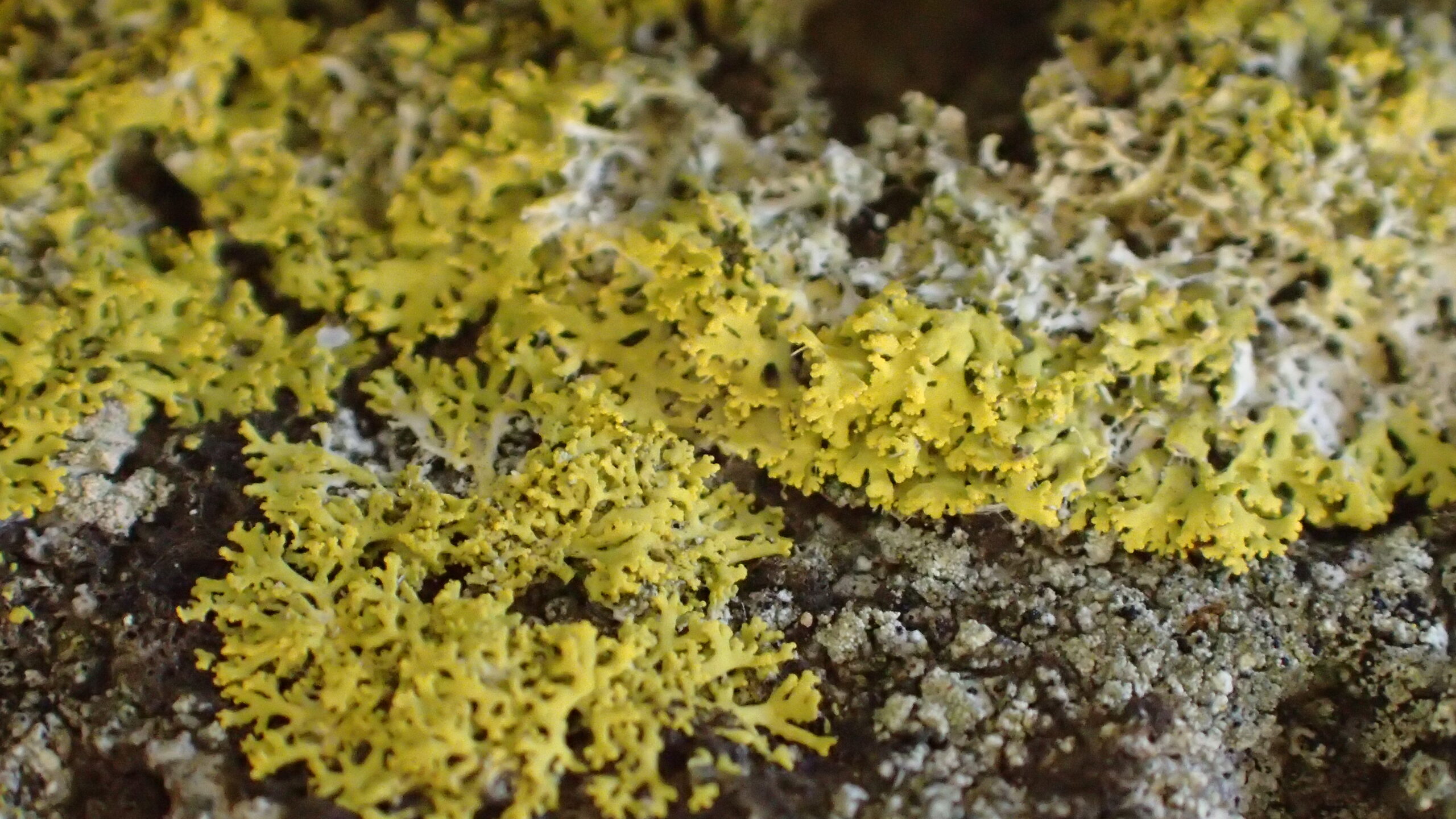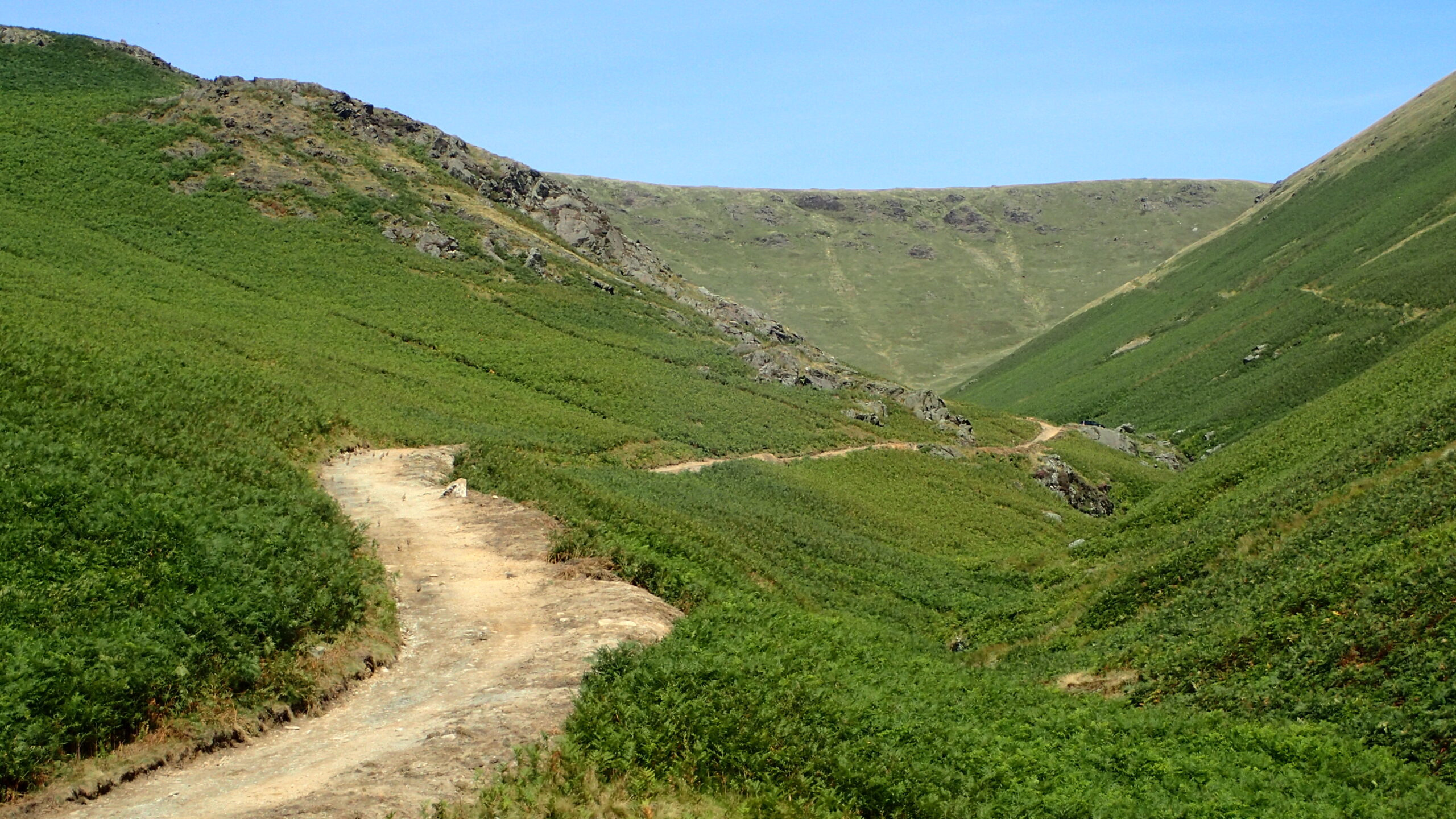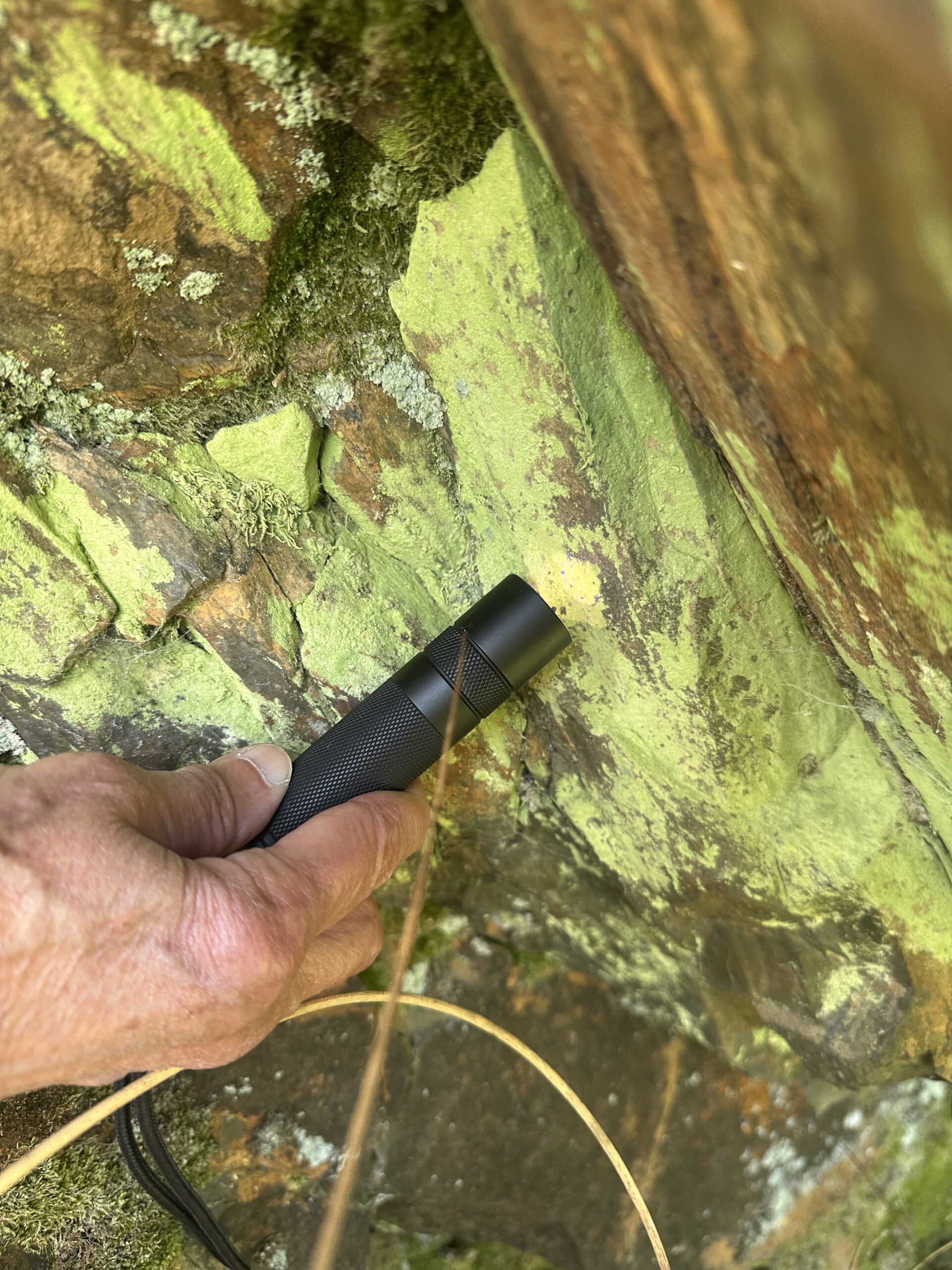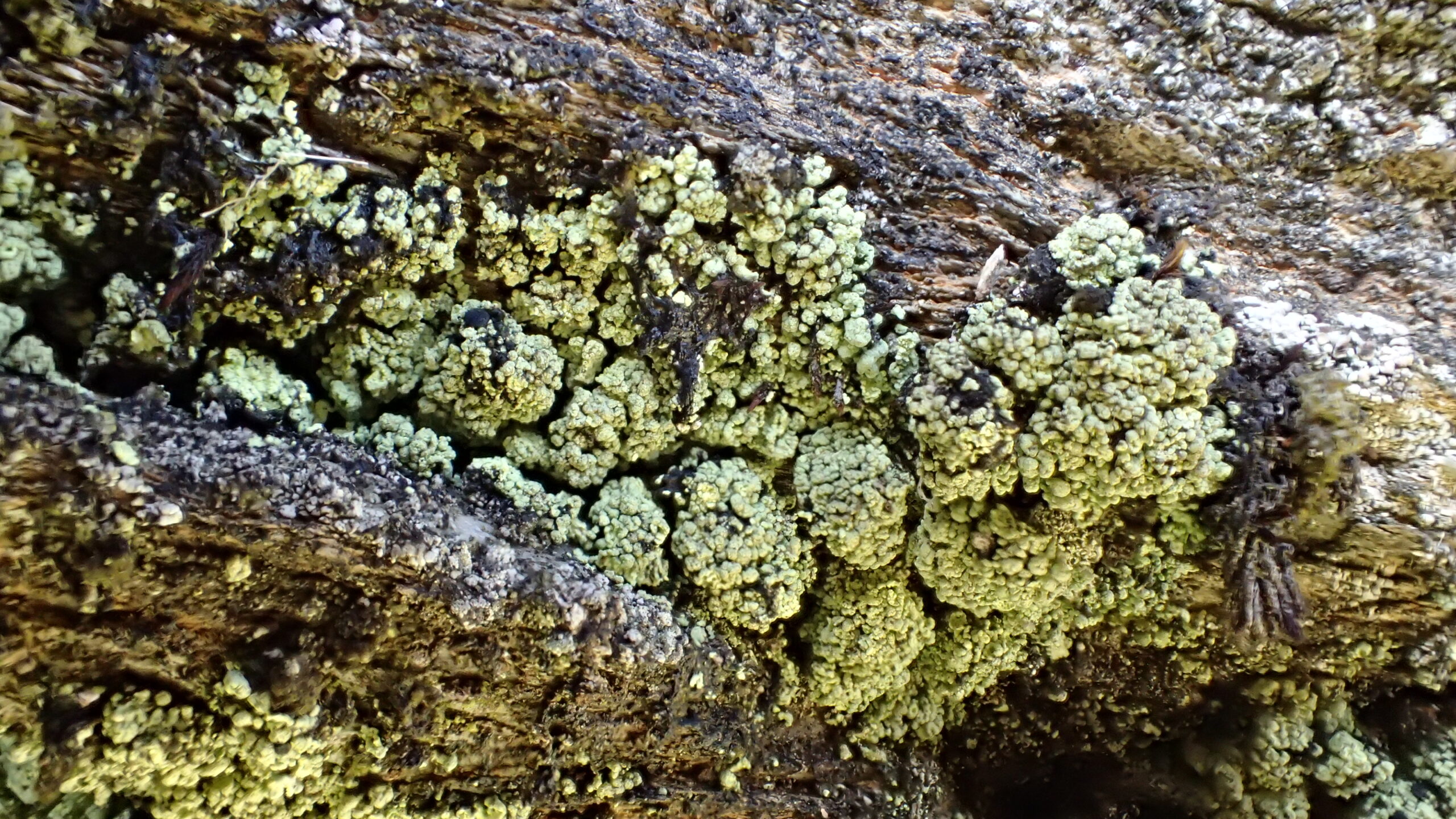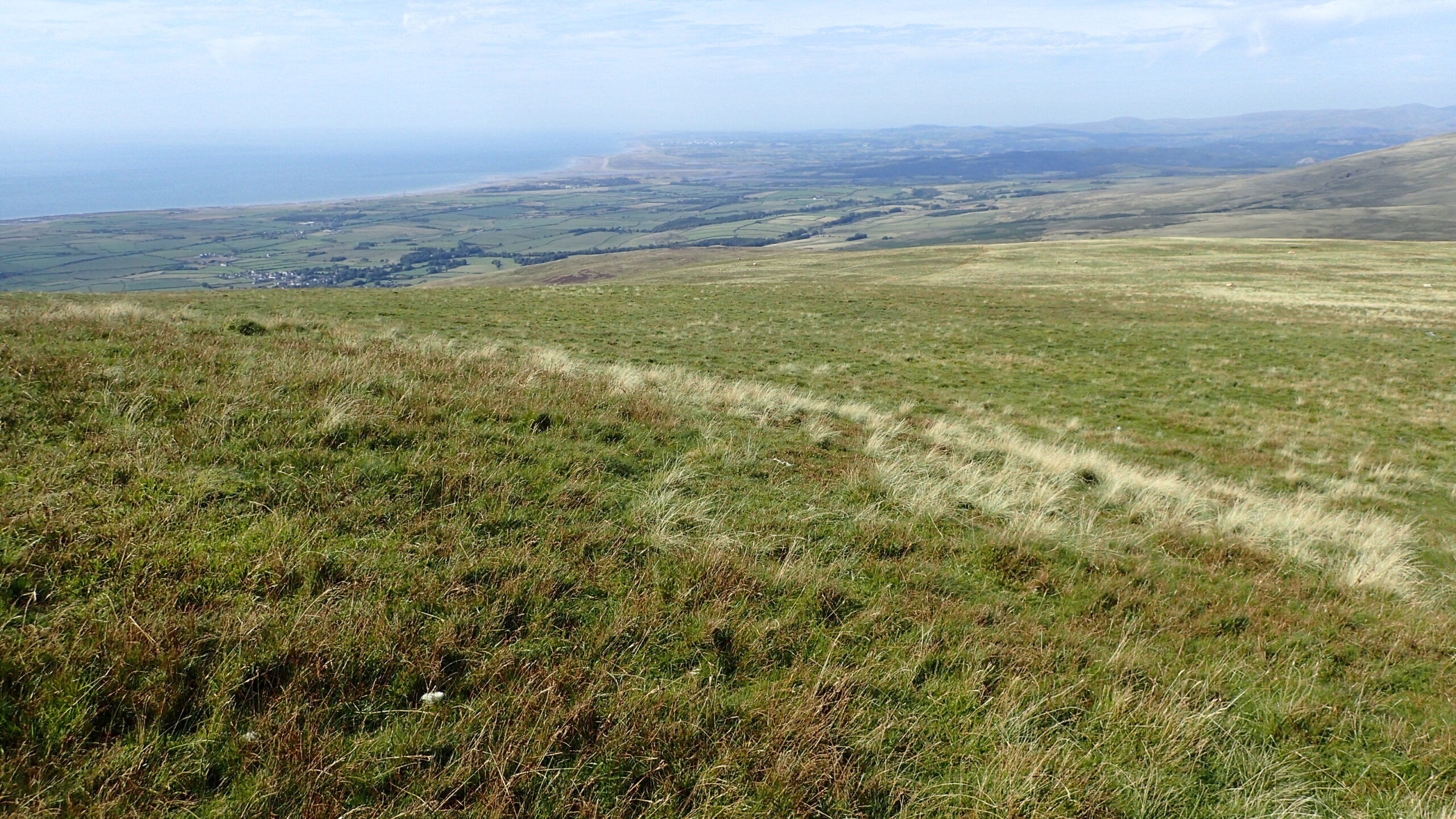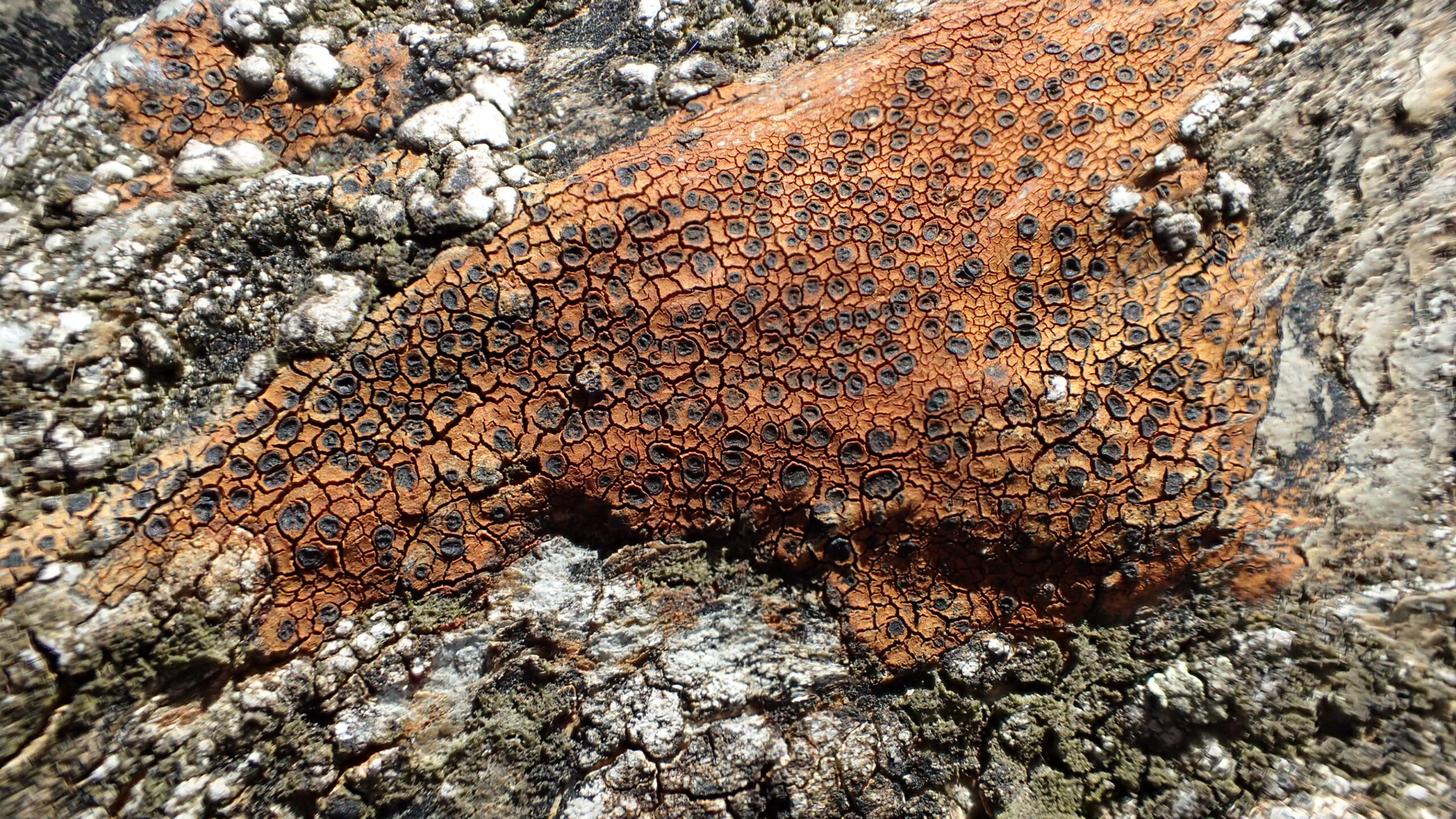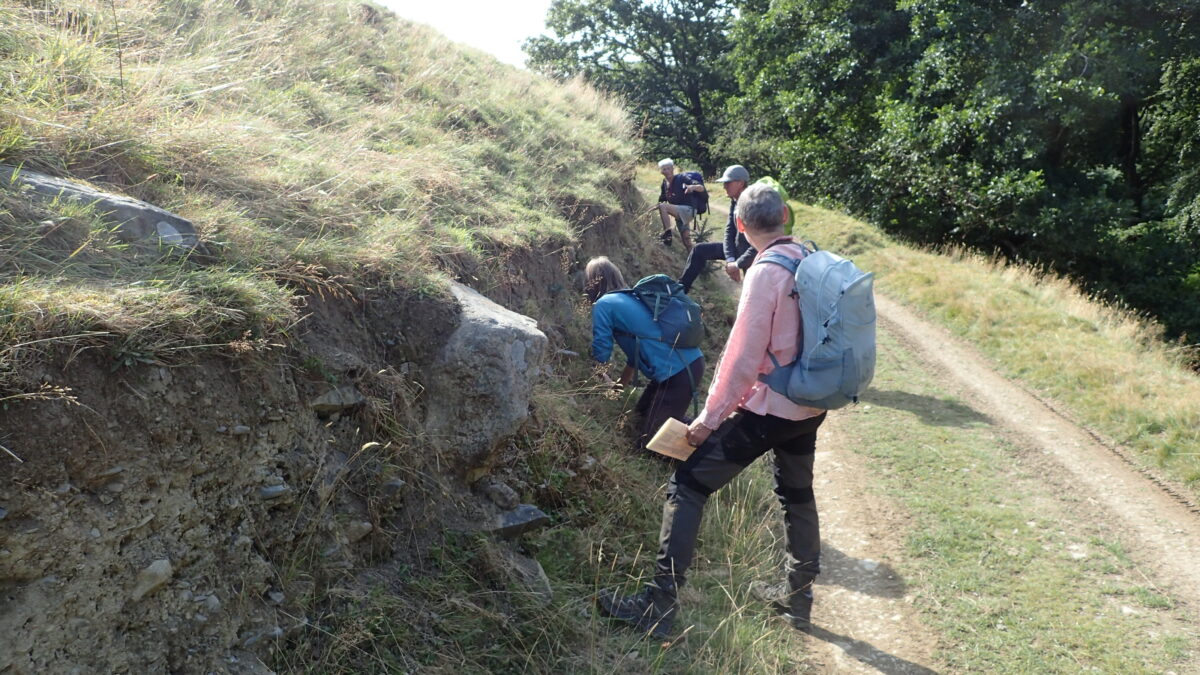
Black Combe is a hill close to the coast in South-West Cumbria whose top is 600m above sea level. The craggy combes face east with a long disused copper mine below showing that there were some metals hidden amongst the mudstone/slate. This was borne out early on as we found Acarospora sinopica, Lecanora handelii and Haugania oederi on the fell wall and boulders in the beck, with some unexpected Candelaria concolor on the drystone wall alongside Hypotrachyna afrorevoluta and Glaucomaria rupicola.
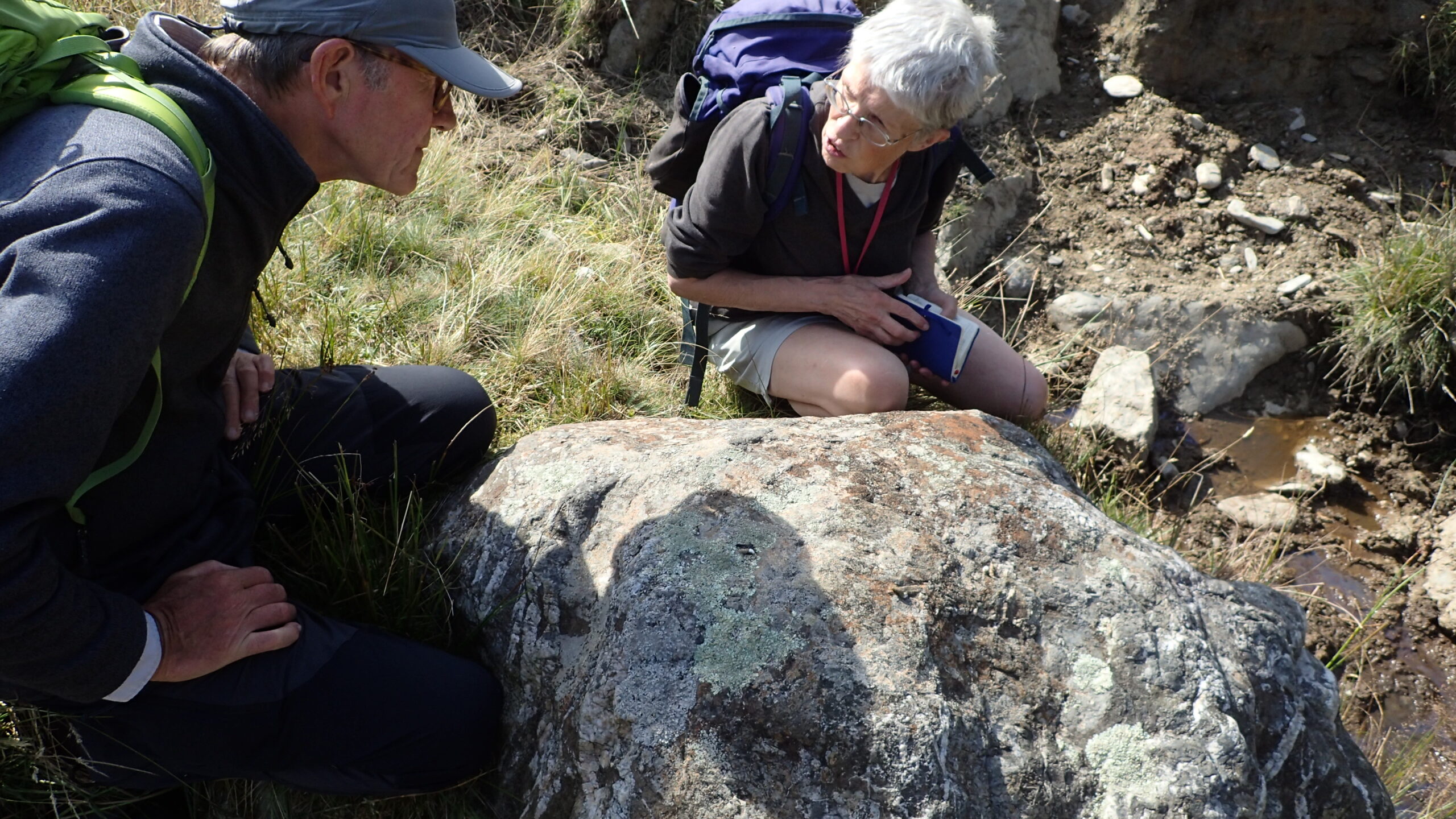
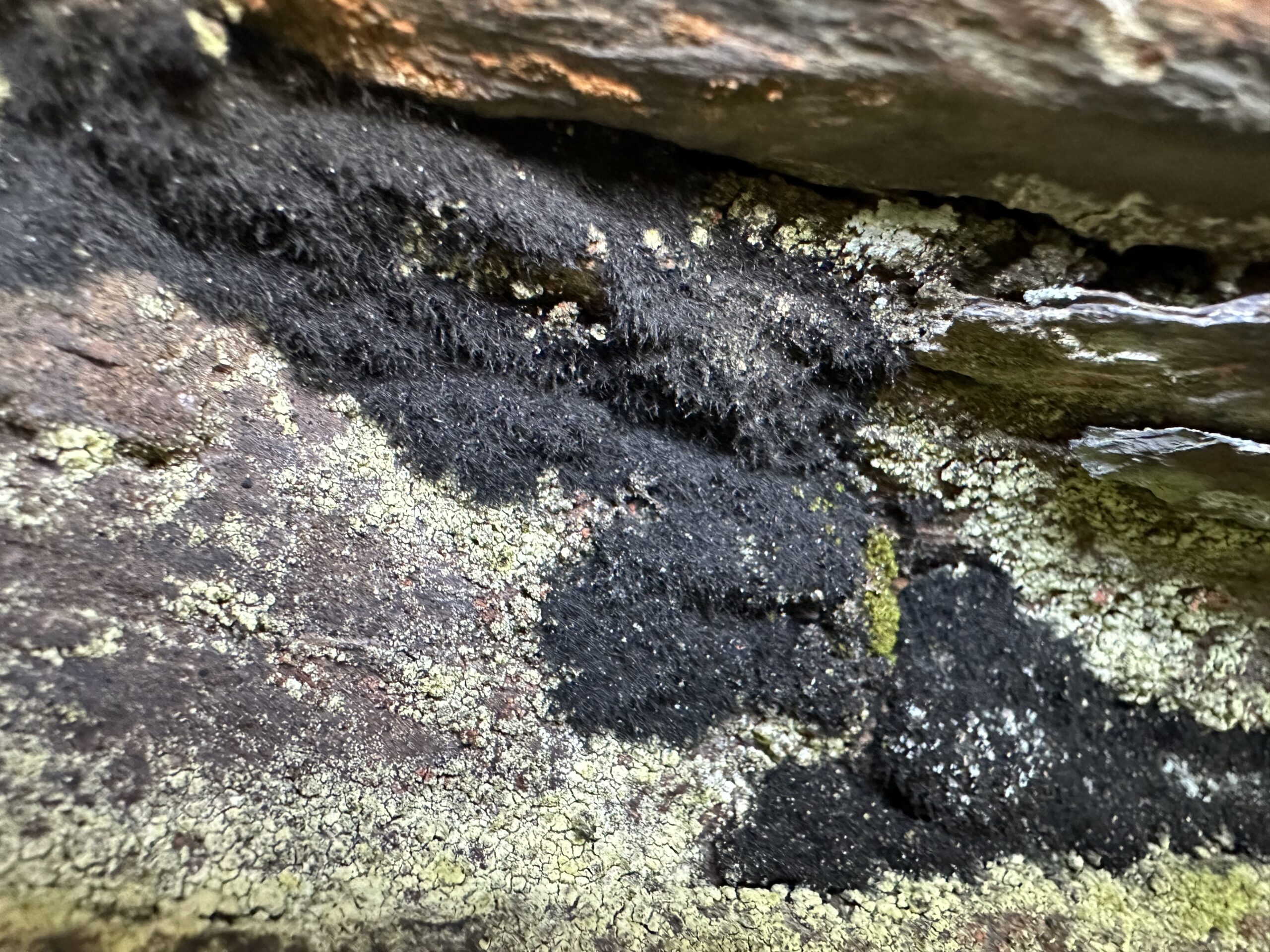
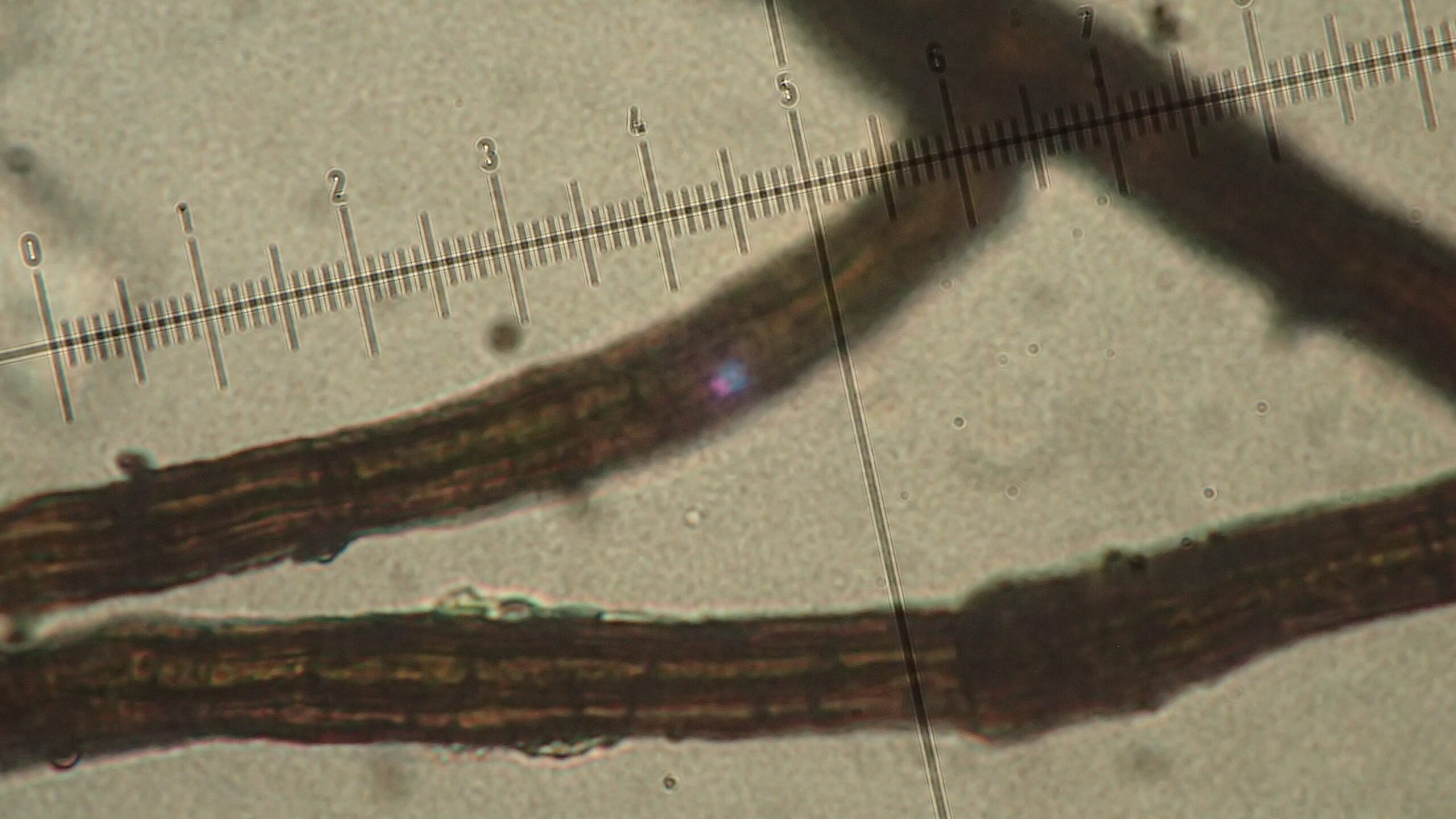
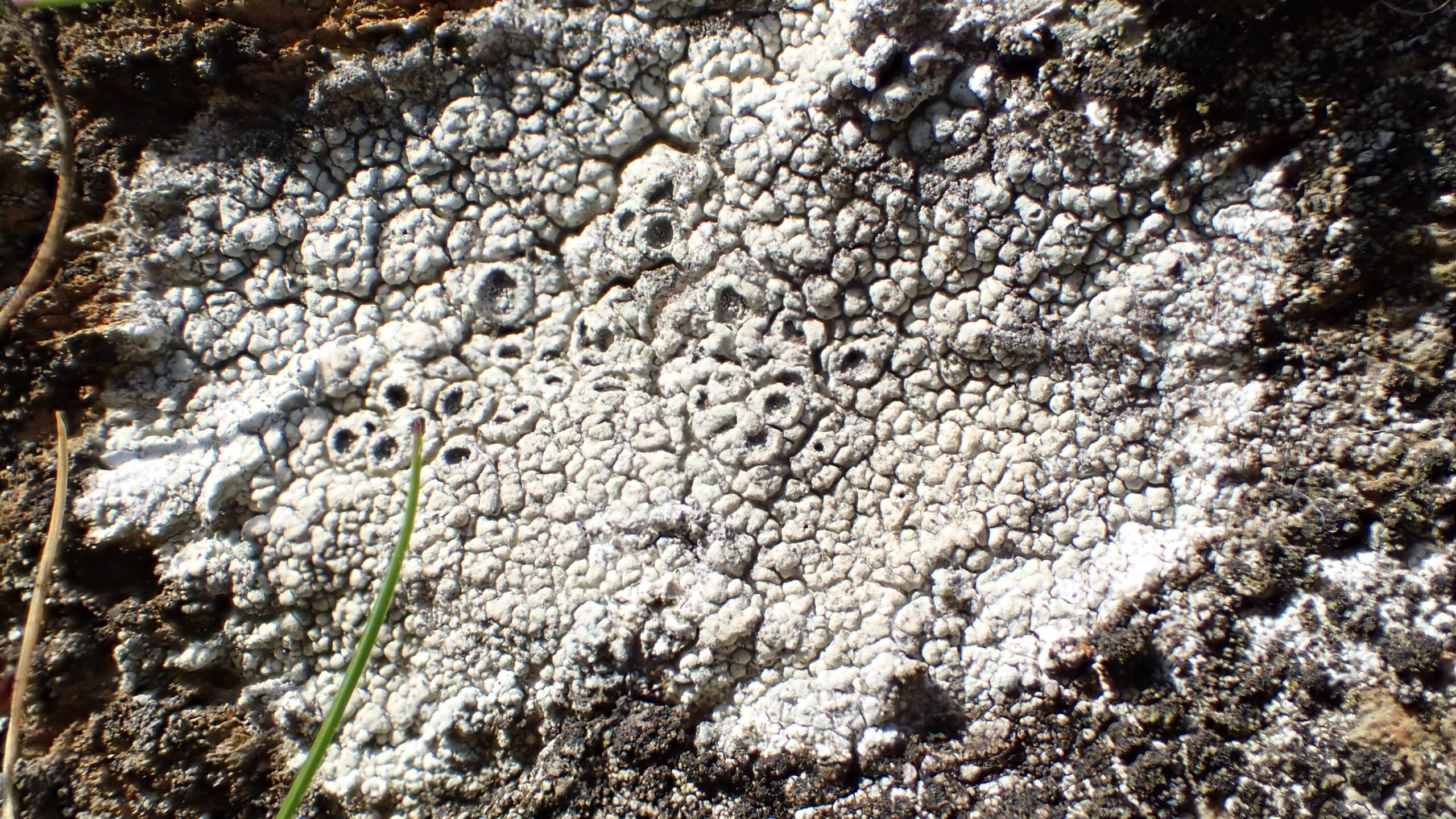
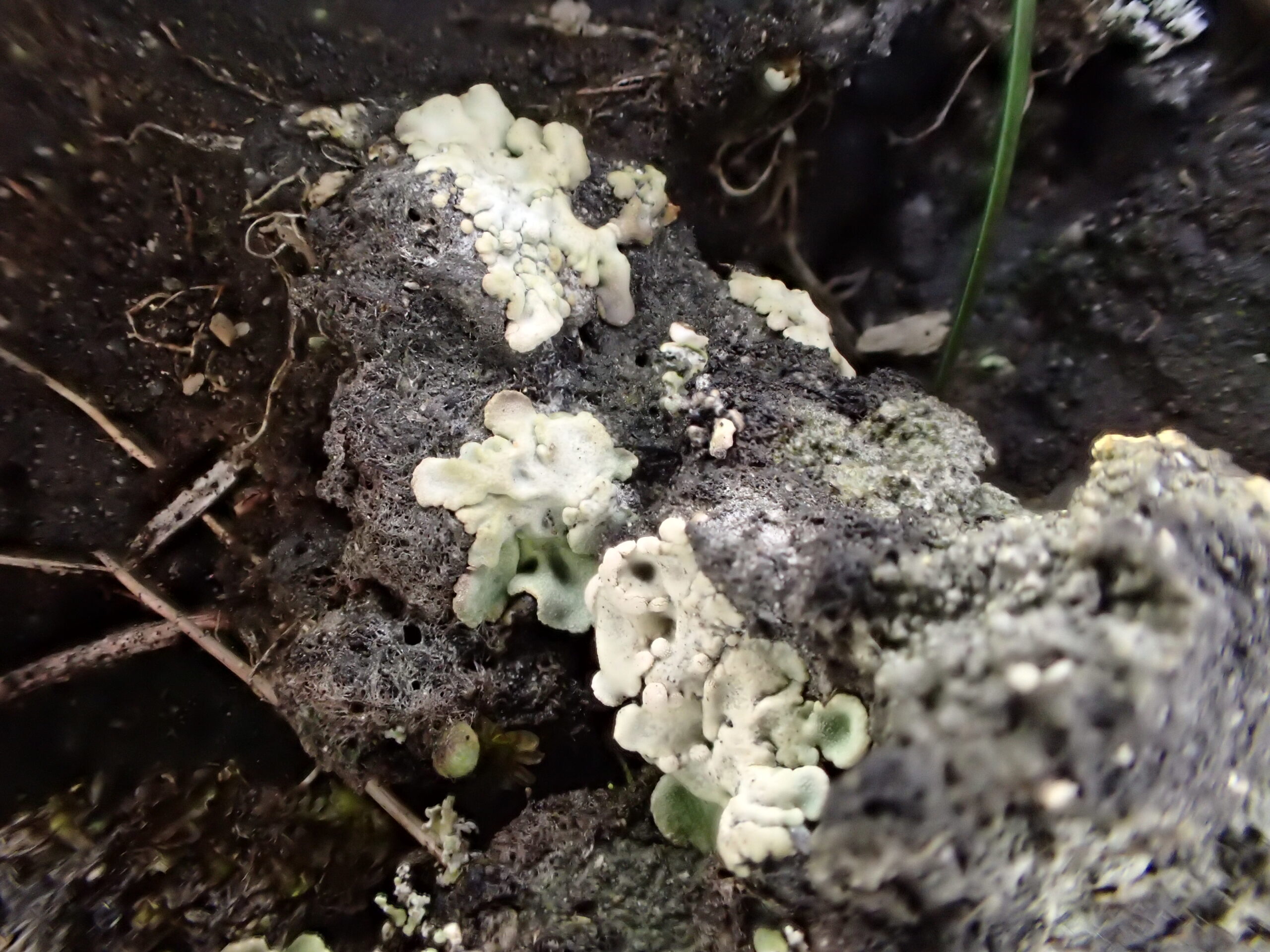
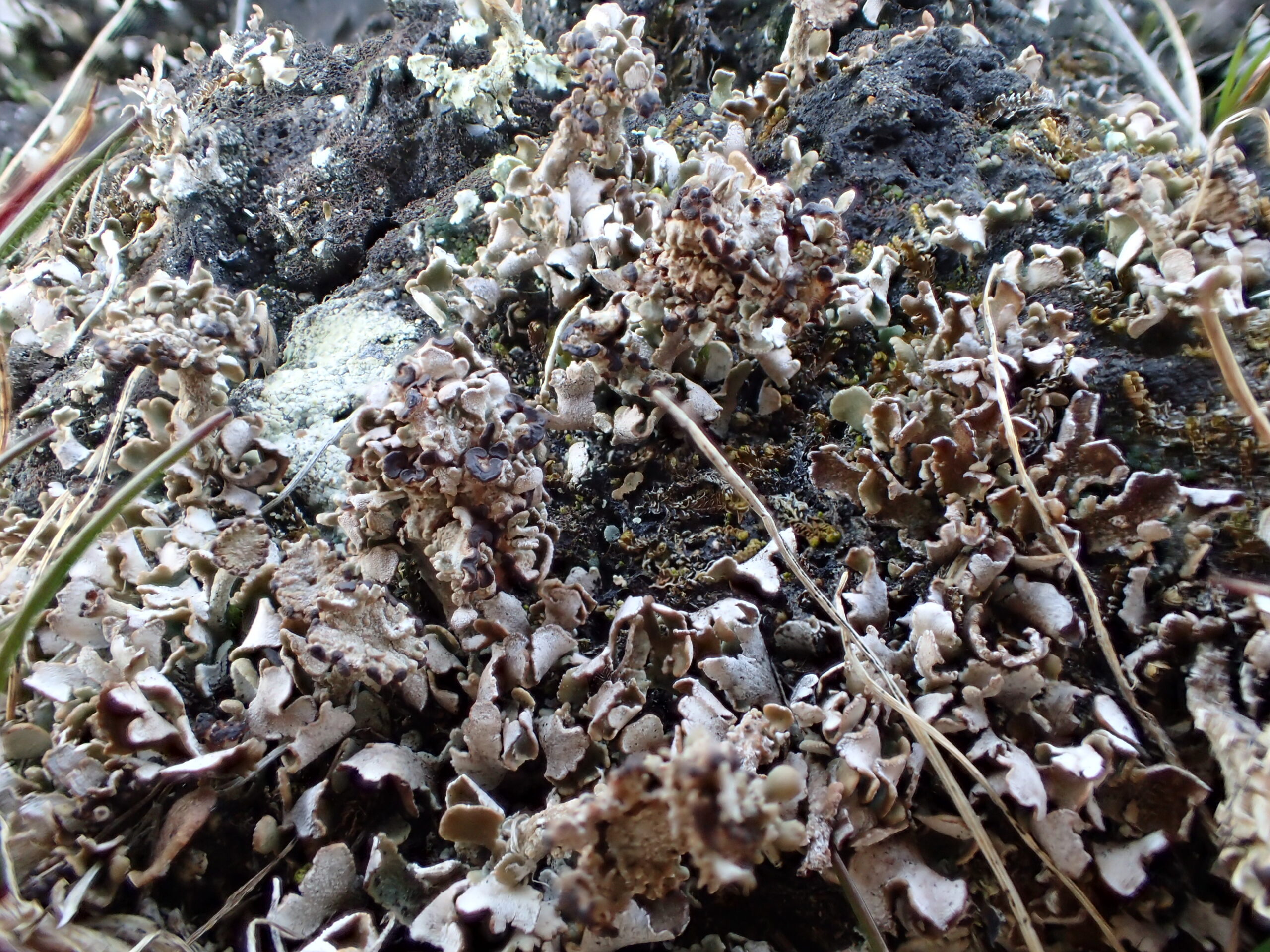
In the valley of Whitecombe Beck there was bracken galore alongside a new bulldozed track with feed containers for hundreds of red-legged partridges released for shooting. A rocky ridge came down to the track that yielded a few specimens to look at later. We kept going with the bryologists to get above the bracken following Blackcombe Beck to a lunch spot where we found Diploschistes scruposus, Baeomyces rufus, B. placophyllus and Arthrorhaphis citrinella. Pilophorus strumaticus was found higher up a cliff while I had a siesta, alongside Racodium rupestre – a matt of filaments each with parallel (not twisted) hyphae.
We decided to press on to the top of the hill which was worth it to get a breeze and good views. We found some bare gravel and peaty patches with a range of Cladonia species, Micarea lignaria and Placynthiella icmalea. Chris H turned up Lecidoma demissum while Caz found Porpidia striata on a pebble. If we’d had more time then we might have found more in the low heath. The ridge back down was pleasant until we had to swim through the bracken zone.
We had some interesting finds and filled in a few blank squares on the map with some records – with the company of a kestrel, a sparrowhawk and a dragonfly or two.
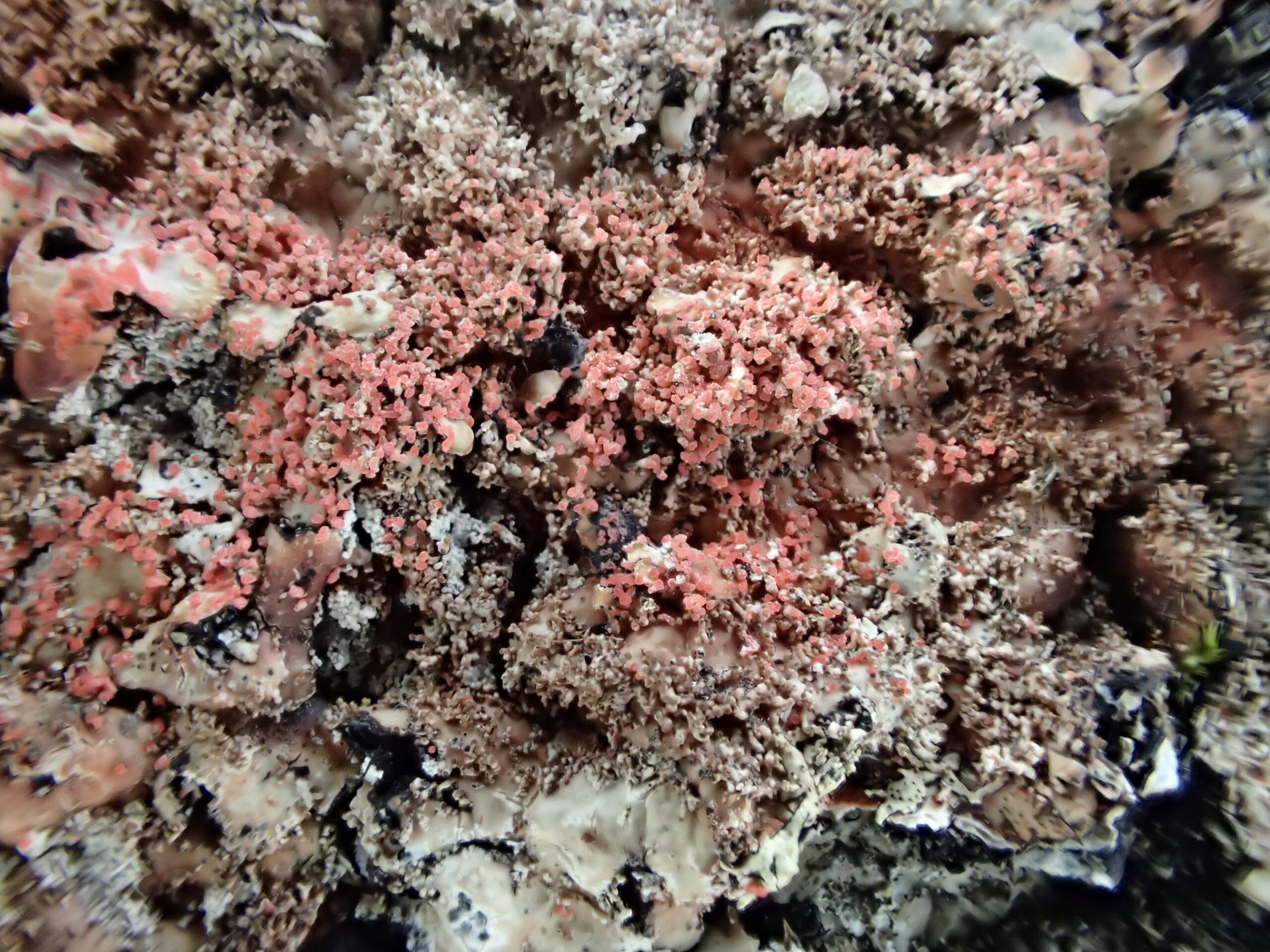
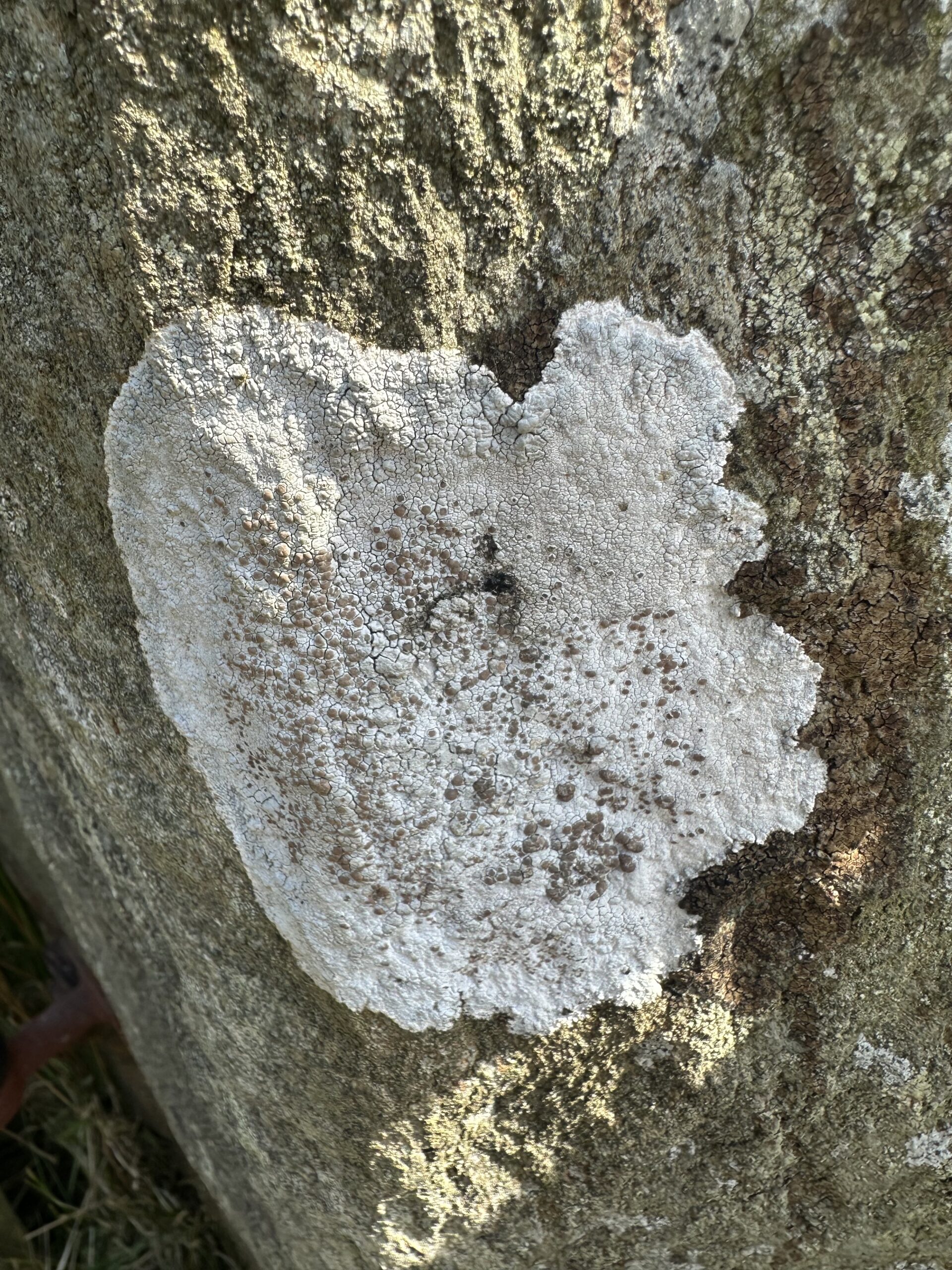
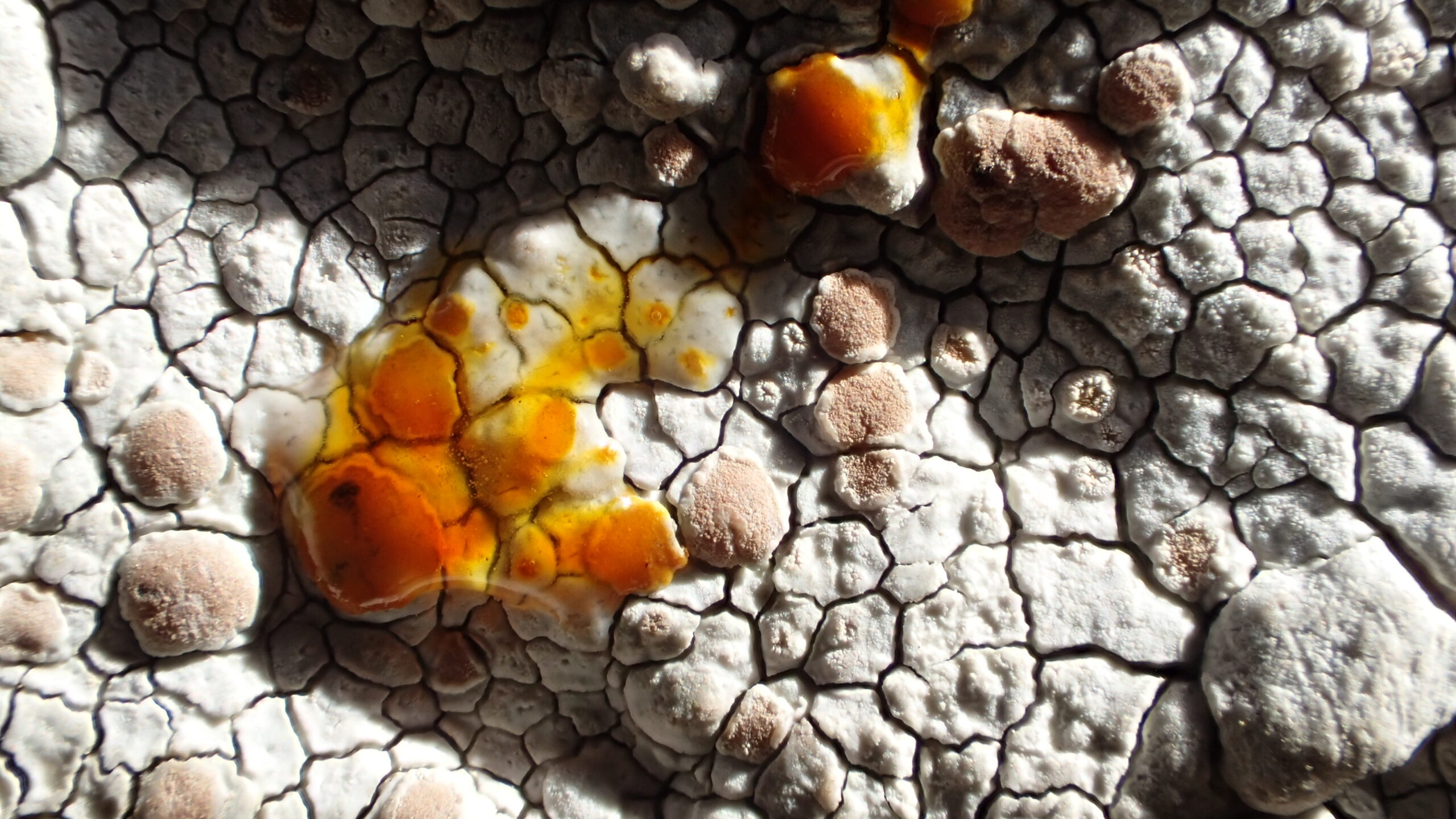
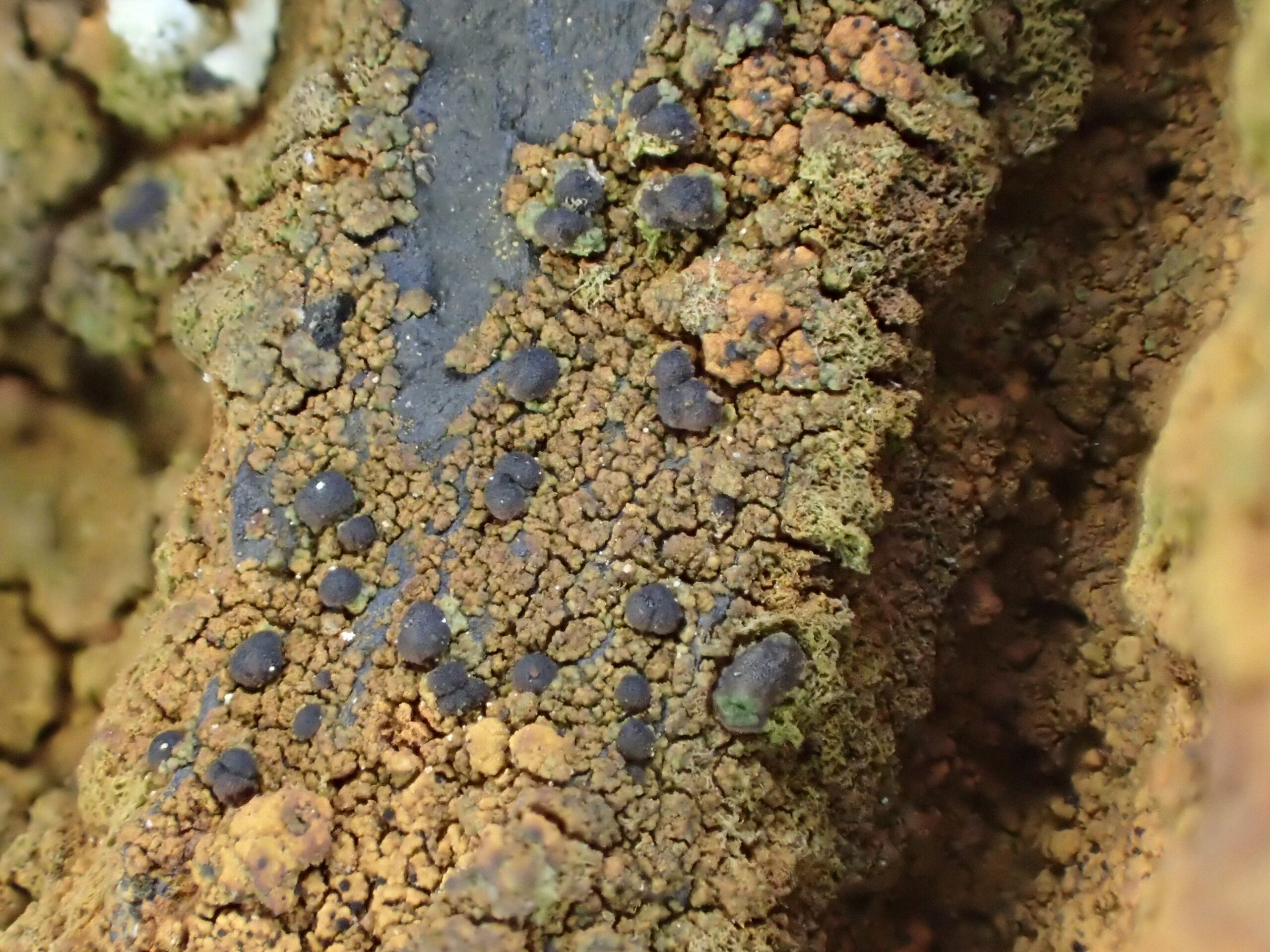
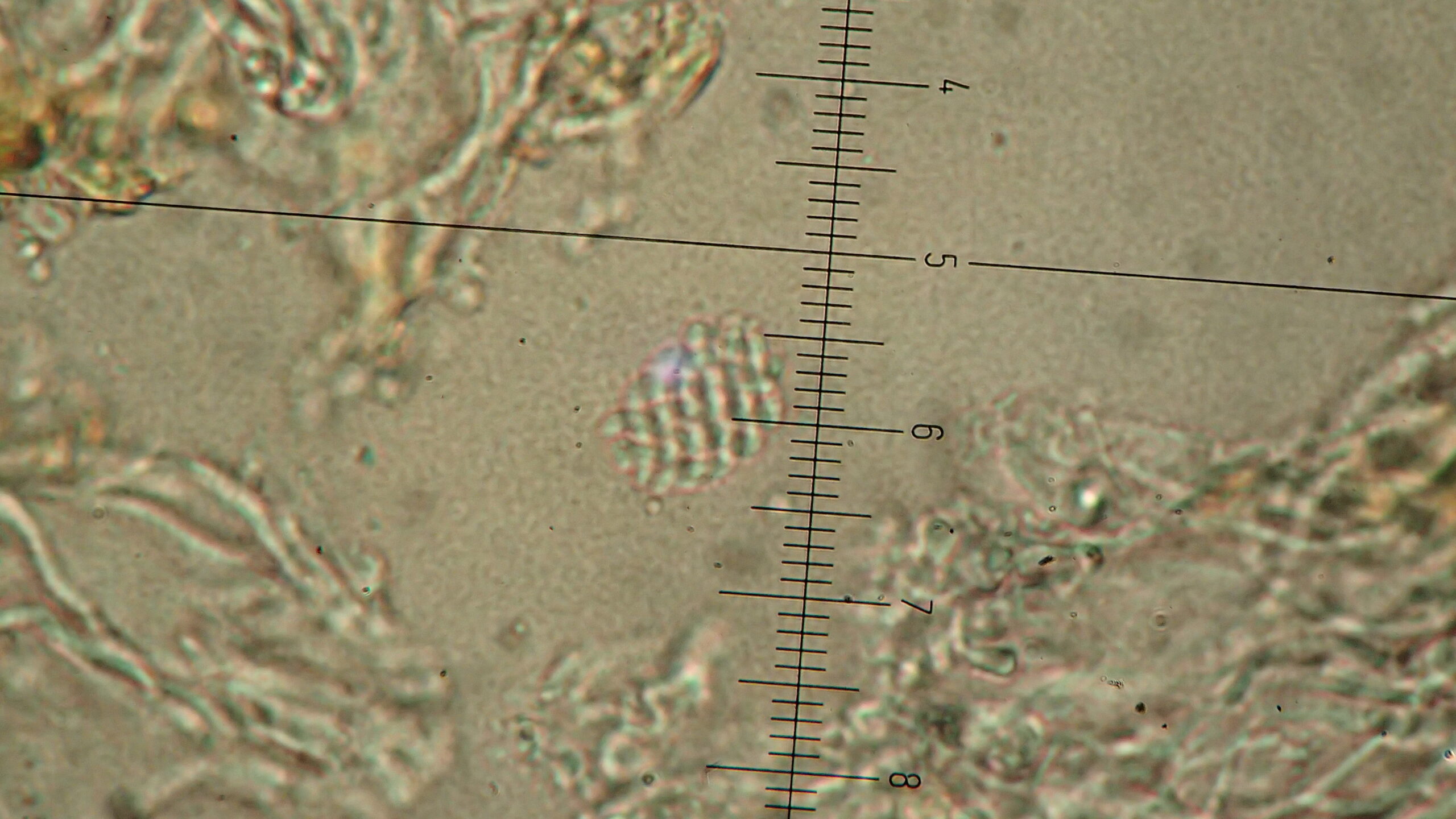
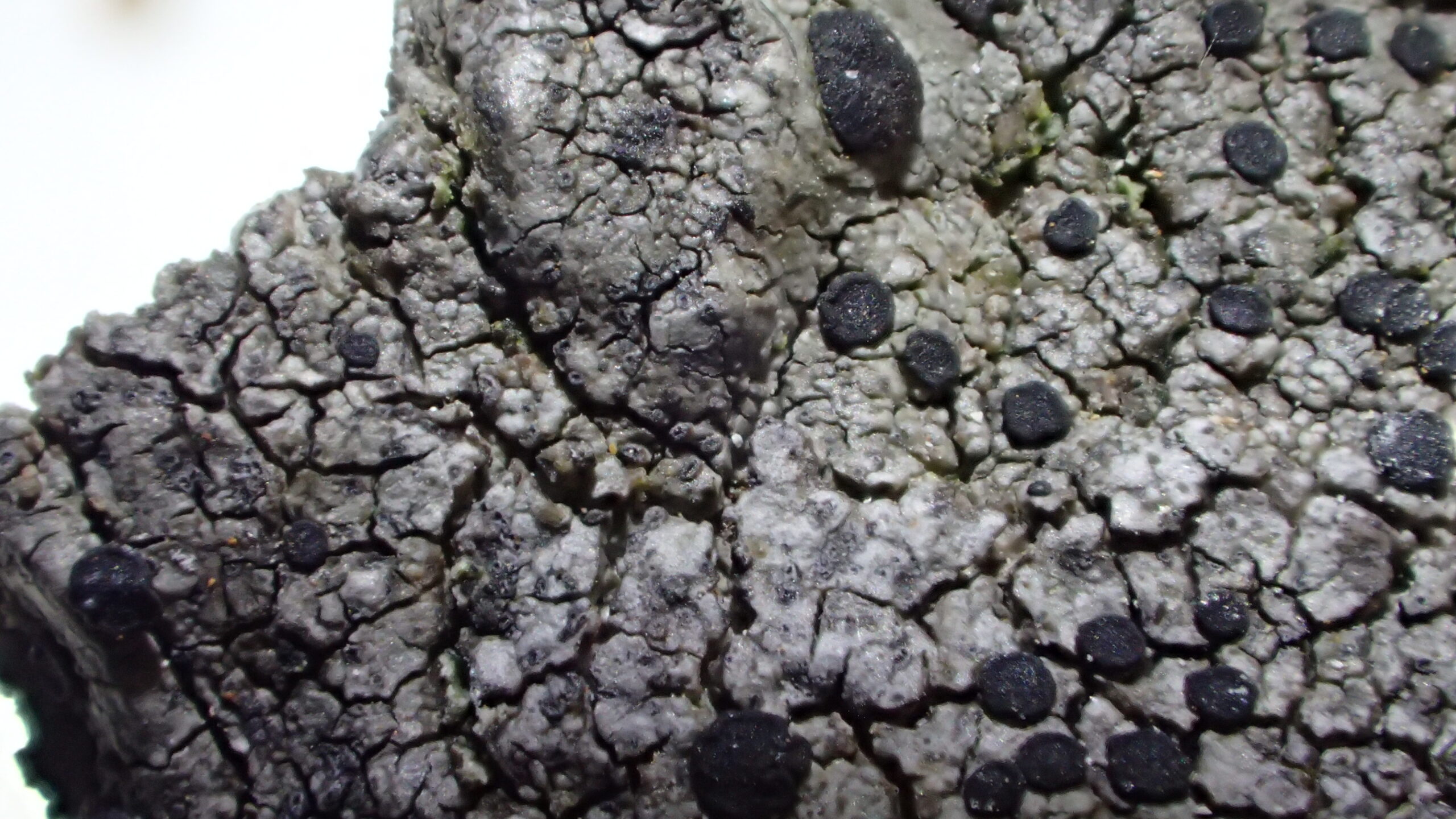
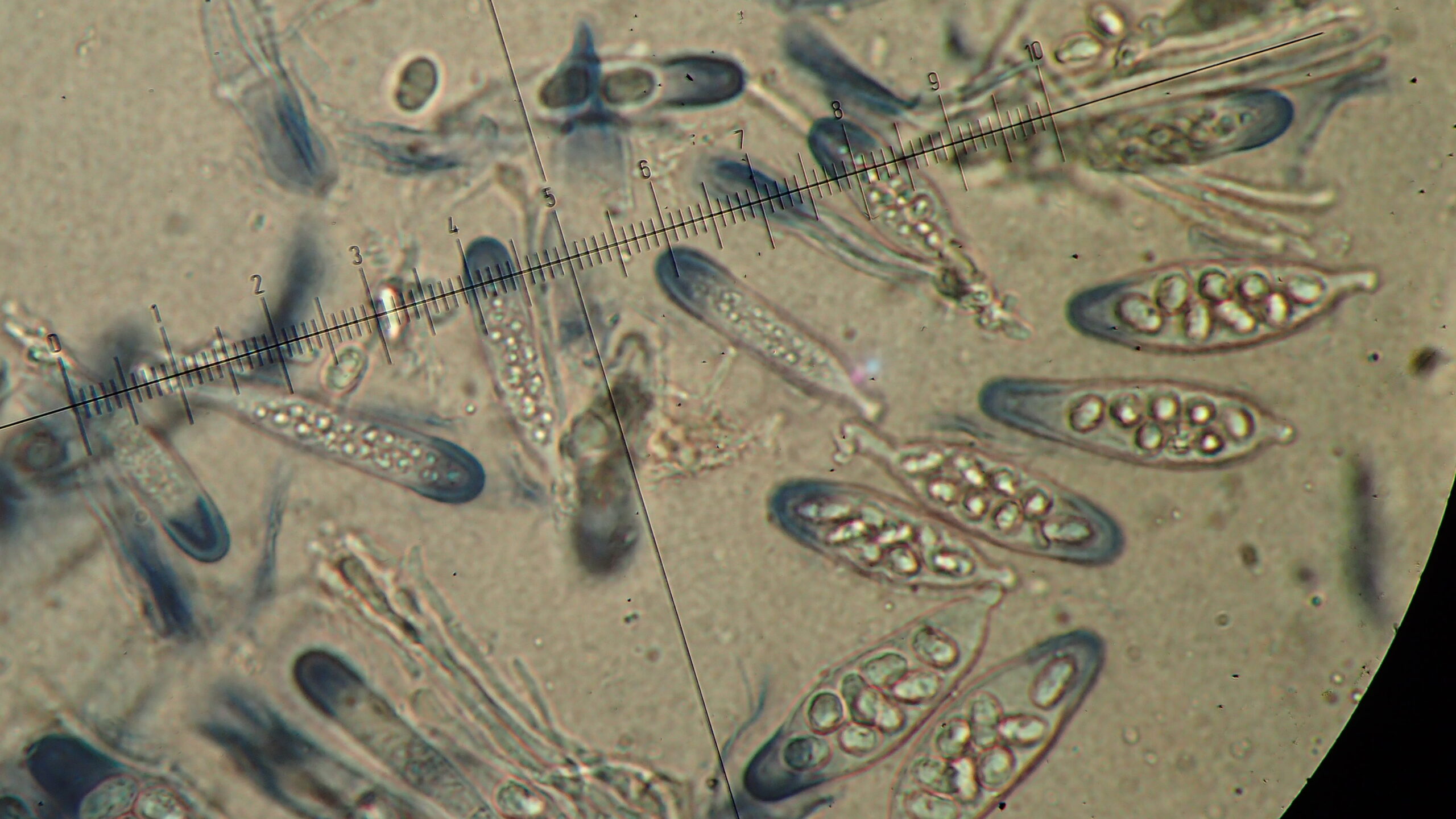
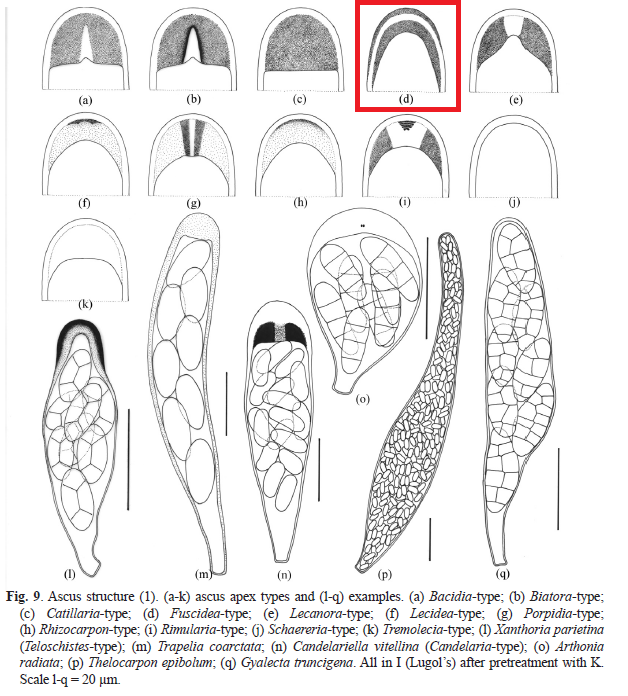
Later, looking under microscopes, a pale orange thallus with fruit turned out to be an unusual looking Scoliciosporum umbrinum with spores twisted in the asci. And a Fuscidea that may (or may not) be a “known unknown” which an expert has seen in the Lake District a few times and may be an undescribed species – exciting! I’ve included photos of the asci and spores stained with KOH and then Iodine – the ascus tips hopefully match the Fuscidea-type shown in the literature.
Text: Chris Cant
Photos: Chris Cant, Chris Hind, Caz Walker