Categories
Lichen Trip report

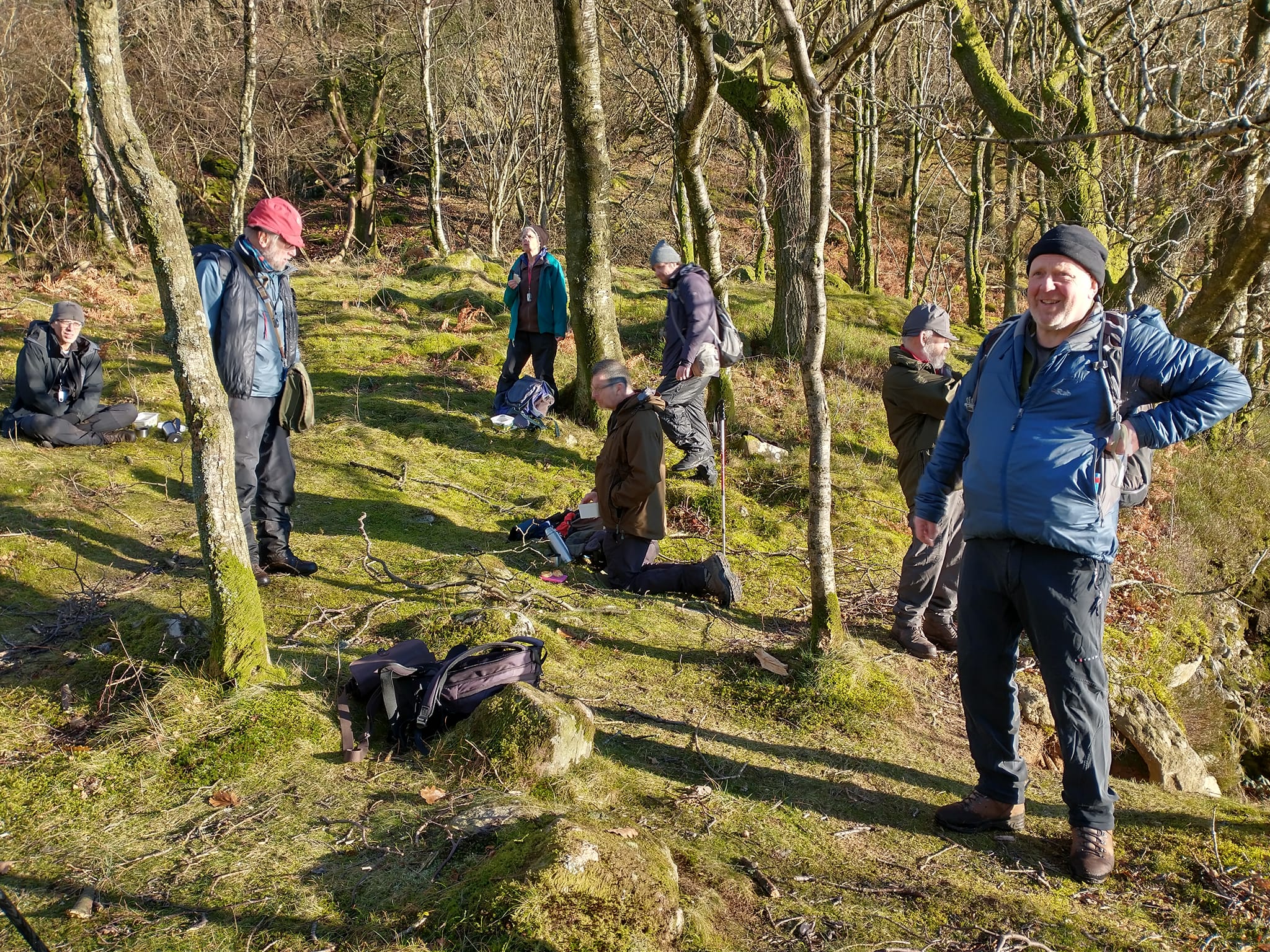
Borrowdale trip report 15-2-23

Lichens at Ashness Wood and Moss Mire, by Watendlath Beck

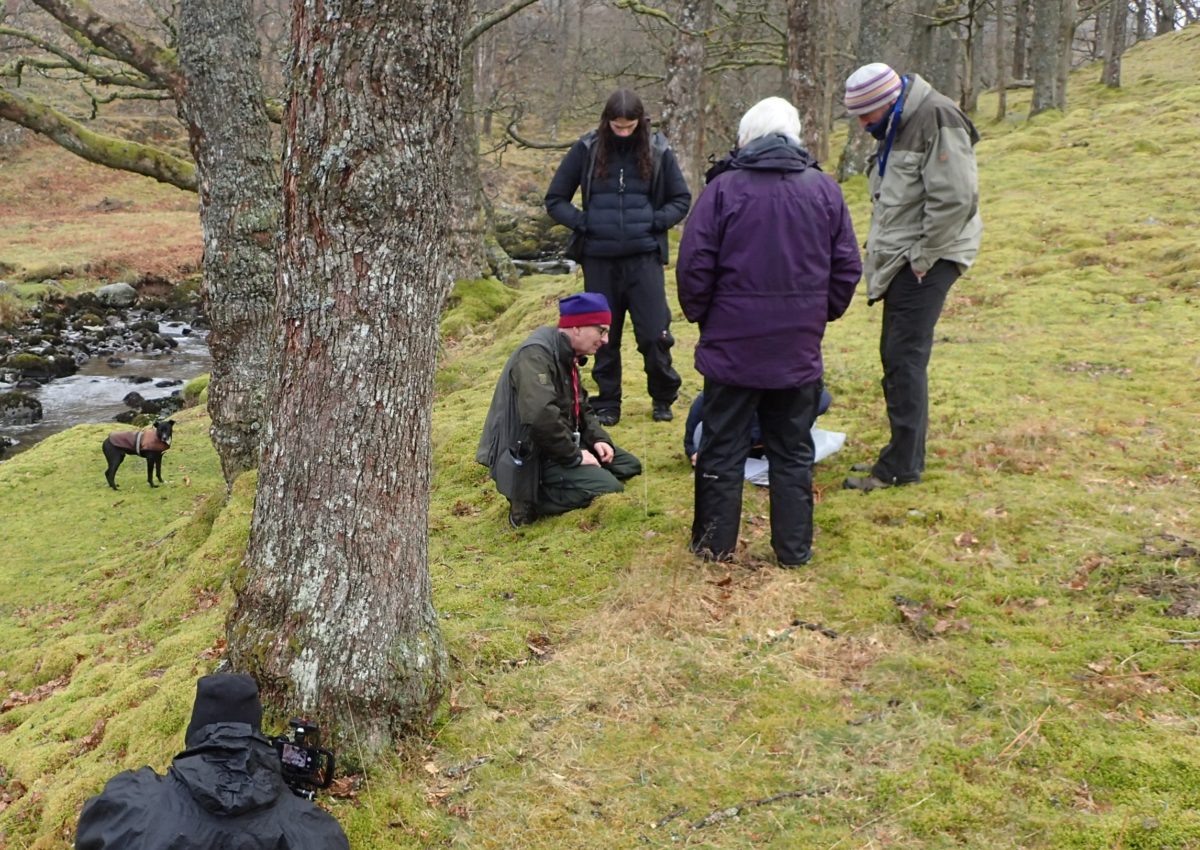
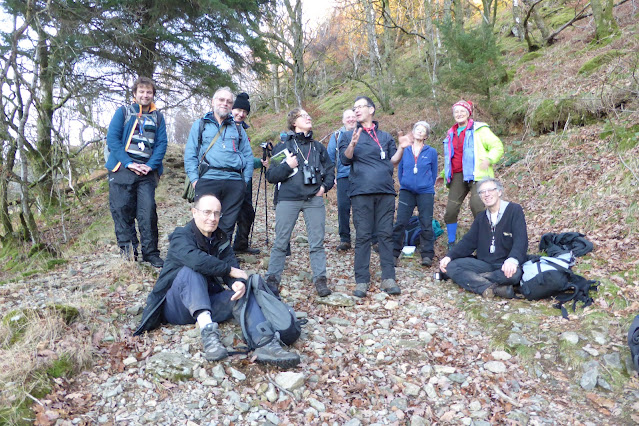
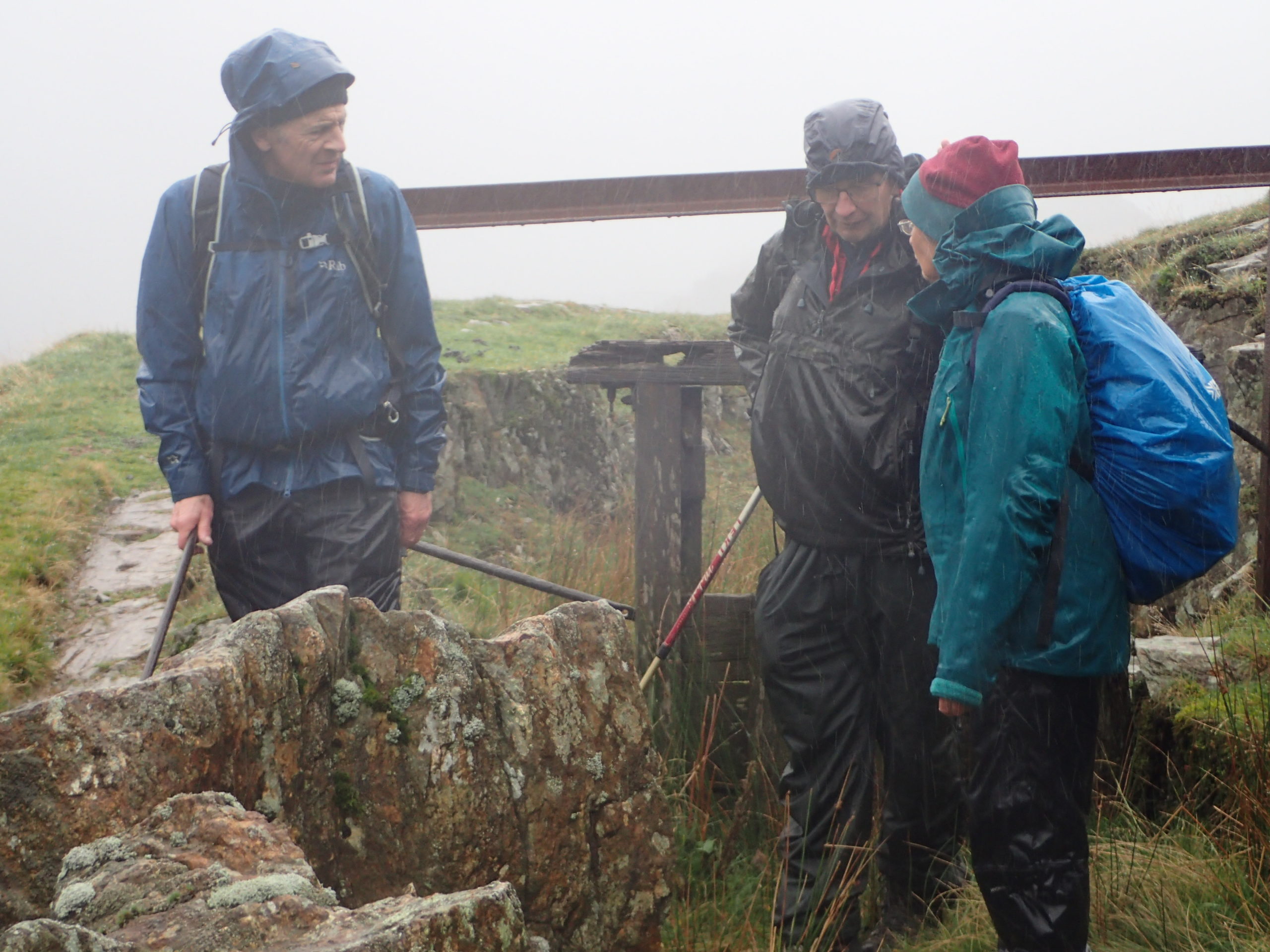
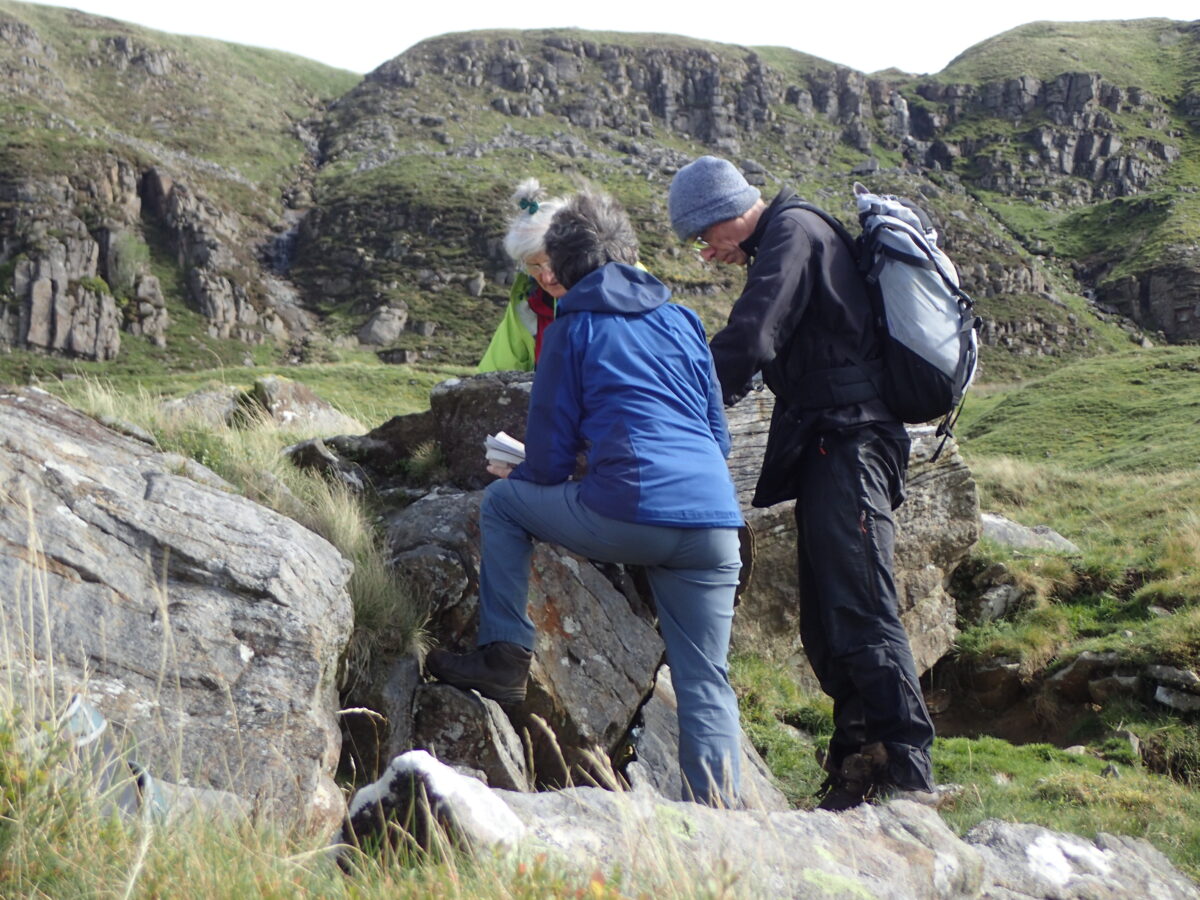
There was a good turn out – 10 people looking at lichens – despite the weather forecast for a wet morning. After a few heavy showers we had a dry afternoon which allowed for some good licheneering.

This is a National Trust site, part of the Lodore-Troutdale Woods SSSI which is designated for its upland acidic oak-birch woodland and forms part of the internationally important Borrowdale Woods complex.

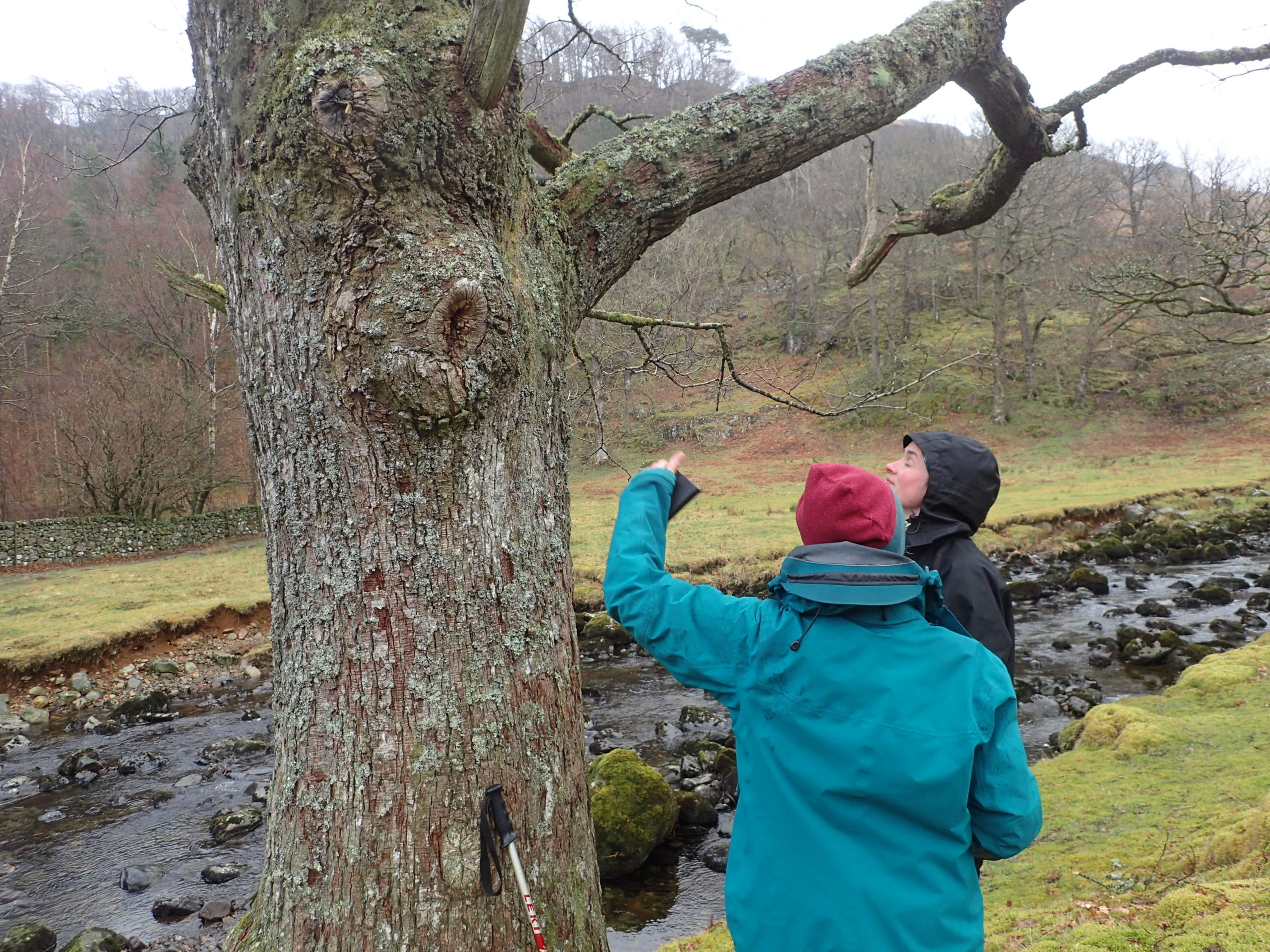
Most of the participants were new to the group and, in some cases, new to lichens so we took a while to get out of the Surprise View car park where the trees had lovely displays of acidic bark species, showing a range of growth forms and other features. Once everyone had had a go with x10 hand lenses and got their eye in for the tiny structures we need to look at in order to start the ID process, we set off, pausing to examine oak and birch trees along the way.

At Moss Mire, beside Watendlath Beck, we stopped for lunch and spent a few hours looking closely at trees (corticolous lichens), riverine rocks, shaded upland rock outcrops (saxicolous species) and terricolous habitats (lichens growing on the ground). This was in the southern part of monad NY2618; we ventured briefly into NY2617 as there seemed to be no records for that square and wrote a short list. All our records will be submitted to the British Lichen Society.

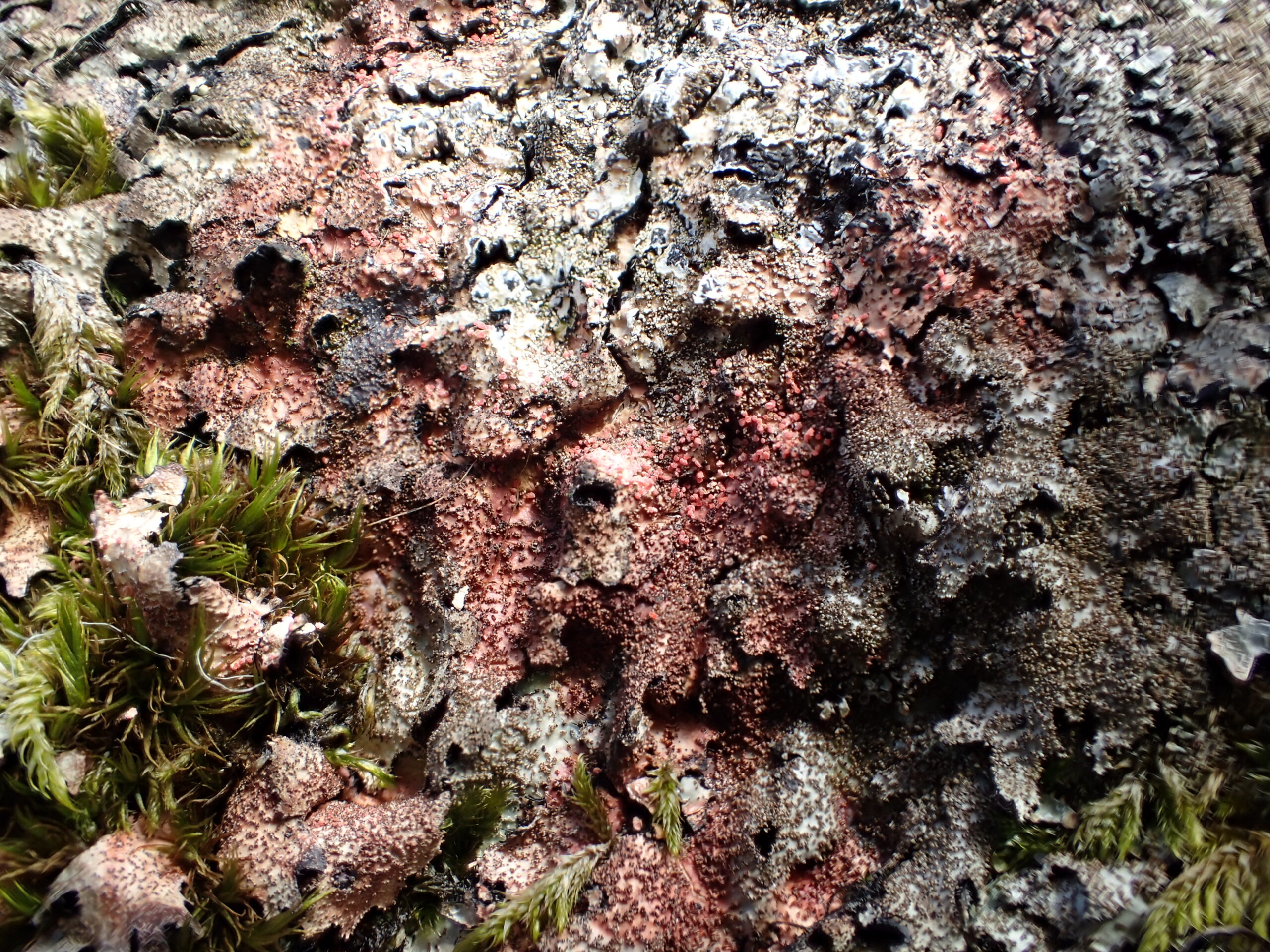
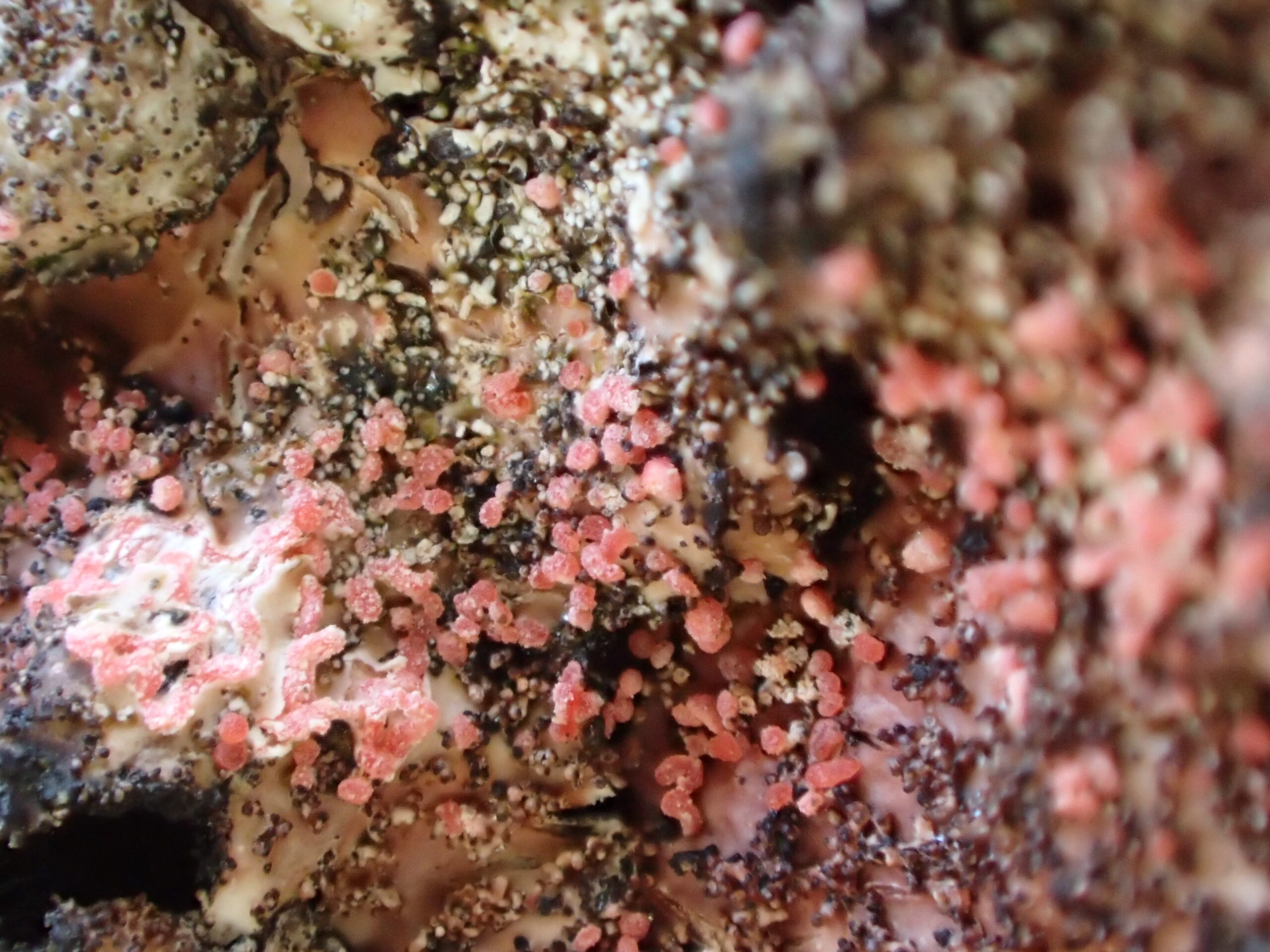
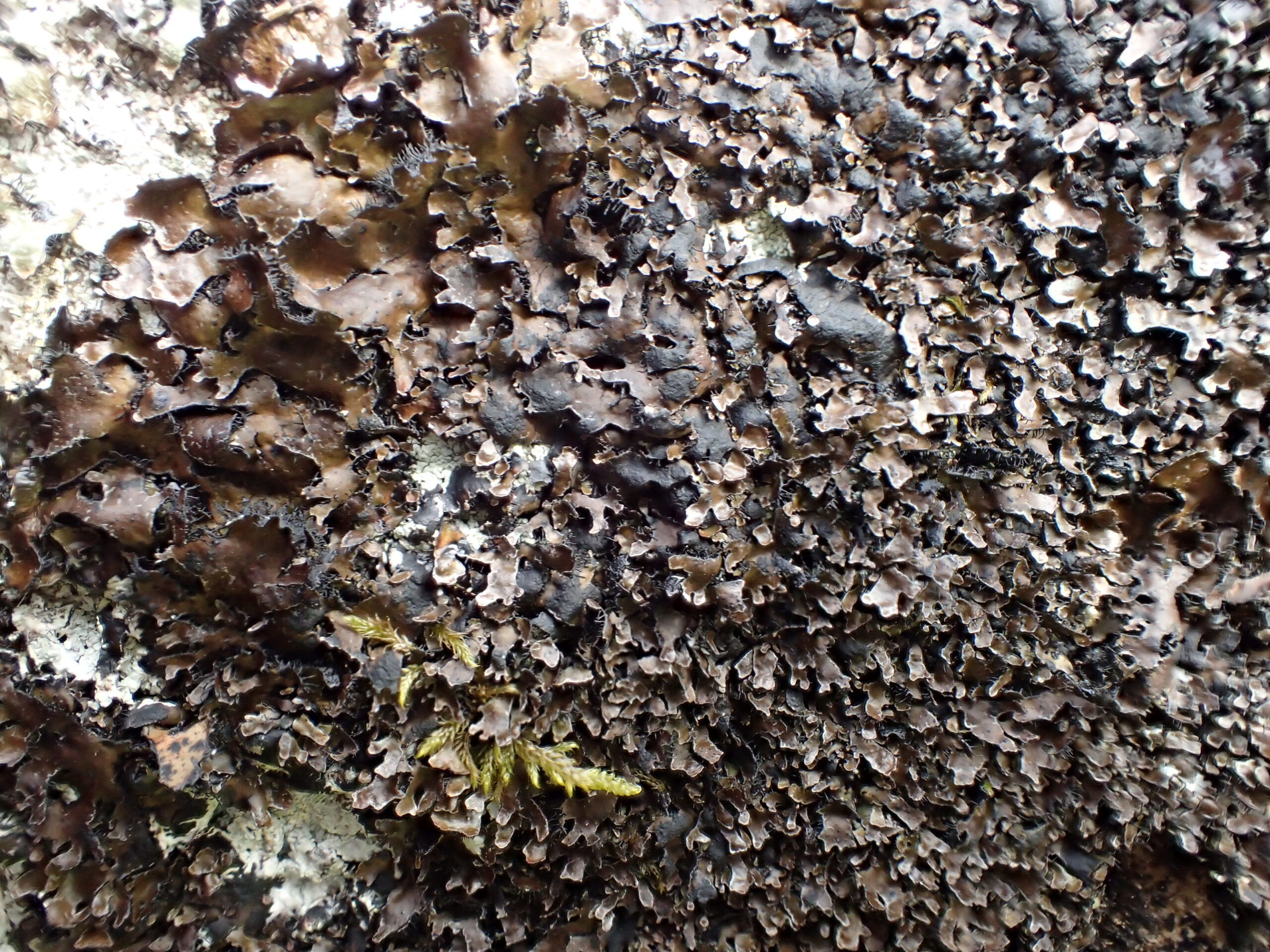
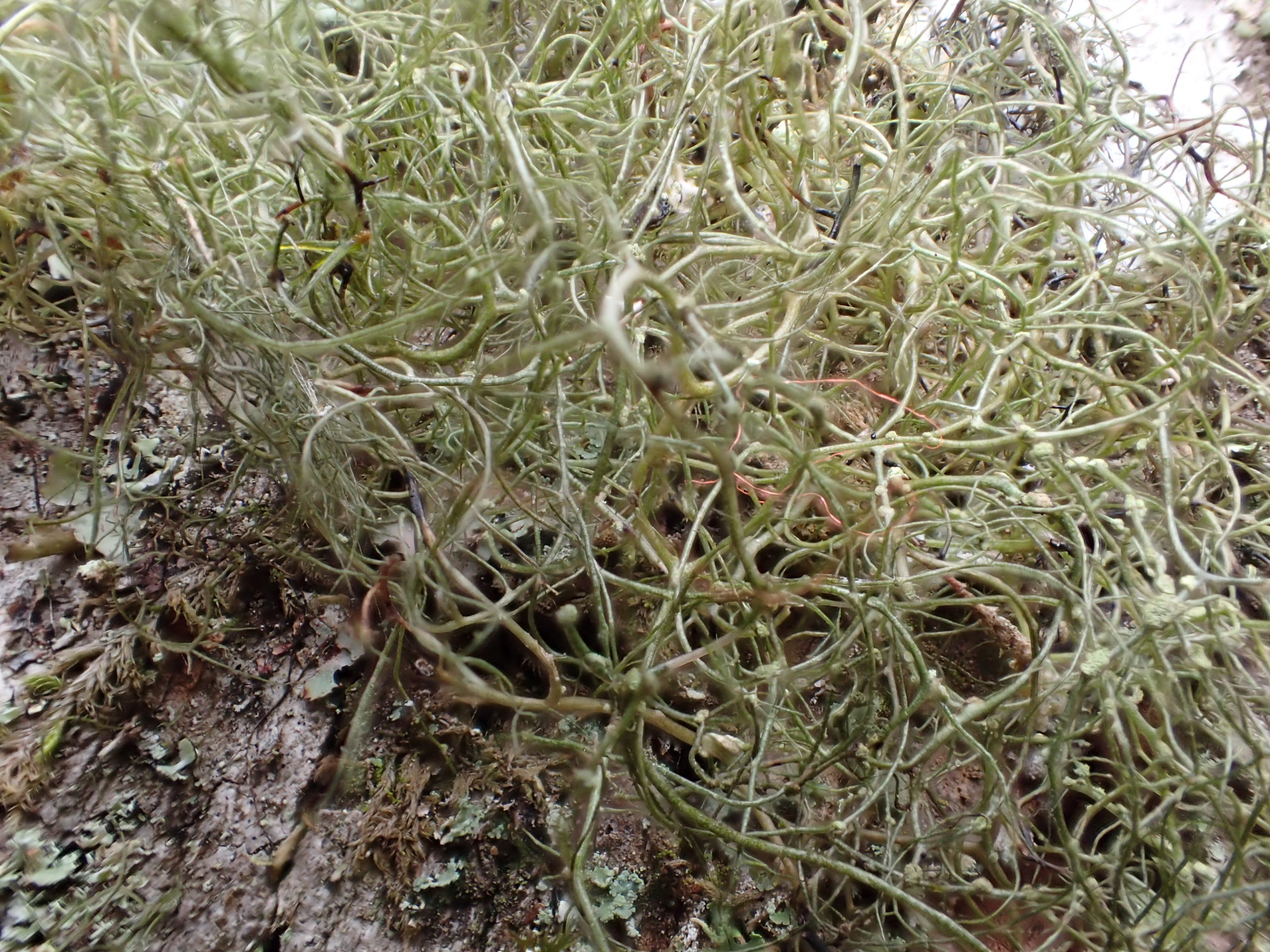
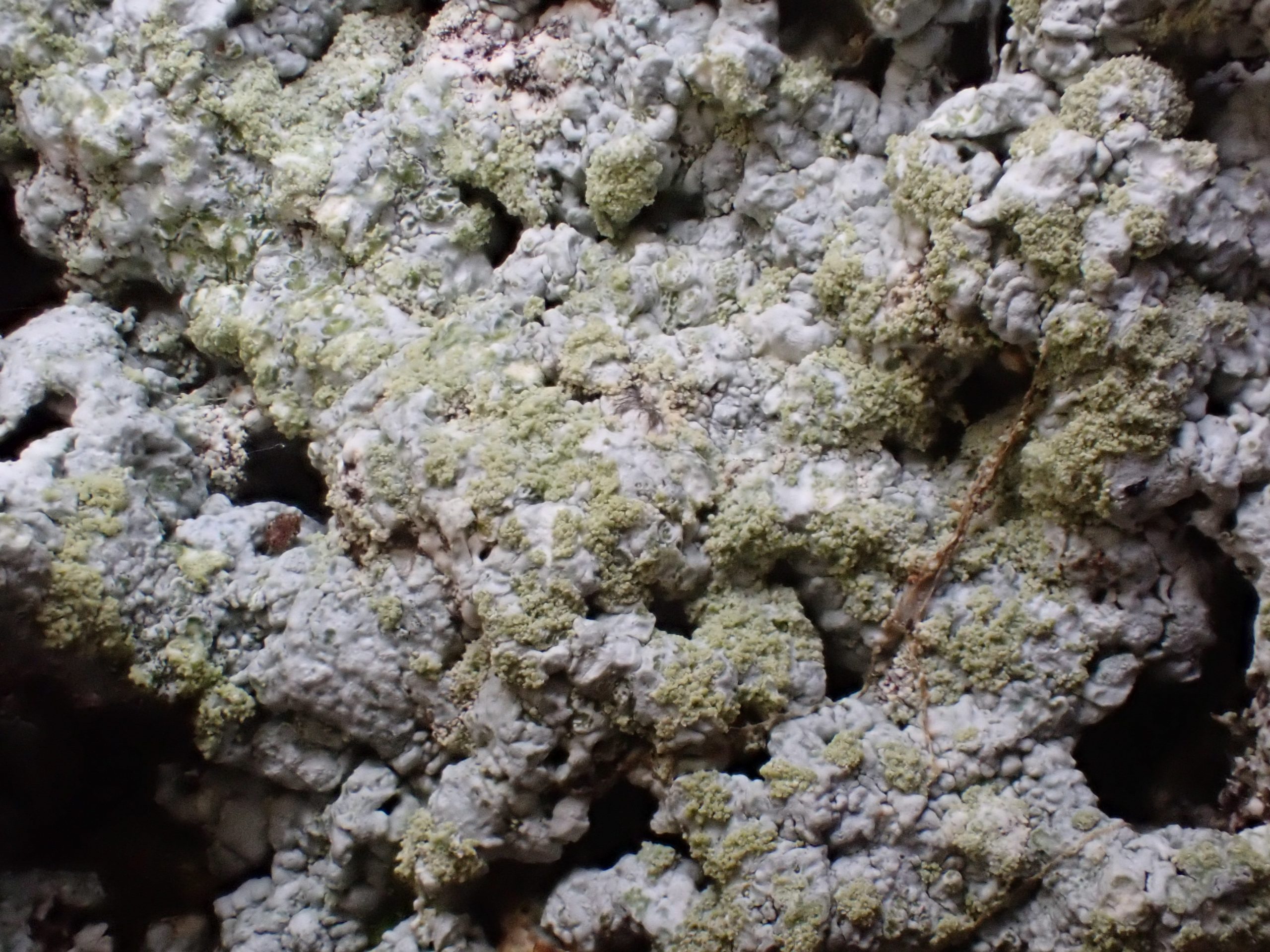
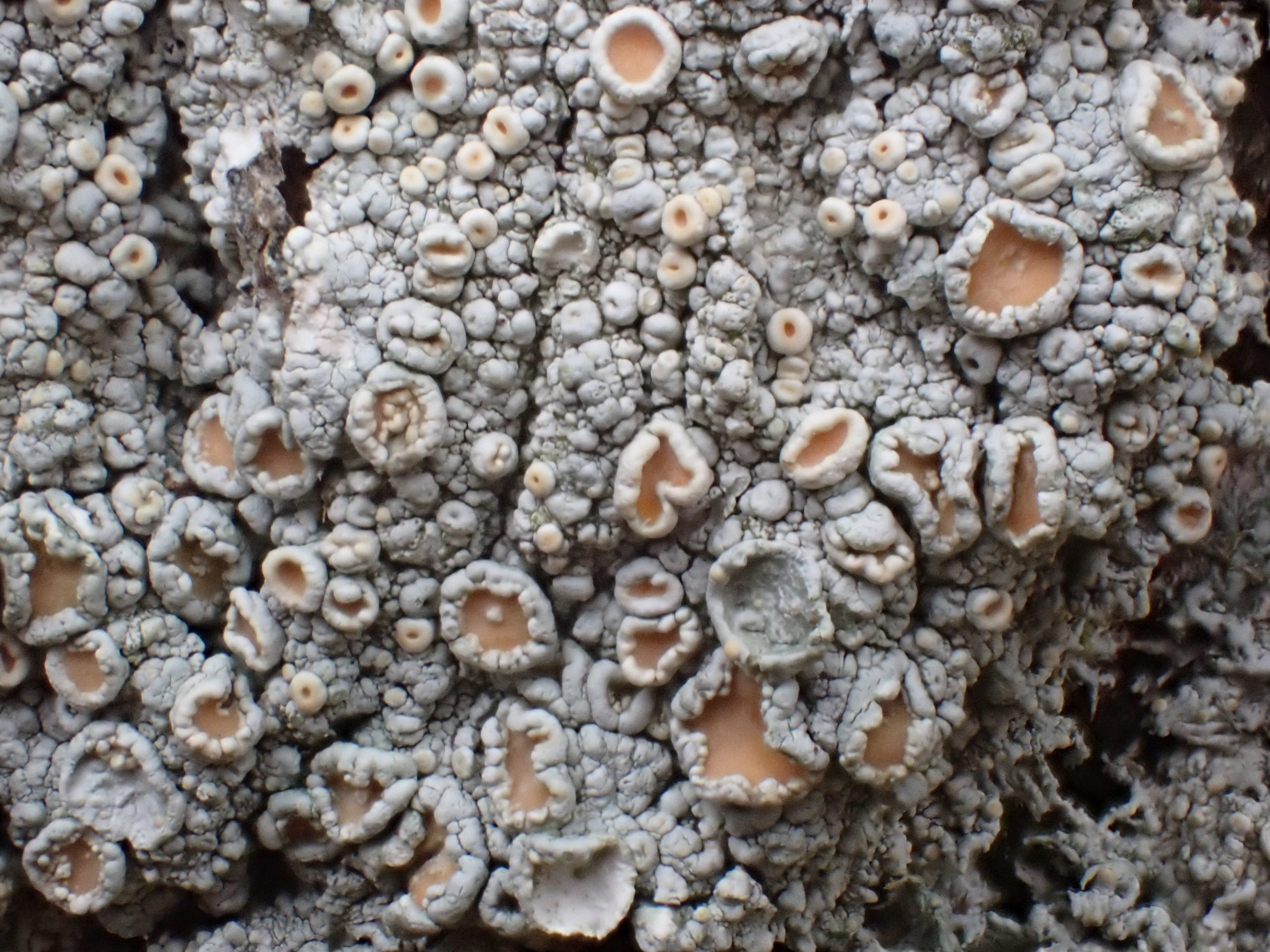
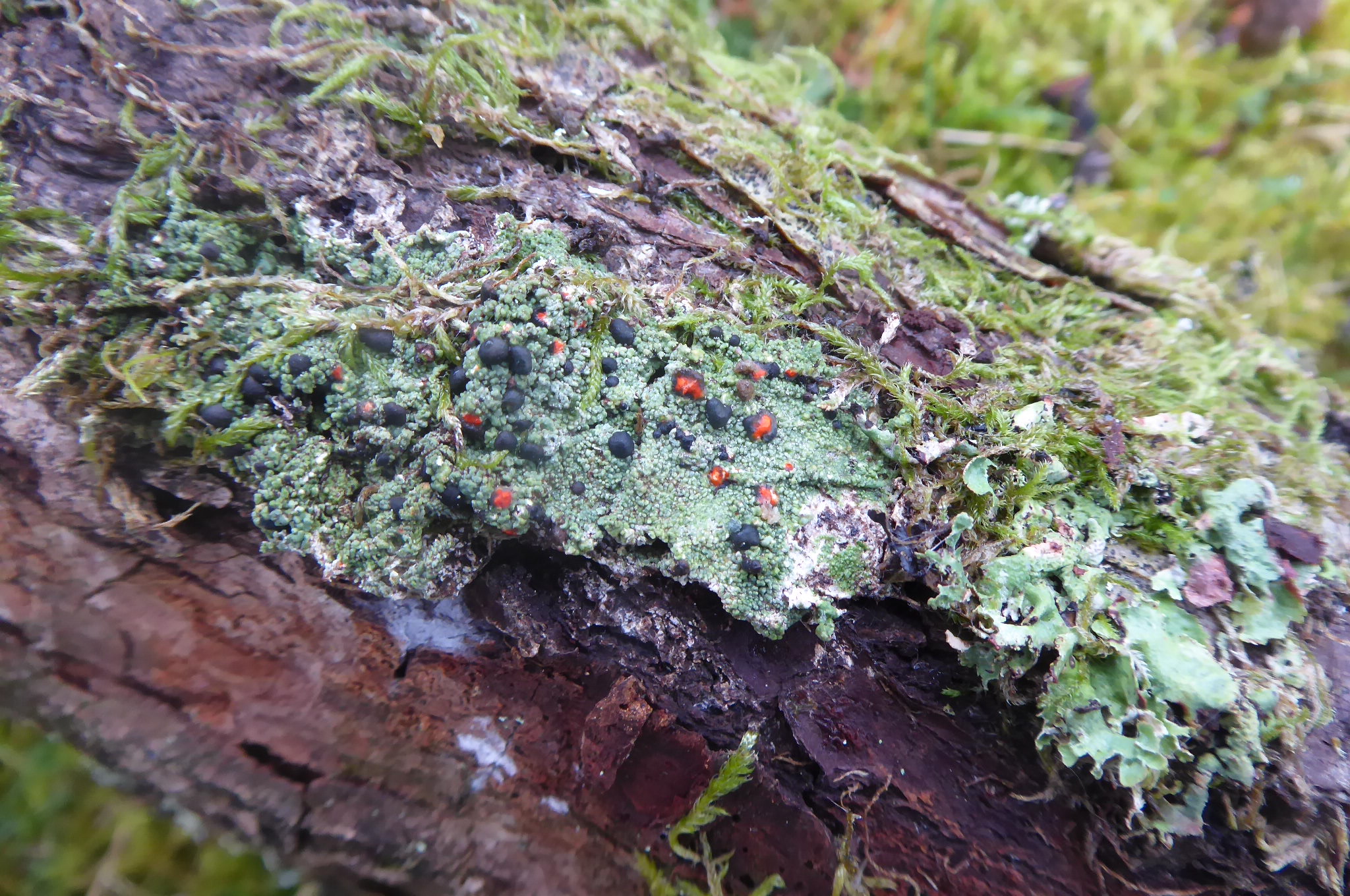
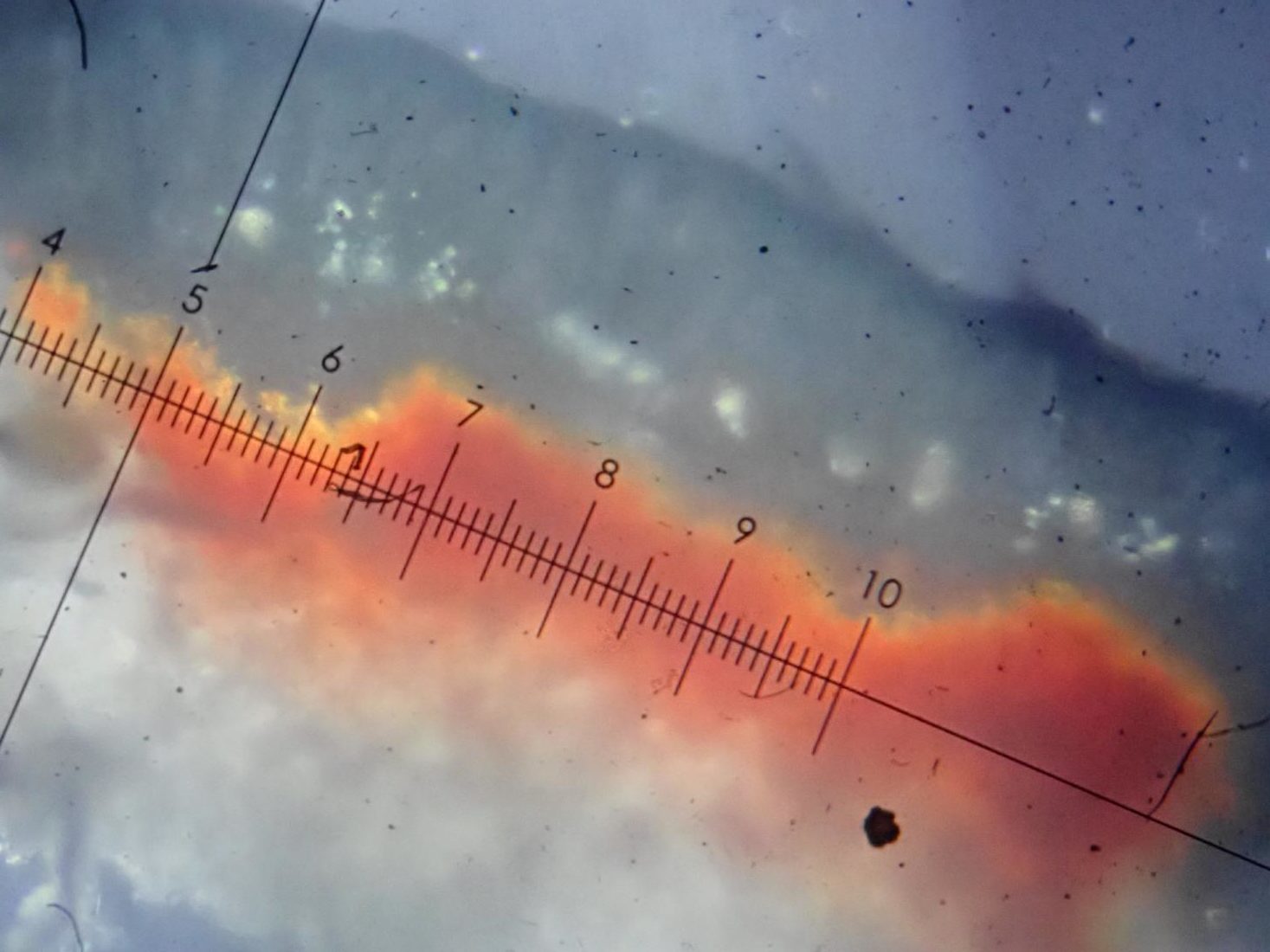
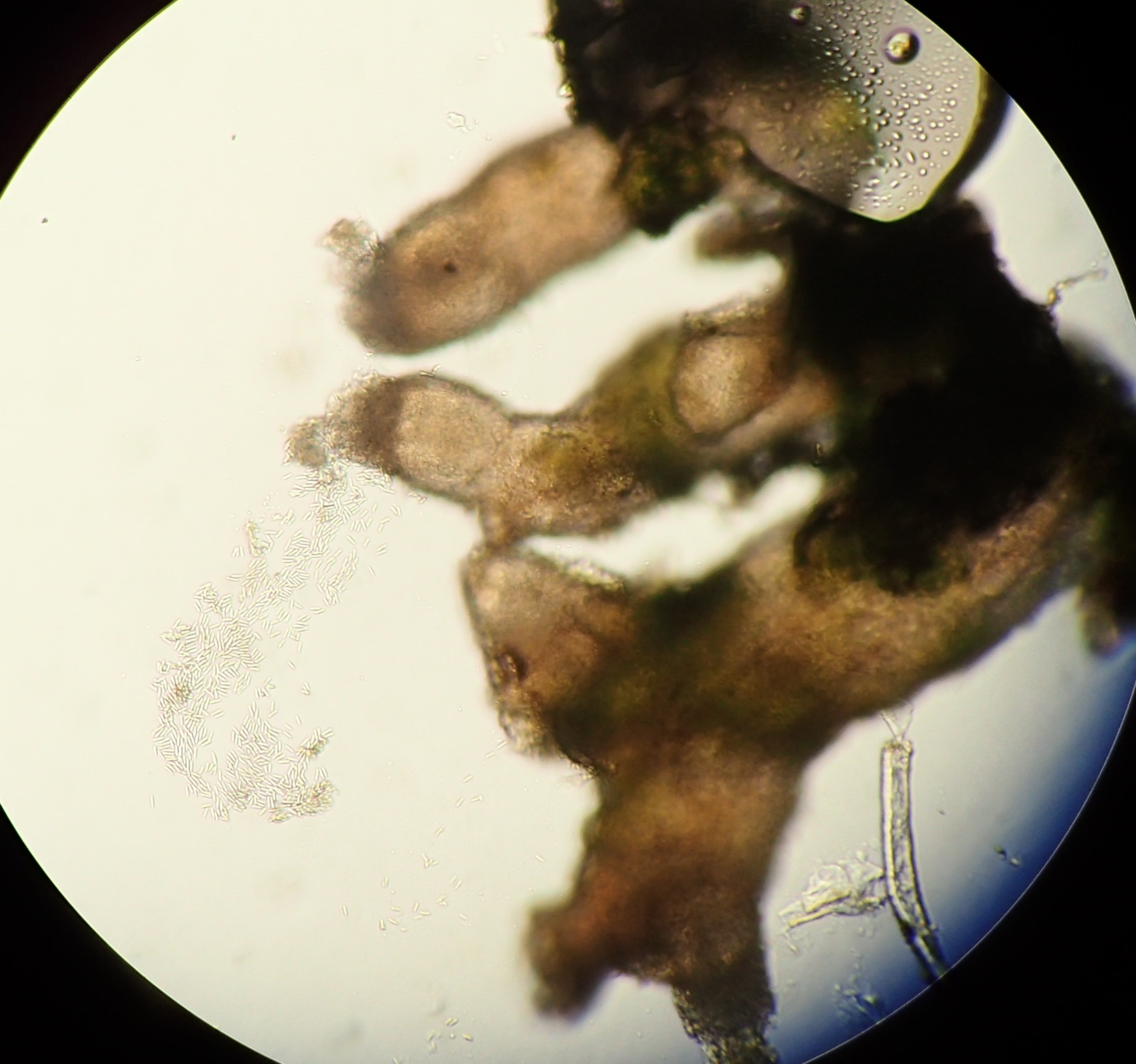
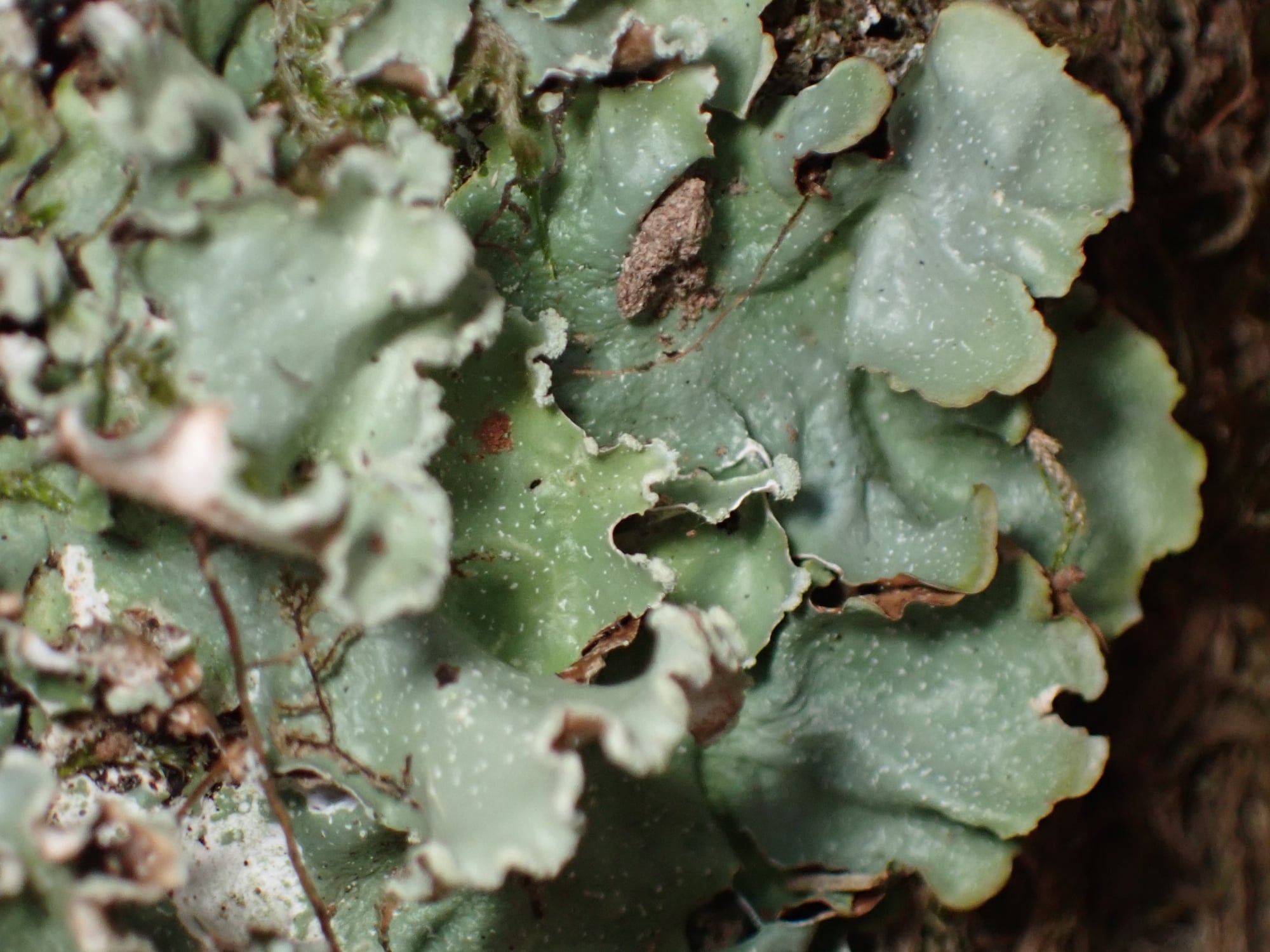
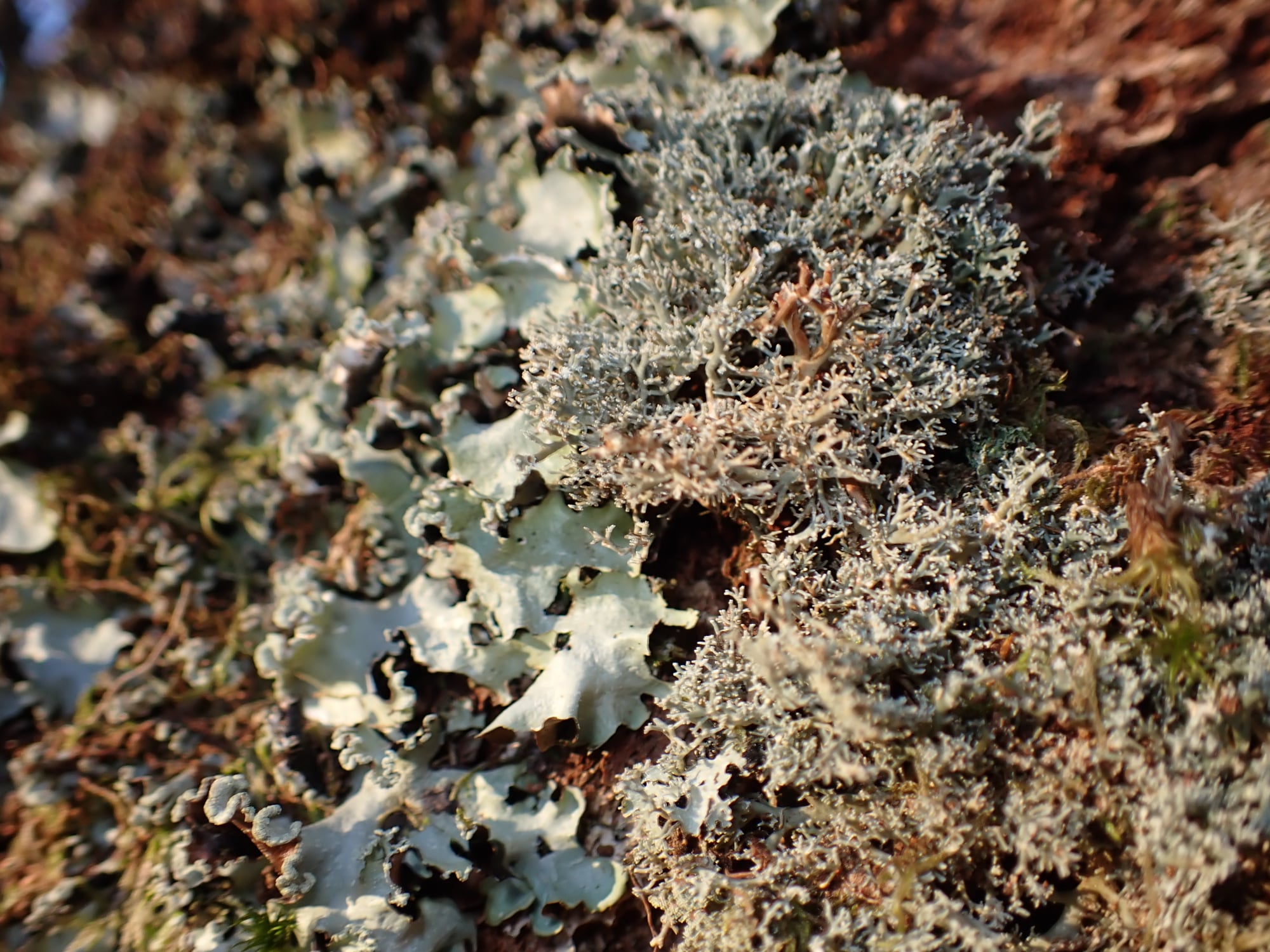
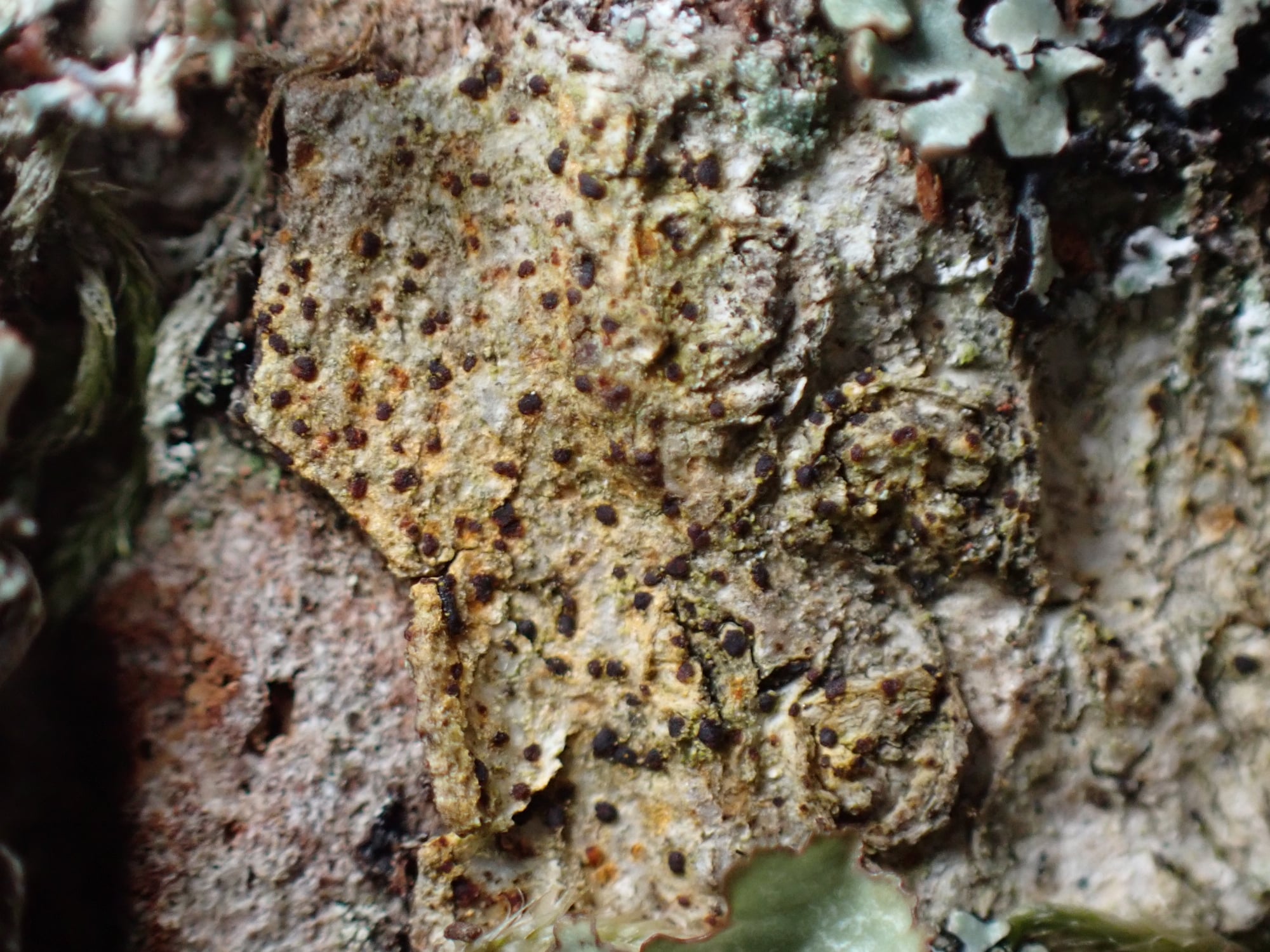
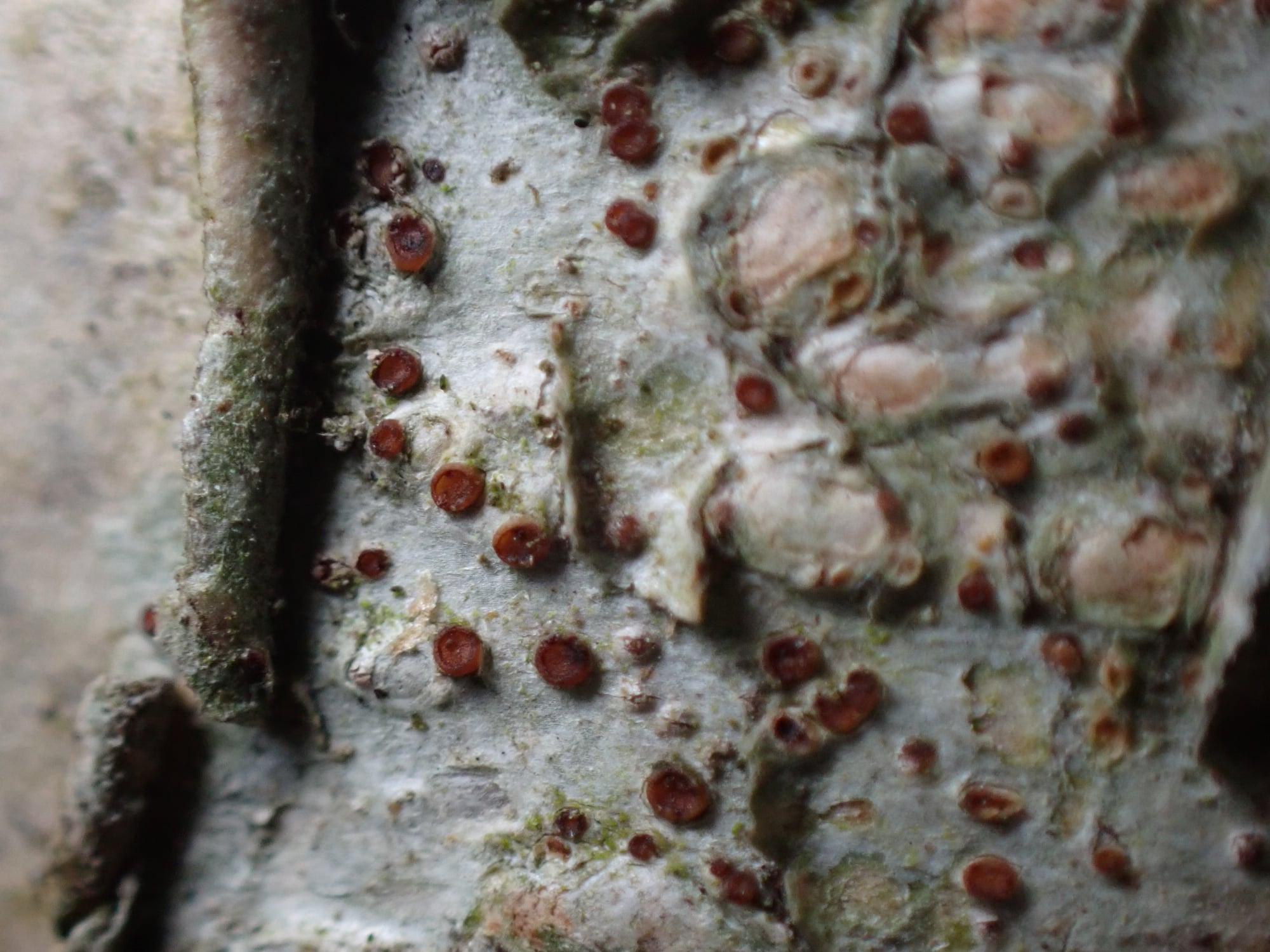
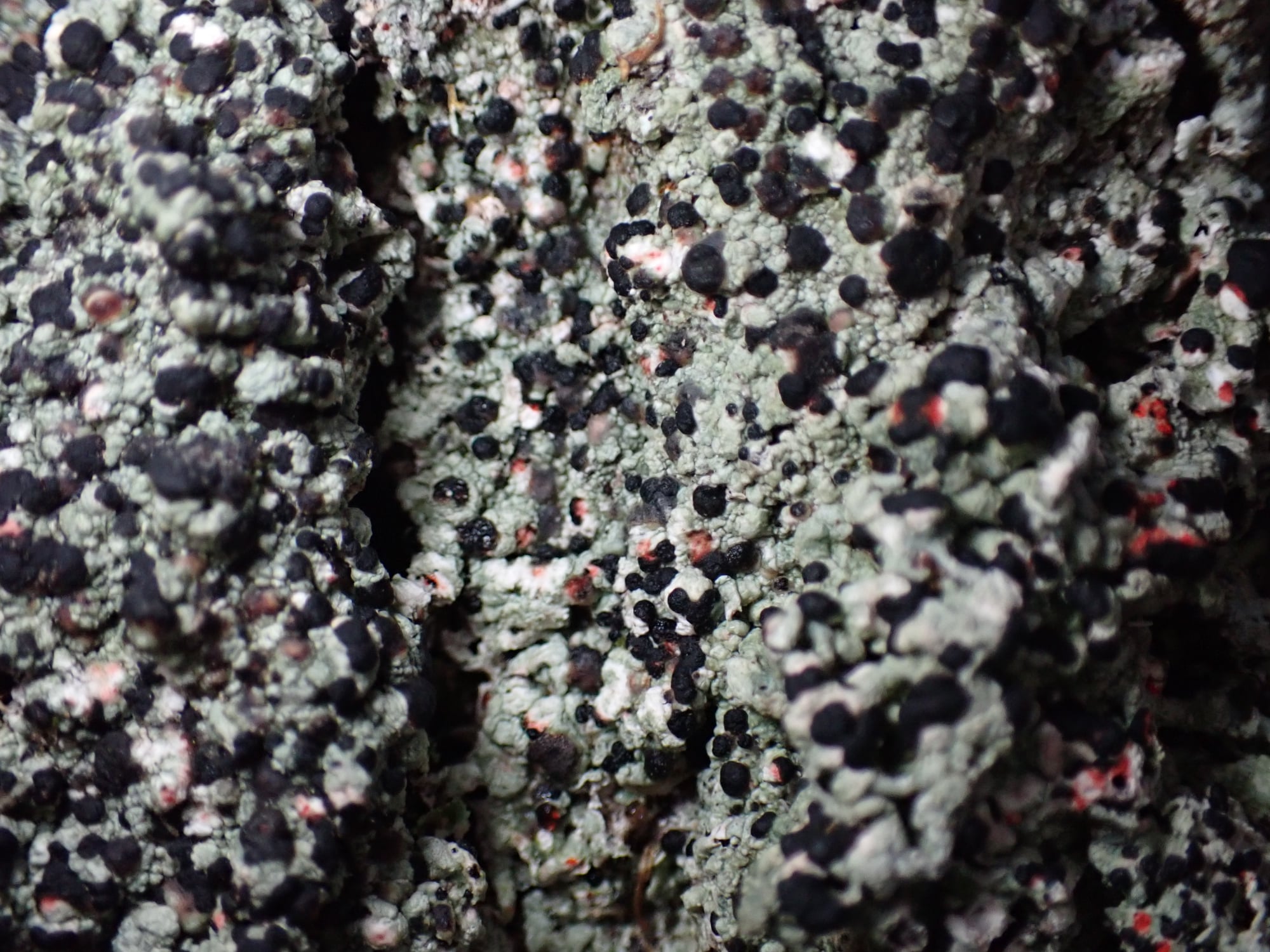
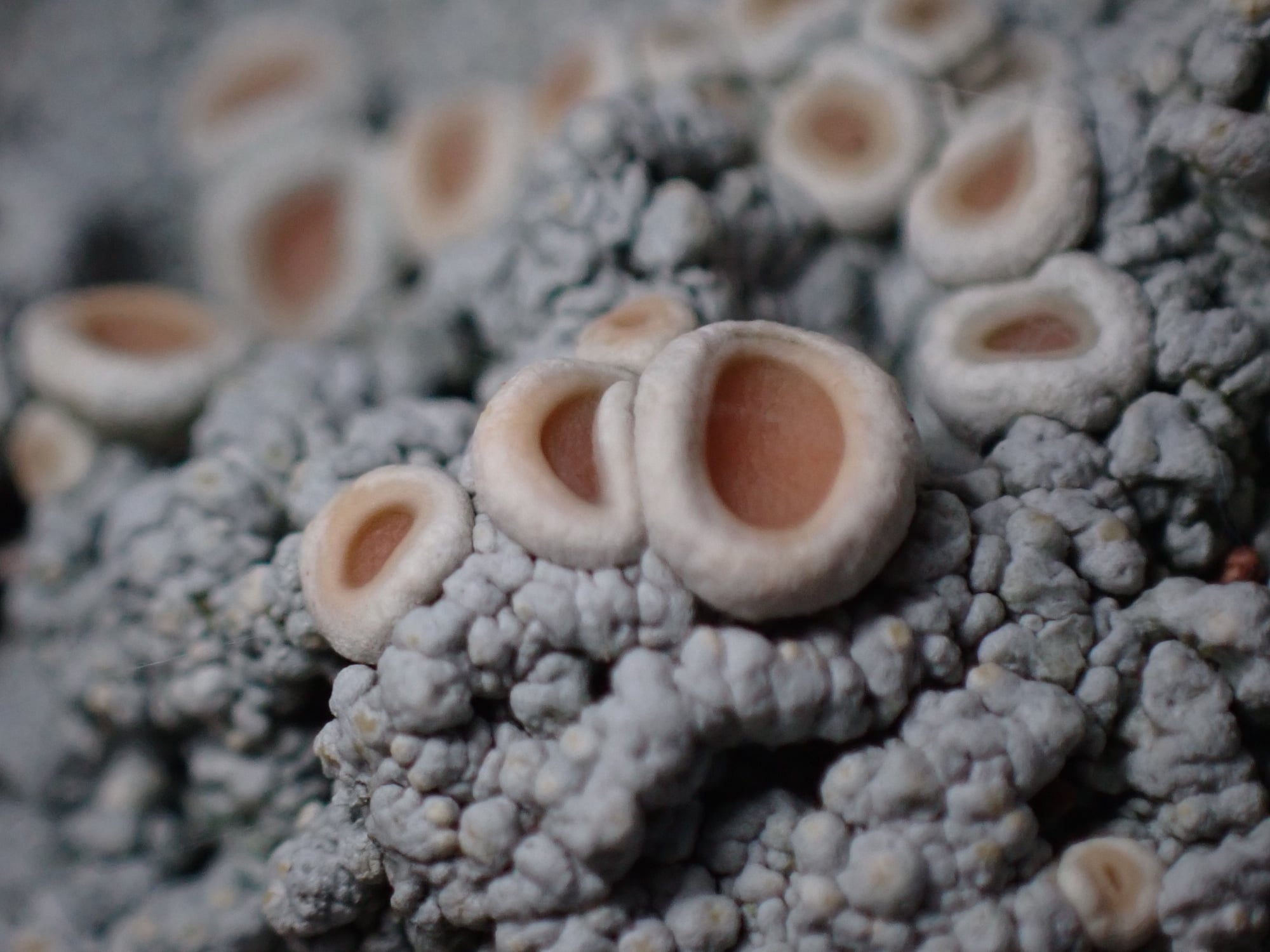
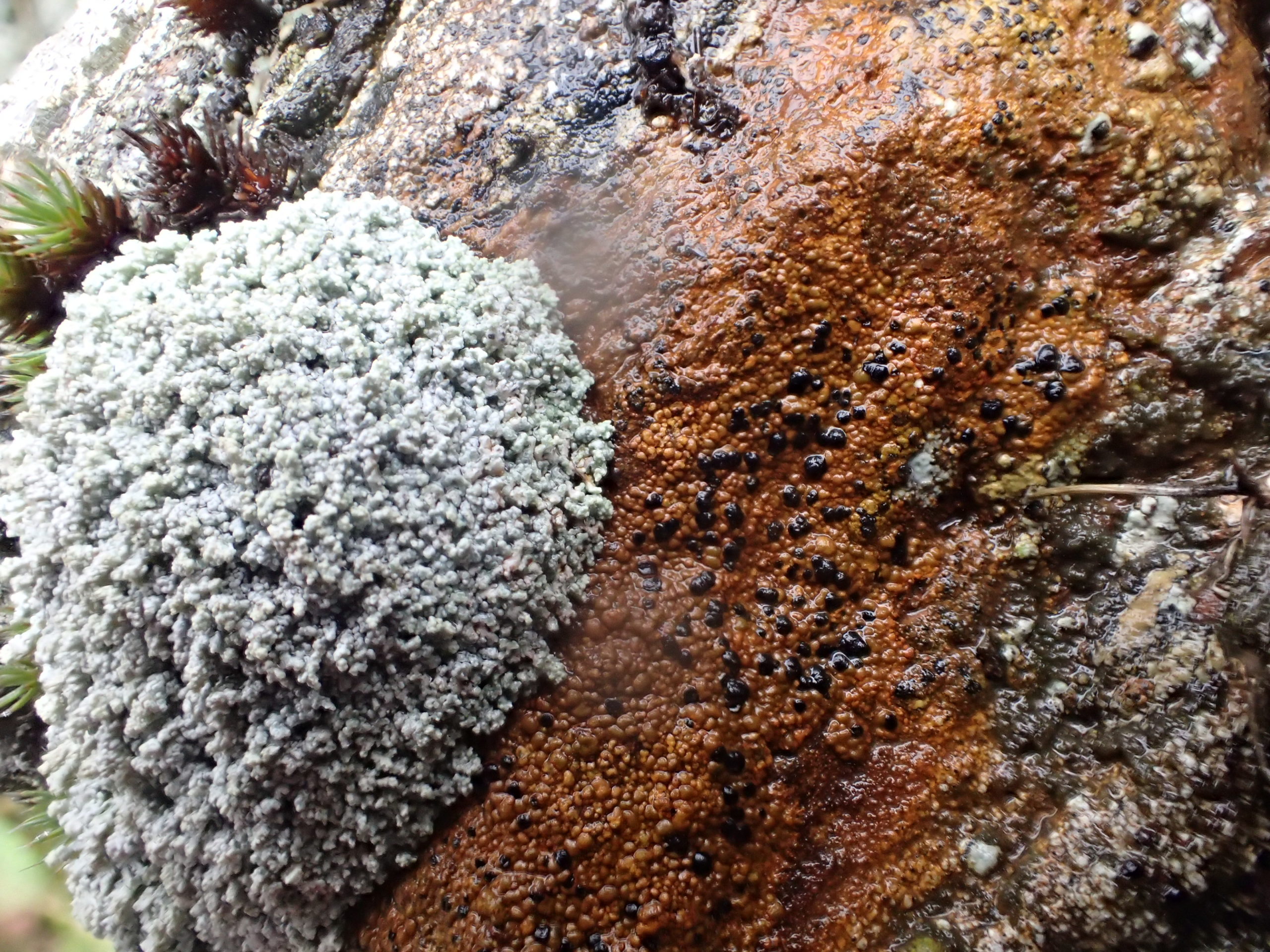
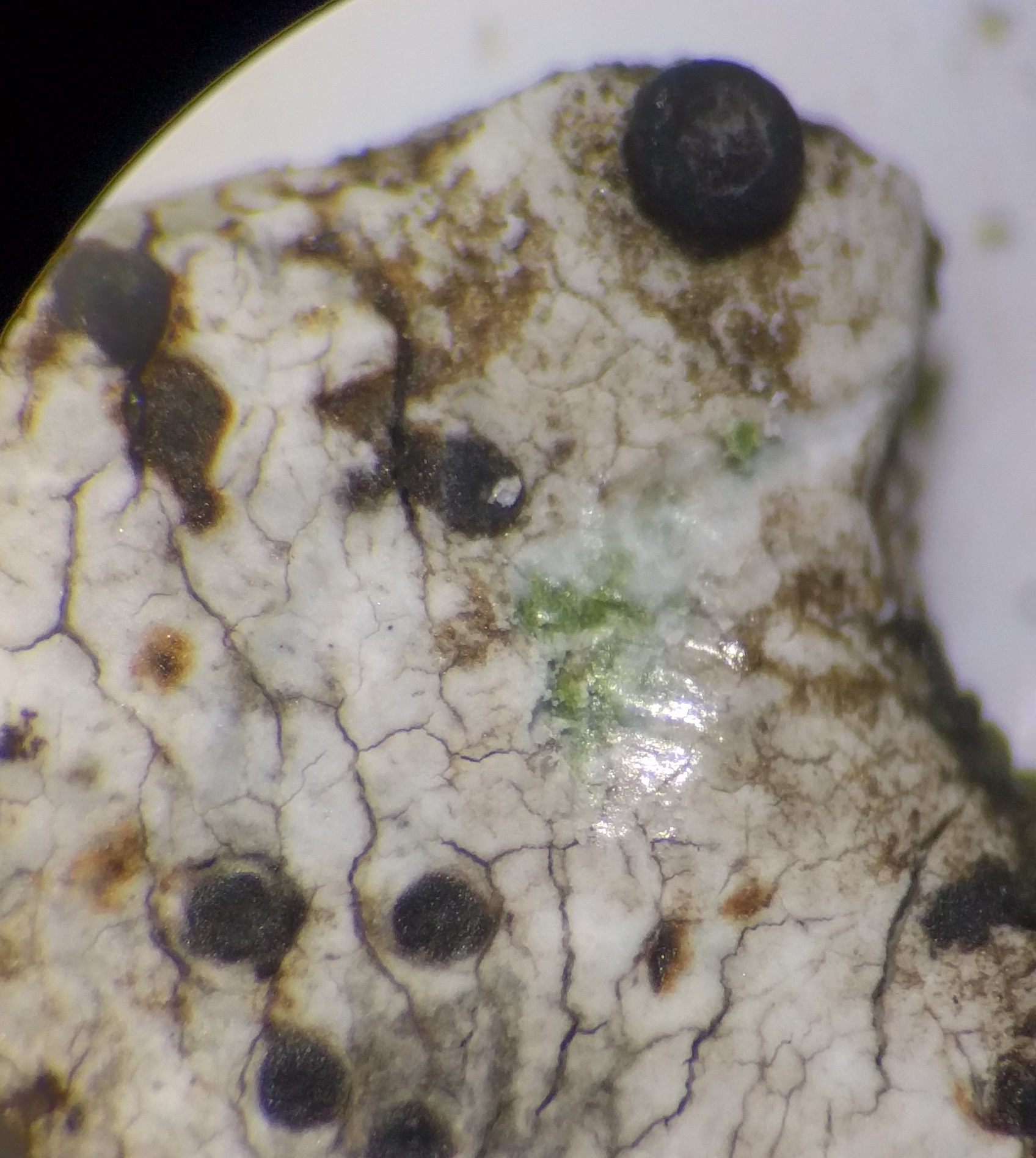
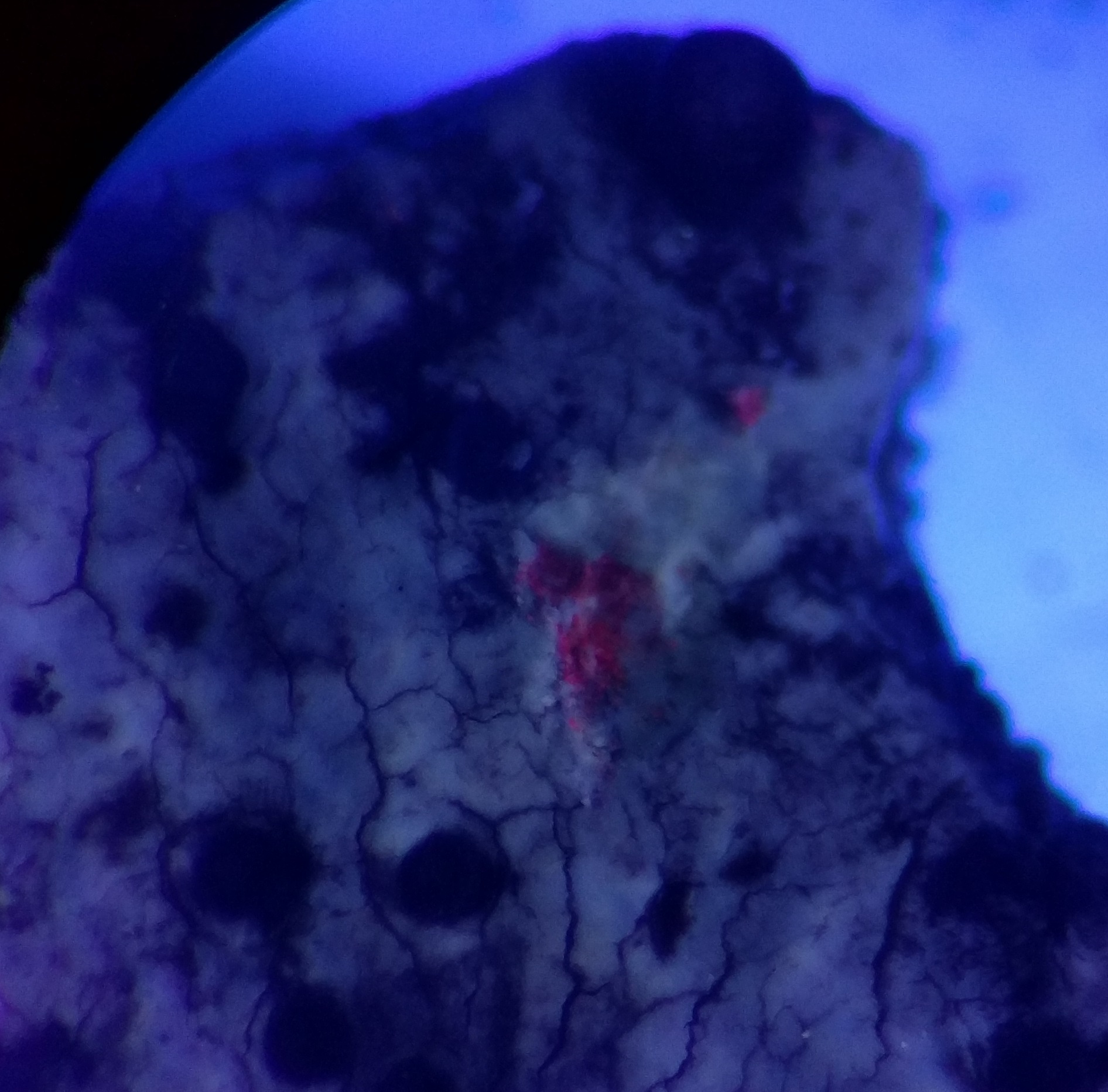
Mostly the species we saw were from the acidic bark lichen communities including Bryoria fuscescens, Sphaerophorus globosus, Ochrolechia tartarea, Ochrolechia androgyna, Dimerella pineti and Micarea stipitata. The Ochrolechia species allowed a demonstration of a useful chemical colour change where a drop of C (bleach) goes red. Mycoblastus sanguinarius was also common with red pigment visible beneath black apothecia. However some of this may turn out to be Mycoblastus sanguinarioides, only recently found in Britain, and distinguished by internal crystals which show up in polarised light under a compound microscope. It needs to be confirmed, but well done to Pete for taking a specimen and investigating.

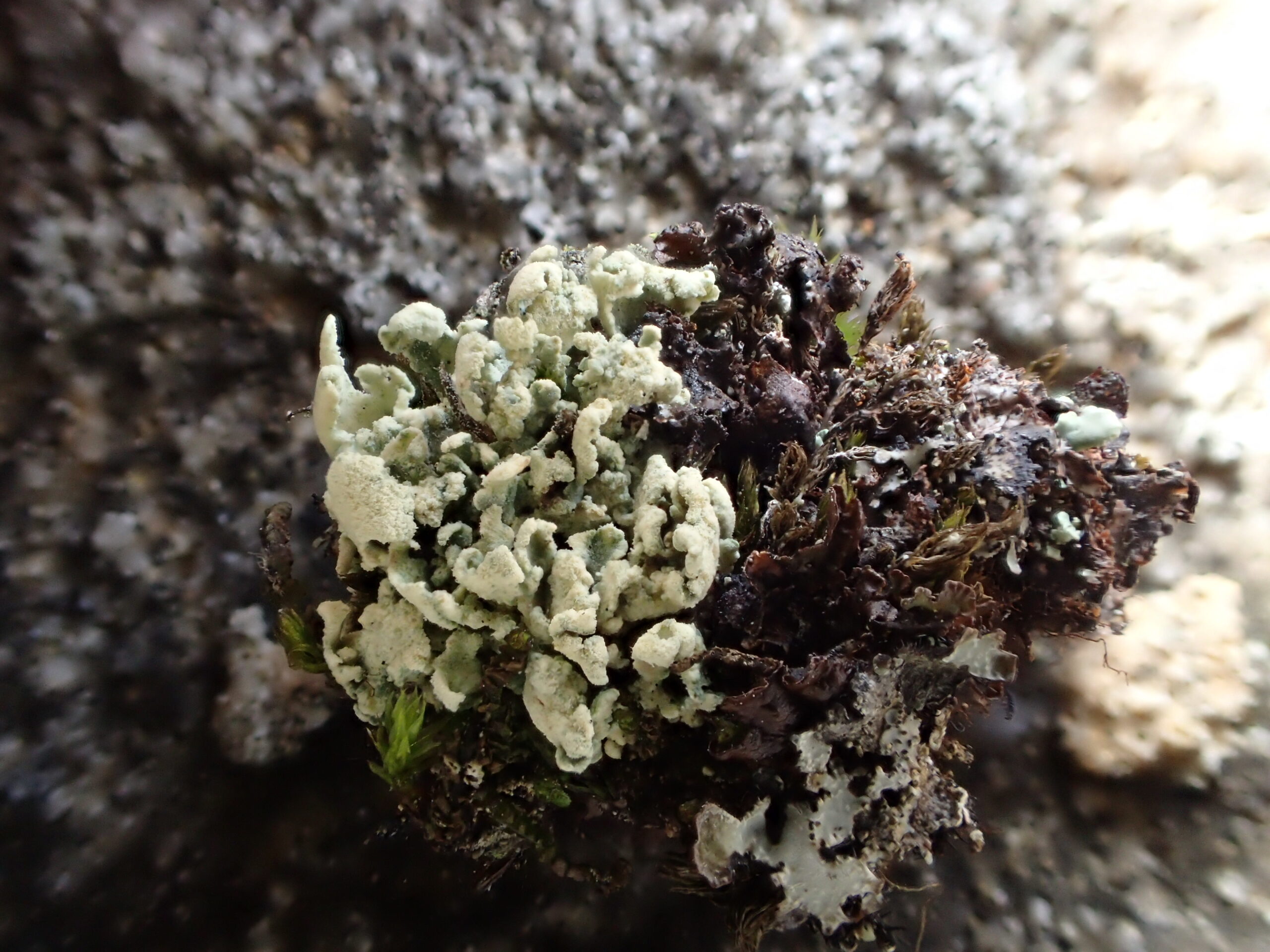
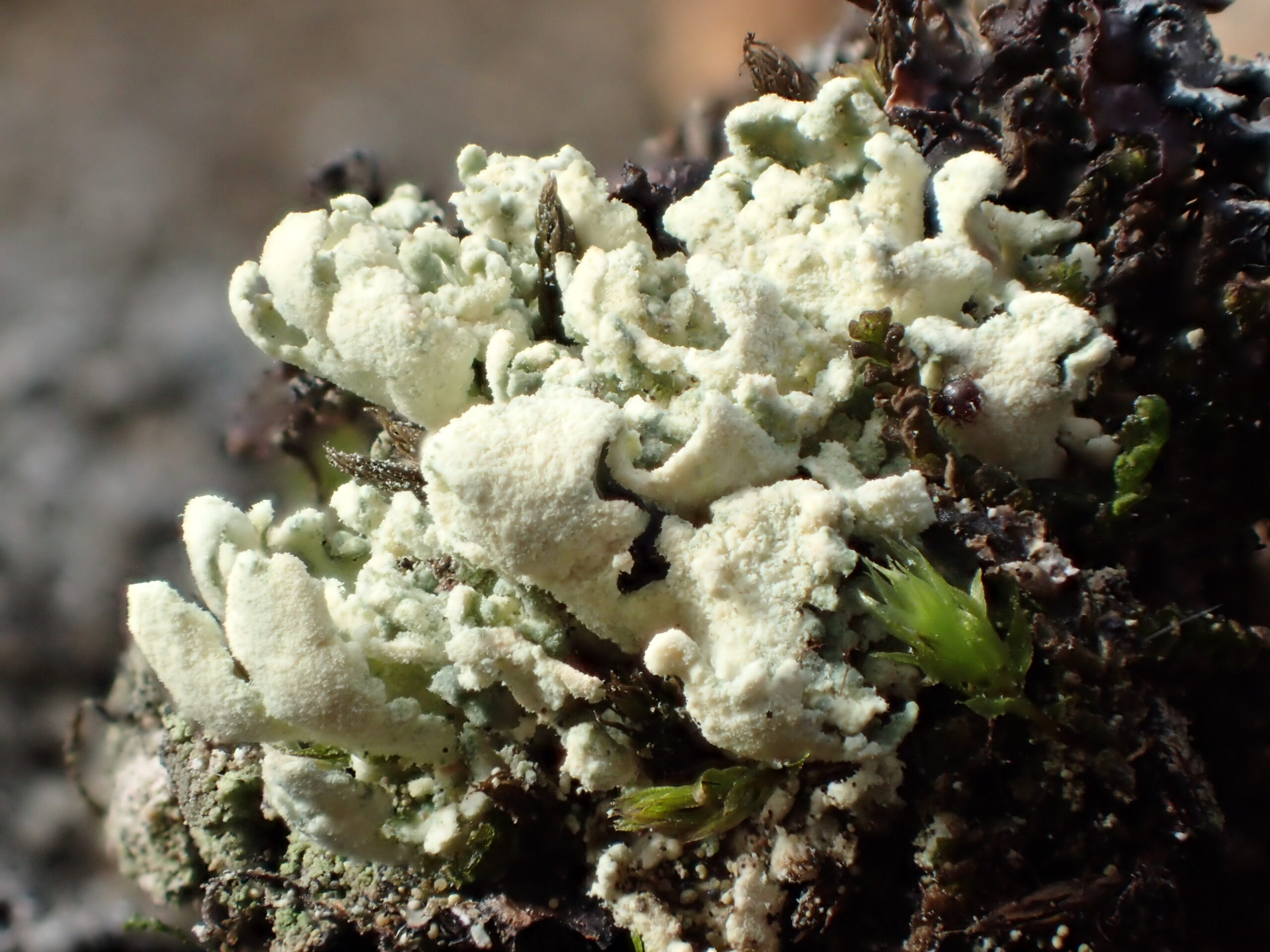
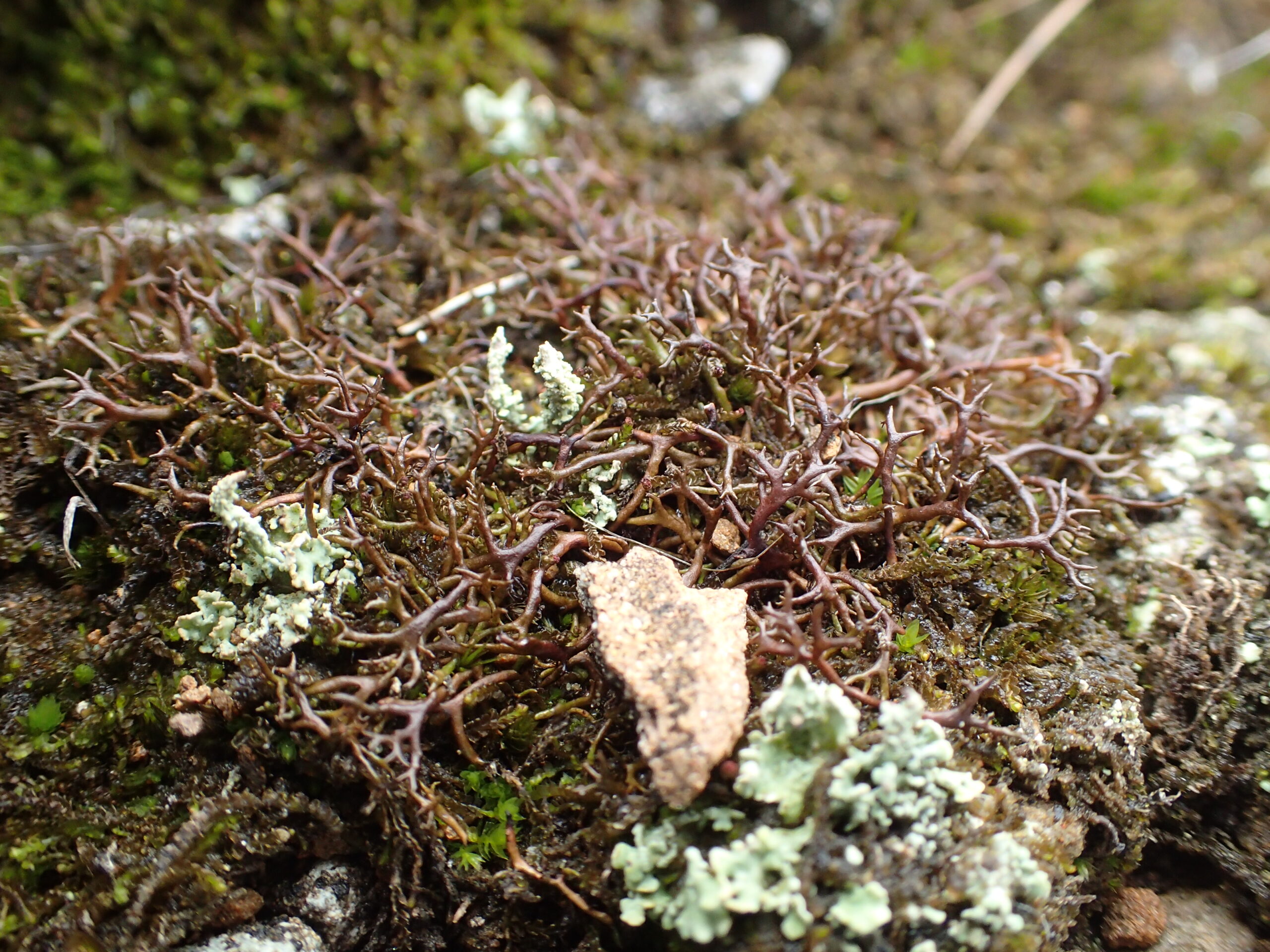
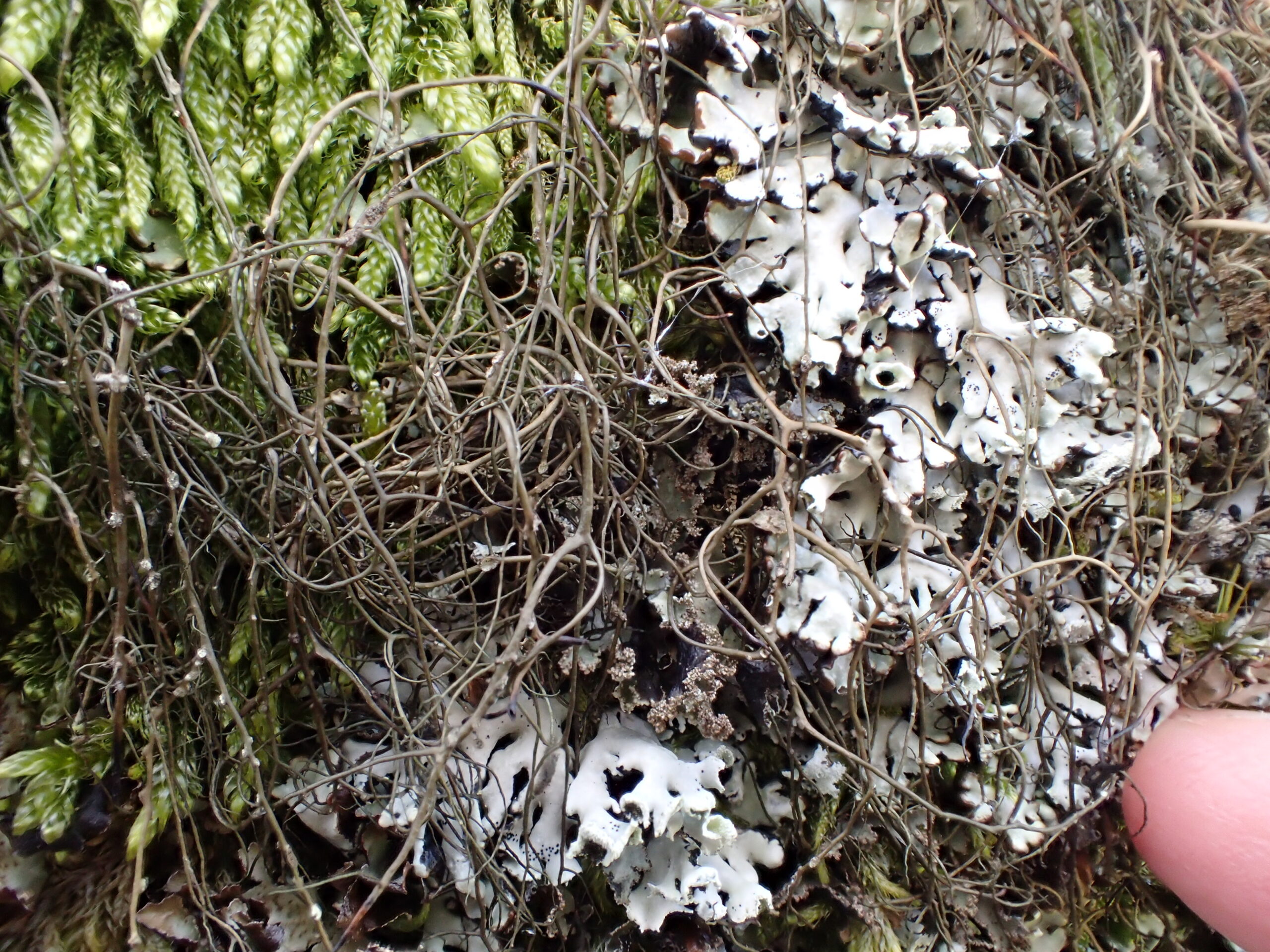
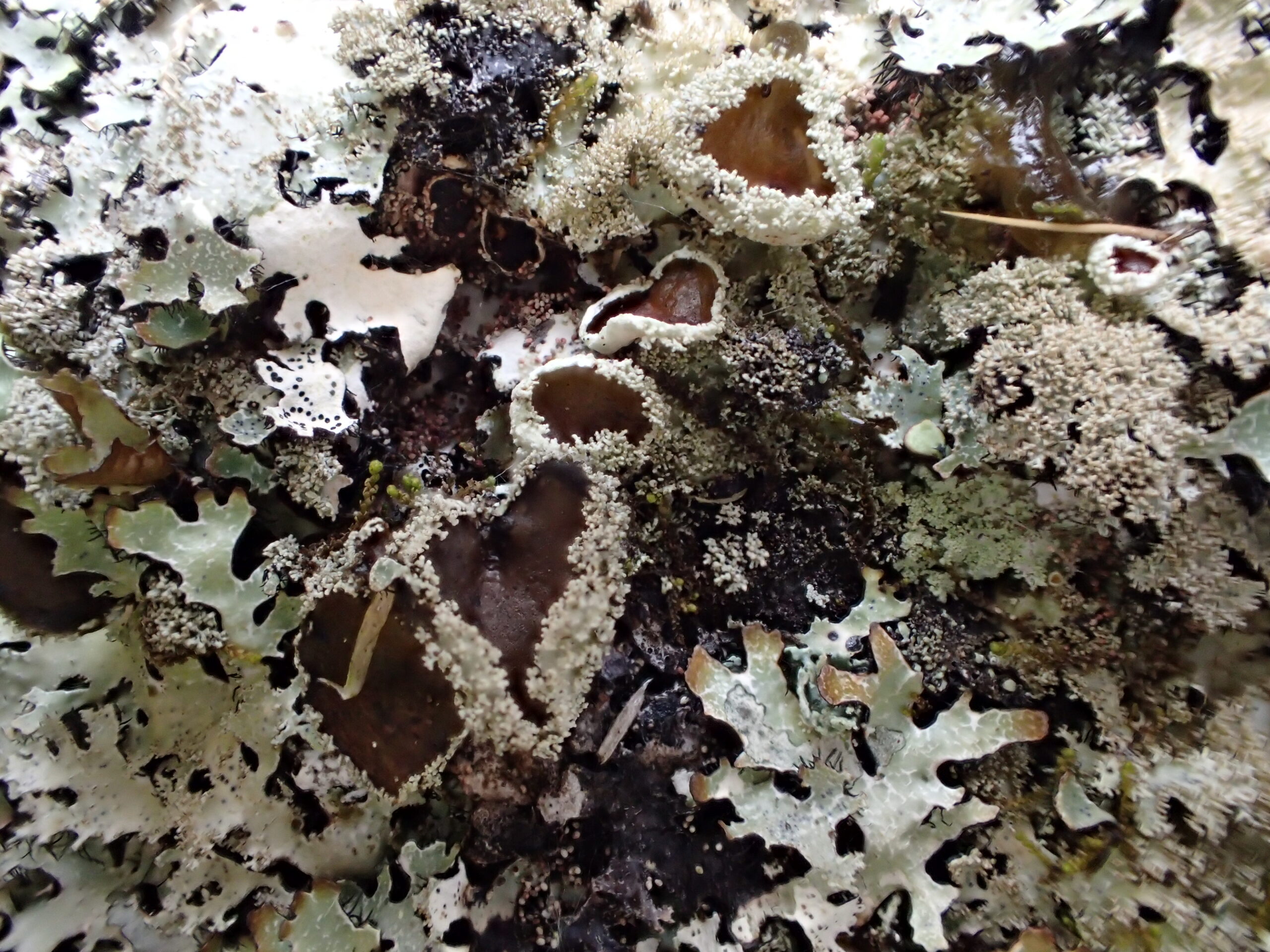
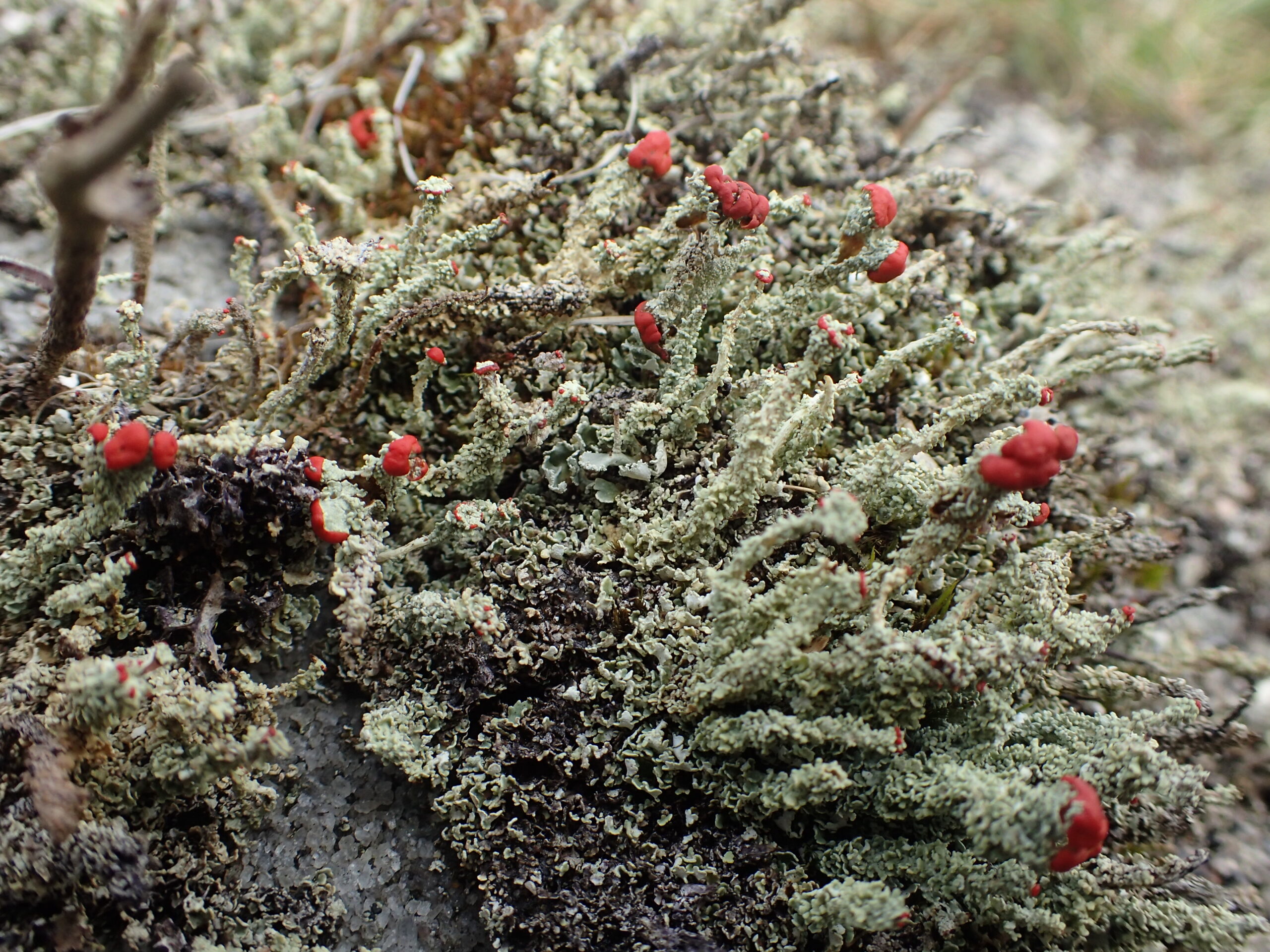
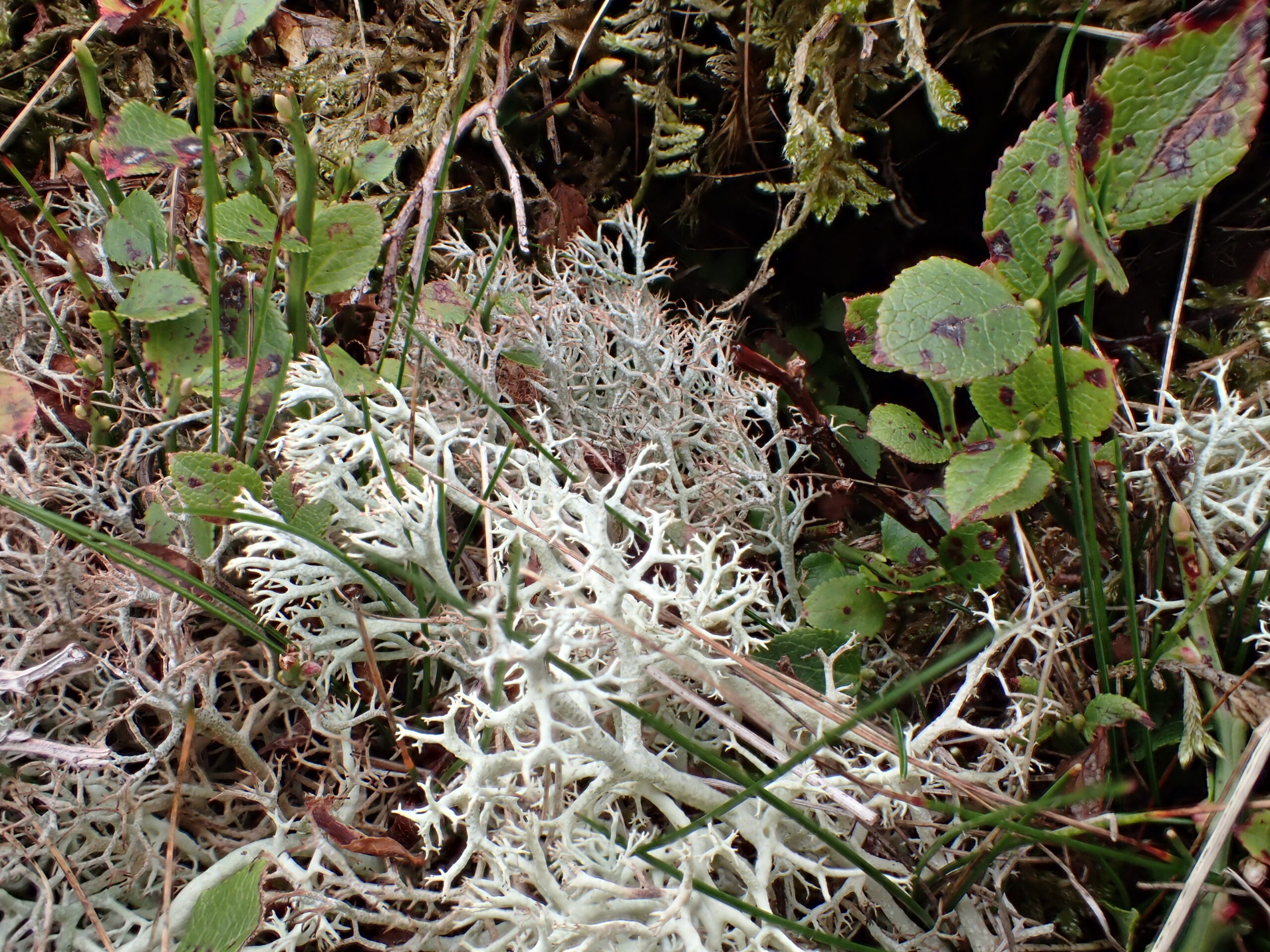
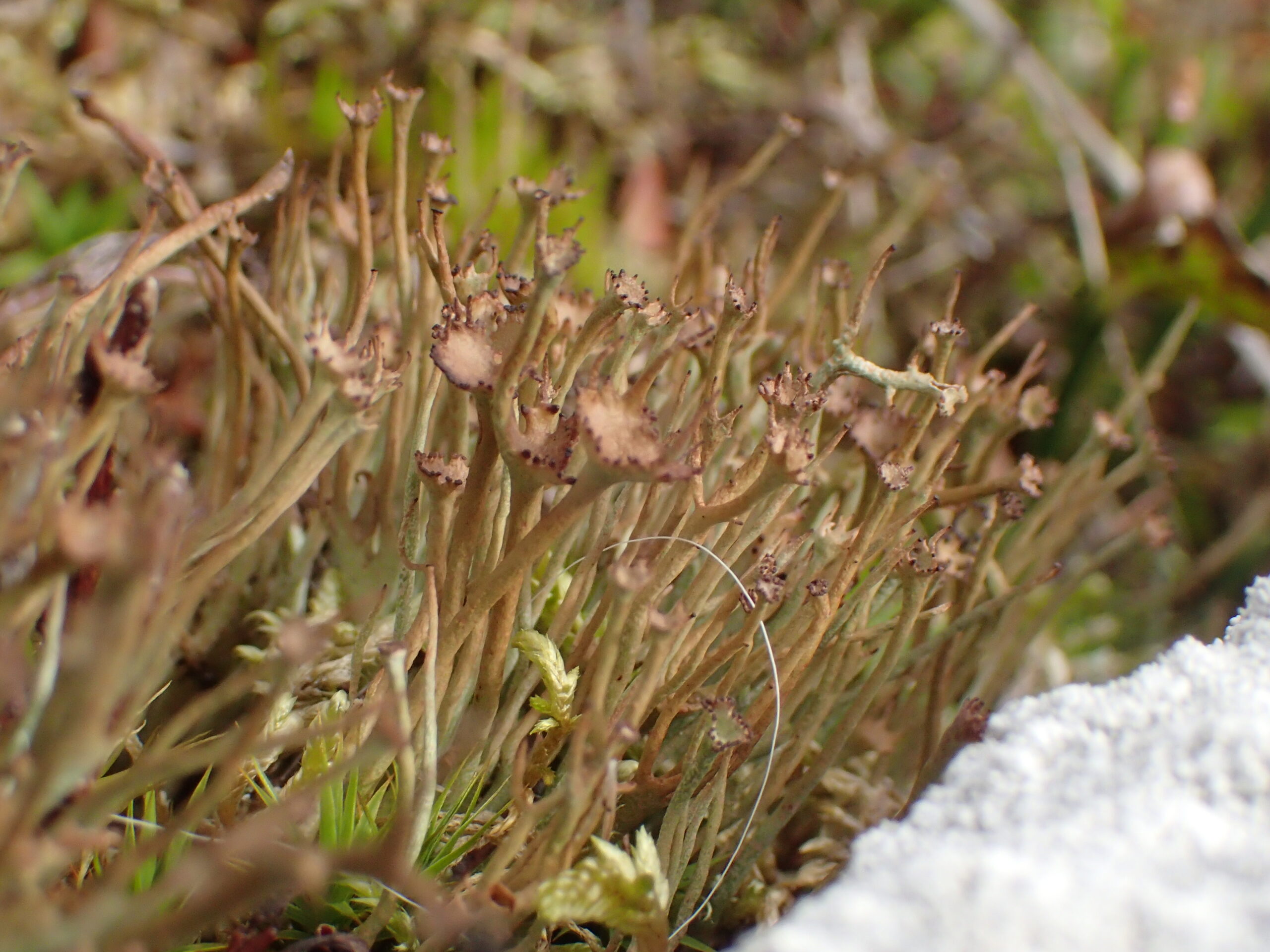
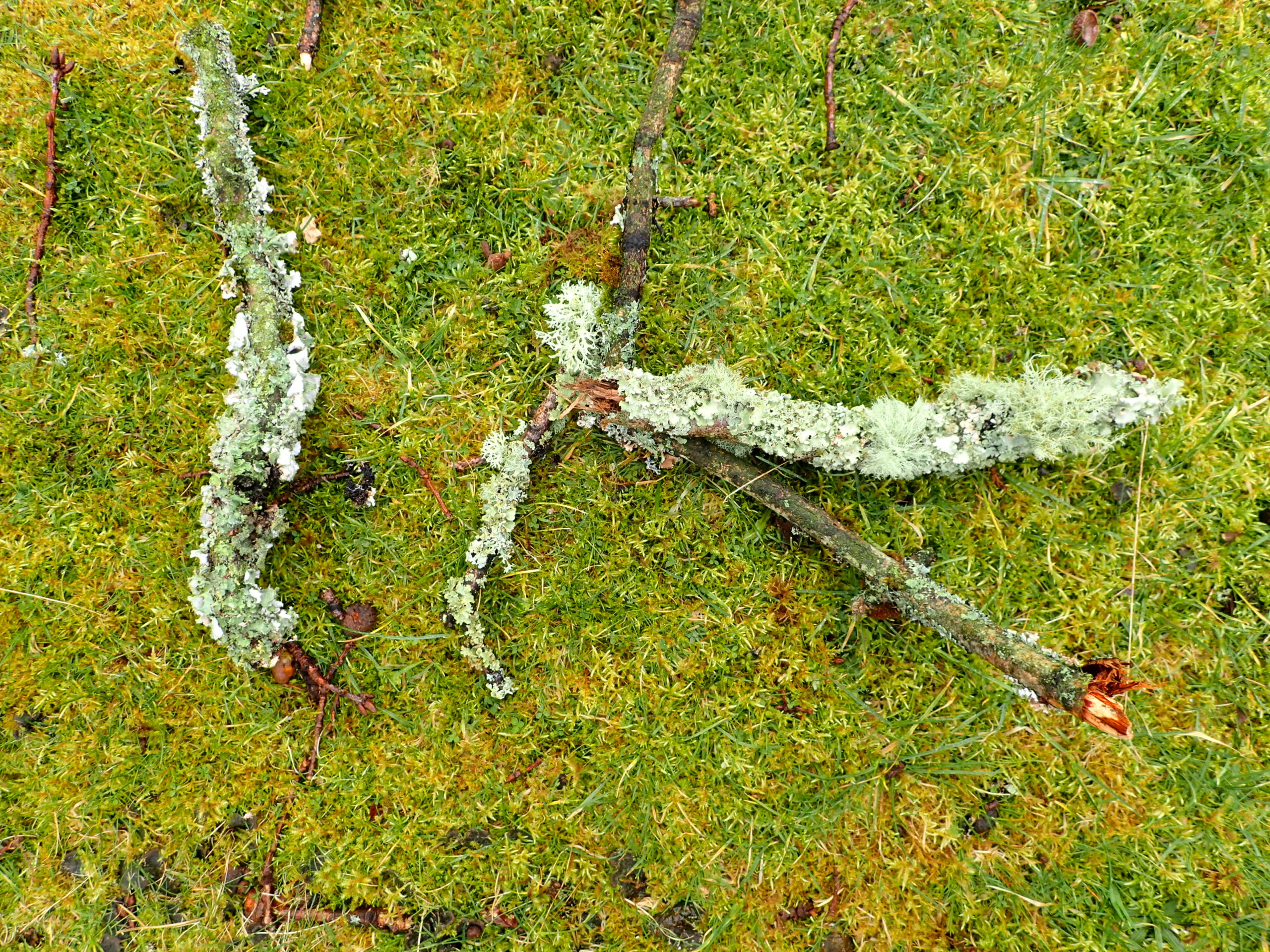
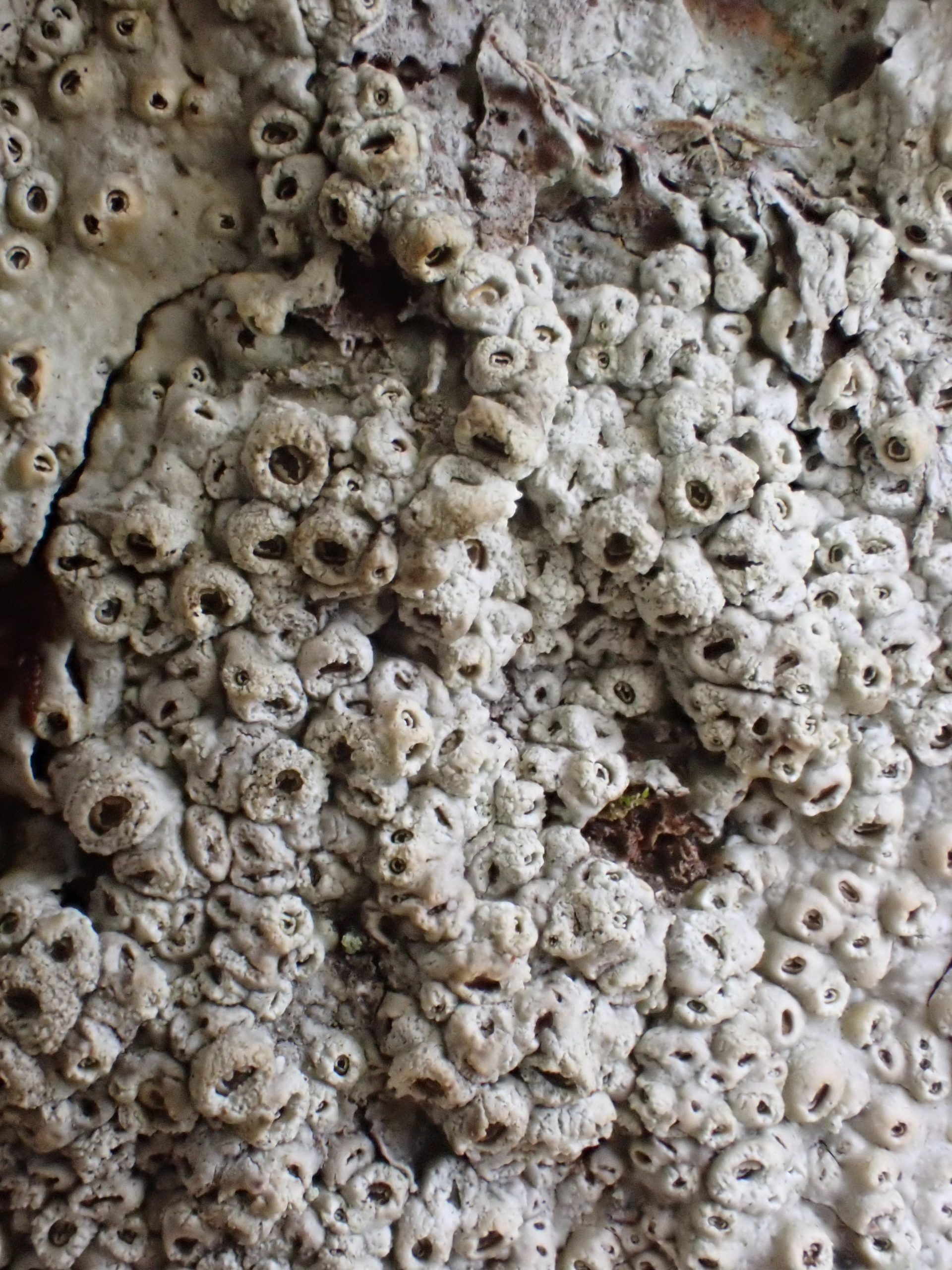
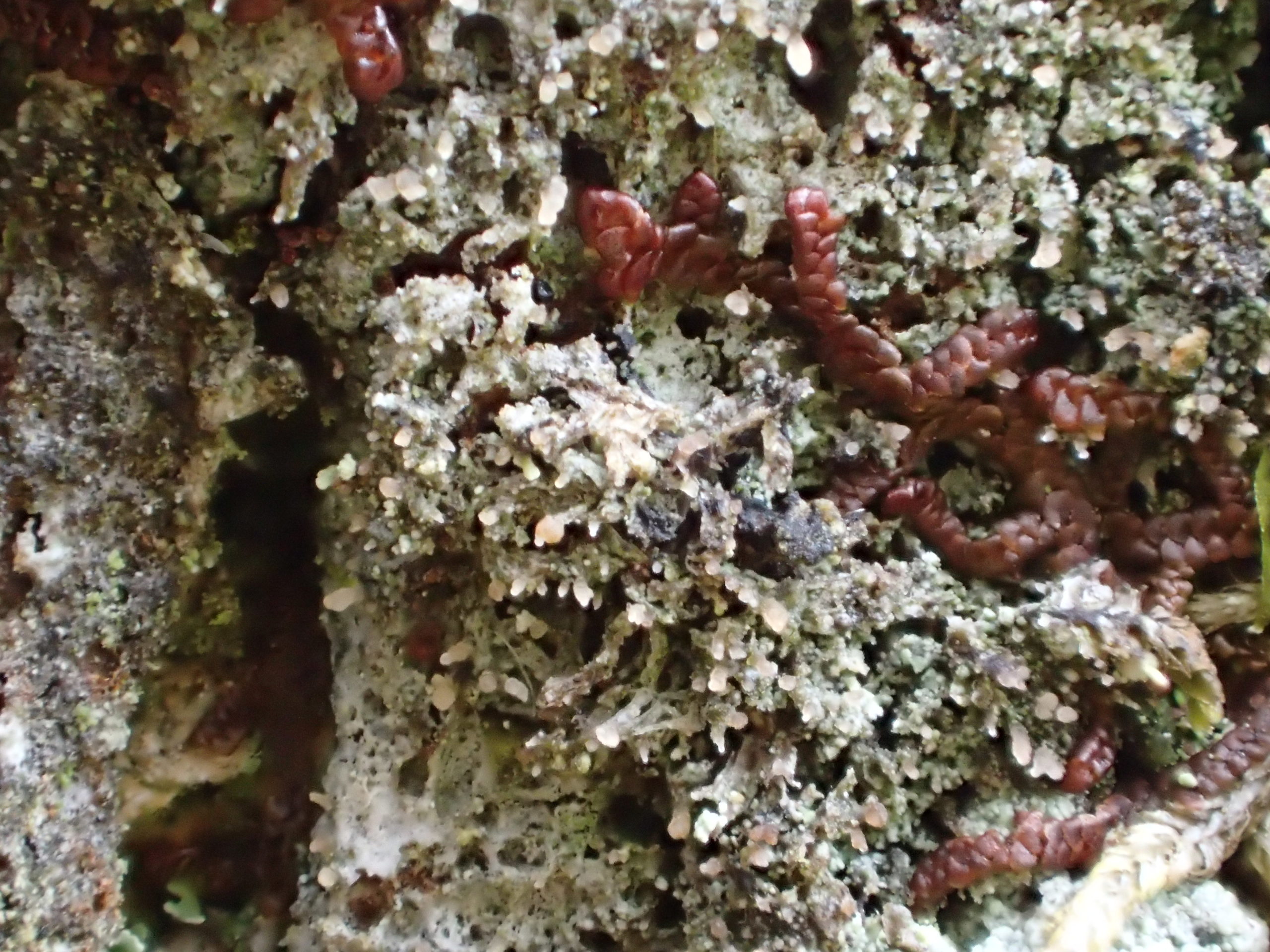
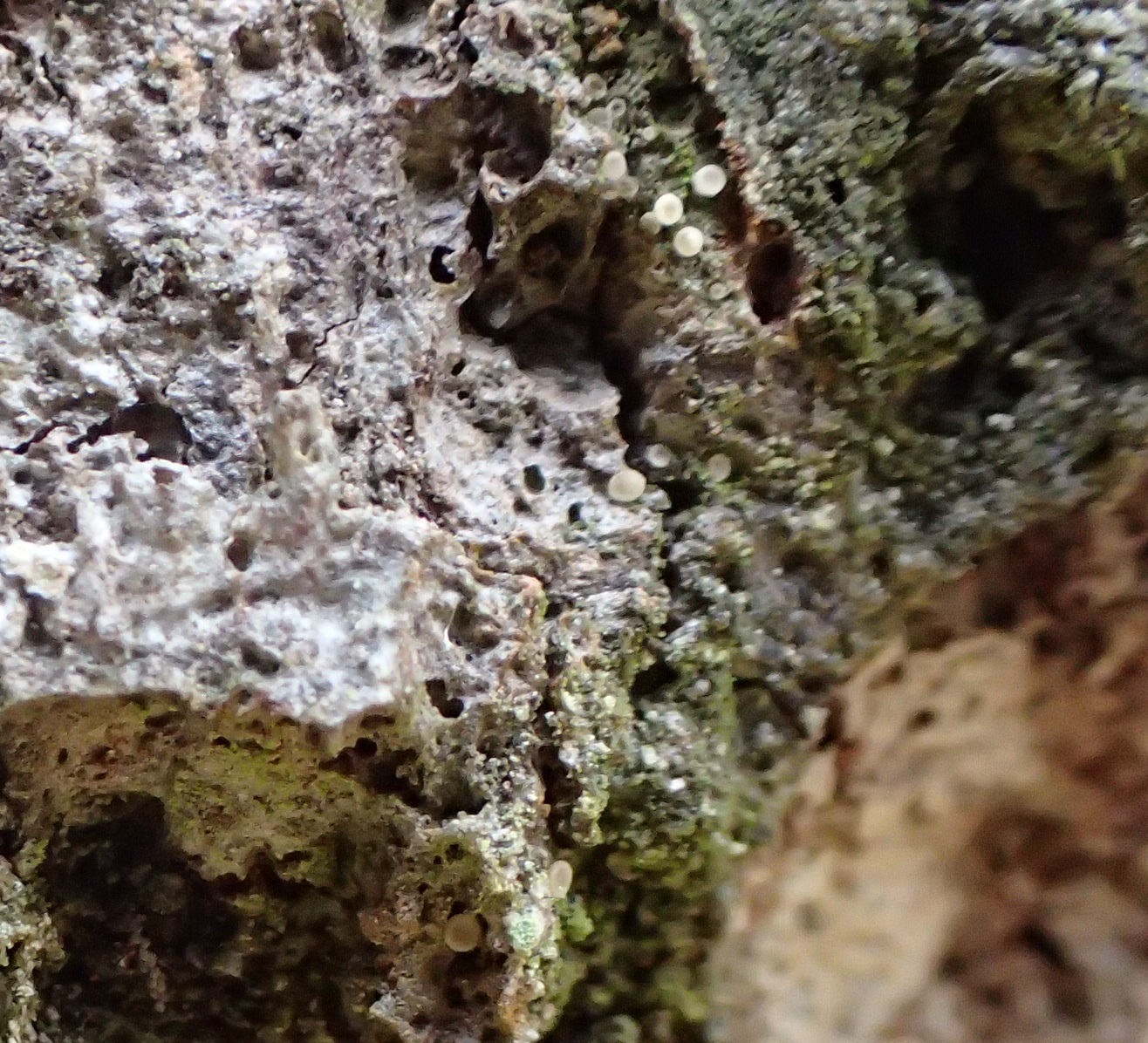
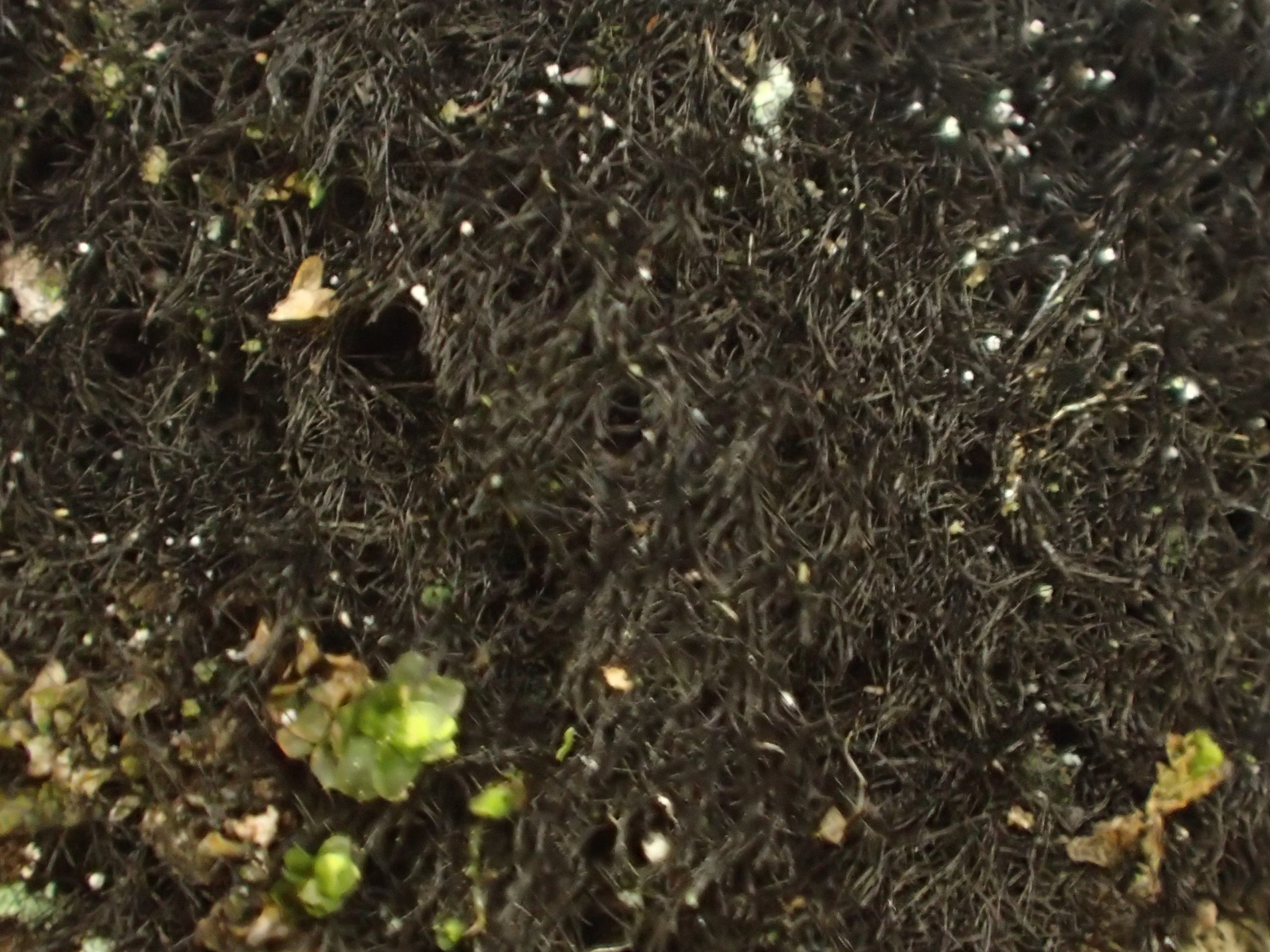
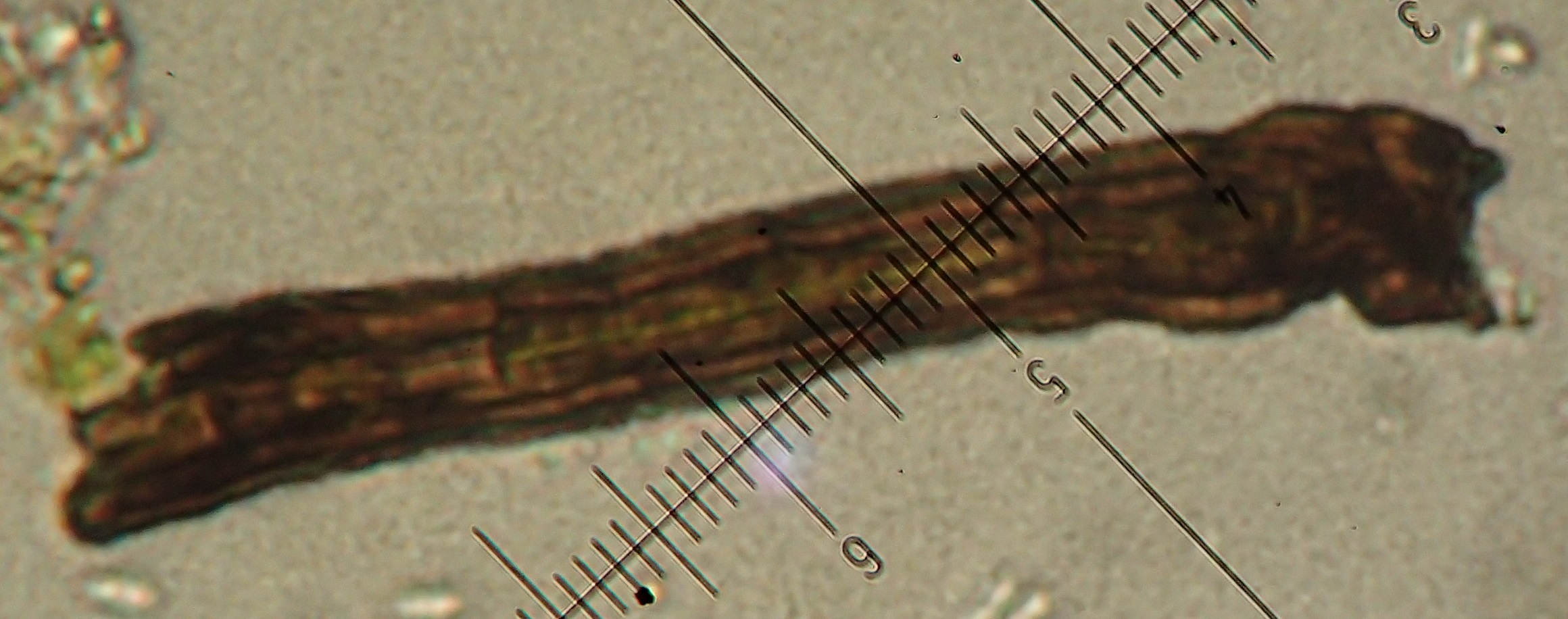
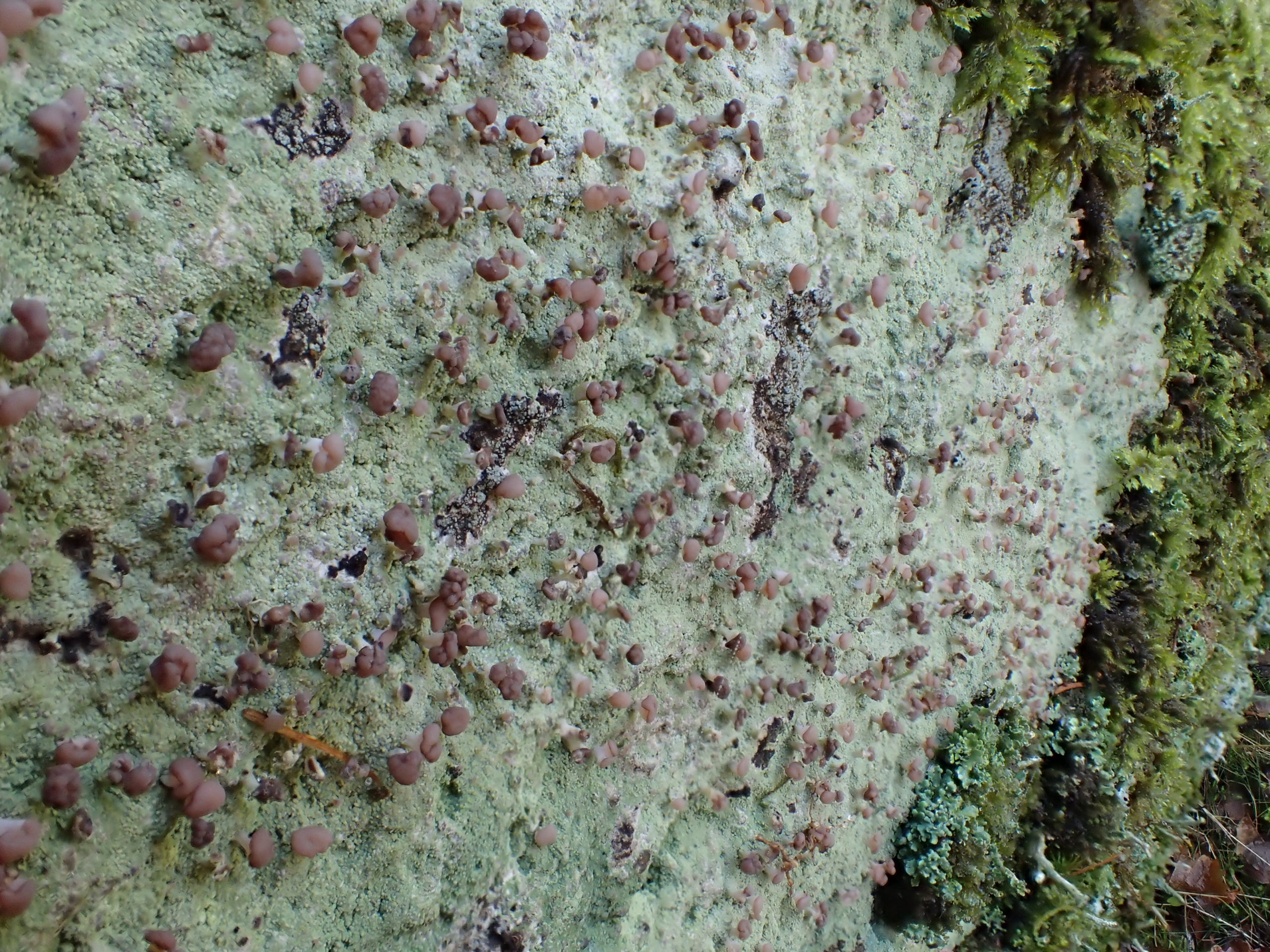
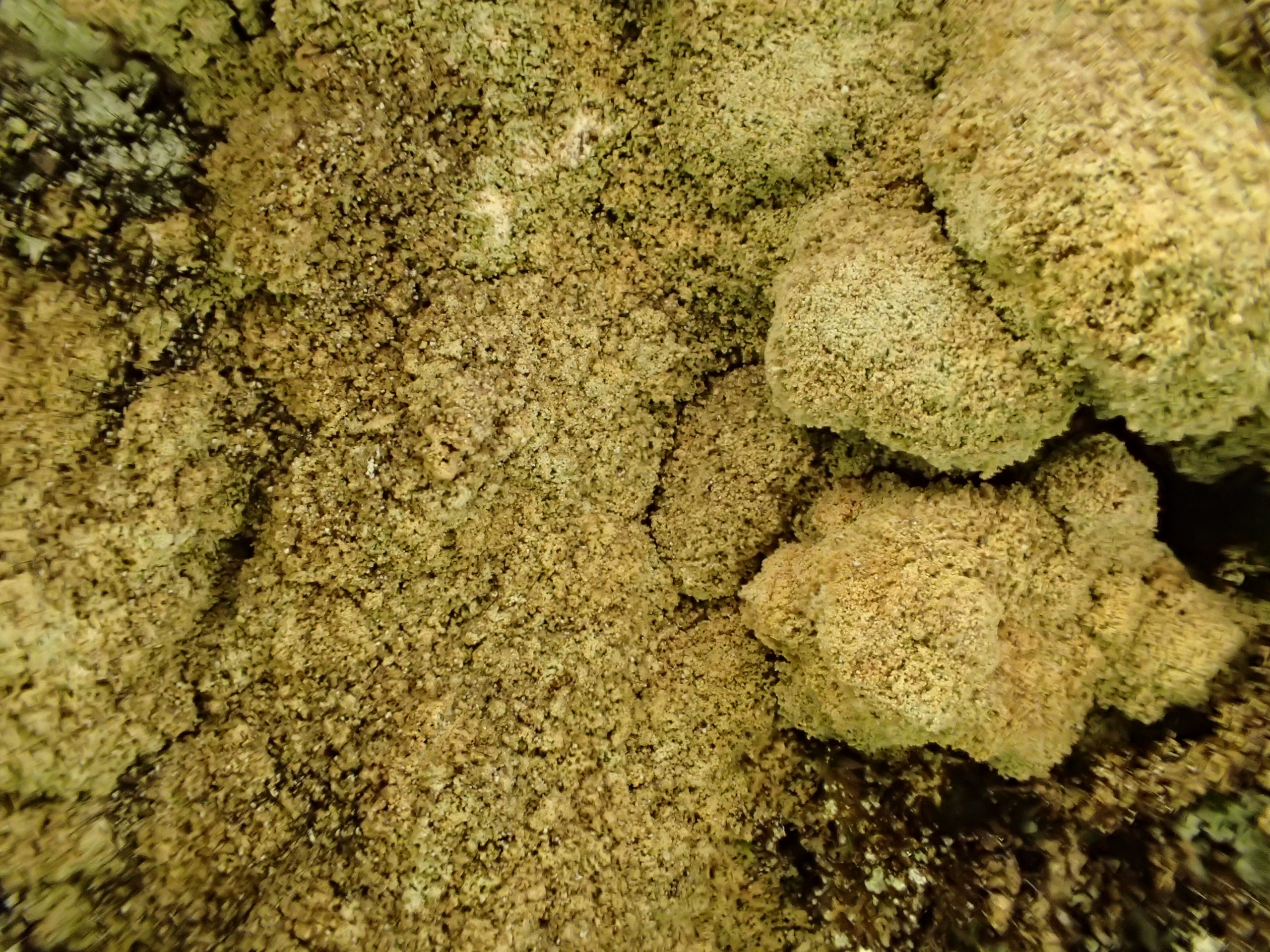
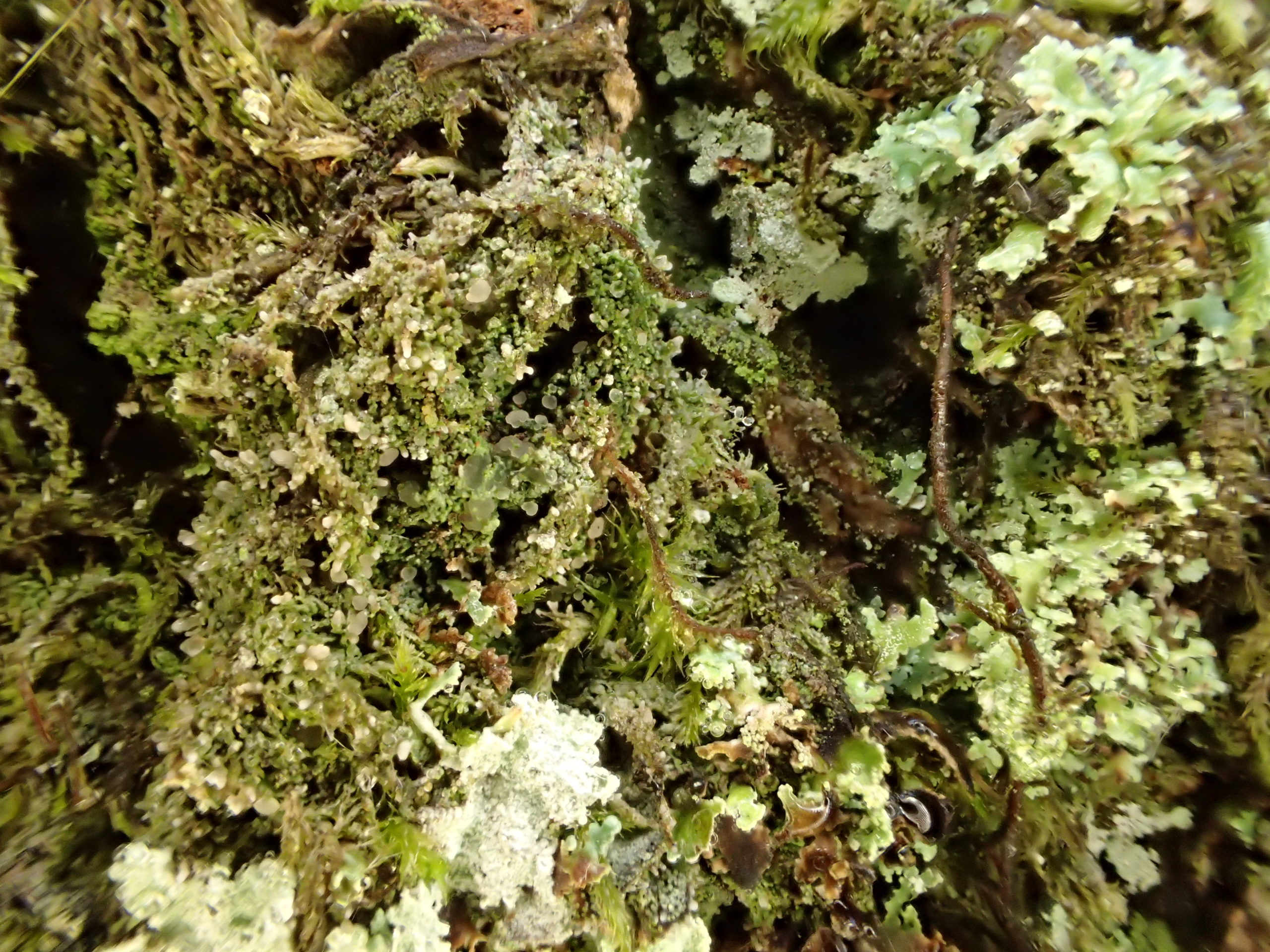
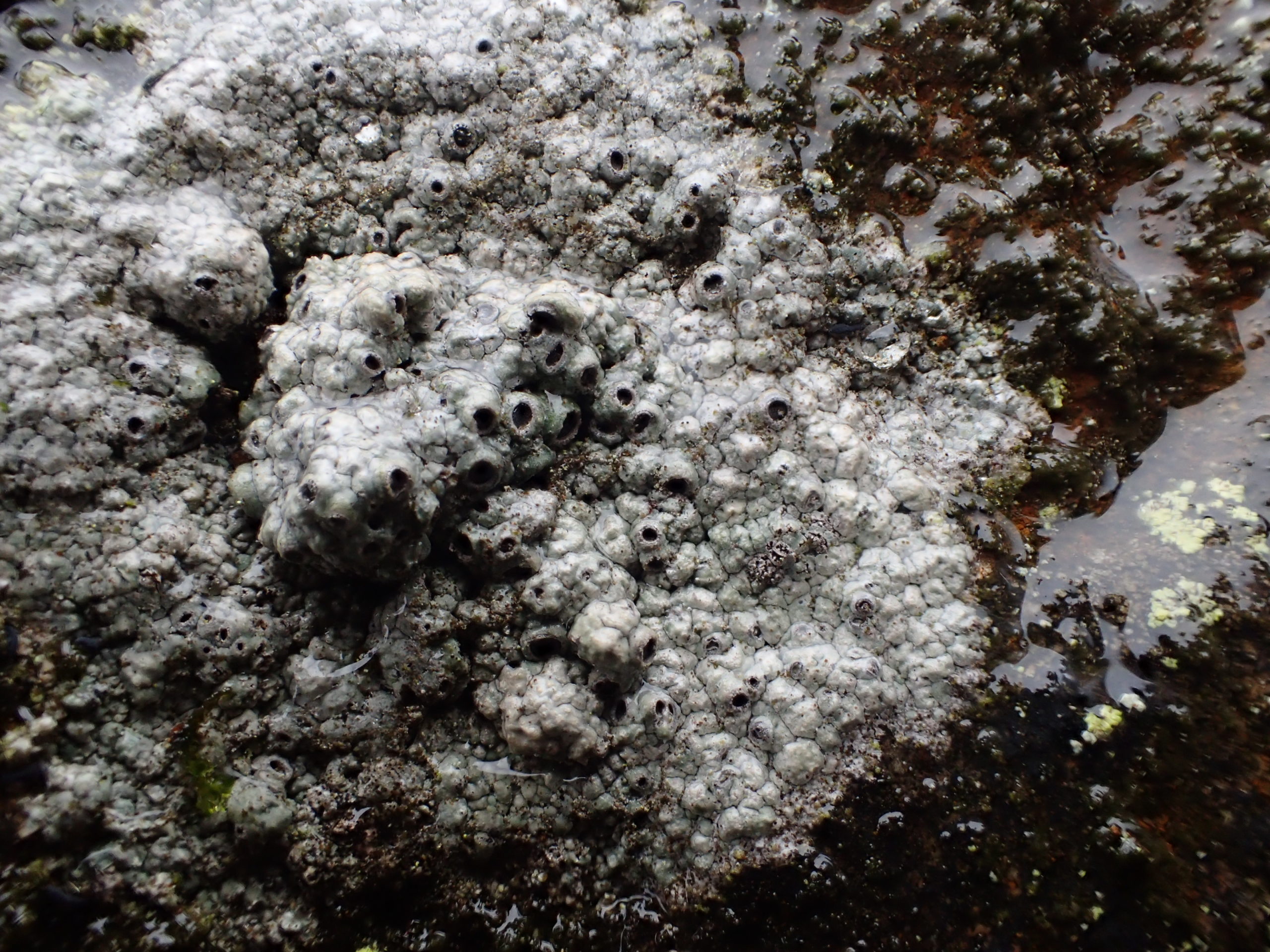
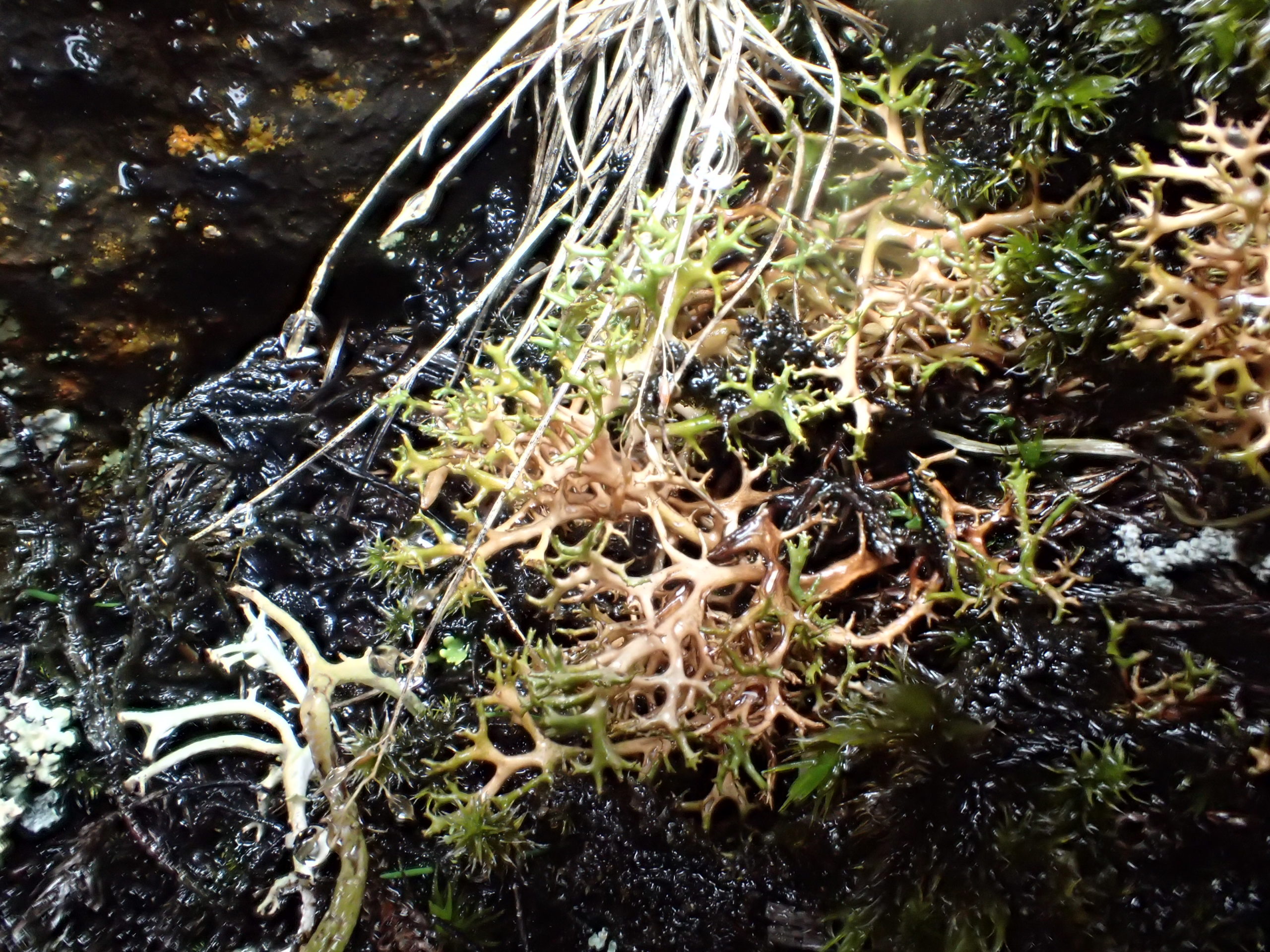
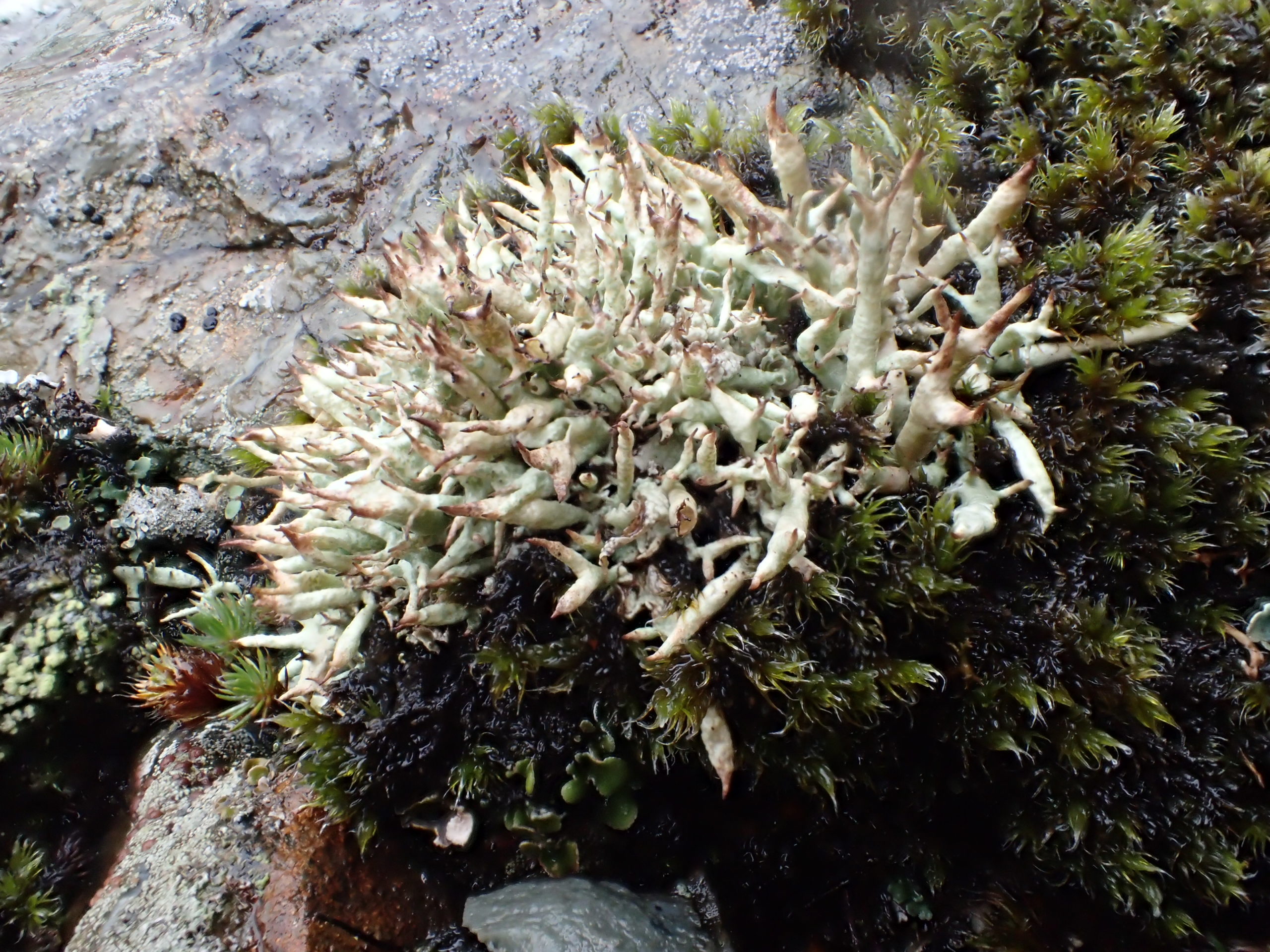
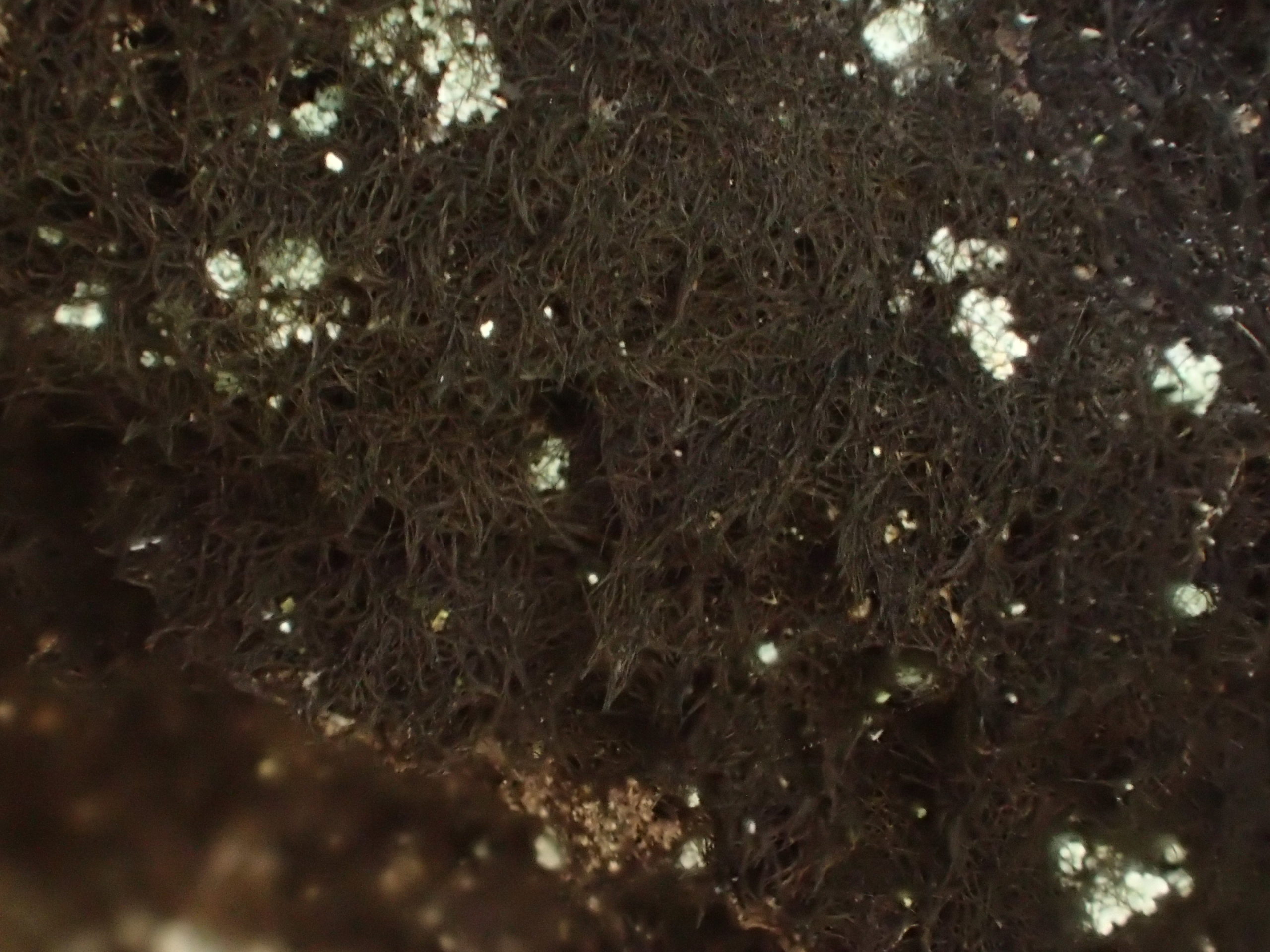
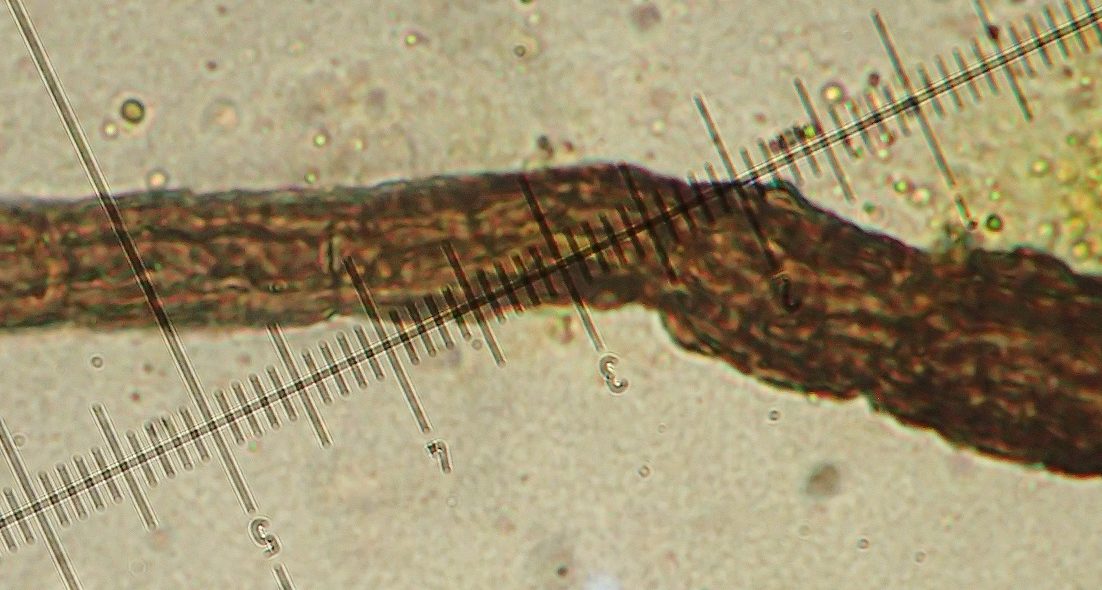
We also saw Thelotrema lepadinum, or barnacle lichen, which indicates good quality woodland, and black fuzz on mossy shaded rock which turned out to be two species, Cystocoleus ebeneus and Racodium rupestre. In a few spots twigs and small branches had blown down, allowing us to examine canopy lichens. There was a fair amount of head-scratching over assorted Cladonia species, in corticolous, saxicolous and terricolous habitats, with Pete finding cool Cladonia caespiticia showing fruiting bodies on short stalks. Other terricolous Cladonia were the richly-branching C. portentosa, C. arbuscula and C. ciliata and there were a couple of sightings of the interesting Trapeliopsis pseudogranulosa overgrowing decaying moss and vegetation with orange and yellow-green granules.

On the way back to the car park there were a few hazel trees which yielded some alkaline bark species, not seen before. Hazels were notable for their absence in the Moss Mire area, perhaps because the rock, therefore soil, is acidic. However there was very little tree regeneration there of any species, or indeed herbaceous flora, which is a sure sign of heavy grazing and, long term, leads to the death of the woodland. This is very much in the news now – how best to regenerate oceanic woodland in the UK? Deer fencing can mean no browsing at all which some lichenologists dislike as tall ground flora and eventually saplings adversely affect lichens on trunks by shading them out. Alternatively a site could be managed for light grazing which allows some natural tree regeneration – but this means major deer culling and only a small number of livestock which could be an effort to monitor etc.

This was a great day with lots of lichen chat, skill sharing, looking and learning.

Caz Walker. Photos: Chris Cant, Pete Martin, Ann Lingard

Categories
Lichen Trip report

Great How trip report 18-12-2021

Great How is a small (c330m) but imposing hill at the north end of Thirlmere – map. It’s part of the Thirlmere Woods SSSI, designated for Atlantic bryophytes, with a mix of oak, hazel, birch and ash trees. It was last assessed by Natural England in 2009 when its status was “Unfavourable-Recovering”. Almost all the woodland around the reservoir is non-native conifer plantation but three fragments of old broadleaved trees remain to make up the SSSI. There are ongoing efforts to remove exotic conifers from these woods.

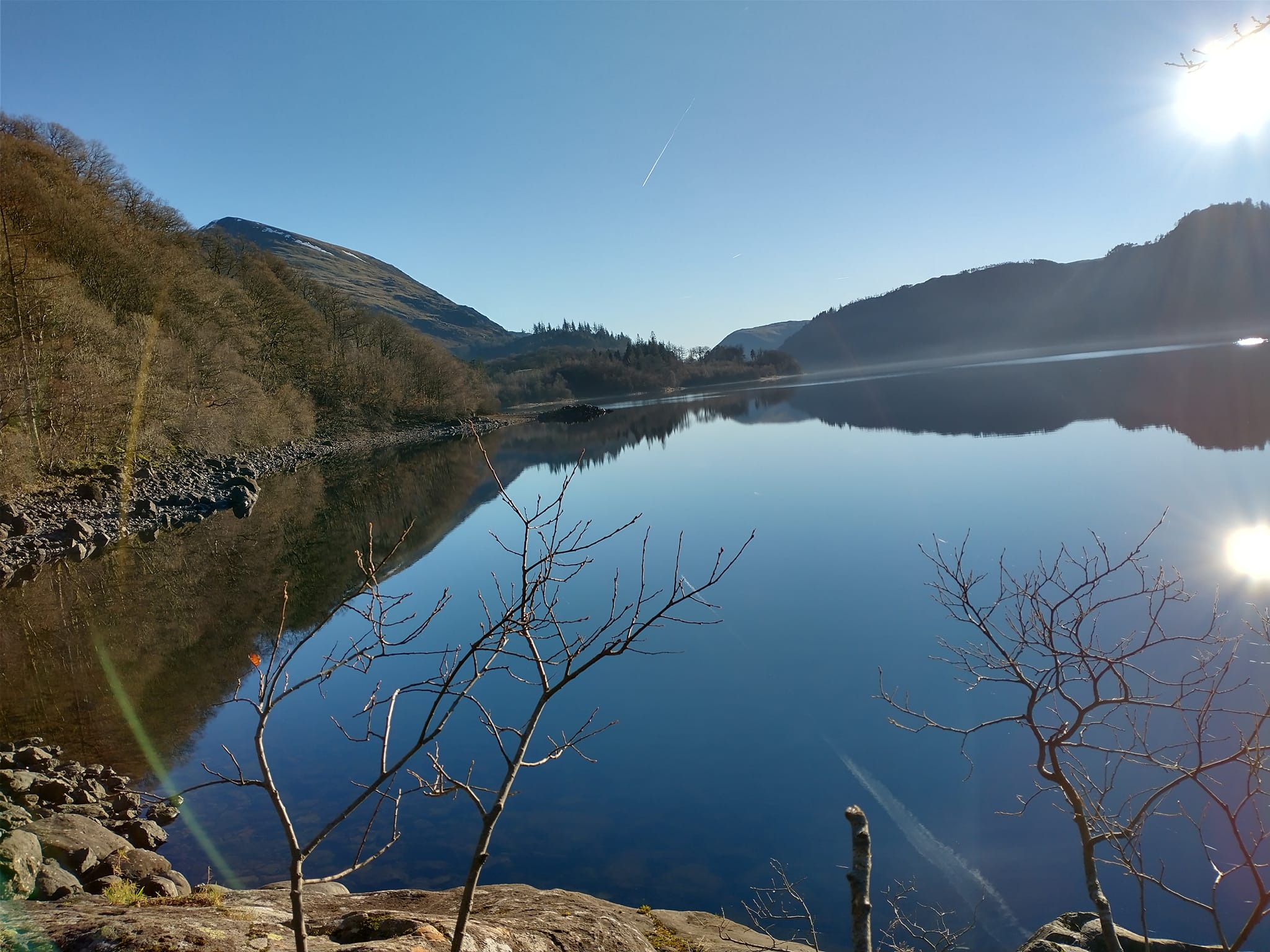
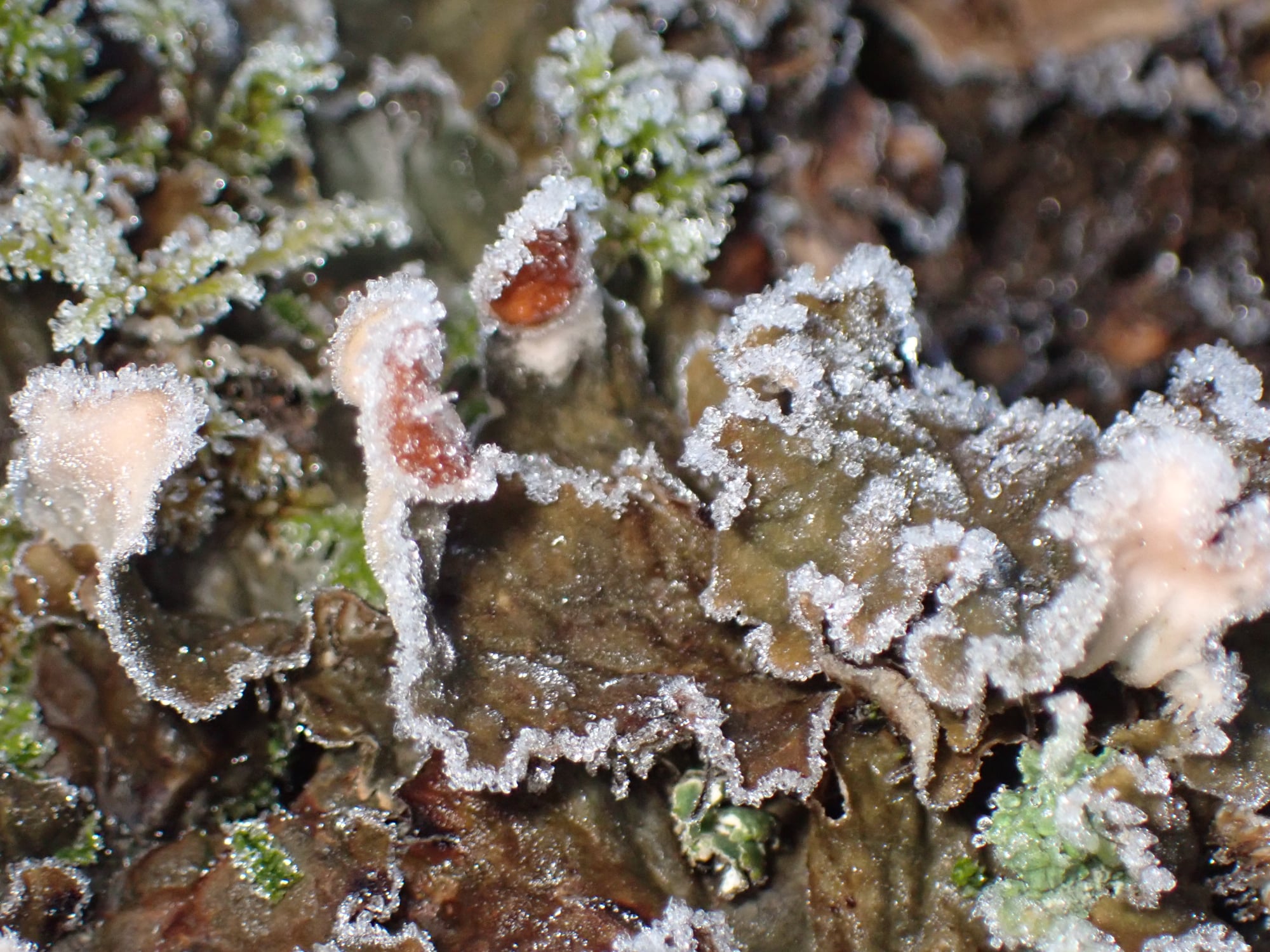
Our route left the minor road by the Thirlmere dam where a footpath skirts the western side of the hill. For once the weather was kind to us – when benign it allows everything to be seen much better in the field, not to mention the enjoyment/comfort factor. The day dawned very cold with frost encrusting the sheets of Peltigera praetextata we saw at the start on the north-facing wall by the road but the mist burned off (it really did) and by lunchtime, when we made it to a south-facing point looking down Thirlmere, it was positively balmy in the sun.

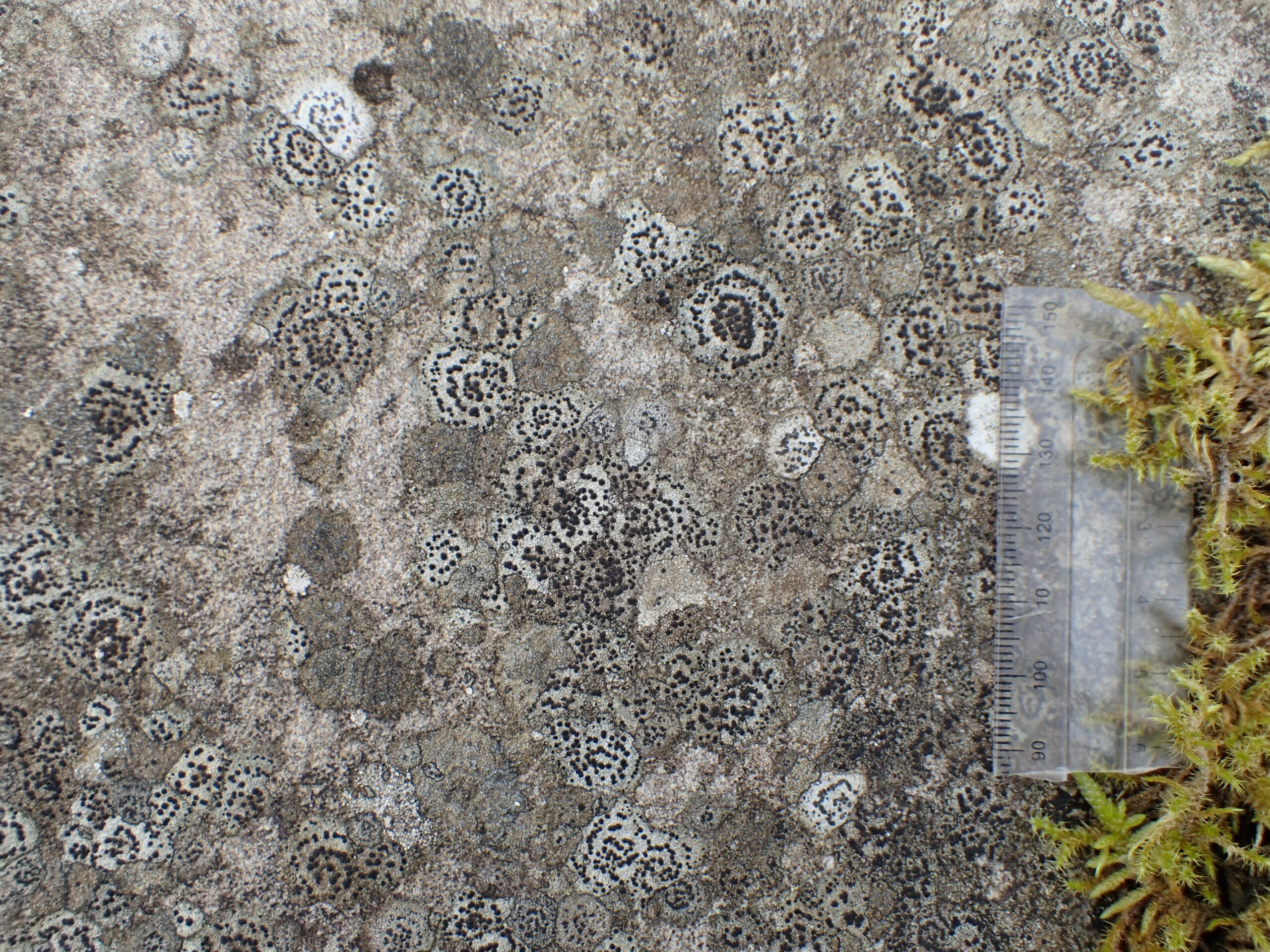
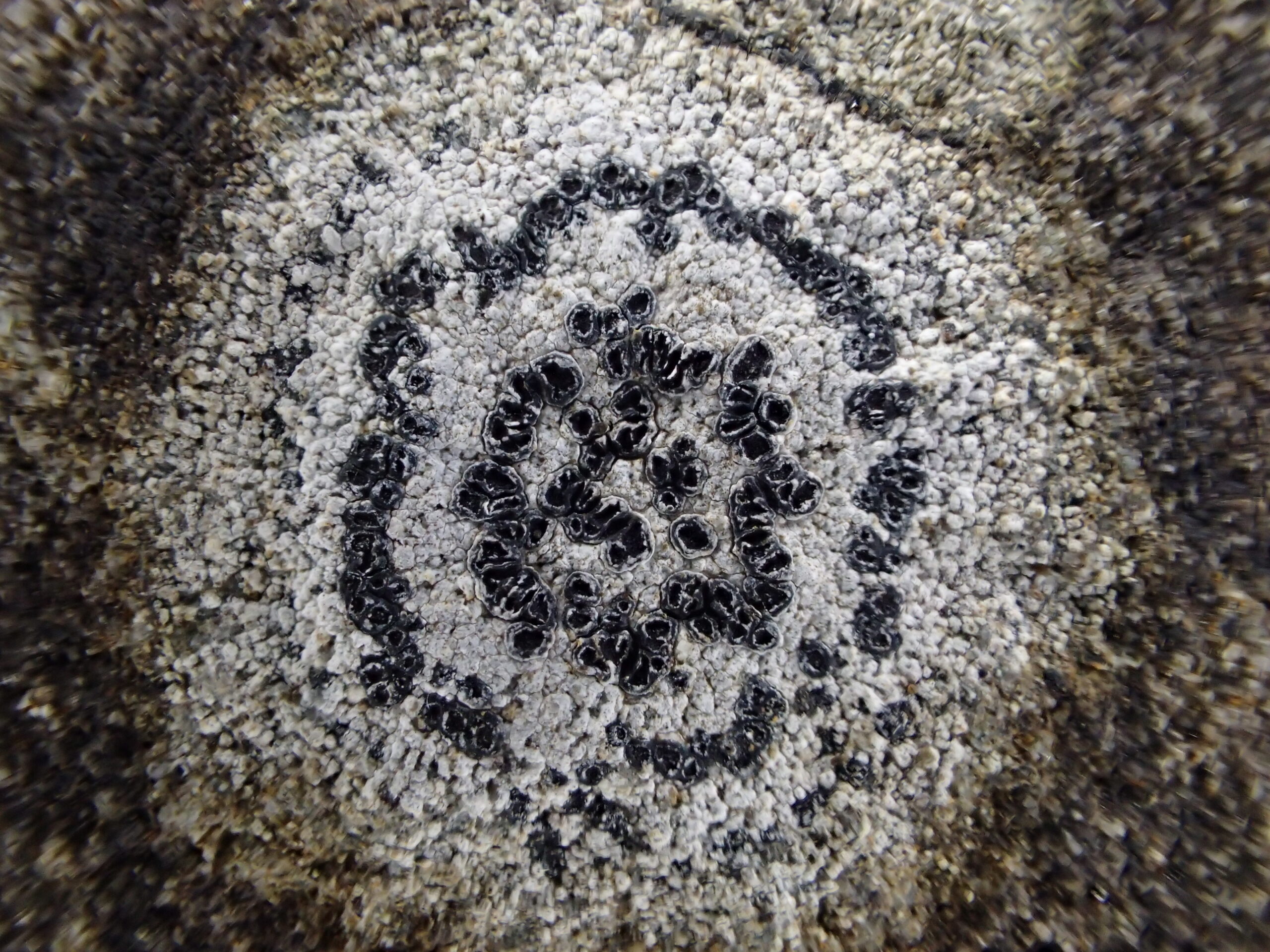
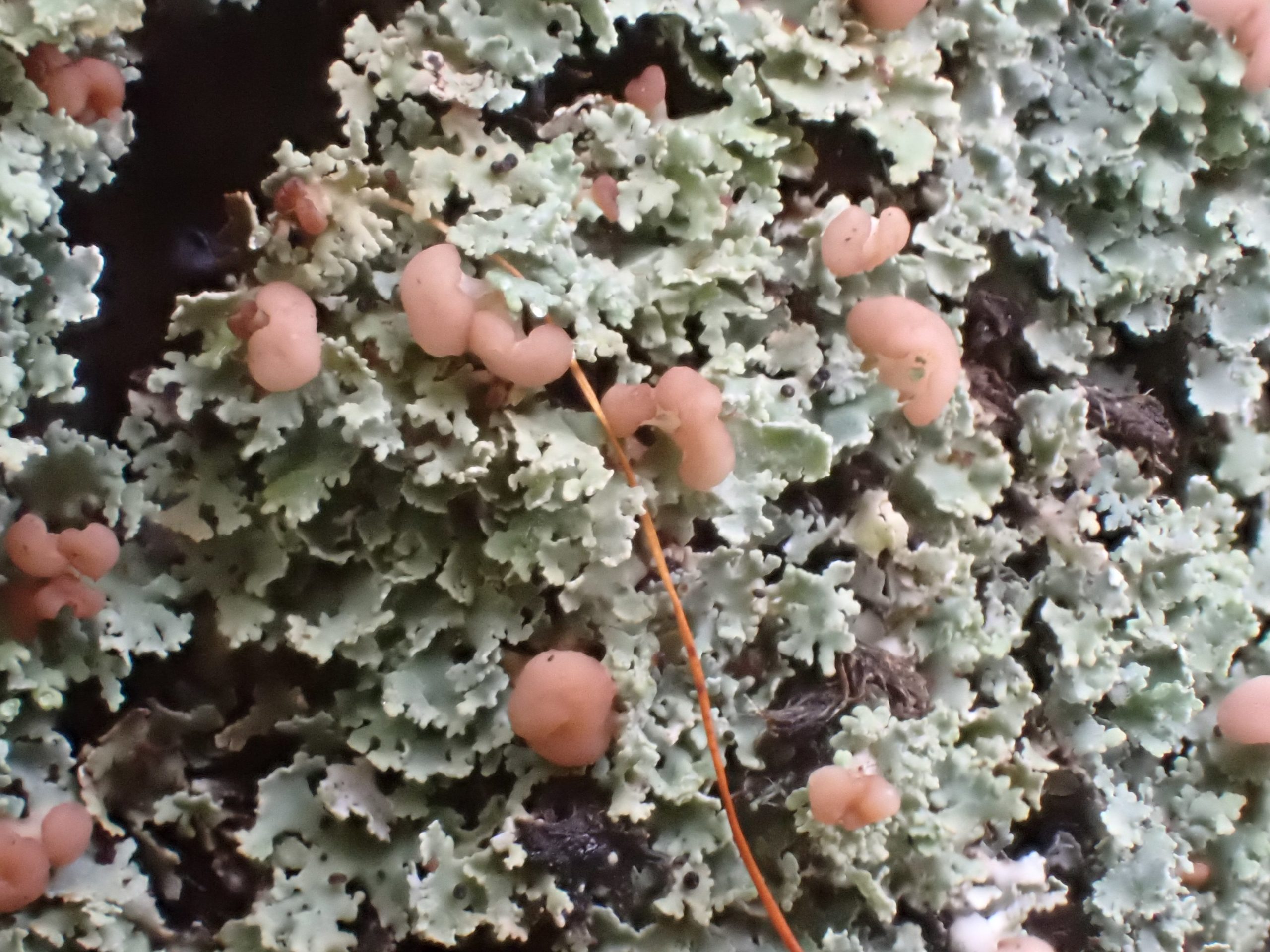
Recent stormy weather had brought many canopy lichens down to the ground for easy viewing so a good range of common acidic bark species were examined. This was great for showing the diversity of lichen morphology to the keen beginners who’d come along. The path skirted some intermittently damp rock faces with interesting crustose species, including the common Baeomyces rufus with pink-brown “mushroom” fruiting bodies, Lepraria membranacea in drier recesses (powdery, yet forming marginal lobe-like structures with upturned rims), red and purple-brown mosaics of Opegrapha gyrocarpa and Enterographa zonata, and a possible example of the rarer Schismatomma umbrinum with a pale brown scurfy crust breaking down into soredia. Close examination of oak trunks nearby revealed a tiny species growing over moss with minute isidia-like structures. Looking under the microscope later these turned out to be pycnidia and we were able to identify this as Micarea stipitata.

As we got further round the base of the hill the slope above became more gentle so we decided to leave the path and head directly up, examining trees as we went. This was a good move as Cetrelia olivetorum, Arthonia vinosa, Lopadium disciforme and Pachyphiale carneola, the latter on hazel, were found here. After rejoining the track below the summit we refound the copious Bryoria fuscescens seen on our earlier recce, though sadly the old oak had been brought down in the storms. Also near here were Mycoblastus sanguinarius, good quantities of Sphaerophorus globosus and beautiful clear grey-blue patches of Hypotrachyna laevigata, all indicating acidic bark.

There was a total for the day of 68 species. We didn’t visit the steeper areas on the north side of the hill where no doubt further lichens could be found. The east side is mainly a beech plantation and large parts of Great How have in the past been planted with exotic conifers, now slowly being removed with evidence of recent native tree planting. The remaining fragments of good quality old oaks on the western side are a sad reminder of what the wider Thirlmere woods might once have been like before the Sitka monoculture we see today. Hopefully they will survive to help regrow a future oak forest.

Caz Walker
Photos: Pete Martin, Judith Allinson, Clare Shaw and Chris Cant

Judith Allinson’s blogpost about the field trip.

Categories
Lichen Trip report

Coniston Coppermines trip report – 17-10-21

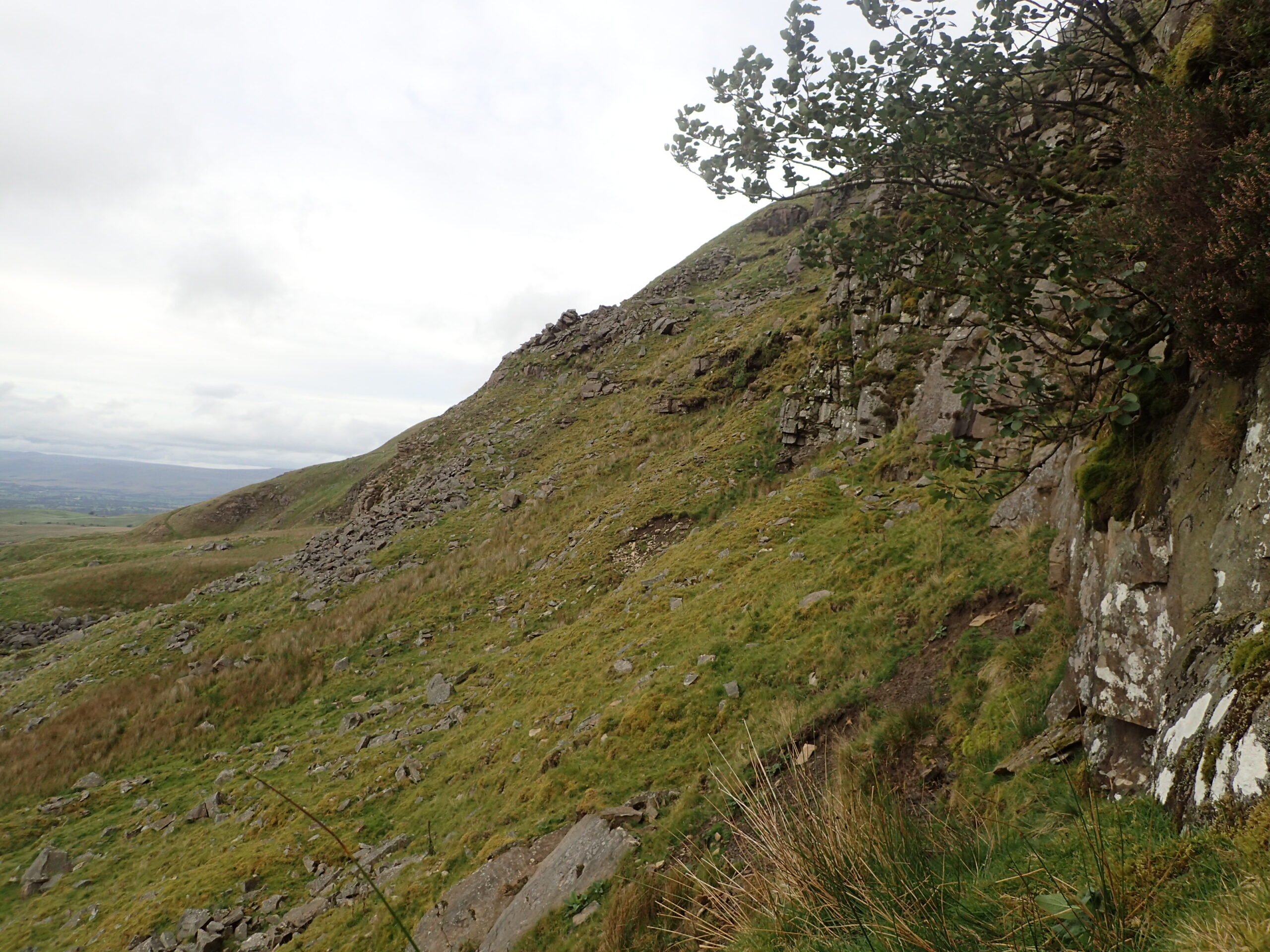
The Coniston Coppermines area is part of the Coniston Mines and Quarries SSSI, designated for its volcanic geology which has produced veins rich in metals, especially copper. These have been mined over centuries, leaving a landscape of spoil heaps, walls and derelict buildings. Specialist metallophyte lichens grow here on a variety of substrates that might not otherwise be exposed. Parts of the area have been well-surveyed: the monad containing the main workings has 124 lichen species reported over a 40 year period, many refound in recent years and a few seriously rare. This, combined with the challenging weather, meant that we decided to treat the visit as a chance to see and try to identify these species, rather than record anything.
From the start it was very wet. The rain cleared somewhat later, but getting any books out wasn’t possible and lenses and glasses were steamed up. Rather than drive up the 1.5km track we decided to walk, which warmed us up. The owner gave us a talk about the history of the site and showed us where James and Purvis found rare lichens 40 odd years ago.

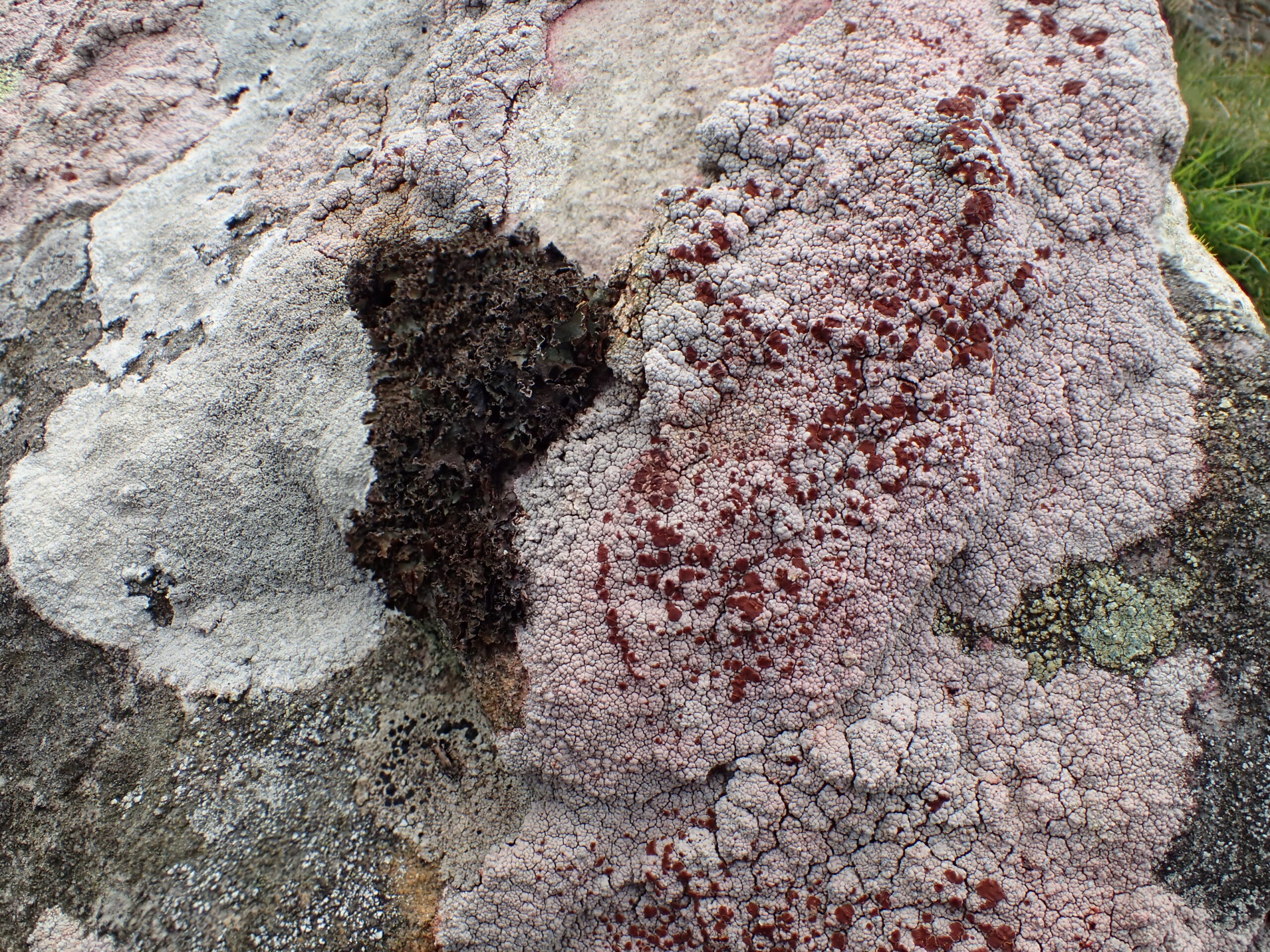
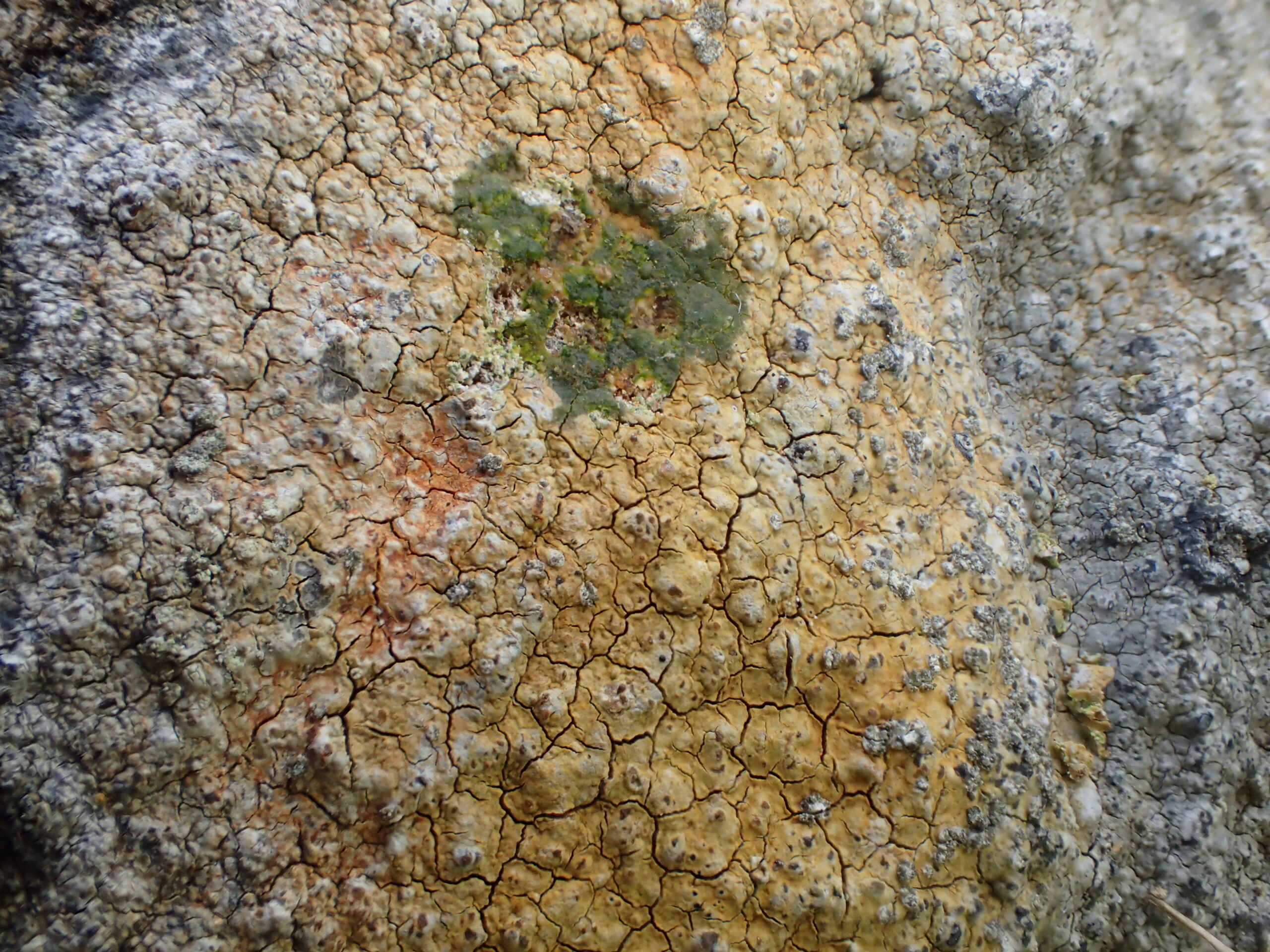
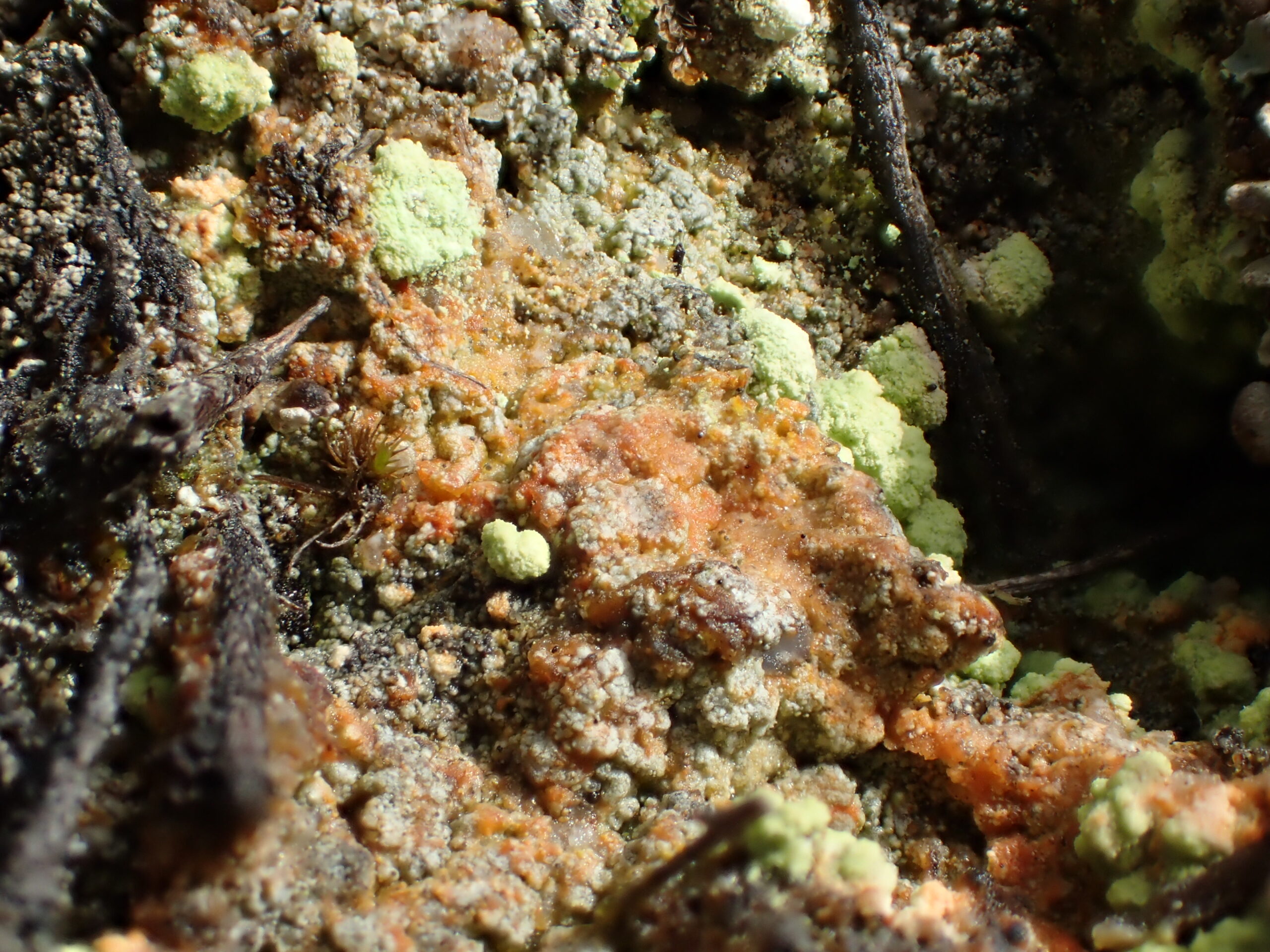
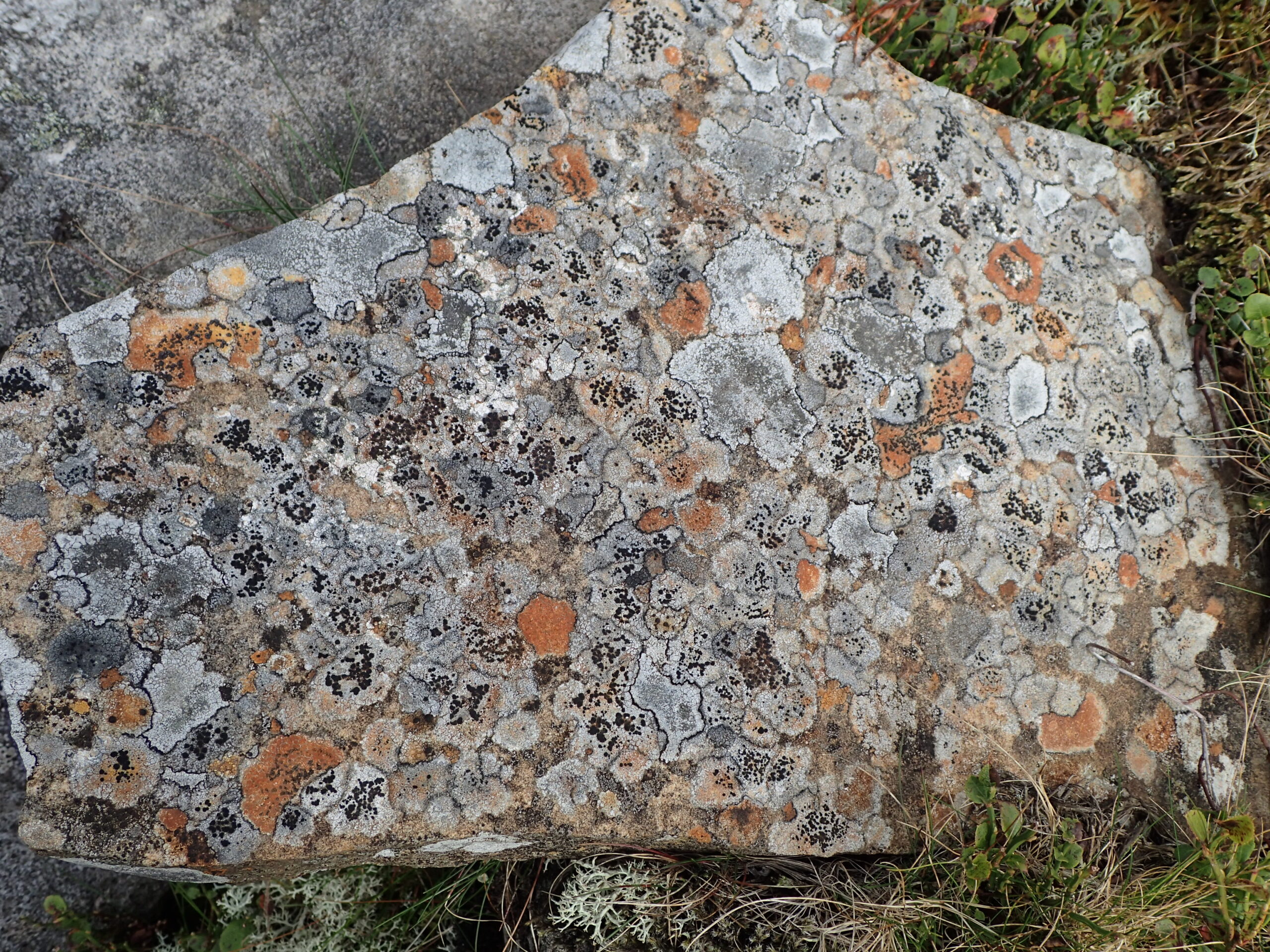
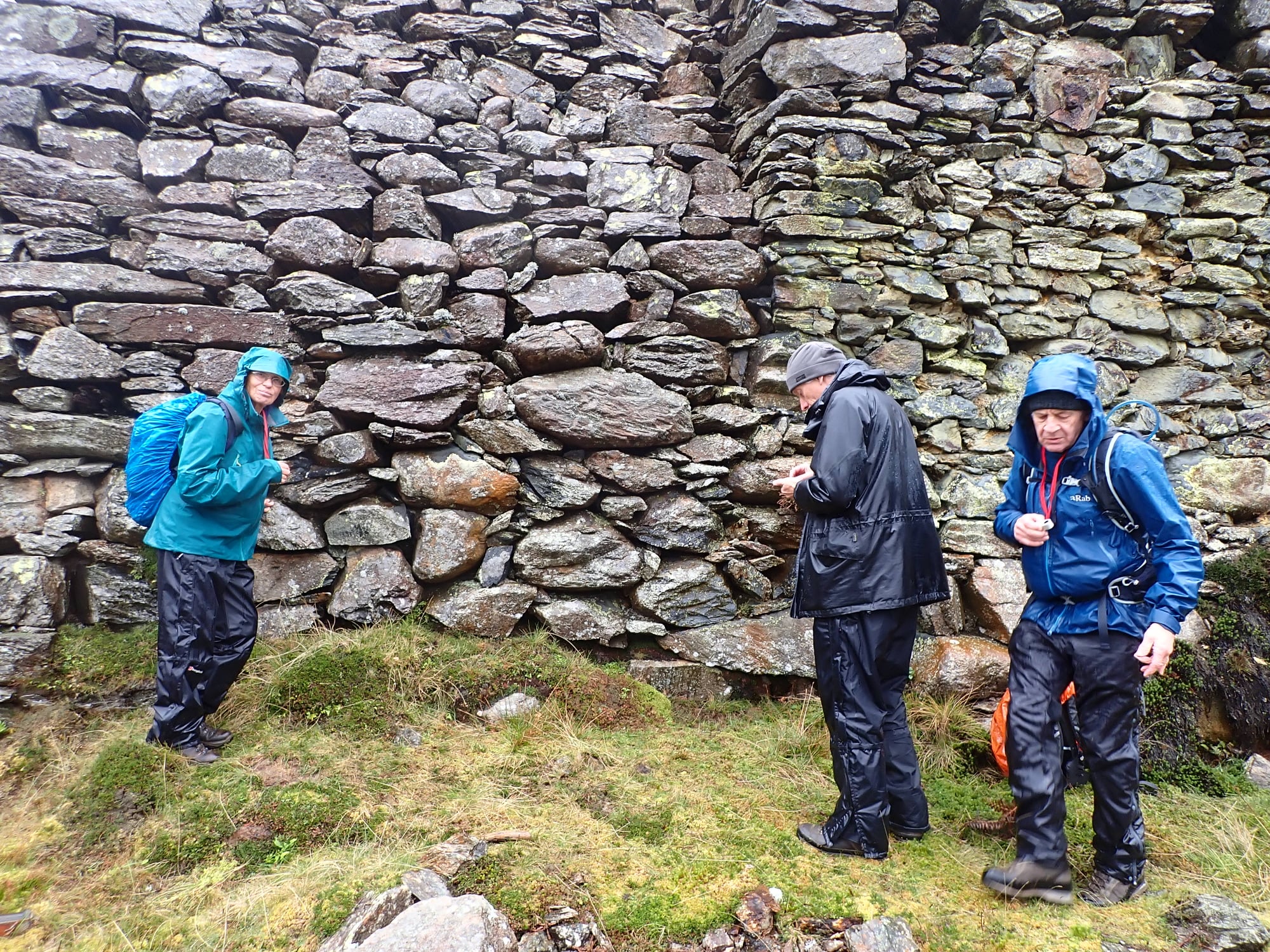
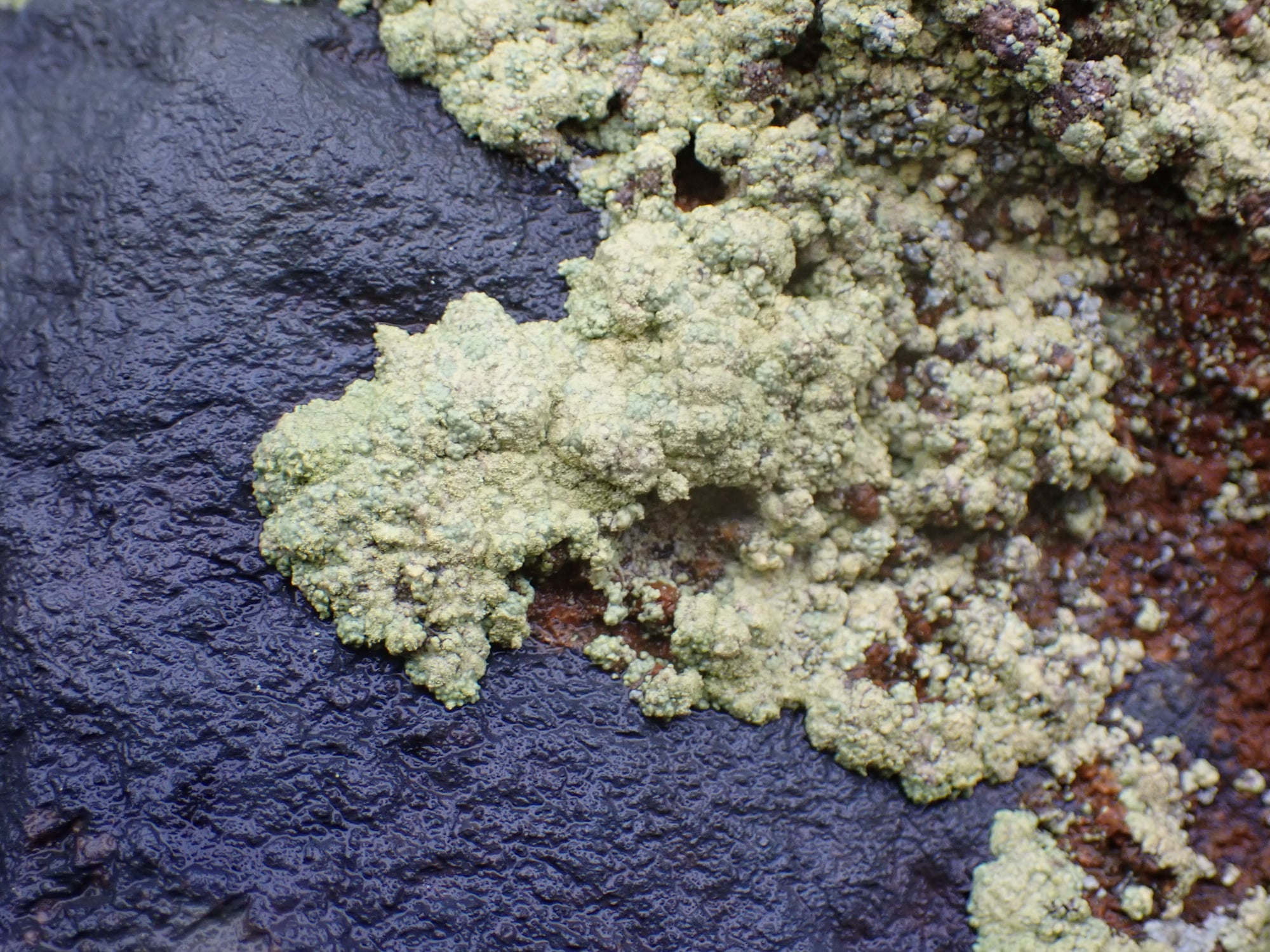
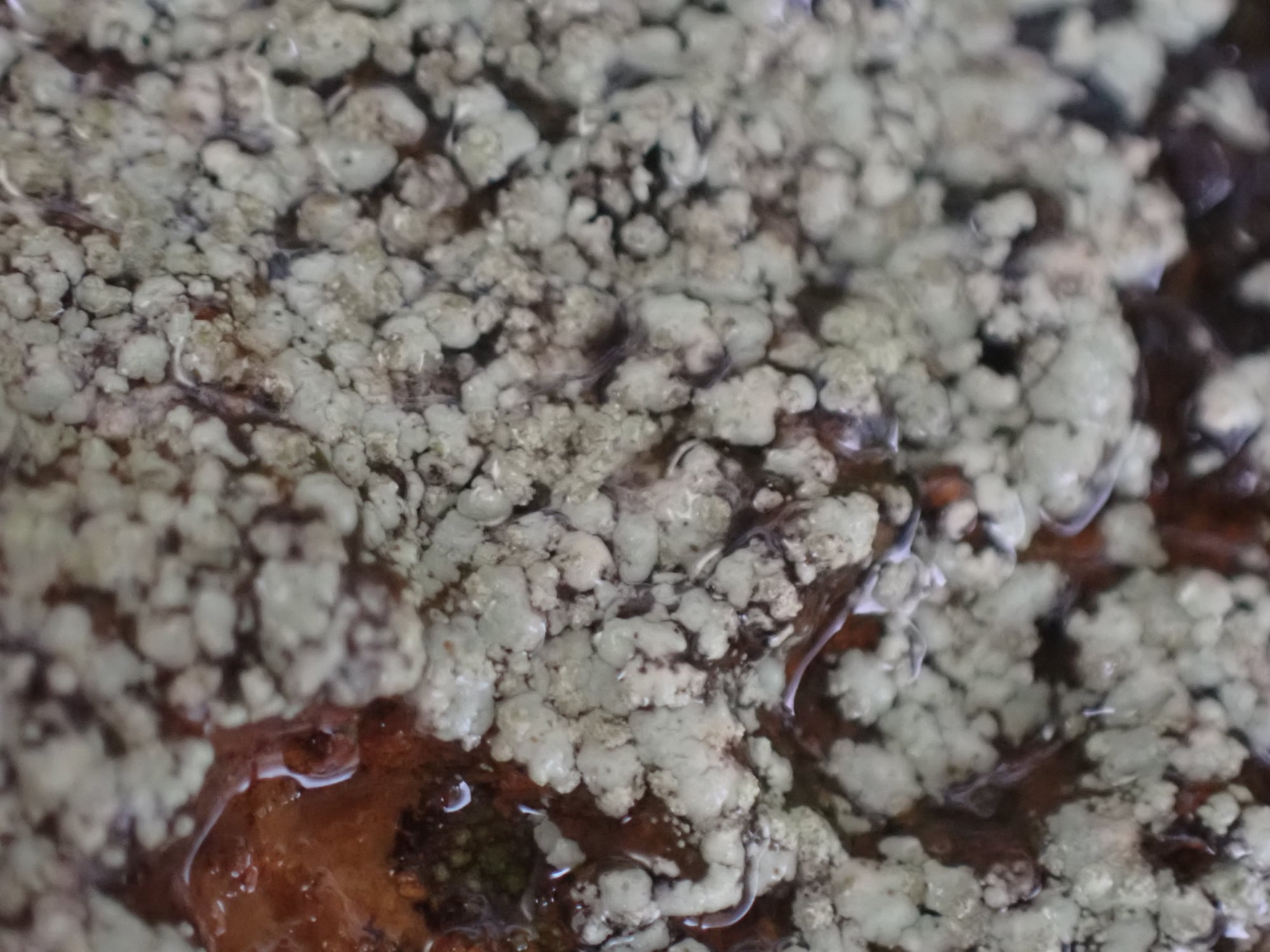
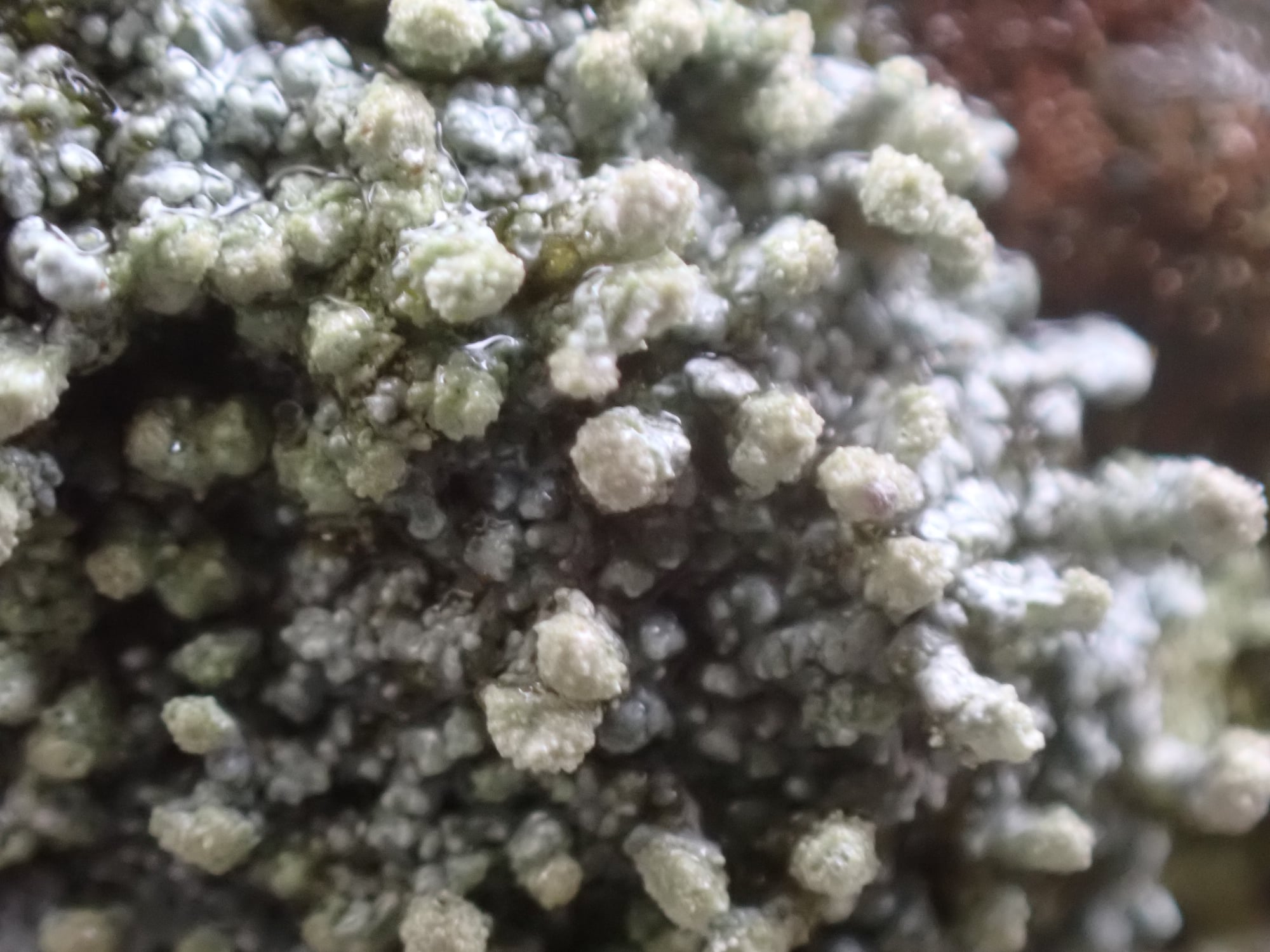
Despite it being dripping the four of us looking at lichens were able to work out several crustose species on a retaining wall. Minute differences in precisely where the soredia arise on the tiny areoles, as well as its colour, helped separate Lecanora epanora (yellow soredia on the surface) from Lecanora handelii (grey areoles with grey soredia arising at the margins). The common Lecanora soralifera (some similarities) was seen elsewhere. Several rust-coloured species turned out to be Acarospora sinopica (dark red chunky “lobes” with immersed fruit), Rhizocarpon oederi (more orange in colour with tiny but distinctive apothecia) and probably Lecidea silacea (orange very convex areoles). The commoner rusty Tremolecia atrata was seen nearby.

The combination of grazing and high metal content in the thin gravelly soil between workings has led to stunted vegetation, including heather, replicating the kind of heaths normally seen at higher altitudes. Cetraria aculeata, Dibaeis baeomyces and a range of Cladonia species were seen here.

Stereocaulon pileatum (tiny pseudopodetia tipped with soredia), Placopsis lambii, Ionaspis lacustris and Agonimia tristicula (very tiny lobes amongst moss with mortar influence) were on a ruined building.

We had an enjoyable diversion up the hill on the trail of the rare Lecidea inops which eluded us. Stereocaulon vesuvianum was abundant, as well as Stereocaulon dactyllophylum. The becks in spate were spectacular and the wet fairly mild conditions had produced a mollusc paradise with many slugs out and about feeding on lichens.

Caz Walker